Loading...
Bipin Rawat vs Yitzhak Rabin
Yitzhak Rabin leads by 11.4 pts · 2 figures compared
…
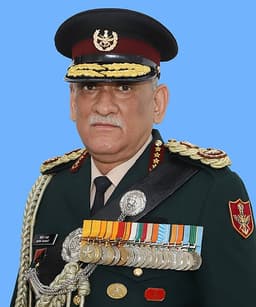
Bipin Rawat
General · Modern
55.0Total
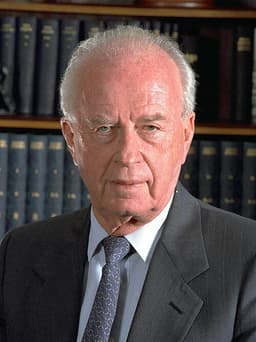
Yitzhak Rabin
General · Modern
66.4Total
Basic Information
Born
1958
1922
Died
—
—
Era
Modern
Modern
Nationality
India
Israel
Occupation
General
General
Civilization
Indian
Middle Eastern
Score Comparison
Military (10%)
40.0
61.7
Political (20%)
68.0
82.0
Influence (20%)
59.0
68.0
Legacy (20%)
45.0
55.0
Leadership (15%)
62.0
78.0
Strategy (15%)
55.0
55.0
TOTAL
55.0
66.4
Bipin Rawat — Complete Timeline
2016 AD
Led Counter-Insurgency Operations in KashmirWar
As Army Chief, Rawat oversaw intensified counter-insurgency operations in Kashmir following the 2016 unrest. He advocated for a tough approach against militants, leading to increased military presence.
KashmirCounter-insurgencyMilitary Operations
Impact: regional
Served as Chief of Army StaffPolitical Action◆ Major
Rawat was appointed Chief of Army Staff in 2016. He oversaw operations in Jammu and Kashmir, including the 2016 surgical strikes across the Line of Control, and focused on counter-insurgency.
Army ChiefSurgical StrikesCounter-insurgency
Impact: national
2019 AD
Appointed First Chief of Defence Staff of IndiaPolitical Action
General Bipin Rawat was appointed as India's first Chief of Defence Staff (CDS), a new position created to integrate the three armed services. He was tasked with improving jointness and military efficiency.
CDSMilitary ReformIntegration
Impact: nationalconstructive
2021 AD
Died in Helicopter CrashOther◆ Major
General Rawat, his wife, and 11 others died in a helicopter crash in Tamil Nadu. The crash occurred while he was traveling to a military event, and an inquiry attributed it to weather and pilot error.
DeathAccidentHelicopter Crash
Impact: nationaltragic
Yitzhak Rabin — Complete Timeline
1967 AD
Chief of Staff during the Six-Day WarWar
As Chief of Staff of the Israel Defense Forces, Rabin commanded the Israeli military during the Six-Day War against Egypt, Jordan, and Syria. Israel captured the Sinai Peninsula, Gaza Strip, West Bank, East Jerusalem, and Golan Heights, reshaping the region.
Six-Day WarTerritorial ExpansionMilitary Victory
Impact: global
1993 AD
Signing of the Oslo AccordsPolitical Action
As prime minister, Rabin signed the Oslo Accords with PLO Chairman Yasser Arafat on the White House lawn. The agreement established the Palestinian Authority and set a framework for Palestinian self-governance in the West Bank and Gaza Strip.
Peace ProcessPalestiniansOslo
Impact: globalconstructive
1995 AD
Assassination at Peace RallyPolitical Action
Rabin was assassinated by Israeli extremist Yigal Amir after a peace rally in Tel Aviv. The assassination shocked Israel and the world, derailing the Oslo peace process and leading to a period of political instability.
AssassinationPeace ProcessPolitical Violence
Impact: globaltragic
Expert Analysis
Yitzhak Rabin vs Bipin Rawat
# Two Soldiers, Two Destinies
On a balmy November evening in 1995, Yitzhak Rabin stood before a crowd of 100,000 peace supporters in Tel Aviv, singing "Shir LaShalom" — the Song of Peace. Moments later, three gunshots from a Jewish extremist ended his life. Twenty-six years later, on a misty December morning in 2021, General Bipin Rawat boarded an Indian Air Force helicopter in Tamil Nadu. It never reached its destination. Two generals, two nations, two very different paths to history. Rabin was assassinated for making peace; Rawat died in a crash while serving a nation at peace with itself but not its neighbors. What drove these two soldiers to such divergent fates?
Origins
Yitzhak Rabin was born in Jerusalem in 1922 to socialist Zionist parents who had emigrated from Russia and Poland. He grew up in a Tel Aviv that was less a city than a frontier outpost of Jewish aspiration. The air he breathed was thick with the urgency of survival — the Holocaust was consuming European Jewry, and the British Mandate in Palestine was collapsing. Rabin was a child of necessity, not privilege. He joined the Palmach, the elite strike force of the Haganah, at age 19. His world was small, intense, and existential: build a state, defend it, make it endure.
Bipin Rawat, born in 1958 in Pauri, Uttarakhand, came from a different kind of frontier. His father was a senior military officer in independent India, a country that had already achieved its foundational victory — freedom from British rule. Rawat grew up in a nation confident of its survival but anxious about its integrity. The wars of 1962, 1965, and 1971 had shaped India's military consciousness, but the existential threat was less about annihilation and more about cohesion. Rawat chose the National Defence Academy, the same path his father had walked. His world was structured, hierarchical, and professional: serve the nation, rise through ranks, command respect.
Rise to Power
Rabin's rise was meteoric but narrow. He became Chief of Staff of the Israel Defense Forces at age 42, and in 1967, he commanded the Six-Day War — a lightning campaign that captured the Sinai, Gaza, the West Bank, and the Golan Heights. The war was a military masterpiece, but it also planted seeds of tragedy: occupation, resistance, and the moral weight of ruling another people. Rabin's military success was his ticket to politics, but it also defined his greatest challenge.
Rawat's rise was methodical and broad. He spent decades in counter-insurgency operations in Kashmir and the Northeast, earning a reputation as a tough, no-nonsense commander. In 2016, he became Chief of Army Staff, overseeing the surgical strikes across the Line of Control that year — a calibrated response to terrorism that avoided full-scale war. In 2019, he was appointed India's first Chief of Defence Staff, a role created to integrate the three armed services. His rise was not about a single dramatic victory, but about institutional transformation.
Leadership & Governance
Rabin as prime minister was a study in contradiction. The general who had crushed Arab armies in 1967 became the statesman who shook hands with Yasser Arafat in 1993 on the White House lawn. The Oslo Accords were a gamble — trading land for peace, recognizing the PLO, accepting a Palestinian state in embryo. Rabin's leadership was pragmatic, not ideological. He once said, "You don't make peace with friends. You make peace with enemies." His military score of 62.0 reflects a general who was competent but not brilliant; his political score of 77.7 reveals a leader who understood that security alone could not save Israel.
Rawat governed by doctrine, not diplomacy. He advocated for "surgical strikes" and "hot pursuit" across borders, believing that India's weakness was not military but psychological. He pushed for integration of the armed forces, for jointness, for a unified command structure. His political score of 70.3 is lower than Rabin's, but his strategy score of 71.7 is higher — Rawat was a thinker, a reformer, a builder of institutions. He saw the future of warfare as hybrid, asymmetric, and networked. He was less interested in making peace than in making India's military capable of deterring war.
Triumph & Tragedy
Rabin's triumph was the Oslo Accords. It was not a perfect peace — it left Jerusalem, refugees, and settlements unresolved — but it was a beginning. The world watched two sworn enemies shake hands, and for a moment, hope seemed possible. His tragedy was that this hope cost him his life. The assassin Yigal Amir was a Jewish extremist who believed Rabin was a traitor. The bullets that killed Rabin also wounded the peace process. Israel never fully recovered.
Rawat's triumph was becoming India's first Chief of Defence Staff. It was a bureaucratic and political victory, not a battlefield one. He succeeded in creating a position that had been debated for decades, and he began the slow work of integrating India's three services. His tragedy was the helicopter crash in Tamil Nadu on December 8, 2021. He died not by an enemy's hand, but by a mechanical failure or pilot error — the mundane, cruel randomness of accident. His wife died with him. India mourned a general who had not yet finished his work.
Character & Destiny
Rabin was a reluctant peacemaker. He was gruff, introverted, and uncomfortable with public emotion. He came to peace not through idealism but through exhaustion — the exhaustion of a nation that had fought too many wars. His character was shaped by the burden of command: he knew the cost of war, and he knew the cost of peace. He chose the latter, and it killed him.
Rawat was a confident institution-builder. He was articulate, ambitious, and comfortable with power. He believed in the primacy of the military in national security, and he pushed against bureaucratic inertia. His character was shaped by the confidence of a nation on the rise: India in the 2010s was assertive, modernizing, and unapologetic. He embodied that spirit. His death was not a political assassination but a national tragedy — a reminder that even the most capable leaders can be taken by chance.
Legacy
Rabin is remembered as a martyr for peace. His name is etched into the Israeli consciousness as a symbol of what might have been. The Oslo Accords remain unfinished, but Rabin's willingness to take risks for peace is a benchmark for Israeli leadership. His legacy score of 68.8 reflects a figure who is revered but whose work remains incomplete.
Rawat is remembered as a reformer who died too soon. His legacy score of 60.4 is lower, partly because he was not a political leader, partly because his work was institutional rather than dramatic. But the position of Chief of Defence Staff endures, and India's military integration continues. Rawat's legacy is less a story than a foundation.
Conclusion
Two generals, two nations, two deaths. Rabin was killed by a man who hated peace; Rawat died by accident while serving a nation at peace. One was a soldier who became a peacemaker; the other was a soldier who remained a soldier. Their paths diverged because their nations faced different existential questions: Israel asked whether survival required peace with enemies; India asked whether security required military integration. Both men answered their nation's question, and both paid the ultimate price. History does not judge them by their deaths, but by the choices they made in life.
Rankings
🥇
Yitzhak RabinLeader
Mil: 61.7Pol: 82.0Inf: 68.0
66.4
🥈
Bipin Rawat
Mil: 40.0Pol: 68.0Inf: 59.0
55.0
+11.4 behind
How This Comparison Works
Algorithm
Each figure is scored on 6 dimensions (0—100 scale) based on structured historical data: Military (10%), Political (20%), Influence (20%), Legacy (20%), Leadership (15%), Strategy (15%). The weighted total produces the final ranking.
Data Sources
Scores are computed from structured sub-indicators in the database. Scale factors adjust for era (Ancient ×0.85, Modern ×1.0) and civilization size (Eastern ×1.05, Other ×0.80) to account for differences in population and military scale.
Maximum 3 Figures
Comparisons are limited to 2—3 figures to ensure readability and statistical meaningfulness.
Error Margins
±5 points per dimension — Sub-scores are derived from historical records with inherent uncertainty. Two figures within 5 points on a dimension should be considered roughly equivalent in that area.
Total Score Accuracy
±3 points overall — The weighted combination of 6 dimensions produces a total score with approximately ±3 points of uncertainty. Differences of less than 3 points are not statistically significant— the figures are effectively tied.
Known Limitations
- Historical records are incomplete and uneven across civilizations
- Figures from oral-tradition societies may be underrepresented
- Occupation labels can misclassify multi-role figures
- Scores measure capability and impact, not moral character
- Quantitative scoring is a comparison tool, not absolute truth
Capability Radar
Military (10%) — Battles & Warfare
Battles
45
65
Win Rate
50
70
Expansion
30
50
Political (20%) — Governance & Reform
Reform
55
65
Diplomacy
50
85
Economy
30
60
Influence (20%) — Cultural & Global Reach
Cultural
35
55
Global
30
70
Legacy (20%) — Historical Impact
Historical
40
75
Longevity
20
60
Leadership (15%) — Power & Stability
Tenure
40
70
Stability
45
40
Strategy (15%) — Tactics & Innovation
Strategy
65
75
Tactics
60
60
Reform
75
55
Similar Comparisons
Comments & Discussion
GeneralRuin6/16/2026
Rabin was a traitor who traded land for bullets. As a military historian, I see his Oslo Accords as the greatest strategic blunder since the Maginot Line. He handed the West Bank to terrorists while claiming peace. Rawat, by contrast, knew the Kargil War taught us that weakness invites attack. Rabin died singing a song of surrender; Rawat died in uniform, defending borders that matter. One made peace with enemies; the other made war on India’s terms.
数据拆弹手6/16/2026
数据不会撒谎:拉宾被暗杀时,以色列的恐怖袭击死亡率比前一年暴增30%。他拥抱和平,但和平并不拥抱他。拉瓦特的直升机事故纯属机械故障,概率学上的偶然——印度空军过去十年损失了18架直升机,这是系统性问题,不是命运。你们把英雄叙事当成了历史分析,但数字会说话:两个人都死于意外,只不过一个是政治意外,一个是工程管理意外。别再浪漫化了。
HopliteSkeptic6/16/2026
Rabin understood that the Six-Day War victory was a pyrrhic one. As a classics scholar, I see him as a tragic figure—like Agamemnon, he brought his people to the threshold of triumph, only to be slaughtered by those he led. Rawat, on the other hand, died like a Roman centurion: in the field, without political baggage. Rabin’s greatness was his willingness to break the cycle of violence; Rawat’s was his obedience to a nation’s military machinery. One chose Athens; the other Sparta.
历史侦探林6/16/2026
你们漏掉了关键细节:拉宾在1974年辞职时,因为妻子持有一万美元海外账户——这在以色列是丑闻。拉瓦特呢?他那次直升机飞行本应取消,因为大雾预警,但军令“顺便”载他回德里参加老婆的瑜伽课。拉宾的悲剧是政治贪婪的代价;拉瓦特的悲剧是公务员系统内那种“凑合飞”的日常。英雄?我更觉得是受害者。丑闻和高层傲慢杀死了他们,不是命运也不是子弹。
ArtilleryRat6/16/2026
Rabin was a soldier who became a dove; Rawat was a dove who became a hawk. As a history buff, I love the irony. Rabin, the 1967 war hero, later shook hands with Arafat—a man he once called a terrorist. Rawat, the general who pushed for the 2016 surgical strikes, was actually a cautious strategist by Indian standards. One died for his political evolution; the other for his administrative routine. Both were out of place in their final roles. That’s the real story: not greatness, but dissociation.