Loading...
This comparison has not been analyzed yet.
One-time AI generation (~1 minute). Scores and timeline are already available below.
Bimbisara vs Shi Xie
Bimbisara leads by 11.2 pts · 2 figures compared
…
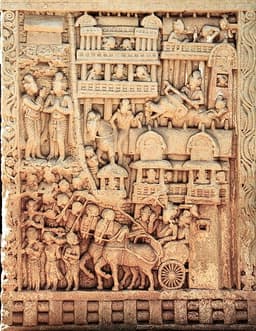
Bimbisara
Emperor · Ancient
57.3Total

Shi Xie
Emperor · Ancient
46.1Total
Basic Information
Born
-558
137
Died
-491
226
Era
Ancient
Ancient
Nationality
India
China
Occupation
Emperor
Emperor
Civilization
Indian
Eastern
Score Comparison
Military (10%)
60.0
50.0
Political (20%)
60.0
61.3
Influence (20%)
55.7
47.1
Legacy (20%)
49.2
39.2
Leadership (15%)
72.0
40.0
Strategy (15%)
52.5
43.7
TOTAL
57.3
46.1
Bimbisara — Complete Timeline
550 BC
Married Princess Chellana of LicchaviPolitical Action
Bimbisara married Chellana, daughter of the Licchavi chief Chetaka of Vaishali. This marriage alliance strengthened Magadha's ties with the powerful Licchavi republic and produced his son Ajatashatru.
Marriage AllianceDiplomacy
Impact: regional
540 BC
Conquered AngaWar◆ Major
Bimbisara annexed the kingdom of Anga (modern Bihar) to the Magadha empire. This conquest gave Magadha control over the Ganges river trade route and access to the sea, strengthening its economic and military power.
ConquestMagadha Expansion
Impact: regional
530 BC
Established Diplomatic Relations with the BuddhaPolitical Action◆ Major
Bimbisara met Gautama Buddha and became a lay follower, donating the Veluvana Bamboo Grove monastery near Rajagriha. This patronage helped establish Buddhism in Magadha and provided the Buddha with a permanent residence during the rainy season.
BuddhismPatronageReligion
Impact: regionalconstructive
491 BC
Imprisoned and Killed by AjatashatruPolitical Action◆ Major
Bimbisara was imprisoned by his son Ajatashatru, who seized the throne. According to Buddhist sources, Bimbisara died in captivity, possibly by starvation or suicide. This event marked a violent succession in Magadha.
Succession CrisisPatricide
Impact: nationaltragic
Shi Xie — Complete Timeline
187 AD
Appointed Administrator of JiaozhiPolitical Action◆ Major
Shi Xie was appointed Administrator of Jiaozhi commandery by the Han court. He governed the southern region with wisdom, maintaining peace and stability while the north was engulfed in chaos.
AppointmentJiaozhiHan Dynasty
Impact: regionalconstructive
200 AD
Promoted Chinese culture in VietnamCultural◆ Major
Shi Xie promoted Chinese learning, Confucianism, and administrative practices in Jiaozhi (modern northern Vietnam). He welcomed Chinese scholars fleeing the chaos of the north, making Jiaozhi a cultural center.
Cultural InfluenceConfucianismVietnam
Impact: regionalconstructive
210 AD
Maintained autonomy from Sun QuanPolitical Action◆ Major
Shi Xie nominally submitted to Sun Quan of Wu but effectively ruled Jiaozhi independently. He paid tribute to Sun Quan while governing his territory without interference, preserving stability in the south.
AutonomySun QuanJiaozhi
Impact: regionalconstructive
226 AD
Died and was succeeded by his son Shi HuiPolitical Action◆ Major
Shi Xie died in 226, and his son Shi Hui succeeded him. However, Sun Quan soon moved to assert direct control over Jiaozhi, leading to conflict and the end of the Shi family's autonomous rule.
SuccessionJiaozhiShi Clan
Impact: regional
This comparison has not been analyzed yet.
One-time AI generation (~1 minute). Scores and timeline are already available below.
Rankings
🥇
BimbisaraLeader
Mil: 60.0Pol: 60.0Inf: 55.7
57.3
🥈
Shi Xie
Mil: 50.0Pol: 61.3Inf: 47.1
46.1
+11.2 behind
How This Comparison Works
Algorithm
Each figure is scored on 6 dimensions (0—100 scale) based on structured historical data: Military (10%), Political (20%), Influence (20%), Legacy (20%), Leadership (15%), Strategy (15%). The weighted total produces the final ranking.
Data Sources
Scores are computed from structured sub-indicators in the database. Scale factors adjust for era (Ancient ×0.85, Modern ×1.0) and civilization size (Eastern ×1.05, Other ×0.80) to account for differences in population and military scale.
Maximum 3 Figures
Comparisons are limited to 2—3 figures to ensure readability and statistical meaningfulness.
Error Margins
±5 points per dimension — Sub-scores are derived from historical records with inherent uncertainty. Two figures within 5 points on a dimension should be considered roughly equivalent in that area.
Total Score Accuracy
±3 points overall — The weighted combination of 6 dimensions produces a total score with approximately ±3 points of uncertainty. Differences of less than 3 points are not statistically significant— the figures are effectively tied.
Known Limitations
- Historical records are incomplete and uneven across civilizations
- Figures from oral-tradition societies may be underrepresented
- Occupation labels can misclassify multi-role figures
- Scores measure capability and impact, not moral character
- Quantitative scoring is a comparison tool, not absolute truth
Capability Radar
Military (10%) — Battles & Warfare
Battles
45
15
Win Rate
50
20
Expansion
65
20
Political (20%) — Governance & Reform
Reform
75
40
Diplomacy
70
55
Economy
65
50
Influence (20%) — Cultural & Global Reach
Cultural
55
30
Global
40
10
Legacy (20%) — Historical Impact
Historical
60
30
Longevity
55
25
Leadership (15%) — Power & Stability
Tenure
70
60
Stability
60
55
Strategy (15%) — Tactics & Innovation
Strategy
55
25
Tactics
40
20
Reform
60
10
Similar Comparisons
Comments & Discussion
No comments yet. Be the first to share your thoughts!