Loading...
Bimbisara vs Theodosius the Great
Theodosius the Great leads by 12.2 pts · 2 figures compared
…
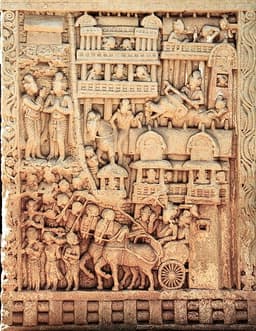
Bimbisara
Emperor · Ancient
57.3Total
Theodosius the Great
Emperor · Ancient
69.5Total
Basic Information
Born
-558
347
Died
-491
395
Era
Ancient
Ancient
Nationality
India
Roman Empire
Occupation
Emperor
Emperor
Civilization
Indian
Western
Score Comparison
Military (10%)
60.0
65.0
Political (20%)
60.0
65.0
Influence (20%)
55.7
75.0
Legacy (20%)
49.2
75.0
Leadership (15%)
72.0
68.0
Strategy (15%)
52.5
55.0
TOTAL
57.3
69.5
Bimbisara — Complete Timeline
550 BC
Married Princess Chellana of LicchaviPolitical Action
Bimbisara married Chellana, daughter of the Licchavi chief Chetaka of Vaishali. This marriage alliance strengthened Magadha's ties with the powerful Licchavi republic and produced his son Ajatashatru.
Marriage AllianceDiplomacy
Impact: regional
540 BC
Conquered AngaWar◆ Major
Bimbisara annexed the kingdom of Anga (modern Bihar) to the Magadha empire. This conquest gave Magadha control over the Ganges river trade route and access to the sea, strengthening its economic and military power.
ConquestMagadha Expansion
Impact: regional
530 BC
Established Diplomatic Relations with the BuddhaPolitical Action◆ Major
Bimbisara met Gautama Buddha and became a lay follower, donating the Veluvana Bamboo Grove monastery near Rajagriha. This patronage helped establish Buddhism in Magadha and provided the Buddha with a permanent residence during the rainy season.
BuddhismPatronageReligion
Impact: regionalconstructive
491 BC
Imprisoned and Killed by AjatashatruPolitical Action◆ Major
Bimbisara was imprisoned by his son Ajatashatru, who seized the throne. According to Buddhist sources, Bimbisara died in captivity, possibly by starvation or suicide. This event marked a violent succession in Magadha.
Succession CrisisPatricide
Impact: nationaltragic
Theodosius the Great — Complete Timeline
380 AD
Edict of ThessalonicaReform
Theodosius issued the Edict of Thessalonica, declaring Nicene Christianity the official state religion of the Roman Empire. All other Christian sects were deemed heretical, and pagan practices were increasingly suppressed.
ChristianityReligious PolicyState Religion
Impact: globalprogressive
390 AD
Massacre of ThessalonicaPolitical Action◆ Major
Theodosius ordered a massacre in Thessalonica after a riot killed a Roman official. Thousands of citizens were killed in the circus. Bishop Ambrose of Milan excommunicated Theodosius until he performed public penance.
MassacreChurch-State RelationsAmbrose
Impact: regionaldestructive
394 AD
Battle of the FrigidusWar◆ Major
Theodosius defeated the usurper Eugenius and his general Arbogast at the Battle of the Frigidus. The victory reunited the Roman Empire under Theodosius's rule for the last time before its permanent division.
Civil WarReunificationEugenius
Impact: national
395 AD
Division of the Roman EmpirePolitical Action
Upon his death, Theodosius divided the Roman Empire between his sons: Arcadius received the East and Honorius the West. This division became permanent, leading to the separate development of the Byzantine and Western Roman Empires.
Imperial DivisionSuccessionByzantine Empire
Impact: global
Expert Analysis
Origins
Bimbisara was born around 544 BCE in the Haryanka dynasty of Magadha, an ancient Indian kingdom in present-day Bihar. His father was King Bhattiya, and Bimbisara ascended the throne at age 15. He received training in statecraft and military tactics, typical for a prince of his time. The region was fragmented into mahajanapadas (great kingdoms), and Magadha was one of the most powerful due to its fertile land and iron resources.
Theodosius I was born around 347 CE in Cauca, Hispania (modern Coca, Spain), into a Christian family. His father, Flavius Theodosius, was a successful general under Emperor Valentinian I. Young Theodosius received a military education and served in the Roman army. His early career was marked by campaigns in Britannia and against the Sarmatians.
Rise to Power
Bimbisara became king of Magadha around 544 BCE. His early reign focused on expanding Magadha's territory through conquest and diplomacy. The key turning point was the conquest of Anga (modern eastern Bihar) around 535 BCE. This victory gave Magadha control over the Ganges river trade route, boosting its economic power. Bimbisara also forged alliances through marriage: he married Chellana, daughter of the Licchavi chief, strengthening ties with the powerful Vajji confederacy. He also married Kosala Devi, sister of King Prasenajit of Kosala, gaining the strategic Kashi region as dowry.
Theodosius rose to power after the death of Emperor Valens at the Battle of Adrianople in 378 CE. Gratian, the Western emperor, appointed Theodosius as Augustus of the Eastern Roman Empire in 379 CE. Theodosius quickly reorganized the army and fought against the Goths, eventually signing a treaty in 382 CE that settled them within the empire as foederati. His political maneuvering included issuing the Edict of Thessalonica (380 CE) to establish Nicene Christianity as the state religion.
Leadership & Governance
Bimbisara ruled Magadha with a centralized administration. He established an efficient bureaucracy and maintained a strong army. His governance was marked by religious tolerance: though he became a lay follower of the Buddha, he continued to support Jainism and other traditions. He donated the Veluvana Bamboo Grove monastery to the Buddha, fostering Buddhism's growth. However, his reign also saw the development of a spy network and strict law enforcement.
Theodosius governed the Roman Empire with a focus on religious unity. He issued the Edict of Thessalonica (380 CE) and the First Council of Constantinople (381 CE) to enforce Nicene orthodoxy. He persecuted Arian Christians and pagans, closing temples and banning pagan rituals. His leadership style was autocratic, but he also showed restraint when Bishop Ambrose of Milan excommunicated him for the Thessalonica massacre in 390 CE; Theodosius performed public penance.
Triumph & Tragedy
Bimbisara's greatest success was expanding Magadha into a dominant power. He conquered Anga and secured trade routes, laying the foundation for the later Maurya Empire. His patronage of Buddhism helped the religion spread across India. However, his tragedy was his downfall: his son Ajatashatru imprisoned him around 492 BCE, and Bimbisara died in captivity, possibly by starvation. This patricide stained his legacy.
Theodosius's greatest triumph was the Battle of the Frigidus (394 CE) against the usurper Eugenius, which reunited the empire under his rule. He also made Christianity the state religion, shaping Western civilization. His tragedy was the Massacre of Thessalonica (390 CE), where thousands were killed in the circus after a riot; this damaged his moral authority. Additionally, his division of the empire upon his death (395 CE) became permanent, contributing to the eventual fall of the Western Roman Empire.
Character & Destiny
Bimbisara was pragmatic and diplomatic, using marriage alliances and religious patronage to strengthen his rule. His trust in his son Ajatashatru proved fatal; he was blind to the betrayal. Historical assessments from Buddhist texts describe him as a just king but overly trusting. His score of 72.0 in leadership reflects his effective governance, but his political score of 60.0 indicates his failure in succession planning.
Theodosius was determined and religiously zealous, willing to enforce orthodoxy through laws and force. He was also capable of humility, as shown by his penance. However, his decision to divide the empire between his sons, Arcadius and Honorius, was a strategic error. His leadership score of 68.0 and political score of 65.0 reflect his mixed record. His influence score of 75.0 is high due to his religious impact.
Legacy
Bimbisara's legacy is as a founder of Magadha's imperial tradition. His capital Rajagriha remained important, and his patronage of Buddhism helped establish it as a major world religion. The Magadha kingdom he built eventually transformed into the Maurya Empire under Chandragupta Maurya. However, his direct impact is limited compared to later Indian rulers. He scores 49.2 in legacy.
Theodosius's legacy is immense: he made Nicene Christianity the state religion, suppressing paganism and Arianism. The Theodosian Code (compiled later) influenced legal systems. The division of the Roman Empire into East and West became permanent, shaping medieval Europe. His legacy score of 75.0 reflects this lasting influence.
Conclusion
Theodosius the Great had greater historical impact than Bimbisara. Theodosius's total score is 69.5 against Bimbisara's 57.3, a gap of 12.2 points. While Bimbisara laid the groundwork for Indian empire-building and supported Buddhism, Theodosius's actions directly shaped the religious and political landscape of Europe for centuries. The establishment of Christianity as the state religion and the permanent division of the Roman Empire are transformative events. Bimbisara's achievements, though significant, were more localized and did not have the same enduring global influence. Thus, Theodosius emerges as the more consequential figure.
Rankings
🥇
Theodosius the GreatLeader
Mil: 65.0Pol: 65.0Inf: 75.0
69.5
🥈
Bimbisara
Mil: 60.0Pol: 60.0Inf: 55.7
57.3
+12.2 behind
How This Comparison Works
Algorithm
Each figure is scored on 6 dimensions (0—100 scale) based on structured historical data: Military (10%), Political (20%), Influence (20%), Legacy (20%), Leadership (15%), Strategy (15%). The weighted total produces the final ranking.
Data Sources
Scores are computed from structured sub-indicators in the database. Scale factors adjust for era (Ancient ×0.85, Modern ×1.0) and civilization size (Eastern ×1.05, Other ×0.80) to account for differences in population and military scale.
Maximum 3 Figures
Comparisons are limited to 2—3 figures to ensure readability and statistical meaningfulness.
Error Margins
±5 points per dimension — Sub-scores are derived from historical records with inherent uncertainty. Two figures within 5 points on a dimension should be considered roughly equivalent in that area.
Total Score Accuracy
±3 points overall — The weighted combination of 6 dimensions produces a total score with approximately ±3 points of uncertainty. Differences of less than 3 points are not statistically significant— the figures are effectively tied.
Known Limitations
- Historical records are incomplete and uneven across civilizations
- Figures from oral-tradition societies may be underrepresented
- Occupation labels can misclassify multi-role figures
- Scores measure capability and impact, not moral character
- Quantitative scoring is a comparison tool, not absolute truth
Capability Radar
Military (10%) — Battles & Warfare
Battles
45
65
Win Rate
50
70
Expansion
65
50
Political (20%) — Governance & Reform
Reform
75
85
Diplomacy
70
75
Economy
65
60
Influence (20%) — Cultural & Global Reach
Cultural
55
85
Global
40
85
Legacy (20%) — Historical Impact
Historical
60
90
Longevity
55
95
Leadership (15%) — Power & Stability
Tenure
70
70
Stability
60
55
Strategy (15%) — Tactics & Innovation
Strategy
55
75
Tactics
40
60
Reform
60
55
Similar Comparisons
Comments & Discussion
No comments yet. Be the first to share your thoughts!