Loading...
Bimbisara vs Psamtik I
Psamtik I leads by 1.5 pts · 2 figures compared
…
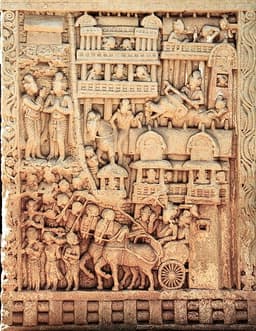
Bimbisara
Emperor · Ancient
57.3Total

Psamtik I
Emperor · Ancient
58.8Total
Basic Information
Born
-558
-664
Died
-491
-610
Era
Ancient
Ancient
Nationality
India
Egypt
Occupation
Emperor
Emperor
Civilization
Indian
Middle Eastern
Score Comparison
Military (10%)
60.0
45.0
Political (20%)
60.0
59.3
Influence (20%)
55.7
60.0
Legacy (20%)
49.2
52.0
Leadership (15%)
72.0
72.0
Strategy (15%)
52.5
66.3
TOTAL
57.3
58.8
Bimbisara — Complete Timeline
550 BC
Married Princess Chellana of LicchaviPolitical Action
Bimbisara married Chellana, daughter of the Licchavi chief Chetaka of Vaishali. This marriage alliance strengthened Magadha's ties with the powerful Licchavi republic and produced his son Ajatashatru.
Marriage AllianceDiplomacy
Impact: regional
540 BC
Conquered AngaWar◆ Major
Bimbisara annexed the kingdom of Anga (modern Bihar) to the Magadha empire. This conquest gave Magadha control over the Ganges river trade route and access to the sea, strengthening its economic and military power.
ConquestMagadha Expansion
Impact: regional
530 BC
Established Diplomatic Relations with the BuddhaPolitical Action◆ Major
Bimbisara met Gautama Buddha and became a lay follower, donating the Veluvana Bamboo Grove monastery near Rajagriha. This patronage helped establish Buddhism in Magadha and provided the Buddha with a permanent residence during the rainy season.
BuddhismPatronageReligion
Impact: regionalconstructive
491 BC
Imprisoned and Killed by AjatashatruPolitical Action◆ Major
Bimbisara was imprisoned by his son Ajatashatru, who seized the throne. According to Buddhist sources, Bimbisara died in captivity, possibly by starvation or suicide. This event marked a violent succession in Magadha.
Succession CrisisPatricide
Impact: nationaltragic
Psamtik I — Complete Timeline
658 BC
Expulsion of Assyrian garrisonsWar◆ Major
Psamtik I expelled Assyrian military garrisons from Egypt, taking advantage of the weakening Assyrian Empire. He used Greek and Carian mercenaries to strengthen his army. This action ended Assyrian control over Egypt and established the Saite dynasty as the ruling power.
AssyriaIndependenceMercenaries
Impact: regional
656 BC
Reunification of Egypt under the Saite dynastyPolitical Action◆ Major
Psamtik I unified Egypt after the Assyrian withdrawal, ending the Third Intermediate Period. He established the 26th Saite dynasty and consolidated control over the Nile Delta and Upper Egypt. This reunification restored Egyptian independence and stability after centuries of foreign domination.
UnificationSaite DynastyIndependence
Impact: globalconstructive
640 BC
Promotion of trade and cultural revivalCultural◆ Major
Psamtik I encouraged trade with Greece and the Levant, and promoted a revival of traditional Egyptian art and religion. He sponsored the construction of temples and the restoration of ancient monuments. This period, known as the Saite Renaissance, saw a resurgence of Egyptian culture.
RenaissanceTradeCulture
Impact: regionalconstructive
Expert Analysis
Origins
Bimbisara (c. 558–491 BCE) was born into the Haryanka dynasty, ruling the kingdom of Magadha in present-day Bihar, India. His father was King Bhattiya, and he ascended the throne around 543 BCE. Bimbisara received a princely education in statecraft and warfare, and his early reign focused on consolidating Magadha's power. He was a contemporary of the Buddha, which shaped his religious patronage.
Psamtik I (c. 664–610 BCE) was a prince of the Saite dynasty, ruling from the city of Sais in the Nile Delta. His father, Necho I, was a local ruler under Assyrian suzerainty. Psamtik I grew up during the turbulent Third Intermediate Period, when Egypt was fragmented. He learned diplomacy and warfare from observing the Assyrian occupation, and he used Greek and Carian mercenaries to build his military.
Rise to Power
Bimbisara rose to power by inheriting the throne of Magadha, but he expanded his influence through strategic marriages and conquests. He married Princess Chellana of the Licchavi clan, strengthening ties with the powerful Vajji confederation. His major military achievement was the conquest of Anga (modern Bihar), which gave Magadha control over the Ganges river trade route. This annexation, occurring around 540 BCE, provided economic resources and strategic depth.
Psamtik I rose to prominence after the Assyrian Empire weakened in the mid-7th century BCE. He initially ruled as a vassal but gradually asserted independence. In 656 BCE, he expelled Assyrian garrisons from Egypt using Greek and Carian mercenaries, a decisive move that marked the reunification of Egypt. He then established the 26th Saite dynasty, consolidating control over the Delta and Upper Egypt. His political score of 59.3 reflects his diplomatic skill in leveraging foreign mercenaries while maintaining Egyptian identity.
Leadership & Governance
Bimbisara's leadership style was diplomatic and religiously tolerant. He scored 72.0 in leadership, reflecting his ability to forge alliances and maintain stability. He established a centralized administration in Rajagriha, with a council of ministers. His governance included patronage of Buddhism: he donated the Veluvana Bamboo Grove monastery and regularly consulted the Buddha. This religious support helped legitimize his rule and integrate diverse communities.
Psamtik I also scored 72.0 in leadership, but his approach was more militaristic and cultural. He reunified Egypt by force but then promoted a revival of traditional Egyptian art, religion, and architecture. He sponsored construction projects and encouraged trade with Greece and the Levant, reviving Egypt's economy. His strategy score of 66.3 is higher than Bimbisara's 52.5, indicating his careful use of mercenaries and diplomacy to expel Assyrians without provoking retaliation.
Triumph & Tragedy
Bimbisara's greatest success was the conquest of Anga, which expanded Magadha's territory and wealth. He also established the first diplomatic relations with the Buddha, which later influenced the spread of Buddhism. However, his greatest failure was his inability to manage succession. His son Ajatashatru imprisoned and killed him (c. 491 BCE) to seize the throne. According to Buddhist sources, Bimbisara died in captivity, possibly by starvation. This tragedy undercut his achievements and led to a period of instability.
Psamtik I's greatest success was the reunification of Egypt after centuries of fragmentation. He expelled Assyrian garrisons and established a stable dynasty that lasted over a century. His promotion of trade and cultural revival restored Egypt's prestige. However, his reliance on Greek and Carian mercenaries created a dependence on foreign troops, which later caused internal tensions. Also, his dynasty ended with the Persian conquest in 525 BCE, partly due to the weakening of native military traditions.
Character & Destiny
Bimbisara was known for his piety and generosity, but his trusting nature may have led to his downfall. He favored his son Ajatashatru and failed to secure his own position. Buddhist texts portray him as a wise and just ruler, but his death highlights the dangers of dynastic politics. His total score of 57.3 reflects a balanced but flawed reign.
Psamtik I was pragmatic and strategic, using mercenaries and diplomacy to achieve his goals. He was a nationalist who revived Egyptian culture while adapting foreign military techniques. His character was decisive and cautious, as seen in his gradual expulsion of Assyrians. His total score of 58.8 is slightly higher, reflecting his more successful long-term impact on Egypt's reunification.
Legacy
Bimbisara's legacy is primarily religious: his patronage of Buddhism helped establish it as a major force in India. The Veluvana monastery became a model for future monastic institutions. However, his political achievements were overshadowed by his son's parricide. His military score of 60.0 is modest, as his conquests were limited to Anga. His legacy score of 49.2 indicates that his influence was largely regional and religious.
Psamtik I's legacy is more enduring in Egyptian history. He is remembered as the founder of the Saite dynasty, which restored Egyptian independence and cultural identity. His promotion of trade and revival of art influenced later periods. His influence score of 60.0 reflects his role in ending the Third Intermediate Period. However, his reliance on mercenaries set a precedent that ultimately weakened Egypt against the Persians.
Conclusion
While both rulers were effective leaders with identical leadership scores of 72.0, Psamtik I had a greater impact on history. He reunified a fractured Egypt and restored its sovereignty, whereas Bimbisara's achievements were more incremental and undone by his son. Psamtik I's total score of 58.8 exceeds Bimbisara's 57.3, and his strategic ability (66.3 vs 52.5) was superior. The reunification of Egypt had lasting geopolitical consequences, while Bimbisara's Magadha remained one of many Indian kingdoms. Therefore, Psamtik I emerges as the more impactful figure, despite Bimbisara's religious contributions.
Rankings
🥇
Psamtik ILeader
Mil: 45.0Pol: 59.3Inf: 60.0
58.8
🥈
Bimbisara
Mil: 60.0Pol: 60.0Inf: 55.7
57.3
+1.5 behind
How This Comparison Works
Algorithm
Each figure is scored on 6 dimensions (0—100 scale) based on structured historical data: Military (10%), Political (20%), Influence (20%), Legacy (20%), Leadership (15%), Strategy (15%). The weighted total produces the final ranking.
Data Sources
Scores are computed from structured sub-indicators in the database. Scale factors adjust for era (Ancient ×0.85, Modern ×1.0) and civilization size (Eastern ×1.05, Other ×0.80) to account for differences in population and military scale.
Maximum 3 Figures
Comparisons are limited to 2—3 figures to ensure readability and statistical meaningfulness.
Error Margins
±5 points per dimension — Sub-scores are derived from historical records with inherent uncertainty. Two figures within 5 points on a dimension should be considered roughly equivalent in that area.
Total Score Accuracy
±3 points overall — The weighted combination of 6 dimensions produces a total score with approximately ±3 points of uncertainty. Differences of less than 3 points are not statistically significant— the figures are effectively tied.
Known Limitations
- Historical records are incomplete and uneven across civilizations
- Figures from oral-tradition societies may be underrepresented
- Occupation labels can misclassify multi-role figures
- Scores measure capability and impact, not moral character
- Quantitative scoring is a comparison tool, not absolute truth
Capability Radar
Military (10%) — Battles & Warfare
Battles
45
45
Win Rate
50
55
Expansion
65
40
Political (20%) — Governance & Reform
Reform
75
70
Diplomacy
70
80
Economy
65
75
Influence (20%) — Cultural & Global Reach
Cultural
55
60
Global
40
40
Legacy (20%) — Historical Impact
Historical
60
65
Longevity
55
55
Leadership (15%) — Power & Stability
Tenure
70
75
Stability
60
70
Strategy (15%) — Tactics & Innovation
Strategy
55
60
Tactics
40
50
Reform
60
65
Similar Comparisons
Comments & Discussion
No comments yet. Be the first to share your thoughts!