Loading...
Bimbisara vs Kavad II Sheroe
Bimbisara leads by 7.0 pts · 2 figures compared
…
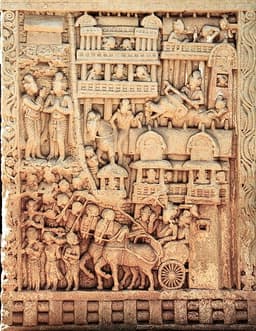
Bimbisara
Emperor · Ancient
57.3Total

Kavad II Sheroe
Emperor · Ancient
50.3Total
Basic Information
Born
-558
-590
Died
-491
—
Era
Ancient
Ancient
Nationality
India
Sasanian Empire
Occupation
Emperor
Emperor
Civilization
Indian
Middle Eastern
Score Comparison
Military (10%)
60.0
33.4
Political (20%)
60.0
68.0
Influence (20%)
55.7
56.4
Legacy (20%)
49.2
39.2
Leadership (15%)
72.0
48.4
Strategy (15%)
52.5
56.4
TOTAL
57.3
50.3
Bimbisara — Complete Timeline
550 BC
Married Princess Chellana of LicchaviPolitical Action
Bimbisara married Chellana, daughter of the Licchavi chief Chetaka of Vaishali. This marriage alliance strengthened Magadha's ties with the powerful Licchavi republic and produced his son Ajatashatru.
Marriage AllianceDiplomacy
Impact: regional
540 BC
Conquered AngaWar◆ Major
Bimbisara annexed the kingdom of Anga (modern Bihar) to the Magadha empire. This conquest gave Magadha control over the Ganges river trade route and access to the sea, strengthening its economic and military power.
ConquestMagadha Expansion
Impact: regional
530 BC
Established Diplomatic Relations with the BuddhaPolitical Action◆ Major
Bimbisara met Gautama Buddha and became a lay follower, donating the Veluvana Bamboo Grove monastery near Rajagriha. This patronage helped establish Buddhism in Magadha and provided the Buddha with a permanent residence during the rainy season.
BuddhismPatronageReligion
Impact: regionalconstructive
491 BC
Imprisoned and Killed by AjatashatruPolitical Action◆ Major
Bimbisara was imprisoned by his son Ajatashatru, who seized the throne. According to Buddhist sources, Bimbisara died in captivity, possibly by starvation or suicide. This event marked a violent succession in Magadha.
Succession CrisisPatricide
Impact: nationaltragic
Kavad II Sheroe — Complete Timeline
628 AD
Murder of Khosrow IIPolitical Action
Kavad II, then known as Sheroe, led a coup against his father Khosrow II, imprisoning and executing him. This ended Khosrow's long reign and the Sasanian war with Byzantium.
CoupPatricideSasanian Civil War
Impact: regionaldestructive
Massacre of the Sasanian PrincesPolitical Action◆ Major
Kavad II ordered the execution of 17 of his brothers to eliminate rivals to the throne. This decimated the Sasanian royal family and weakened the dynasty's legitimacy.
MassacreSuccession CrisisSasanian Empire
Impact: nationaldestructive
Peace Treaty with ByzantiumPolitical Action◆ Major
Kavad II negotiated a peace treaty with the Byzantine Empire, ending the decades-long Sasanian-Byzantine war. He returned all conquered territories, including Egypt and the Levant, to Byzantine control.
TreatyByzantine-Sasanian WarTerritorial Loss
Impact: regional
Death from PlagueOther◆ Major
Kavad II died of plague after a reign of only a few months. His death plunged the Sasanian Empire into further chaos and civil war.
DeathPlagueSasanian Empire
Impact: nationaltragic
Expert Analysis
Origins
Bimbisara was born around 558 BCE into the Haryanka dynasty of Magadha, an ancient Indian kingdom in present-day Bihar. He became king at age 15 and ruled from his capital Rajagriha. His early life is documented in Buddhist and Jain texts, which describe him as a capable administrator and diplomat. He married Chellana, a princess of the powerful Licchavi clan of Vaishali, to secure an alliance.
Kavad II, originally named Sheroe, was a Sasanian prince born in the late 6th century CE. He was the son of Khosrow II, the last great Sasanian shah. Little is known of his early life except that he grew up in the palace amid the opulence and intrigues of the Sasanian court. His father had many wives and children, and Sheroe was not initially the favored heir.
Rise to Power
Bimbisara ascended the throne of Magadha at a young age and immediately began expanding his kingdom. His first major conquest was the neighboring kingdom of Anga, which he annexed around 540 BCE. This gave Magadha control of the Ganges river trade route and access to the Bay of Bengal, boosting its economic power. He also established diplomatic relations with the Buddha, becoming a lay follower and donating the Veluvana Bamboo Grove monastery, which enhanced his prestige.
Kavad II rose to power through a palace coup in February 628 CE. Discontent with Khosrow II's long and costly wars with Byzantium, the Sasanian nobility supported Sheroe. He imprisoned his father and had him executed, then massacred 17 of his brothers to eliminate rivals. This brutal rise decimated the royal family and left the empire vulnerable.
Leadership & Governance
Bimbisara's leadership was marked by diplomacy and infrastructure. He built roads, forts, and irrigation systems, and maintained a large army. He fostered trade and agriculture, and his patronage of Buddhism helped spread the religion. His governance was stable and progressive, with a centralized administration that collected taxes efficiently. He scored 72.0 in leadership, reflecting his effective rule.
Kavad II's leadership was chaotic. He ruled only a few months and focused on consolidating power through murder. He negotiated a peace treaty with Byzantium, returning all conquered territories including Egypt, Syria, and Palestine, which ended the war but reversed his father's gains. He made no administrative reforms. His leadership score of 48.4 indicates his short, destructive reign.
Triumph & Tragedy
Bimbisara's greatest triumph was the conquest of Anga, which laid the foundation for Magadha's dominance in India. His patronage of Buddhism also had lasting cultural impact. However, his tragedy was his death: his son Ajatashatru imprisoned him and, according to sources, starved him to death. This betrayal ended his reign in sorrow.
Kavad II's triumph was ending the Sasanian-Byzantine war through a treaty that brought peace, but at a cost of returning territories. His tragedy was his own death from plague after only a few months, leaving the empire in civil war. His massacre of the princes also crippled the dynasty, leading to its eventual collapse.
Character & Destiny
Bimbisara is portrayed as wise, generous, and strategic. His support for Buddhism shows he valued religious and cultural development. His character attracted allies and fostered loyalty. However, his trust in his son proved fatal. He scored 60.0 in political acumen, indicating shrewdness but a blind spot regarding family.
Kavad II was ruthless and ambitious, willing to kill his father and brothers to seize power. His actions were driven by a desire for control, but his short reign prevented any positive legacy. His character brought about his own downfall via the plague. He scored 68.0 in politics, showing cunning, but his leadership and military scores were low.
Legacy
Bimbisara's legacy is enduring. He is remembered as the founder of Magadha's imperial power, which later culminated in the Maurya Empire under Chandragupta and Ashoka. His support for Buddhism helped it become a major world religion. His influence score is 55.7, and legacy 49.2, reflecting his foundational role.
Kavad II's legacy is mostly negative. He is remembered as a parricide and usurper who destroyed the Sasanian royal family and accelerated the empire's decline. His peace treaty with Byzantium was a strategic retreat. His influence score is 56.4, but legacy only 39.2, as his impact was destructive.
Conclusion
Bimbisara had a greater impact on history. His military and political achievements (military 60.0, political 60.0, strategy 52.5) built a kingdom that would shape India for centuries. Kavad II's actions (total score 50.3) were mainly destructive and short-lived. While Bimbisara's reign ended tragically, his positive contributions to state-building and religion outlasted him. Kavad II's brief, violent rule left a negative mark. Therefore, Bimbisara's overall score of 57.3 versus Kavad II's 50.3 reflects his more substantial and lasting impact.
Rankings
🥇
BimbisaraLeader
Mil: 60.0Pol: 60.0Inf: 55.7
57.3
🥈
Kavad II Sheroe
Mil: 33.4Pol: 68.0Inf: 56.4
50.3
+7.0 behind
How This Comparison Works
Algorithm
Each figure is scored on 6 dimensions (0—100 scale) based on structured historical data: Military (10%), Political (20%), Influence (20%), Legacy (20%), Leadership (15%), Strategy (15%). The weighted total produces the final ranking.
Data Sources
Scores are computed from structured sub-indicators in the database. Scale factors adjust for era (Ancient ×0.85, Modern ×1.0) and civilization size (Eastern ×1.05, Other ×0.80) to account for differences in population and military scale.
Maximum 3 Figures
Comparisons are limited to 2—3 figures to ensure readability and statistical meaningfulness.
Error Margins
±5 points per dimension — Sub-scores are derived from historical records with inherent uncertainty. Two figures within 5 points on a dimension should be considered roughly equivalent in that area.
Total Score Accuracy
±3 points overall — The weighted combination of 6 dimensions produces a total score with approximately ±3 points of uncertainty. Differences of less than 3 points are not statistically significant— the figures are effectively tied.
Known Limitations
- Historical records are incomplete and uneven across civilizations
- Figures from oral-tradition societies may be underrepresented
- Occupation labels can misclassify multi-role figures
- Scores measure capability and impact, not moral character
- Quantitative scoring is a comparison tool, not absolute truth
Capability Radar
Military (10%) — Battles & Warfare
Battles
45
40
Win Rate
50
39
Expansion
65
43
Political (20%) — Governance & Reform
Reform
75
0
Diplomacy
70
0
Economy
65
0
Influence (20%) — Cultural & Global Reach
Cultural
55
0
Global
40
0
Legacy (20%) — Historical Impact
Historical
60
5
Longevity
55
0
Leadership (15%) — Power & Stability
Tenure
70
10
Stability
60
0
Strategy (15%) — Tactics & Innovation
Strategy
55
44
Tactics
40
50
Reform
60
53
Similar Comparisons
Comments & Discussion
No comments yet. Be the first to share your thoughts!