Loading...
Bidhan Chandra Roy vs Ranil Wickremesinghe
Bidhan Chandra Roy leads by 11.0 pts · 2 figures compared
…

Bidhan Chandra Roy
Politician · Modern
61.7Total
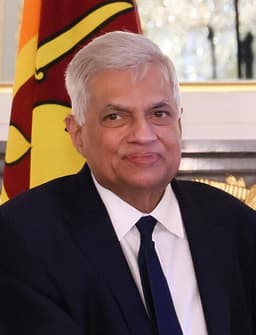
Ranil Wickremesinghe
Politician · Modern
50.7Total
Basic Information
Born
1882
1949
Died
1962
—
Era
Modern
Modern
Nationality
India
Sri Lanka
Occupation
Politician
Politician
Civilization
Indian
Indian
Score Comparison
Military (10%)
47.2
25.9
Political (20%)
68.8
45.0
Influence (20%)
60.0
54.9
Legacy (20%)
52.0
45.8
Leadership (15%)
84.5
68.0
Strategy (15%)
60.0
60.0
TOTAL
61.7
50.7
Bidhan Chandra Roy — Complete Timeline
1948 AD
Became Chief Minister of West BengalPolitical Action◆ Major
Bidhan Chandra Roy was sworn in as the Chief Minister of West Bengal, serving until his death in 1962. He led the Congress government and focused on rebuilding the state after the partition of Bengal.
Chief MinisterWest BengalCongress
Impact: regionalconstructive
1950 AD
Developed the Kolkata Metropolitan AreaReform◆ Major
Roy oversaw the development of the Kolkata Metropolitan Area, including the construction of the Kolkata Municipal Corporation building, the expansion of the city's infrastructure, and the establishment of the Kolkata Port Trust.
Urban DevelopmentKolkataInfrastructure
Impact: regionalconstructive
1951 AD
Established the Indian Institute of Technology KharagpurReform
Roy played a key role in establishing the Indian Institute of Technology (IIT) Kharagpur, the first IIT in India. The institution became a premier engineering college and a model for technical education in the country.
EducationIITTechnical Education
Impact: nationalprogressive
1952 AD
Established the West Bengal Health SchemeReform◆ Major
Roy introduced the West Bengal Health Scheme, a pioneering health insurance program for government employees. The scheme provided medical coverage and became a model for other states.
HealthInsuranceWest Bengal
Impact: regionalprogressive
1962 AD
Death and legacy as a physician and statesmanOther◆ Major
Roy died in office in 1962, leaving a legacy as a physician and builder of modern West Bengal. His birthday, July 1, is celebrated as National Doctors' Day in India in his honor.
DeathLegacyDoctors' Day
Impact: nationalconstructive
Ranil Wickremesinghe — Complete Timeline
1987 AD
Signed the Indo-Sri Lanka Peace AccordPolitical Action◆ Major
As a key negotiator, Wickremesinghe helped finalize the Indo-Sri Lanka Peace Accord, which aimed to end the Sri Lankan Civil War by devolving power to provinces and deploying Indian peacekeeping forces. The accord ultimately failed to bring lasting peace.
Peace accordIndiaCivil war
Impact: regional
1993 AD
Appointed Prime Minister for the first timePolitical Action◆ Major
Ranil Wickremesinghe was appointed Prime Minister of Sri Lanka by President D.B. Wijetunga, following the assassination of President Ranasinghe Premadasa. He led the United National Party government, beginning a long political career marked by multiple terms.
Prime MinisterUNPSri Lanka
Impact: national
2005 AD
Lost the 2005 presidential electionPolitical Action◆ Major
Wickremesinghe, as the UNP candidate, lost the presidential election to Mahinda Rajapaksa. The defeat was partly attributed to a boycott by the Tamil Tiger rebels, which suppressed voter turnout in the north and east. This loss kept him out of power for several years.
Election lossRajapaksaUNP
Impact: national
2022 AD
Became Prime Minister for a sixth timePolitical Action◆ Major
After the resignation of Mahinda Rajapaksa amid economic crisis, Wickremesinghe was appointed Prime Minister. He later became acting president and then president after Gotabaya Rajapaksa fled the country. His leadership focused on stabilizing the economy and securing an IMF bailout.
Prime MinisterEconomic crisisIMF
Impact: national
Expert Analysis
Origins
Bidhan Chandra Roy was born on July 1, 1882, in Bankipore, Bihar, India, into a Bengali Kayastha family. His father, Prakash Chandra Roy, was a deputy magistrate, and his mother, Aghorekamini Devi, was a homemaker. Roy graduated from Patna College and then studied medicine at Calcutta Medical College, later earning a MRCP and FRCS in London. He returned to India in 1911 and established a successful medical practice in Calcutta.
Ranil Wickremesinghe was born on March 24, 1949, in Colombo, Sri Lanka, into a political family. His father, Esmond Wickremesinghe, was a journalist and lawyer, and his mother, Nalini Wickremesinghe, was a teacher. He studied at Royal College, Colombo, and later earned a law degree from the University of Ceylon. He entered politics early, joining the United National Party (UNP) and becoming a Member of Parliament in 1977 at age 28.
Rise to Power
Roy entered politics through the Indian National Congress, inspired by Mahatma Gandhi. He served as the mayor of Calcutta in 1931 and was a key figure in the Civil Disobedience Movement. After India's independence, he became Chief Minister of West Bengal in 1948, a position he held until his death in 1962. His rise was marked by his dual role as a physician and statesman, gaining trust through his medical work and administrative competence.
Wickremesinghe rose within the UNP, becoming a deputy minister in 1977 and minister of education in 1980. He was appointed Prime Minister for the first time in 1993 after the assassination of President Ranasinghe Premadasa. He served as PM multiple times (1993-1994, 2001-2004, 2015-2018, 2018-2019, 2022-present) and became acting president in 2022. His rise was characterized by coalition-building and diplomatic skills, especially in negotiating the Indo-Sri Lanka Peace Accord in 1987.
Leadership & Governance
Roy's leadership style was paternalistic and reform-oriented. As Chief Minister, he focused on industrialization, education, and healthcare. He established the Indian Institute of Technology Kharagpur (1951), the first IIT, and oversaw the development of the Kolkata Metropolitan Area, including the Kolkata Municipal Corporation building and the expansion of the city's infrastructure. He introduced the West Bengal Health Scheme, a pioneering health insurance program for government employees. His governance was marked by fiscal discipline and a focus on long-term planning.
Wickremesinghe's leadership was pragmatic and diplomatic. He prioritized economic liberalization, signing free trade agreements and promoting foreign investment. He also focused on constitutional reforms to address ethnic tensions, including the 13th Amendment devolving power to provinces. However, his tenure was marred by political instability and a failure to resolve the civil war. He scored 68.0 in leadership, lower than Roy's 84.5, reflecting his inability to maintain stable governance or end the conflict.
Triumph & Tragedy
Roy's greatest triumph was transforming West Bengal into a hub of education and industry. He established multiple hospitals, including the Bidhan Chandra Roy Hospital, and expanded the Calcutta Medical College. His worst failure was his inability to address the growing communist influence in West Bengal, which later led to decades of leftist rule. He also faced criticism for not doing enough to alleviate poverty in rural areas.
Wickremesinghe's greatest triumph was his role in the Indo-Sri Lanka Peace Accord, which temporarily reduced violence. He also managed Sri Lanka's economy during periods of growth, with GDP per capita rising from $800 in 2001 to $1,600 in 2004. His worst failure was losing the 2005 presidential election, partly due to a Tamil boycott, which allowed Mahinda Rajapaksa to take power and pursue a military solution that ended the war but caused massive civilian casualties. He also presided over the 2022 economic crisis, with inflation soaring above 50%.
Character & Destiny
Roy was known for his integrity, discipline, and dedication to public service. He worked as a physician even while Chief Minister, often treating patients for free. His character shaped his destiny: his medical background gave him a pragmatic, problem-solving approach, but his reluctance to engage in partisan politics left him vulnerable to factionalism within the Congress party.
Wickremesinghe was a skilled negotiator and intellectual, but his indecisiveness and inability to build a strong political base often hampered him. He was seen as aloof and out of touch with the common Sinhalese voter, which contributed to his electoral defeats. His character led to a pattern of coming to power during crises but being unable to consolidate his position.
Legacy
Roy's legacy is enduring: he is remembered as the 'Maker of Modern West Bengal'. His birthday is celebrated as National Doctors' Day in India. IIT Kharagpur remains a premier institution, and his health schemes influenced later national policies. He scored 52.0 in legacy, reflecting his regional impact.
Wickremesinghe's legacy is mixed: he is credited with economic reforms but criticized for failing to bring peace. The Indo-Sri Lanka Accord is largely seen as a failure. He scored 45.8 in legacy, lower than Roy, as his impact is overshadowed by the civil war and economic crisis.
Conclusion
Bidhan Chandra Roy had a greater impact than Ranil Wickremesinghe. Roy's total score of 61.7 exceeds Wickremesinghe's 50.7, with a leadership score of 84.5 versus 68.0. Roy's concrete achievements—founding IIT Kharagpur, building Kolkata's infrastructure, and pioneering health insurance—created lasting institutions that continue to benefit millions. Wickremesinghe's diplomatic efforts and economic reforms, while notable, were undermined by political instability and failure to resolve Sri Lanka's core conflicts. Roy's legacy as a physician-statesman who combined expertise with governance offers a model of effective leadership that Wickremesinghe could not match.
Rankings
🥇
Bidhan Chandra RoyLeader
Mil: 47.2Pol: 68.8Inf: 60.0
61.7
🥈
Ranil Wickremesinghe
Mil: 25.9Pol: 45.0Inf: 54.9
50.7
+11.0 behind
How This Comparison Works
Algorithm
Each figure is scored on 6 dimensions (0—100 scale) based on structured historical data: Military (10%), Political (20%), Influence (20%), Legacy (20%), Leadership (15%), Strategy (15%). The weighted total produces the final ranking.
Data Sources
Scores are computed from structured sub-indicators in the database. Scale factors adjust for era (Ancient ×0.85, Modern ×1.0) and civilization size (Eastern ×1.05, Other ×0.80) to account for differences in population and military scale.
Maximum 3 Figures
Comparisons are limited to 2—3 figures to ensure readability and statistical meaningfulness.
Error Margins
±5 points per dimension — Sub-scores are derived from historical records with inherent uncertainty. Two figures within 5 points on a dimension should be considered roughly equivalent in that area.
Total Score Accuracy
±3 points overall — The weighted combination of 6 dimensions produces a total score with approximately ±3 points of uncertainty. Differences of less than 3 points are not statistically significant— the figures are effectively tied.
Known Limitations
- Historical records are incomplete and uneven across civilizations
- Figures from oral-tradition societies may be underrepresented
- Occupation labels can misclassify multi-role figures
- Scores measure capability and impact, not moral character
- Quantitative scoring is a comparison tool, not absolute truth
Capability Radar
Military (10%) — Battles & Warfare
Battles
47
46
Win Rate
44
48
Expansion
48
50
Political (20%) — Governance & Reform
Reform
75
55
Diplomacy
70
60
Economy
72
50
Influence (20%) — Cultural & Global Reach
Cultural
55
30
Global
45
40
Legacy (20%) — Historical Impact
Historical
60
40
Longevity
50
35
Leadership (15%) — Power & Stability
Tenure
65
65
Stability
68
40
Strategy (15%) — Tactics & Innovation
Strategy
50
53
Tactics
58
54
Reform
58
58
Similar Comparisons
Comments & Discussion
No comments yet. Be the first to share your thoughts!