Loading...
Arif Alvi vs Ranil Wickremesinghe
Ranil Wickremesinghe leads by 6.5 pts · 2 figures compared
…

Arif Alvi
Politician · Modern
44.2Total
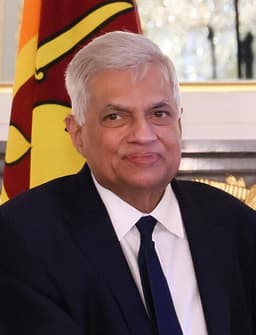
Ranil Wickremesinghe
Politician · Modern
50.7Total
Basic Information
Born
1949
1949
Died
—
—
Era
Modern
Modern
Nationality
Pakistan
Sri Lanka
Occupation
Politician
Politician
Civilization
Indian
Indian
Score Comparison
Military (10%)
43.0
25.9
Political (20%)
30.8
45.0
Influence (20%)
47.1
54.9
Legacy (20%)
36.7
45.8
Leadership (15%)
55.3
68.0
Strategy (15%)
60.0
60.0
TOTAL
44.2
50.7
Arif Alvi — Complete Timeline
1996 AD
Joined Pakistan Tehreek-e-InsafPolitical Action
Arif Alvi joined the Pakistan Tehreek-e-Insaf (PTI) party founded by Imran Khan. As an early member, he played a role in building the party's organizational structure and advocating for its anti-corruption agenda.
PTIPolitical PartyImran Khan
Impact: nationalconstructive
2013 AD
Elected to National Assembly in 2013Political Action
Arif Alvi was elected to the National Assembly of Pakistan from Karachi as a PTI candidate. His election marked the party's growing presence in urban Sindh, though he faced challenges in a competitive constituency.
National AssemblyPTIKarachi
Impact: national
2018 AD
Became President of Pakistan in 2018Political Action◆ Major
Arif Alvi was elected President of Pakistan by the electoral college, succeeding Mamnoon Hussain. His presidency was aligned with the PTI government of Imran Khan, focusing on social welfare and technology initiatives.
PresidentPakistanPTI
Impact: nationalconstructive
2019 AD
Signed the 26th Constitutional AmendmentPolitical Action
President Alvi signed the 26th Constitutional Amendment, which established the Pakistan Medical Commission and reformed medical education. The amendment was controversial, facing opposition from medical associations and political parties.
Constitutional AmendmentMedical ReformControversy
Impact: national
Ranil Wickremesinghe — Complete Timeline
1987 AD
Signed the Indo-Sri Lanka Peace AccordPolitical Action◆ Major
As a key negotiator, Wickremesinghe helped finalize the Indo-Sri Lanka Peace Accord, which aimed to end the Sri Lankan Civil War by devolving power to provinces and deploying Indian peacekeeping forces. The accord ultimately failed to bring lasting peace.
Peace accordIndiaCivil war
Impact: regional
1993 AD
Appointed Prime Minister for the first timePolitical Action◆ Major
Ranil Wickremesinghe was appointed Prime Minister of Sri Lanka by President D.B. Wijetunga, following the assassination of President Ranasinghe Premadasa. He led the United National Party government, beginning a long political career marked by multiple terms.
Prime MinisterUNPSri Lanka
Impact: national
2005 AD
Lost the 2005 presidential electionPolitical Action◆ Major
Wickremesinghe, as the UNP candidate, lost the presidential election to Mahinda Rajapaksa. The defeat was partly attributed to a boycott by the Tamil Tiger rebels, which suppressed voter turnout in the north and east. This loss kept him out of power for several years.
Election lossRajapaksaUNP
Impact: national
2022 AD
Became Prime Minister for a sixth timePolitical Action◆ Major
After the resignation of Mahinda Rajapaksa amid economic crisis, Wickremesinghe was appointed Prime Minister. He later became acting president and then president after Gotabaya Rajapaksa fled the country. His leadership focused on stabilizing the economy and securing an IMF bailout.
Prime MinisterEconomic crisisIMF
Impact: national
Expert Analysis
Origins
Arif Alvi was born in 1949 in Karachi, Pakistan, into a middle-class family. He earned a dental degree from De'Montmorency College of Dentistry in Lahore and later a master's in prosthodontics from the University of Michigan. Alvi practiced dentistry before entering politics, joining the Pakistan Tehreek-e-Insaf (PTI) in 1996 as a founding member. His early political work focused on party organization and advocacy for democratic reforms.
Ranil Wickremesinghe was born in 1949 in Colombo, Sri Lanka, into a politically prominent family. His uncle was Prime Minister Dudley Senanayake. Wickremesinghe studied law at the University of Colombo and became a lawyer. He entered parliament in 1977 as a member of the United National Party (UNP). His early career was shaped by his family's political legacy and his work on constitutional reforms.
Rise to Power
Alvi's rise was gradual within PTI. He was elected to the National Assembly in 2013 from Karachi, a key urban constituency. In 2018, after PTI's electoral victory, he was elected President of Pakistan by the electoral college, receiving 352 votes against 184 for the opponent. His presidency was largely ceremonial, but he signed several key bills, including the 26th Constitutional Amendment in 2019, which established the Pakistan Medical Commission.
Wickremesinghe first became Prime Minister in 1993 after the assassination of President Premadasa. He was a key negotiator of the Indo-Sri Lanka Peace Accord in 1987, which aimed to devolve power to Tamil regions. He lost the 2005 presidential election to Mahinda Rajapaksa, partly due to Tamil boycott. However, he returned as Prime Minister in 2015 after a coalition victory. In 2022, amid an economic crisis, he was appointed Prime Minister for a sixth time and later became acting president.
Leadership & Governance
Alvi's leadership style was low-key, focusing on ceremonial duties and signing legislation. He scored 55.3 in leadership, reflecting his limited executive role. He championed the 26th Amendment, which reformed medical education, but his influence was constrained by the prime minister's authority. Alvi also faced criticism for not vetoing controversial laws, such as the 2020 anti-rape bill criticized for its provisions.
Wickremesinghe scored 68.0 in leadership, reflecting his active governance. As prime minister, he pursued economic liberalization, including privatizing state enterprises. He negotiated the 1987 peace accord, though it failed to end the civil war. During the 2022 economic crisis, he implemented austerity measures, including tax hikes and spending cuts, to secure an IMF bailout. His governance was marked by pragmatism but also accusations of corruption and nepotism.
Triumph & Tragedy
Alvi's greatest success was his election as president, a symbol of PTI's rise. He also signed the 26th Amendment, which improved medical regulation. However, his presidency was overshadowed by PTI's internal conflicts and the 2022 no-confidence motion against Imran Khan. Alvi's failure to assert presidential independence reduced his legacy, scoring 36.7.
Wickremesinghe's triumphs include his long political career spanning six terms as PM. He played a role in the 1987 peace accord and in stabilizing the economy after the 2022 crisis. However, his tragedies include losing the 2005 election and being blamed for the failure of the peace process. His legacy is mixed, scored at 45.8, as he is seen as a skilled politician but unable to solve deep-rooted ethnic conflicts.
Character & Destiny
Alvi is described as a loyal party man, often deferring to Imran Khan. His decision to remain in the presidency despite political turmoil showed commitment but also lack of independent action. His character shaped a destiny of being a figurehead rather than a transformative leader.
Wickremesinghe is seen as a shrewd, resilient politician. His ability to return to power multiple times after defeats demonstrates persistence. However, his pragmatism sometimes led to unpopular decisions, such as austerity measures. His character of compromise and negotiation defined his career, but also limited his ability to take bold stands.
Legacy
Alvi's legacy is tied to PTI's rise and fall. He will be remembered as the first president from a non-traditional political family, but his impact on Pakistani politics is minimal. His scores in influence (47.1) and legacy (36.7) reflect this.
Wickremesinghe's legacy is more substantial. He shaped Sri Lanka's political landscape through multiple terms and economic reforms. His role in the peace process and crisis management will be studied. His total score of 50.7 compared to Alvi's 44.2 underscores his greater impact.
Conclusion
Ranil Wickremesinghe had a greater impact on his country's politics and economy than Arif Alvi. Wickremesinghe's leadership score of 68.0 and political score of 45.0 exceed Alvi's 55.3 and 30.8, respectively. While Alvi was a ceremonial president, Wickremesinghe was a key decision-maker during crises. The 6.5-point gap in total scores reflects Wickremesinghe's deeper involvement in governance and longer tenure. Alvi's legacy is overshadowed by PTI's turmoil, whereas Wickremesinghe's multiple terms and crisis management leave a more lasting mark.
Rankings
🥇
Ranil WickremesingheLeader
Mil: 25.9Pol: 45.0Inf: 54.9
50.7
🥈
Arif Alvi
Mil: 43.0Pol: 30.8Inf: 47.1
44.2
+6.5 behind
How This Comparison Works
Algorithm
Each figure is scored on 6 dimensions (0—100 scale) based on structured historical data: Military (10%), Political (20%), Influence (20%), Legacy (20%), Leadership (15%), Strategy (15%). The weighted total produces the final ranking.
Data Sources
Scores are computed from structured sub-indicators in the database. Scale factors adjust for era (Ancient ×0.85, Modern ×1.0) and civilization size (Eastern ×1.05, Other ×0.80) to account for differences in population and military scale.
Maximum 3 Figures
Comparisons are limited to 2—3 figures to ensure readability and statistical meaningfulness.
Error Margins
±5 points per dimension — Sub-scores are derived from historical records with inherent uncertainty. Two figures within 5 points on a dimension should be considered roughly equivalent in that area.
Total Score Accuracy
±3 points overall — The weighted combination of 6 dimensions produces a total score with approximately ±3 points of uncertainty. Differences of less than 3 points are not statistically significant— the figures are effectively tied.
Known Limitations
- Historical records are incomplete and uneven across civilizations
- Figures from oral-tradition societies may be underrepresented
- Occupation labels can misclassify multi-role figures
- Scores measure capability and impact, not moral character
- Quantitative scoring is a comparison tool, not absolute truth
Capability Radar
Military (10%) — Battles & Warfare
Battles
43
46
Win Rate
44
48
Expansion
52
50
Political (20%) — Governance & Reform
Reform
20
55
Diplomacy
25
60
Economy
15
50
Influence (20%) — Cultural & Global Reach
Cultural
10
30
Global
10
40
Legacy (20%) — Historical Impact
Historical
10
40
Longevity
10
35
Leadership (15%) — Power & Stability
Tenure
30
65
Stability
20
40
Strategy (15%) — Tactics & Innovation
Strategy
54
53
Tactics
58
54
Reform
59
58
Similar Comparisons
Comments & Discussion
No comments yet. Be the first to share your thoughts!