Loading...
Francesco Cossiga vs Ranil Wickremesinghe
Francesco Cossiga leads by 6.7 pts · 2 figures compared
…

Francesco Cossiga
Politician · Modern
57.4Total
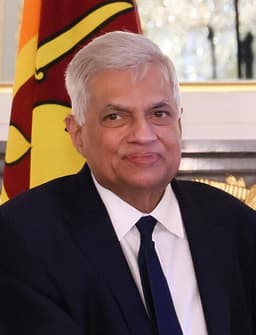
Ranil Wickremesinghe
Politician · Modern
50.7Total
Basic Information
Born
1928
1949
Died
—
—
Era
Modern
Modern
Nationality
Italy
Sri Lanka
Occupation
Politician
Politician
Civilization
Western
Indian
Score Comparison
Military (10%)
46.8
25.9
Political (20%)
68.0
45.0
Influence (20%)
62.0
54.9
Legacy (20%)
48.3
45.8
Leadership (15%)
72.0
68.0
Strategy (15%)
41.4
60.0
TOTAL
57.4
50.7
Francesco Cossiga — Complete Timeline
1976 AD
Minister of the InteriorPolitical Action◆ Major
Cossiga served as Minister of the Interior from 1976 to 1978 during the Years of Lead. He oversaw security measures against terrorism, including the response to the kidnapping and murder of Aldo Moro by the Red Brigades in 1978.
Italian PoliticsTerrorismYears of Lead
Impact: national
1979 AD
Prime Minister of ItalyPolitical Action◆ Major
Cossiga served as Prime Minister from August 1979 to October 1980. His government focused on combating terrorism and economic instability, but fell after losing parliamentary support over economic policies and the Bologna massacre.
Italian PoliticsGovernmentTerrorism
Impact: national
1985 AD
President of ItalyPolitical Action◆ Major
Cossiga was elected President of the Italian Republic in June 1985. His presidency was marked by a shift from a ceremonial role to an active political intervention, earning him the nickname 'picconatore' (pickaxe) for his attacks on the political establishment.
Italian PresidencyPolitical InterventionPicconatore
Impact: national
1992 AD
Resignation as PresidentPolitical Action◆ Major
Cossiga resigned as President in April 1992, two months before the end of his term, citing political isolation and frustration with the party system. His resignation was a dramatic gesture that highlighted the crisis of the First Italian Republic.
Italian PoliticsPresidential ResignationPolitical Crisis
Impact: nationaltragic
Senator for lifePolitical Action
After resigning as President, Cossiga automatically became a senator for life. He continued to be an active and controversial figure in Italian politics, often criticizing the political class and advocating for institutional reforms.
Italian PoliticsSenateInstitutional Reform
Impact: national
Ranil Wickremesinghe — Complete Timeline
1987 AD
Signed the Indo-Sri Lanka Peace AccordPolitical Action◆ Major
As a key negotiator, Wickremesinghe helped finalize the Indo-Sri Lanka Peace Accord, which aimed to end the Sri Lankan Civil War by devolving power to provinces and deploying Indian peacekeeping forces. The accord ultimately failed to bring lasting peace.
Peace accordIndiaCivil war
Impact: regional
1993 AD
Appointed Prime Minister for the first timePolitical Action◆ Major
Ranil Wickremesinghe was appointed Prime Minister of Sri Lanka by President D.B. Wijetunga, following the assassination of President Ranasinghe Premadasa. He led the United National Party government, beginning a long political career marked by multiple terms.
Prime MinisterUNPSri Lanka
Impact: national
2005 AD
Lost the 2005 presidential electionPolitical Action◆ Major
Wickremesinghe, as the UNP candidate, lost the presidential election to Mahinda Rajapaksa. The defeat was partly attributed to a boycott by the Tamil Tiger rebels, which suppressed voter turnout in the north and east. This loss kept him out of power for several years.
Election lossRajapaksaUNP
Impact: national
2022 AD
Became Prime Minister for a sixth timePolitical Action◆ Major
After the resignation of Mahinda Rajapaksa amid economic crisis, Wickremesinghe was appointed Prime Minister. He later became acting president and then president after Gotabaya Rajapaksa fled the country. His leadership focused on stabilizing the economy and securing an IMF bailout.
Prime MinisterEconomic crisisIMF
Impact: national
Expert Analysis
Origins
Francesco Cossiga was born on July 26, 1928, in Sassari, Sardinia, into a middle-class family. His father was a magistrate, and his mother a homemaker. Cossiga studied law at the University of Sassari, graduating in 1948. He entered academia as a professor of constitutional law before transitioning to politics. His early career was shaped by the post-war Italian Republic and the dominance of the Christian Democracy party.
Ranil Wickremesinghe was born on March 24, 1949, in Colombo, Sri Lanka, into a politically influential family. His father was a prominent lawyer and diplomat, and his mother was a socialite. Wickremesinghe studied law at the University of Ceylon and later qualified as a barrister from Lincoln's Inn. He entered parliament at a young age, representing the United National Party (UNP).
Rise to Power
Cossiga rose through the ranks of the Christian Democracy party, serving as Minister of the Interior from 1976 to 1978 during Italy's Years of Lead. He oversaw security measures against terrorism, including the capture of Red Brigades members. In August 1979, he became Prime Minister, but his government fell after just over a year due to economic instability and coalition infighting. His election as President of Italy in June 1985 marked his peak, transforming the traditionally ceremonial role into an active political force.
Wickremesinghe first became Prime Minister in May 1993 after the assassination of President Ranasinghe Premadasa. He was a key negotiator of the Indo-Sri Lanka Peace Accord in 1987, which aimed to devolve power to Tamil provinces. He lost the 2005 presidential election to Mahinda Rajapaksa, partly due to a Tamil boycott. He returned as Prime Minister in 2022 amid Sri Lanka's economic collapse, later becoming acting president.
Leadership & Governance
Cossiga's leadership style was confrontational and unpredictable. As President, he used his powers to criticize the party system, earning the nickname 'picconatore' (pickaxe) for his attacks on political institutions. He appointed technocratic governments and used his constitutional authority to influence legislation. In contrast, Wickremesinghe was a consensus-builder, often criticized for indecisiveness. As Prime Minister, he focused on economic reforms, privatization, and peace negotiations with Tamil separatists.
Triumph & Tragedy
Cossiga's greatest success was his role in combating terrorism as Interior Minister, including the capture of Red Brigades leaders. However, his presidency was marred by controversy, including his resignation in 1992 after losing support from parliament and the public. He scored 72.0 in leadership but only 41.4 in strategy, reflecting his tactical missteps.
Wickremesinghe's triumph was his role in the Indo-Sri Lanka Peace Accord, which temporarily reduced violence. His tragedy was his inability to win a presidential election and his failure to prevent the economic crisis of 2022. He scored 60.0 in strategy but only 45.0 in political acumen, indicating his weakness in electoral politics.
Character & Destiny
Cossiga was known for his sharp intellect and independent streak. His decision to resign early demonstrated his frustration with the political system. Historians view him as a transformative but divisive figure. Wickremesinghe was more pragmatic and resilient, surviving multiple political defeats. His character was marked by patience, but he lacked the charisma to inspire mass support.
Legacy
Cossiga's legacy is mixed: he challenged the traditional role of the presidency but left no enduring reforms. His impact on Italian politics is remembered through his confrontational style. Wickremesinghe's legacy is tied to his efforts for peace and economic liberalization in Sri Lanka, though the civil war continued and the economy collapsed. He scored 48.3 in legacy versus Cossiga's 48.3, showing similar long-term impact.
Conclusion
Francesco Cossiga had a greater overall impact, with a total score of 57.4 compared to Wickremesinghe's 50.7. Cossiga's higher leadership and political scores reflect his more decisive actions during a period of national crisis. While Wickremesinghe's strategic skills were notable, his inability to secure electoral victories and the ongoing turmoil in Sri Lanka diminish his comparative influence. Cossiga's role in reshaping the Italian presidency and his direct confrontation with terrorism give him the edge.
Rankings
🥇
Francesco CossigaLeader
Mil: 46.8Pol: 68.0Inf: 62.0
57.4
🥈
Ranil Wickremesinghe
Mil: 25.9Pol: 45.0Inf: 54.9
50.7
+6.7 behind
How This Comparison Works
Algorithm
Each figure is scored on 6 dimensions (0—100 scale) based on structured historical data: Military (10%), Political (20%), Influence (20%), Legacy (20%), Leadership (15%), Strategy (15%). The weighted total produces the final ranking.
Data Sources
Scores are computed from structured sub-indicators in the database. Scale factors adjust for era (Ancient ×0.85, Modern ×1.0) and civilization size (Eastern ×1.05, Other ×0.80) to account for differences in population and military scale.
Maximum 3 Figures
Comparisons are limited to 2—3 figures to ensure readability and statistical meaningfulness.
Error Margins
±5 points per dimension — Sub-scores are derived from historical records with inherent uncertainty. Two figures within 5 points on a dimension should be considered roughly equivalent in that area.
Total Score Accuracy
±3 points overall — The weighted combination of 6 dimensions produces a total score with approximately ±3 points of uncertainty. Differences of less than 3 points are not statistically significant— the figures are effectively tied.
Known Limitations
- Historical records are incomplete and uneven across civilizations
- Figures from oral-tradition societies may be underrepresented
- Occupation labels can misclassify multi-role figures
- Scores measure capability and impact, not moral character
- Quantitative scoring is a comparison tool, not absolute truth
Capability Radar
Military (10%) — Battles & Warfare
Battles
30
46
Win Rate
34
48
Expansion
38
50
Political (20%) — Governance & Reform
Reform
60
55
Diplomacy
55
60
Economy
50
50
Influence (20%) — Cultural & Global Reach
Cultural
40
30
Global
40
40
Legacy (20%) — Historical Impact
Historical
45
40
Longevity
35
35
Leadership (15%) — Power & Stability
Tenure
65
65
Stability
45
40
Strategy (15%) — Tactics & Innovation
Strategy
35
53
Tactics
40
54
Reform
44
58
Similar Comparisons
Comments & Discussion
No comments yet. Be the first to share your thoughts!