Loading...
Bhoja vs King Sejong the Great
King Sejong the Great leads by 19.0 pts · 2 figures compared
…
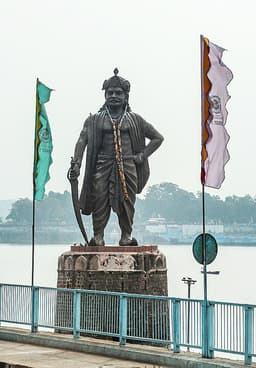
Bhoja
Emperor · Medieval
55.9Total

King Sejong the Great
Emperor · Medieval
74.9Total
Basic Information
Born
1010
1397
Died
1055
1450
Era
Medieval
Medieval
Nationality
India
Korea
Occupation
Emperor
Emperor
Civilization
Indian
Eastern
Score Comparison
Military (10%)
50.0
55.0
Political (20%)
53.8
78.0
Influence (20%)
58.3
85.0
Legacy (20%)
58.0
75.0
Leadership (15%)
53.2
78.0
Strategy (15%)
57.5
60.0
TOTAL
55.9
74.9
Bhoja — Complete Timeline
1030 AD
Patronage of the University of DharaCultural
Bhoja patronized the university at Dhara, his capital, attracting scholars from across India. He established a library and supported studies in grammar, philosophy, and astronomy. This made Dhara a major center of learning.
EducationPatronageScholarship
Impact: regionalconstructive
1040 AD
Composition of the Samarangana SutradharaCultural◆ Major
Bhoja wrote the Samarangana Sutradhara, a comprehensive treatise on architecture and engineering. The text covers temple construction, town planning, and mechanical devices. It became a foundational work in Indian architectural theory.
ArchitectureEngineeringScholarship
Impact: regionalconstructive
1042 AD
Defeat by the Chaulukya King Bhima IWar◆ Major
Bhoja's army was defeated by the Chaulukya king Bhima I of Gujarat in a battle near the Narmada River. This loss halted Paramara expansion westward and forced Bhoja to pay tribute. It marked a significant setback for his reign.
Chaulukya WarMilitary DefeatGujarat
Impact: regionaltragic
1050 AD
Construction of the Bhojeshwar TempleCultural◆ Major
Bhoja began construction of the Bhojeshwar Temple at Bhojpur, dedicated to Shiva. The temple features a massive lingam and a large dome, but was left incomplete at his death. It remains a significant example of Paramara architecture.
Temple BuildingShivaArchitecture
constructive
King Sejong the Great — Complete Timeline
1441 AD
Development of the Cheugugi (Rain Gauge)Invention◆ Major
Sejong's court invented the cheugugi, the world's first standardized rain gauge, to improve agricultural planning and tax assessment. This scientific instrument was distributed across the kingdom, enabling systematic weather data collection and enhancing state capacity to manage crop yields.
Scientific InstrumentAgricultureInnovation
Impact: nationalconstructive
1443 AD
Creation of Hangul (Hunminjeongeum)Invention
King Sejong oversaw the creation of Hangul, the Korean alphabet, promulgated in 1446 as the Hunminjeongeum. The script was designed to be easily learned by commoners, dramatically increasing literacy rates and fostering a distinct Korean cultural identity, separate from Chinese characters.
AlphabetLiteracyCultural Identity
Impact: nationalconstructive
1446 AD
Promulgation of the Gyeongguk Daejeon (National Code)Reform◆ Major
Sejong initiated the compilation of the Gyeongguk Daejeon, a comprehensive legal code that systematized Joseon's government and laws. Although completed after his death, it became the foundational legal document of the dynasty, centralizing royal authority and standardizing administration.
Legal ReformGovernanceJoseon Dynasty
Impact: nationalconstructive
Expert Analysis
Origins
Bhoja (c. 1010–1055 CE) was a Paramara king of Malwa in central India, born into a dynasty that had ruled since the 9th century. He received a thorough education in Sanskrit, statecraft, and the arts, likely at the court of his father, King Sindhuraja. The Paramara kingdom was a medium-sized power in a fragmented political landscape, surrounded by rivals like the Chaulukyas and the Chalukyas. Bhoja's early life was shaped by the need to defend and expand his realm while also patronizing culture.
King Sejong the Great (1397–1450) was born as the third son of King Taejong of Joseon, a dynasty that had recently overthrown the Goryeo kingdom. He grew up in a Confucian court that emphasized education and moral governance. His older brothers were passed over due to their behavior, and Sejong was chosen as heir apparent in 1418. He ascended the throne at age 22, inheriting a stable but centralized state that needed administrative and cultural reforms.
Rise to Power
Bhoja became king around 1010 CE after his father's death. He quickly asserted Paramara independence by resisting the expanding Chalukya empire under Vikramaditya V. His early reign saw military campaigns to secure the northern and western borders. Around 1018, he defeated the Chaulukya king Bhima I in a battle near the Narmada River, temporarily halting their advance. However, the victory was not decisive, and Bhoja later suffered a major defeat by Bhima I around 1042, which curtailed Paramara ambitions. Bhoja's rise was thus marked by mixed military fortunes, but he consolidated his rule through patronage of scholars and building projects.
Sejong's rise was smoother. He was appointed crown prince in 1418 and became king later that year when his father abdicated. His early reign focused on strengthening the bureaucracy and legal system. He surrounded himself with talented scholars from the Hall of Worthies (Jiphyeonjeon), a group of Confucian intellectuals who advised on policy and research. Sejong's power was rooted in his ability to delegate and foster innovation, rather than military conquest.
Leadership & Governance
Bhoja ruled as a traditional Hindu monarch, combining military leadership with patronage of learning. He personally composed several scholarly works, including the *Samarangana Sutradhara* (a treatise on architecture), *Yukti Kalpataru* (on statecraft), and *Sarasvati Kanthabharana* (on grammar and poetics). His governance emphasized dharma (righteous duty) and support for Brahminical culture. He established a library and university at his capital, Dhara, attracting scholars from across India. However, his military score of 50.0 reflects his inability to achieve lasting territorial expansion, as his campaigns against the Chaulukyas and others yielded mixed results.
Sejong's leadership was transformative. He prioritized the welfare of the common people, famously creating Hangul (the Korean alphabet) in 1446 to promote literacy among all classes, not just the elite. His governance was systematic: he oversaw the compilation of the *Gyeongguk Daejeon* (National Code), which standardized laws and administration. He also advanced science, ordering the development of the *cheugugi* (rain gauge) for agriculture, and improved printing technology. His political score of 78.0 and influence score of 85.0 reflect his ability to implement lasting reforms that changed Korean society.
Triumph & Tragedy
Bhoja's greatest triumph was his intellectual output. The *Samarangana Sutradhara* remains a key source on medieval Indian architecture, influencing temple construction for centuries. He also built the Bhojeshwar Temple at Bhojpur, which was meant to be one of the largest Shiva temples in India, though it was left incomplete. His patronage of Dhara university created a vibrant scholarly community. However, his military failures were his tragedy: the defeat by Bhima I around 1042 not only halted expansion but also led to the loss of some territory. His kingdom declined after his death, unable to withstand the growing power of the Chalukyas and later the Delhi Sultanate.
Sejong's triumph is the creation of Hangul, which is now the official script of both South and North Korea, with a literacy rate near 100%. His other achievements—the rain gauge, the legal code, and advancements in astronomy—show a ruler who systematically improved his kingdom. However, his tragedy lies in the suppression of his own father's authoritarian tendencies; Sejong had to balance Confucian ideals with the realities of power. Additionally, his son and successor, King Munjong, died young, and the throne passed to a child, leading to political instability. Sejong's legacy score of 75.0 reflects his enduring impact despite these setbacks.
Character & Destiny
Bhoja was a scholar-king, deeply interested in learning and the arts. His writings reveal a methodical mind, but his military decisions were sometimes overly ambitious. He scored 57.5 in strategy, indicating competence but not brilliance on the battlefield. His character—intellectual and pious—shaped a reign focused on cultural achievement rather than conquest. This ultimately limited his dynasty's power, as neighboring kingdoms grew stronger.
Sejong was pragmatic and compassionate. He personally tested Hangul's ease of learning and insisted on its use in official documents. His leadership score of 78.0 reflects his ability to inspire loyalty and innovation. He was also decisive: when faced with opposition from Confucian scholars who resisted Hangul, he overruled them. His destiny was to create a legacy that outlasted his dynasty, making him one of the most revered figures in Korean history.
Legacy
Bhoja's legacy is primarily cultural. His architectural treatise influenced temple builders across India, and his patronage helped preserve Sanskrit learning. However, his political and military achievements were ephemeral; the Paramara kingdom faded into obscurity after his death. His total score of 55.9 places him as a notable but not dominant figure in world history.
Sejong's legacy is monumental. Hangul is a unique, scientifically designed alphabet that has enabled near-universal literacy in Korea. His legal and scientific reforms laid the groundwork for Joseon's stability for centuries. Today, he is celebrated as one of the greatest Korean monarchs, with his image on the 10,000 won note. His total score of 74.9 reflects his transformative impact on Korean society and culture.
Conclusion
Sejong the Great had a greater impact than Bhoja. While both were scholar-kings, Sejong's reforms—especially the creation of Hangul—fundamentally changed the trajectory of an entire nation, fostering literacy and cultural identity that endure to this day. Bhoja's contributions, though significant in art and architecture, were more limited in scope and did not produce a lasting societal transformation. Sejong's higher scores across all categories (political, influence, legacy, leadership) support this conclusion: his total of 74.9 far exceeds Bhoja's 55.9. Sejong's achievements were more systematic, more widely disseminated, and more enduring.
Rankings
🥇
King Sejong the GreatLeader
Mil: 55.0Pol: 78.0Inf: 85.0
74.9
🥈
Bhoja
Mil: 50.0Pol: 53.8Inf: 58.3
55.9
+19.0 behind
How This Comparison Works
Algorithm
Each figure is scored on 6 dimensions (0—100 scale) based on structured historical data: Military (10%), Political (20%), Influence (20%), Legacy (20%), Leadership (15%), Strategy (15%). The weighted total produces the final ranking.
Data Sources
Scores are computed from structured sub-indicators in the database. Scale factors adjust for era (Ancient ×0.85, Modern ×1.0) and civilization size (Eastern ×1.05, Other ×0.80) to account for differences in population and military scale.
Maximum 3 Figures
Comparisons are limited to 2—3 figures to ensure readability and statistical meaningfulness.
Error Margins
±5 points per dimension — Sub-scores are derived from historical records with inherent uncertainty. Two figures within 5 points on a dimension should be considered roughly equivalent in that area.
Total Score Accuracy
±3 points overall — The weighted combination of 6 dimensions produces a total score with approximately ±3 points of uncertainty. Differences of less than 3 points are not statistically significant— the figures are effectively tied.
Known Limitations
- Historical records are incomplete and uneven across civilizations
- Figures from oral-tradition societies may be underrepresented
- Occupation labels can misclassify multi-role figures
- Scores measure capability and impact, not moral character
- Quantitative scoring is a comparison tool, not absolute truth
Capability Radar
Military (10%) — Battles & Warfare
Battles
45
30
Win Rate
50
40
Expansion
45
20
Political (20%) — Governance & Reform
Reform
65
90
Diplomacy
55
70
Economy
70
85
Influence (20%) — Cultural & Global Reach
Cultural
70
95
Global
40
85
Legacy (20%) — Historical Impact
Historical
65
90
Longevity
60
95
Leadership (15%) — Power & Stability
Tenure
60
80
Stability
60
85
Strategy (15%) — Tactics & Innovation
Strategy
50
40
Tactics
55
35
Reform
40
50
Similar Comparisons
Comments & Discussion
No comments yet. Be the first to share your thoughts!