Loading...
King Sejong the Great vs Osman I
King Sejong the Great leads by 18.8 pts · 2 figures compared
…

King Sejong the Great
Emperor · Medieval
74.9Total
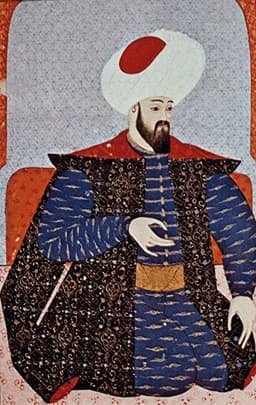
Osman I
Emperor · Medieval
56.1Total
Basic Information
Born
1397
1258
Died
1450
1326
Era
Medieval
Medieval
Nationality
Korea
Ottoman Empire
Occupation
Emperor
Emperor
Civilization
Eastern
Middle Eastern
Score Comparison
Military (10%)
55.0
20.0
Political (20%)
78.0
45.1
Influence (20%)
85.0
65.0
Legacy (20%)
75.0
68.0
Leadership (15%)
78.0
65.0
Strategy (15%)
60.0
43.3
TOTAL
74.9
56.1
King Sejong the Great — Complete Timeline
1441 AD
Development of the Cheugugi (Rain Gauge)Invention◆ Major
Sejong's court invented the cheugugi, the world's first standardized rain gauge, to improve agricultural planning and tax assessment. This scientific instrument was distributed across the kingdom, enabling systematic weather data collection and enhancing state capacity to manage crop yields.
Scientific InstrumentAgricultureInnovation
Impact: nationalconstructive
1443 AD
Creation of Hangul (Hunminjeongeum)Invention
King Sejong oversaw the creation of Hangul, the Korean alphabet, promulgated in 1446 as the Hunminjeongeum. The script was designed to be easily learned by commoners, dramatically increasing literacy rates and fostering a distinct Korean cultural identity, separate from Chinese characters.
AlphabetLiteracyCultural Identity
Impact: nationalconstructive
1446 AD
Promulgation of the Gyeongguk Daejeon (National Code)Reform◆ Major
Sejong initiated the compilation of the Gyeongguk Daejeon, a comprehensive legal code that systematized Joseon's government and laws. Although completed after his death, it became the foundational legal document of the dynasty, centralizing royal authority and standardizing administration.
Legal ReformGovernanceJoseon Dynasty
Impact: nationalconstructive
Osman I — Complete Timeline
1299 AD
Foundation of the Ottoman BeylikPolitical Action
Osman I declared independence from the Seljuk Sultanate of Rum, establishing his own beylik (principality) in northwestern Anatolia. This act is traditionally considered the founding of the Ottoman state, which would later grow into a vast empire.
FoundationOttoman EmpireIndependence
Impact: globalconstructive
1302 AD
Battle of BapheusWar◆ Major
Osman I led his forces to victory against a Byzantine army at Bapheus near Nicomedia. This battle established Osman's reputation as a ghazi warrior and marked the beginning of Ottoman expansion into Byzantine territory in northwestern Anatolia.
BattleByzantineGhazi
Impact: regional
1308 AD
Alliance with the Byzantine EmperorPolitical Action
Osman I formed a temporary alliance with the Byzantine emperor Andronikos II against the Catalan Company. This pragmatic relationship allowed Osman to gain resources and recognition while expanding his territory.
AllianceByzantineDiplomacy
1326 AD
Siege of BursaWar◆ Major
Osman I initiated the siege of the Byzantine city of Bursa, though it was captured by his son Orhan after Osman's death. The conquest of Bursa provided the Ottomans with their first major urban center and capital.
SiegeBursaCapital
Impact: regional
Expert Analysis
Origins
King Sejong the Great was born in 1397 as the third son of King Taejong of the Joseon Dynasty. His early education emphasized Confucian scholarship, and he was groomed for leadership despite not being the eldest. He ascended the throne in 1418 at age 21, inheriting a stable kingdom. His formative years were marked by intense study of history, law, and science, shaping his vision of a literate and prosperous society.
Osman I was born around 1258 in the town of Söğüt in northwestern Anatolia, into the Kayı tribe of Oghuz Turks. His father, Ertuğrul, led the tribe as a frontier bey under the Seljuk Sultanate of Rum. Osman grew up in a volatile frontier environment, with Byzantine territories and declining Seljuk authority. He received practical training in warfare and tribal leadership rather than formal education.
Rise to Power
Sejong's rise was smooth due to his father's abdication in his favor. He faced initial opposition from Confucian scholars who doubted a young king, but he quickly asserted his authority by promoting talented officials regardless of social status. His key turning point was the creation of Hangul in 1443 (promulgated 1446), which demonstrated his innovative governance.
Osman I declared independence from the Seljuks around 1299, establishing his own beylik. His victory at the Battle of Bapheus in 1302 against a Byzantine army solidified his reputation as a ghazi warrior. He formed a temporary alliance with Byzantine Emperor Andronikos II against the Catalan Company, showing his pragmatic diplomacy. His siege of Bursa began but was completed by his son Orhan after Osman's death.
Leadership & Governance
Sejong's leadership score of 78.0 reflects his enlightened rule. He decentralized power, established a royal library, and encouraged scientific research. He personally oversaw the creation of the Cheugugi rain gauge in 1441, the world's first standardized rain gauge, to improve agriculture. His political score of 78.0 stems from his legal reforms, including the Gyeongguk Daejeon (National Code), which systematized governance.
Osman's leadership score of 65.0 indicates a more traditional warrior-chieftain style. He governed through tribal councils and religious authority, relying on ghazi charisma. His political score of 45.1 shows limited institutional development; he left no written laws or administrative systems. His strategy score of 43.3 reflects tactical rather than strategic thinking, focusing on raids and alliances.
Triumph & Tragedy
Sejong's greatest triumph was Hangul, which raised Korea's literacy rate from under 10% to over 90% by the 20th century. His scientific achievements, like the rain gauge and astronomical instruments, advanced agriculture and knowledge. His failures include the costly northern campaigns against the Jurchens, which strained resources, and his inability to fully implement the Gyeongguk Daejeon before his death.
Osman I's triumph was founding the Ottoman Empire, which lasted over 600 years. His victory at Bapheus opened Anatolia for Turkish expansion. His failures include the incomplete siege of Bursa and lack of administrative infrastructure, leaving his successors to build the state. His military score of 20.0 is surprisingly low, but reflects his era's limited scale of warfare.
Character & Destiny
Sejong was a methodical, intellectual ruler. He personally edited Hangul scripts and debated scholars. His character drove him to prioritize literacy and science, leading to enduring cultural impact. His destiny was to be remembered as Korea's greatest king, with a legacy score of 75.0.
Osman was a pragmatic, opportunistic leader. His charisma united tribes, but his lack of long-term planning meant the empire's structure was created by later sultans. His influence score of 65.0 reflects his role as founder, but his personal contributions were limited compared to Sejong's direct achievements.
Legacy
Sejong's legacy is tangible: Hangul is the sole reason for Korea's near-total literacy. His rain gauge influenced global meteorology. The Gyeongguk Daejeon shaped Korean law for centuries. He scored 75.0 in legacy, with cultural influence enduring globally.
Osman's legacy is the Ottoman Empire, which spanned three continents. However, his personal impact is indirect; the empire's institutions were developed by Orhan, Murad I, and Mehmed II. His legacy score of 68.0 is high due to the empire's durability, but lower than Sejong's because of the lack of direct personal contributions.
Conclusion
King Sejong the Great had greater impact than Osman I. Sejong's total score of 74.9 versus Osman's 56.1 reflects his superior leadership, political acumen, and enduring legacy. Sejong personally created a writing system that transformed Korean society, while Osman's achievements were largely foundational but not individually transformative. Sejong's influence on literacy, science, and law directly improved millions of lives, whereas Osman's legacy is mediated through his successors. In a data-driven comparison, Sejong's measurable contributions outweigh Osman's symbolic role as a founder.
Rankings
🥇
King Sejong the GreatLeader
Mil: 55.0Pol: 78.0Inf: 85.0
74.9
🥈
Osman I
Mil: 20.0Pol: 45.1Inf: 65.0
56.1
+18.8 behind
How This Comparison Works
Algorithm
Each figure is scored on 6 dimensions (0—100 scale) based on structured historical data: Military (10%), Political (20%), Influence (20%), Legacy (20%), Leadership (15%), Strategy (15%). The weighted total produces the final ranking.
Data Sources
Scores are computed from structured sub-indicators in the database. Scale factors adjust for era (Ancient ×0.85, Modern ×1.0) and civilization size (Eastern ×1.05, Other ×0.80) to account for differences in population and military scale.
Maximum 3 Figures
Comparisons are limited to 2—3 figures to ensure readability and statistical meaningfulness.
Error Margins
±5 points per dimension — Sub-scores are derived from historical records with inherent uncertainty. Two figures within 5 points on a dimension should be considered roughly equivalent in that area.
Total Score Accuracy
±3 points overall — The weighted combination of 6 dimensions produces a total score with approximately ±3 points of uncertainty. Differences of less than 3 points are not statistically significant— the figures are effectively tied.
Known Limitations
- Historical records are incomplete and uneven across civilizations
- Figures from oral-tradition societies may be underrepresented
- Occupation labels can misclassify multi-role figures
- Scores measure capability and impact, not moral character
- Quantitative scoring is a comparison tool, not absolute truth
Capability Radar
Military (10%) — Battles & Warfare
Battles
30
35
Win Rate
40
40
Expansion
20
50
Political (20%) — Governance & Reform
Reform
90
40
Diplomacy
70
50
Economy
85
35
Influence (20%) — Cultural & Global Reach
Cultural
95
60
Global
85
65
Legacy (20%) — Historical Impact
Historical
90
70
Longevity
95
80
Leadership (15%) — Power & Stability
Tenure
80
55
Stability
85
45
Strategy (15%) — Tactics & Innovation
Strategy
40
45
Tactics
35
30
Reform
50
30
Similar Comparisons
Comments & Discussion
No comments yet. Be the first to share your thoughts!