Loading...
Bhoja vs Henry IV of England
Bhoja leads by 8.2 pts · 2 figures compared
…
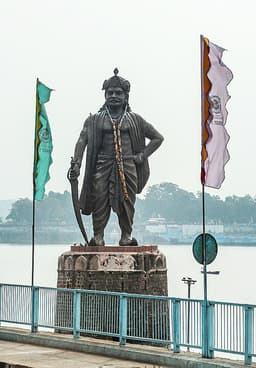
Bhoja
Emperor · Medieval
55.9Total
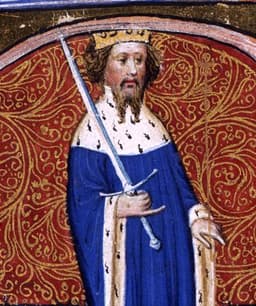
Henry IV of England
Emperor · Medieval
47.7Total
Basic Information
Born
1010
1367
Died
1055
1413
Era
Medieval
Medieval
Nationality
India
England
Occupation
Emperor
Emperor
Civilization
Indian
Western
Score Comparison
Military (10%)
50.0
55.0
Political (20%)
53.8
35.1
Influence (20%)
58.3
53.3
Legacy (20%)
58.0
45.8
Leadership (15%)
53.2
55.3
Strategy (15%)
57.5
38.3
TOTAL
55.9
47.7
Bhoja — Complete Timeline
1030 AD
Patronage of the University of DharaCultural
Bhoja patronized the university at Dhara, his capital, attracting scholars from across India. He established a library and supported studies in grammar, philosophy, and astronomy. This made Dhara a major center of learning.
EducationPatronageScholarship
Impact: regionalconstructive
1040 AD
Composition of the Samarangana SutradharaCultural◆ Major
Bhoja wrote the Samarangana Sutradhara, a comprehensive treatise on architecture and engineering. The text covers temple construction, town planning, and mechanical devices. It became a foundational work in Indian architectural theory.
ArchitectureEngineeringScholarship
Impact: regionalconstructive
1042 AD
Defeat by the Chaulukya King Bhima IWar◆ Major
Bhoja's army was defeated by the Chaulukya king Bhima I of Gujarat in a battle near the Narmada River. This loss halted Paramara expansion westward and forced Bhoja to pay tribute. It marked a significant setback for his reign.
Chaulukya WarMilitary DefeatGujarat
Impact: regionaltragic
1050 AD
Construction of the Bhojeshwar TempleCultural◆ Major
Bhoja began construction of the Bhojeshwar Temple at Bhojpur, dedicated to Shiva. The temple features a massive lingam and a large dome, but was left incomplete at his death. It remains a significant example of Paramara architecture.
Temple BuildingShivaArchitecture
constructive
Henry IV of England — Complete Timeline
1399 AD
Usurpation of the ThronePolitical Action◆ Major
Henry Bolingbroke deposed Richard II and claimed the English throne as Henry IV. This usurpation established the Lancastrian dynasty but created a legitimacy crisis that led to future conflicts.
UsurpationLancasterSuccession
Impact: national
1403 AD
Battle of ShrewsburyWar◆ Major
Henry IV defeated a rebellion led by Henry Percy (Hotspur) at the Battle of Shrewsbury. Hotspur was killed, and the rebellion was crushed, but the king suffered heavy casualties and ongoing challenges.
BattleRebellionPercy
Impact: nationaldestructive
1405 AD
Execution of Archbishop ScropePolitical Action◆ Major
Henry IV ordered the execution of Richard Scrope, Archbishop of York, for leading a rebellion. This act shocked the church and nobility, damaging Henry's reputation and legitimacy.
ExecutionChurchRebellion
Impact: nationaldestructive
Illness and DeclineOther
Henry IV suffered from a debilitating illness, possibly leprosy or epilepsy, which weakened his rule. He became increasingly unable to govern effectively, leading to factionalism and his son's growing influence.
IllnessDecline
Impact: nationaltragic
Expert Analysis
Origins
Bhoja was born around 1000 CE into the Paramara dynasty of Malwa, central India. His father, King Sindhuraja, and mother, Queen Shashiprabha, provided a cultured upbringing. Bhoja was educated in statecraft, literature, and the sciences, showing early aptitude for scholarship. He ascended the throne in 1010 CE after his father's death.
Henry IV of England was born Henry Bolingbroke in 1367, son of John of Gaunt, Duke of Lancaster, and Blanche of Lancaster. He was raised in the English court, trained in chivalry and governance. His father was a powerful noble, and Henry spent his youth participating in tournaments and military campaigns, including the Crusades in Lithuania. He was exiled in 1398 after a dispute with Thomas Mowbray.
Rise to Power
Bhoja inherited a stable kingdom and focused on expanding Paramara influence through diplomacy and cultural patronage. His rise was gradual, marked by building alliances and promoting learning. He established Dhara as a center of education, attracting scholars like Dhanapala and Udayaditya. His military campaigns were moderate, aiming to consolidate control over central India.
Henry IV's rise was dramatic and violent. After his exile, he returned to England in 1399 while King Richard II was in Ireland. He gathered support from disaffected nobles, captured Richard, and forced his abdication. Henry was crowned king on October 13, 1399, establishing the Lancastrian dynasty. His usurpation created a precedent for deposing anointed kings, destabilizing the realm.
Leadership & Governance
Bhoja ruled as a classic Indian monarch, emphasizing dharma (righteous rule) and patronage. He wrote the Samarangana Sutradhara, a treatise on architecture, and the Yuktikalpataru, a work on statecraft. He built the Bhojeshwar Temple, a massive unfinished structure, and supported the University of Dhara. His governance was decentralized, relying on local chiefs, and he promoted trade and agriculture. His political score of 53.8 reflects moderate effectiveness.
Henry IV faced constant challenges to his legitimacy. He relied on Lancastrian supporters but struggled with Parliament and the church. He executed Archbishop Scrope in 1405 for rebellion, alienating the clergy. His leadership score of 55.3 is slightly higher than Bhoja's 53.2, but his political score of 35.1 is significantly lower, indicating poor governance. He suffered from a chronic illness that weakened his rule, leading to administrative chaos.
Triumph & Tragedy
Bhoja's greatest triumph was his intellectual legacy. He composed the Samarangana Sutradhara, which influenced Indian architecture for centuries. His patronage made Dhara a renowned center of learning. However, his military weakness was exposed by the defeat to Chaulukya king Bhima I around 1050 CE, halting Paramara expansion. The unfinished Bhojeshwar Temple symbolizes his ambitious but incomplete projects.
Henry IV's triumph was successfully usurping the throne and defeating the Percy rebellion at the Battle of Shrewsbury in 1403, killing Hotspur. This secured his reign temporarily. His tragedy was the execution of Archbishop Scrope, which damaged his moral authority and sparked long-term conflict with the church. His constant illness and inability to control the realm led to a decline in royal power, setting the stage for the Wars of the Roses.
Character & Destiny
Bhoja is remembered as a scholar-king, deeply intellectual and cultured. His writings show a systematic mind, but his military strategy score of 57.5 indicates he was cautious, not aggressive. His destiny was to be a cultural luminary rather than a conqueror, leaving a legacy of knowledge.
Henry IV was pragmatic and ruthless, willing to kill an archbishop to maintain power. His strategic score of 38.3 is low, reflecting poor long-term planning. His character—ambitious but insecure—led to a reign of constant crisis. Historians often see him as a transitional figure, overshadowed by his son Henry V.
Legacy
Bhoja's legacy is immense in Indian culture. His architectural treatise is still studied, and the Bhojeshwar Temple is a pilgrimage site. He scored 58.3 in influence and 58.0 in legacy, higher than Henry IV's 53.3 and 45.8. He is remembered as a model of enlightened kingship.
Henry IV's legacy is mixed. He established the Lancastrian dynasty but his usurpation weakened the monarchy. The Wars of the Roses stemmed from the instability he created. He is often depicted as a sickly, guilt-ridden king in Shakespeare's plays. His legacy score of 45.8 reflects his diminished historical stature.
Conclusion
Bhoja had greater impact than Henry IV. His total score of 55.9 to 47.7 reflects his superior contributions to culture, governance, and lasting influence. While Henry IV's political maneuvering changed England's dynasty, Bhoja's intellectual and architectural achievements transcended his era. Bhoja's legacy endures in texts and temples, whereas Henry IV is remembered primarily for the chaos of his reign. The scholar-king outshines the usurper.
Rankings
🥇
BhojaLeader
Mil: 50.0Pol: 53.8Inf: 58.3
55.9
🥈
Henry IV of England
Mil: 55.0Pol: 35.1Inf: 53.3
47.7
+8.2 behind
How This Comparison Works
Algorithm
Each figure is scored on 6 dimensions (0—100 scale) based on structured historical data: Military (10%), Political (20%), Influence (20%), Legacy (20%), Leadership (15%), Strategy (15%). The weighted total produces the final ranking.
Data Sources
Scores are computed from structured sub-indicators in the database. Scale factors adjust for era (Ancient ×0.85, Modern ×1.0) and civilization size (Eastern ×1.05, Other ×0.80) to account for differences in population and military scale.
Maximum 3 Figures
Comparisons are limited to 2—3 figures to ensure readability and statistical meaningfulness.
Error Margins
±5 points per dimension — Sub-scores are derived from historical records with inherent uncertainty. Two figures within 5 points on a dimension should be considered roughly equivalent in that area.
Total Score Accuracy
±3 points overall — The weighted combination of 6 dimensions produces a total score with approximately ±3 points of uncertainty. Differences of less than 3 points are not statistically significant— the figures are effectively tied.
Known Limitations
- Historical records are incomplete and uneven across civilizations
- Figures from oral-tradition societies may be underrepresented
- Occupation labels can misclassify multi-role figures
- Scores measure capability and impact, not moral character
- Quantitative scoring is a comparison tool, not absolute truth
Capability Radar
Military (10%) — Battles & Warfare
Battles
45
35
Win Rate
50
40
Expansion
45
15
Political (20%) — Governance & Reform
Reform
65
30
Diplomacy
55
35
Economy
70
25
Influence (20%) — Cultural & Global Reach
Cultural
70
30
Global
40
20
Legacy (20%) — Historical Impact
Historical
65
45
Longevity
60
30
Leadership (15%) — Power & Stability
Tenure
60
50
Stability
60
20
Strategy (15%) — Tactics & Innovation
Strategy
50
25
Tactics
55
30
Reform
40
10
Similar Comparisons
Comments & Discussion
No comments yet. Be the first to share your thoughts!