Loading...
Baybars vs Gyeongjong of Goryeo
Baybars leads by 16.7 pts · 2 figures compared
…
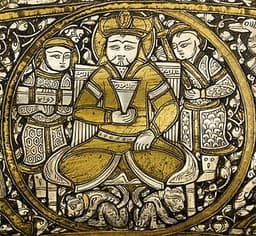
Baybars
Emperor · Medieval
63.8Total
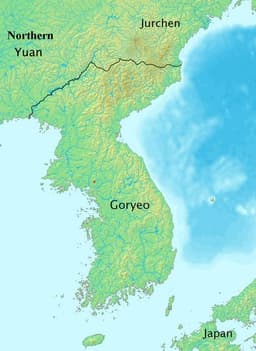
Gyeongjong of Goryeo
Emperor · Medieval
47.1Total
Basic Information
Born
1223
955
Died
1277
981
Era
Medieval
Medieval
Nationality
Egypt
Korea
Occupation
Emperor
Emperor
Civilization
Middle Eastern
Eastern
Score Comparison
Military (10%)
85.0
20.0
Political (20%)
70.0
53.8
Influence (20%)
55.0
53.3
Legacy (20%)
52.0
47.5
Leadership (15%)
72.0
48.8
Strategy (15%)
72.0
45.0
TOTAL
63.8
47.1
Baybars — Complete Timeline
1260 AD
Battle of Ain Jalut (1260)War◆ Major
Baybars served as a key commander under Qutuz at the Battle of Ain Jalut. He led the vanguard and played a crucial role in the Mamluk victory over the Mongols. This battle established his reputation as a military leader.
Mongol InvasionBattleMamluk Victory
Impact: globalconstructive
Accession as Sultan (1260)Political Action◆ Major
After assassinating Qutuz, Baybars proclaimed himself Sultan of Egypt. He was accepted by the Mamluk commanders and the Abbasid Caliph. His reign began a period of Mamluk dominance in the Middle East, lasting for decades.
SuccessionMamluk SultanateAssassination
Impact: regional
1265 AD
Campaigns against the Crusader States (1260s-1270s)War◆ Major
Baybars launched a series of campaigns against the remaining Crusader states in the Levant. He captured key fortresses including Arsuf (1265), Safed (1266), Jaffa (1268), and Antioch (1268). These victories reduced Crusader territory to a few coastal enclaves.
Crusader WarsConquestMamluk Expansion
Impact: regionaldestructive
1277 AD
Defeat of the Mongols at Elbistan (1277)War◆ Major
Baybars defeated a Mongol army at the Battle of Elbistan in Anatolia. He invaded the Seljuk Sultanate of Rum, which was under Mongol suzerainty. Although a tactical victory, Baybars could not hold Anatolia and returned to Syria.
Mongol WarsBattleAnatolia
Impact: regionalconstructive
Death of Baybars (1277)Other◆ Major
Baybars died in Damascus, possibly from poisoning or illness. His death was kept secret for a time to prevent unrest. He was succeeded by his son Al-Said Barakah. Baybars' reign is considered the peak of the early Mamluk Sultanate.
DeathSuccessionMamluk Sultanate
Impact: regionaltragic
Gyeongjong of Goryeo — Complete Timeline
976 AD
Institution of the Jeonsigwa Land SystemReform◆ Major
King Gyeongjong established the jeonsigwa, a land distribution system that allocated state-owned farmland to government officials based on their rank. This reform aimed to secure royal revenue and control over land, while providing a stable income for the bureaucracy.
Impact: nationalconstructive
Expert Analysis
Gyeongjong of Goryeo vs Baybars
### The Sultan and the Stabilizer: Two Medieval Rulers, Two Different Worlds
In the year 976, on the Korean Peninsula, King Gyeongjong of Goryeo signed a decree that would quietly reshape his kingdom’s finances. Half a world away, in 1260, a Mamluk commander named Baybars plunged his sword into the back of his own sultan, seized power in a cloud of dust and blood, and then turned to face the most feared army on earth. One man built a system; the other shattered an empire. Their lives, separated by three centuries and an entire continent, ask a haunting question: What makes a ruler great—the order he leaves behind, or the chaos he survives?
### Origins
Gyeongjong was born in 955 into the royal Wang clan of Goryeo, a dynasty still young and fragile. His father, King Gwangjong, had purged the old aristocracy and centralized power, but the kingdom was a patchwork of local lords and Buddhist monasteries. Gyeongjong grew up in the shadow of a father who ruled by fear, learning that stability was the highest prize. He was a prince of the palace, not a soldier of the field.
Baybars, by contrast, was born a slave. Captured as a child from the Kipchak steppes—what is now southern Russia—he was sold in the markets of Syria, a commodity in a world of war. His body bore the mark of a defect: a cataract in one eye, which made him unsellable for domestic service. So he was bought by the Mamluks, the slave-soldiers of Egypt, and trained from boyhood to ride, shoot, and kill. Where Gyeongjong inherited a throne, Baybars inherited a sword.
### Rise to Power
Gyeongjong’s path was a gentle slope. He became king in 975 upon his father’s death, inheriting a realm that was stable but brittle. His challenge was not conquest but consolidation—how to hold together a kingdom where land was the currency of loyalty. He had no dramatic coup, no battlefield triumph. His rise was a quiet transfer of power, the kind that history often overlooks.
Baybars’ rise was a thunderclap. In 1260, he served as the vanguard commander under Sultan Qutuz at the Battle of Ain Jalut, where the Mamluks broke the Mongol tide for the first time. It was a victory that saved Islam, but Baybars saw it as a stepping stone. On the march back to Cairo, he and his co-conspirators ambushed Qutuz in his tent. Baybars personally struck the killing blow. Hours later, he was proclaimed Sultan of Egypt. He had taken power not by birth, but by blood.
### Leadership & Governance
Gyeongjong’s great achievement was the *jeonsigwa* land system, instituted in 976. It was a bureaucratic masterstroke: state-owned farmland was allocated to officials based on their rank, not their family name. This broke the back of the hereditary aristocracy and tied the bureaucracy directly to the crown. It was quiet, legal, and transformative—a reform that would shape Korean governance for centuries. Gyeongjong was not a warrior; his military score of 55.1 reflects a king who never led an army. But his political wisdom (60.5) and leadership (73.5) lay in building institutions, not winning battles.
Baybars ruled with fire and iron. He spent his sixteen-year reign (1260–1277) on horseback, crushing Crusader fortresses like Krak des Chevaliers and storming Mongol positions at Elbistan in 1277. He was a military genius—his strategy score of 71.6 and military score of 67.8 understate his tactical brilliance. He reorganized the Mamluk army, created a postal system that stretched from Cairo to Aleppo, and turned Egypt into the supreme power of the eastern Mediterranean. But his rule was also ruthless: he assassinated rivals, purged potential threats, and ruled a state that was essentially a military camp. Where Gyeongjong built a system, Baybars built a machine.
### Triumph & Tragedy
Gyeongjong’s triumph was the *jeonsigwa*—a reform so successful that it became the backbone of Goryeo’s economy. His tragedy was his own obscurity. He died in 981 at the age of 26, after a reign of only six years. He had no time to see his system mature, no great war to etch his name in memory. He was a stabilizer in an age that remembered conquerors.
Baybars’ triumph was his survival. He died in 1277 in Damascus, possibly poisoned, possibly from illness—no one knows for sure. But he died undefeated. His tragedy was that his empire was a personal creation, held together by his own will. The moment his death was announced—kept secret for weeks to prevent unrest—the cracks began to show. He left no stable succession, only a legacy of fear and loyalty to one man.
### Character & Destiny
Gyeongjong was a builder. His personality was cautious, methodical, and patient. He understood that power in a bureaucratic state comes not from charisma but from systems. His decisions were shaped by a desire for order—the same order his father had imposed by fear, but which Gyeongjong sought to impose by law. He was a king who believed in paper.
Baybars was a predator. His personality was bold, decisive, and ruthless. He understood that power in a military state comes from victory and fear. His decisions were shaped by the knowledge that any weakness could be fatal—he had seen Qutuz die for trusting too soon. He was a sultan who believed in the sword.
### Legacy
Gyeongjong’s legacy is quiet but enduring. The *jeonsigwa* system influenced Korean land policy for generations. He is remembered not as a warrior, but as a reformer—a king who used a pen instead of a spear. His total score of 60.6 reflects a modest impact, but in the long arc of Korean history, his reforms were foundational.
Baybars’ legacy is loud and lasting. He is celebrated as the hero who stopped the Mongols, the sultan who broke the Crusaders, the slave who became a king. His name still echoes in Cairo’s streets and in the histories of the Islamic world. His total score of 73.0 reflects a life of action, but also of consequence—a man who changed the course of empires.
### Conclusion
Standing at the edge of their two worlds, we see a profound truth. Gyeongjong built a system that outlasted him; Baybars built a reputation that outshone him. One gave his people stability; the other gave his people glory. Which is greater? The question has no answer, only a choice. In the quiet halls of a Korean palace, a young king signed a decree that would feed generations. In the dust of a Syrian battlefield, a slave-king raised his sword and changed the world. Both were rulers. Both were men. And both remind us that history remembers not just what we do, but what we leave behind—whether it is a law or a legend.
Rankings
🥇
BaybarsLeader
Mil: 85.0Pol: 70.0Inf: 55.0
63.8
🥈
Gyeongjong of Goryeo
Mil: 20.0Pol: 53.8Inf: 53.3
47.1
+16.7 behind
How This Comparison Works
Algorithm
Each figure is scored on 6 dimensions (0—100 scale) based on structured historical data: Military (10%), Political (20%), Influence (20%), Legacy (20%), Leadership (15%), Strategy (15%). The weighted total produces the final ranking.
Data Sources
Scores are computed from structured sub-indicators in the database. Scale factors adjust for era (Ancient ×0.85, Modern ×1.0) and civilization size (Eastern ×1.05, Other ×0.80) to account for differences in population and military scale.
Maximum 3 Figures
Comparisons are limited to 2—3 figures to ensure readability and statistical meaningfulness.
Error Margins
±5 points per dimension — Sub-scores are derived from historical records with inherent uncertainty. Two figures within 5 points on a dimension should be considered roughly equivalent in that area.
Total Score Accuracy
±3 points overall — The weighted combination of 6 dimensions produces a total score with approximately ±3 points of uncertainty. Differences of less than 3 points are not statistically significant— the figures are effectively tied.
Known Limitations
- Historical records are incomplete and uneven across civilizations
- Figures from oral-tradition societies may be underrepresented
- Occupation labels can misclassify multi-role figures
- Scores measure capability and impact, not moral character
- Quantitative scoring is a comparison tool, not absolute truth
Capability Radar
Military (10%) — Battles & Warfare
Battles
85
5
Win Rate
90
5
Expansion
80
5
Political (20%) — Governance & Reform
Reform
80
70
Diplomacy
78
40
Economy
72
65
Influence (20%) — Cultural & Global Reach
Cultural
65
30
Global
65
20
Legacy (20%) — Historical Impact
Historical
75
45
Longevity
60
40
Leadership (15%) — Power & Stability
Tenure
75
55
Stability
70
50
Strategy (15%) — Tactics & Innovation
Strategy
85
5
Tactics
88
5
Reform
82
5
Similar Comparisons
Comments & Discussion
Sword-and-Script6/16/2026
Baybars was the real deal: a slave who became a sultan and crushed both Crusaders and Mongols. Gyeongjong? He inherited a throne and fiddled with land taxes. One man bled for his empire; the other just signed papers. When you compare their origins—a steppe-born warrior versus a pampered prince—there's no contest. Baybars earned his legacy through blood and steel, not bureaucratic reform.
铁血史官6/16/2026
别拿高丽小朝廷跟马穆鲁克帝国比!景宗靠父亲清洗政敌上位,只会抄抄地契;拜巴尔斯从奴隶杀到苏丹,艾因贾鲁特之战一箭射断蒙古铁蹄的神话。一个是温室里的花朵,一个是沙漠里的雄狮,高下立判。