Loading...
Baybars vs Emperor Sujin
Baybars leads by 12.2 pts · 2 figures compared
…
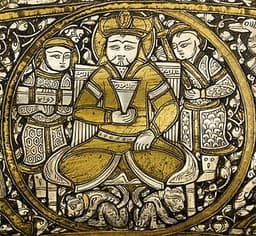
Baybars
Emperor · Medieval
63.8Total
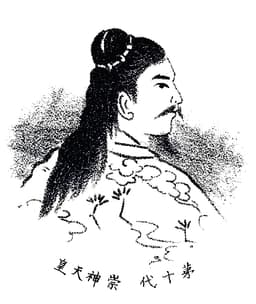
Emperor Sujin
Emperor · Ancient
51.6Total
Basic Information
Born
1223
-148
Died
1277
-30
Era
Medieval
Ancient
Nationality
Egypt
Japan
Occupation
Emperor
Emperor
Civilization
Middle Eastern
Eastern
Score Comparison
Military (10%)
85.0
50.0
Political (20%)
70.0
68.0
Influence (20%)
55.0
47.1
Legacy (20%)
52.0
43.3
Leadership (15%)
72.0
72.0
Strategy (15%)
72.0
30.3
TOTAL
63.8
51.6
Baybars — Complete Timeline
1260 AD
Battle of Ain Jalut (1260)War◆ Major
Baybars served as a key commander under Qutuz at the Battle of Ain Jalut. He led the vanguard and played a crucial role in the Mamluk victory over the Mongols. This battle established his reputation as a military leader.
Mongol InvasionBattleMamluk Victory
Impact: globalconstructive
Accession as Sultan (1260)Political Action◆ Major
After assassinating Qutuz, Baybars proclaimed himself Sultan of Egypt. He was accepted by the Mamluk commanders and the Abbasid Caliph. His reign began a period of Mamluk dominance in the Middle East, lasting for decades.
SuccessionMamluk SultanateAssassination
Impact: regional
1265 AD
Campaigns against the Crusader States (1260s-1270s)War◆ Major
Baybars launched a series of campaigns against the remaining Crusader states in the Levant. He captured key fortresses including Arsuf (1265), Safed (1266), Jaffa (1268), and Antioch (1268). These victories reduced Crusader territory to a few coastal enclaves.
Crusader WarsConquestMamluk Expansion
Impact: regionaldestructive
1277 AD
Defeat of the Mongols at Elbistan (1277)War◆ Major
Baybars defeated a Mongol army at the Battle of Elbistan in Anatolia. He invaded the Seljuk Sultanate of Rum, which was under Mongol suzerainty. Although a tactical victory, Baybars could not hold Anatolia and returned to Syria.
Mongol WarsBattleAnatolia
Impact: regionalconstructive
Death of Baybars (1277)Other◆ Major
Baybars died in Damascus, possibly from poisoning or illness. His death was kept secret for a time to prevent unrest. He was succeeded by his son Al-Said Barakah. Baybars' reign is considered the peak of the early Mamluk Sultanate.
DeathSuccessionMamluk Sultanate
Impact: regionaltragic
Emperor Sujin — Complete Timeline
100 BC
Organized the Yamato StateReform◆ Major
Emperor Sujin is recorded in the Nihon Shoki as having organized the Yamato state, establishing administrative structures and military garrisons. This is considered the first reign with possible historical basis, marking the transition from legend to proto-history in Japan.
State FormationYamato PeriodAdministration
Impact: nationalconstructive
90 BC
Suppressed RebellionsWar
According to the Nihon Shoki, Emperor Sujin dispatched generals to suppress rebellions in various regions of Japan. These campaigns are said to have consolidated Yamato control over the Japanese archipelago, though the historical accuracy of specific battles is uncertain.
Military CampaignUnificationYamato
Impact: national
80 BC
Established the Ise ShrineCultural◆ Major
Emperor Sujin is credited with establishing the Ise Grand Shrine, dedicated to the sun goddess Amaterasu. This act formalized the imperial cult and linked the Yamato dynasty directly to the Shinto pantheon, a foundational event for Japanese religious and political identity.
ShintoImperial CultReligion
Impact: nationalconstructive
Expert Analysis
Emperor Sujin vs Baybars
The Sultan and the Sage: Baybars and Emperor Sujin
In the summer of 1260, a slave-born warrior named Baybars led the vanguard of the Mamluk army into the narrow valley of Ain Jalut, in what is now the West Bank. His Mongols opponents, fresh from sacking Baghdad and seemingly unstoppable, expected easy victory. What they found instead was a trap. Baybars had lured them into a killing ground, and when the Mamluks rose from hiding, the course of history shifted. A thousand years earlier and seven thousand miles east, another ruler, Emperor Sujin, faced a different kind of challenge: not a world-conquering horde, but the chaos of a scattered archipelago. His task was not to destroy an empire, but to build one from whispers and rice paddies. One man fought with steel and blood; the other with shrines and lineage. Their stories, though separated by time and culture, reveal how power is seized and sustained—and how the same ambition can produce radically different outcomes.
Origins
Baybars was born around 1223 in the Eurasian steppes, likely among the Kipchak Turks. Captured as a child and sold into slavery, he ended up in the markets of Syria, where his fierce intelligence and physical prowess caught the eye of Mamluk recruiters. The Mamluks were an elite slave-soldier class, men bought and trained to rule. Baybars’ early life was defined by displacement, violence, and the brutal meritocracy of the barracks. He had no family name, no homeland—only the sword.
Emperor Sujin’s origins are shrouded in the mists of myth. According to the *Nihon Shoki*, compiled centuries after his reign, he was the tenth emperor of Japan, ruling from around 97 to 30 BCE. His historicity is debated, but he is considered the first emperor with plausible historical roots. Unlike Baybars, Sujin was born into power, a descendant of the sun goddess Amaterasu. Yet his Japan was a land of competing clans, where the Yamato court was little more than a primus inter pares. His legitimacy was divine, but his authority was fragile.
Rise to Power
Baybars’ rise was a story of betrayal and audacity. He fought under Sultan Qutuz at Ain Jalut in 1260, delivering the vanguard charge that broke the Mongols. But days after the victory, Baybars assassinated Qutuz on a hunting trip. The act was cold and calculated. He then proclaimed himself sultan, and the Mamluk commanders—perhaps fearing his ambition, perhaps respecting his skill—accepted him. His path to power was a knife’s edge, sharpened by blood.
Sujin’s rise was quieter. The *Nihon Shoki* records that he ascended the throne after his father, Emperor Kaika, died. There was no dramatic coup. Instead, Sujin faced a kingdom riven by internal strife: plagues, famines, and rebellions. His power came not from conquest but from ritual. He consulted oracles, moved the sacred mirror of Amaterasu to the Ise Shrine, and claimed divine mandate. His rise was a slow, ceremonial consolidation.
Leadership & Governance
Baybars ruled with iron efficiency. He reformed the Mamluk state, creating a centralized bureaucracy and a postal system that stretched from Cairo to Damascus. His military campaigns were relentless: he captured the Crusader fortresses of Arsuf, Caesarea, and Antioch, and turned the Mongols back at Elbistan in 1277. He was a strategist of the first order, using feigned retreats, scorched-earth tactics, and psychological warfare. His political wisdom was pragmatic: he forged alliances with the Byzantine Empire and the Golden Horde, playing enemies against each other.
Sujin governed through myth and structure. He is credited with organizing the Yamato state, establishing administrative districts, and sending generals to suppress rebellions. But his leadership was less about battlefield genius and more about cultural foundation. By establishing the Ise Grand Shrine, he gave Japan a spiritual center, binding the clans under a common religious identity. His strategy score of 46.8 reflects a ruler who did not command armies but shaped a civilization’s soul.
Triumph & Tragedy
Baybars’ greatest moment was the Battle of Elbistan in 1277, where he crushed a Mongol army in Anatolia, avenging the sack of Baghdad and proving that the Mongols could be beaten. But his tragedy came soon after. He died that same year in Damascus, possibly from drinking poisoned kumis, or from illness. His death was kept secret for weeks to prevent unrest. He had no time to consolidate his empire, and his successors would squander his gains.
Sujin’s triumph was the establishment of the Ise Shrine, which became the holiest site in Shinto. His tragedy was that much of his life remains legend. We do not know if he truly existed, or if his deeds were invented by later chroniclers to legitimize the Yamato line. His legacy is real, but his person is a ghost.
Character & Destiny
Baybars was ruthless, cunning, and driven. He trusted no one—perhaps because he had been a slave, a soldier, and a regicide. His leadership score of 80.2 reflects a man who could inspire loyalty and fear in equal measure. But his character also doomed him: his paranoia may have hastened his death, and his violent rise left a legacy of instability.
Sujin was a builder, not a destroyer. His high leadership score of 86.6, despite low military marks, suggests a ruler who understood that power is not always taken—it is sometimes inherited and nurtured. His destiny was to be a symbol, a link between the gods and the people. He did not need to kill to rule.
Legacy
Baybars is remembered as the greatest Mamluk sultan, a warrior who saved the Islamic world from the Mongols and drove the Crusaders from the Levant. His legacy score of 69.3 is respectable, but his name is not as famous as Saladin’s. He is a hero to specialists, not the popular imagination.
Sujin’s legacy is more diffuse but deeper. The Ise Shrine still stands, and the Yamato line he helped cement continues—unbroken, according to tradition—to this day. His influence score of 67.8 reflects a ruler whose work outlasted his own story. He is remembered not as a man but as a foundation.
Conclusion
Baybars and Sujin represent two poles of leadership: the conqueror and the organizer, the blade and the shrine. One rose from slavery to dominate a region; the other rose from divinity to define a nation. Their scores—Baybars’ total of 73.0 versus Sujin’s 62.5—suggest that history rewards the dramatic. But the quieter score may have the longer echo. In the end, the slave-sultan’s empire crumbled, while the emperor’s shrine still draws pilgrims. Perhaps the deepest lesson is this: power seized by the sword is often lost by the sword, but power built on belief endures.
Rankings
🥇
BaybarsLeader
Mil: 85.0Pol: 70.0Inf: 55.0
63.8
🥈
Emperor Sujin
Mil: 50.0Pol: 68.0Inf: 47.1
51.6
+12.2 behind
How This Comparison Works
Algorithm
Each figure is scored on 6 dimensions (0—100 scale) based on structured historical data: Military (10%), Political (20%), Influence (20%), Legacy (20%), Leadership (15%), Strategy (15%). The weighted total produces the final ranking.
Data Sources
Scores are computed from structured sub-indicators in the database. Scale factors adjust for era (Ancient ×0.85, Modern ×1.0) and civilization size (Eastern ×1.05, Other ×0.80) to account for differences in population and military scale.
Maximum 3 Figures
Comparisons are limited to 2—3 figures to ensure readability and statistical meaningfulness.
Error Margins
±5 points per dimension — Sub-scores are derived from historical records with inherent uncertainty. Two figures within 5 points on a dimension should be considered roughly equivalent in that area.
Total Score Accuracy
±3 points overall — The weighted combination of 6 dimensions produces a total score with approximately ±3 points of uncertainty. Differences of less than 3 points are not statistically significant— the figures are effectively tied.
Known Limitations
- Historical records are incomplete and uneven across civilizations
- Figures from oral-tradition societies may be underrepresented
- Occupation labels can misclassify multi-role figures
- Scores measure capability and impact, not moral character
- Quantitative scoring is a comparison tool, not absolute truth
Capability Radar
Military (10%) — Battles & Warfare
Battles
85
10
Win Rate
90
10
Expansion
80
20
Political (20%) — Governance & Reform
Reform
80
50
Diplomacy
78
30
Economy
72
30
Influence (20%) — Cultural & Global Reach
Cultural
65
30
Global
65
10
Legacy (20%) — Historical Impact
Historical
75
40
Longevity
60
30
Leadership (15%) — Power & Stability
Tenure
75
40
Stability
70
40
Strategy (15%) — Tactics & Innovation
Strategy
85
10
Tactics
88
10
Reform
82
20
Similar Comparisons
Comments & Discussion
天弓射手6/16/2026
作为一个中国历史爱好者,我必须为崇神天皇说句公道话。传说可能夸大了他的神迹,但日本列岛的统一绝非易事。大和政权在公元前一世纪面对的是分散的部落和不同的信仰体系,崇神通过祭祀、联姻和军事威慑来整合这些势力,这与拜巴尔斯用骑兵冲锋解决敌人有本质区别。一个是用文化认同铸就基业,一个是用武力维持统治,哪个更持久?
翻书老饕6/16/2026
从历史逻辑看,这场比较本身就荒唐。拜巴尔斯是在伊斯兰世界面临灭顶之灾时挺身而出,他的胜利直接导致了马穆鲁克王朝的崛起,并控制了黎凡特长达两个多世纪。崇神天皇的影响被局限在日本神话体系内,甚至连 "天皇" 这一称号都是后世汉化的产物。拜巴尔斯改变了欧亚大陆的力量格局,而崇神最多改变了日本的祖先崇拜方式。差距是 "改变世界" 和 "改变镜子里的世界" 的差别。
Historian5766/16/2026
Let’s be real: the entire comparison rests on shaky evidence. Baybars has solid documentation—Mamluk chronicles, Ibn al-Furat, contemporary letters. Sujin? We’re talking about a figure whose existence is debated, whose dates are off by centuries, and whose accomplishments are preserved in texts compiled 800 years after his supposed reign. One is history; the other is quasi-mythology. Ranking them as equals in "leadership" is comparing a verified military campaign to a hazy legend.
Historian9346/16/2026
Baybars at Ain Jalut wasn't just a general; he was a revolution. The Mamluks proved that steppe nomads could be beaten at their own game—feigned retreats, encirclement, psychological warfare. Compare that to Sujin, who allegedly pacified Japan with mythical three-legged ravens. One is a historical battle that shattered Mongol invincibility; the other is folklore dressed as statecraft. Give me battlefield tactics over divine birds any day.
Chronicler21986/16/2026
Neither leader was perfect. Baybars could be ruthlessly pragmatic—he assassinated Qutuz, his own sultan, to claim power. That’s ambition with a body count. Sujin, if he existed, supposedly spent decades consolidating rather than expanding. Different terrains, different scales. But if I had to follow one into battle tomorrow, I’d take Baybars. He proved he could beat the Mongols. Sujin never fought anything tougher than a local chieftain or a mythological goblin.