Loading...
Charles de Gaulle vs Dinh Tien Hoang
Charles de Gaulle leads by 7.8 pts · 2 figures compared
…
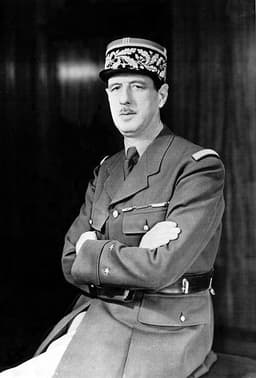
Charles de Gaulle
Politician · Modern
68.2Total
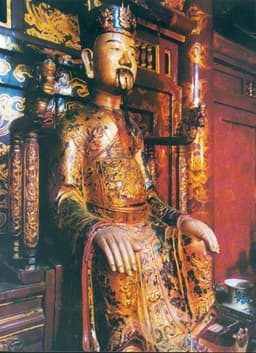
Dinh Tien Hoang
Emperor · Medieval
60.4Total
Basic Information
Born
1890
924
Died
1970
979
Era
Modern
Medieval
Nationality
France
Vietnam
Occupation
Politician
Emperor
Civilization
Western
Eastern
Score Comparison
Military (10%)
55.0
60.0
Political (20%)
75.0
72.0
Influence (20%)
65.0
65.0
Legacy (20%)
68.0
40.0
Leadership (15%)
78.0
77.2
Strategy (15%)
65.0
58.0
TOTAL
68.2
60.4
Charles de Gaulle — Complete Timeline
1940 AD
Appeal of 18 June 1940Political Action
From London, de Gaulle broadcast a radio appeal urging French resistance against Nazi occupation. He called on French soldiers and citizens to continue the fight, founding the Free French Forces and becoming the symbol of French defiance.
World War IIResistanceLeadership
Impact: nationalconstructive
1958 AD
Founding of the Fifth RepublicPolitical Action
De Gaulle returned to power during the Algerian crisis and oversaw the drafting of a new constitution. The Fifth Republic established a strong executive presidency, replacing the unstable parliamentary system of the Fourth Republic.
ConstitutionGovernment ReformPolitical System
Impact: nationalconstructive
1962 AD
End of the Algerian WarPolitical Action◆ Major
De Gaulle negotiated the
DecolonizationPeace TreatyAlgeria
Impact: regionalconstructive
1968 AD
May 1968 CrisisPolitical Action◆ Major
Mass student protests and general strikes paralyzed France, challenging de Gaulle's government. De Gaulle briefly fled to Germany, then returned to dissolve the National Assembly and call elections, which his party won, but his authority was weakened.
ProtestPolitical CrisisSocial Unrest
Impact: nationaldestructive
1969 AD
Resignation as PresidentPolitical Action
De Gaulle resigned after losing a referendum on regional reform and Senate restructuring. The defeat marked the end of his political career, as he withdrew from public life and died the following year.
ResignationPolitical DefeatReferendum
Impact: nationaltragic
Dinh Tien Hoang — Complete Timeline
968 AD
Defeat of the Twelve WarlordsWar
Dinh Bo Linh, later known as Dinh Tien Hoang, unified Vietnam by defeating the Twelve Warlords who had divided the country after the collapse of Chinese rule. He established the Dinh dynasty and became the first emperor of an independent Vietnam.
UnificationDinh DynastyVietnamese Independence
Impact: nationalconstructive
Establishment of the Dinh DynastyPolitical Action◆ Major
Dinh Tien Hoang founded the Dinh dynasty and declared himself Emperor. He moved the capital to Hoa Lu and implemented administrative reforms to consolidate power. This marked the beginning of a new era of Vietnamese independence after centuries of Chinese domination.
Dynasty FoundingCapital MoveAdministrative Reform
Impact: nationalconstructive
979 AD
Assassination of Dinh Tien HoangPolitical Action◆ Major
Dinh Tien Hoang and his crown prince were assassinated by a court official while sleeping. The murder plunged the Dinh dynasty into chaos, leading to a succession crisis and eventual takeover by Le Hoan. The assassination ended the short-lived Dinh dynasty.
AssassinationSuccession CrisisEnd of Dinh Dynasty
Impact: nationaltragic
Expert Analysis
Charles de Gaulle vs Dinh Tien Hoang
# The Voice and the Sword: Charles de Gaulle and Dinh Tien Hoang
In the summer of 1940, a tall, awkward French general stood before a microphone in a London studio and spoke words that would define a nation’s soul. Half a world away and a thousand years earlier, a Vietnamese warlord named Dinh Bo Linh rode through the rice paddies of the Red River Delta, sword in hand, determined to shatter a century of chaos. One man had only his voice; the other, only his sword. Yet both sought the same thing: to resurrect a broken homeland from the ashes of foreign domination and internal collapse. How did these two figures, separated by centuries and civilizations, come to embody the very essence of national rebirth?
Origins
Charles de Gaulle was born into a devoutly Catholic, patriotic family in Lille, 1890. His father taught him that France was a sacred idea, not merely a piece of land. The humiliation of the Franco-Prussian War still stung French pride, and young Charles absorbed a sense of destiny early. He chose the army, believing that France’s honor could be restored through discipline and sacrifice. His era was one of industrial empires, global wars, and the slow death of old Europe.
Dinh Tien Hoang, born in 924, emerged from a world where China had ruled Vietnam for a thousand years. The great Tang dynasty had collapsed, and Vietnam was torn apart by twelve local warlords who fought endlessly for scraps of power. Dinh’s father was a regional chief, but the boy grew up amid violence and division. Unlike de Gaulle, who inherited a proud but wounded nation, Dinh inherited a land that had never truly been his own people’s—a land waiting for someone to give it a name.
Rise to Power
De Gaulle’s path was slow, intellectual, and marked by frustration. He was a tank theorist in an army that worshipped the Maginot Line. His warnings about mechanized warfare were ignored. Then, in 1940, France fell in six weeks. Everything changed. On June 18, from London, de Gaulle broadcast his famous appeal: “France has lost a battle, but France has not lost the war.” He had no army, no territory, no legitimacy—only his voice and an unshakable conviction that he *was* France. That moral authority became his power base.
Dinh’s rise was faster, bloodier, and more direct. In 968, after years of campaigning, he defeated the last of the Twelve Warlords and declared himself Emperor. He moved the capital to Hoa Lu, a fortress among limestone mountains, and established the Dinh dynasty. Where de Gaulle had to persuade, Dinh had to conquer. One built his authority from exile; the other built it from the battlefield.
Leadership & Governance
De Gaulle’s leadership was defined by distance and grandeur. He believed a leader must be aloof, almost mysterious, to inspire respect. As president of the Fifth Republic, founded in 1958, he crafted a constitution that concentrated power in the executive—a system designed for his own towering figure. He ended the Algerian War in 1962 through the Évian Accords, a decision that sparked assassination attempts but also freed France from a colonial nightmare. He pursued an independent foreign policy, withdrew from NATO’s military command, and vetoed British entry into the European Economic Community. His France would bow to no one.
Dinh Tien Hoang ruled differently. His governance was pragmatic and ruthless. He centralized administration, standardized taxes, and crushed any hint of rebellion. His capital at Hoa Lu was a fortified stronghold, reflecting a ruler who trusted no one—not even his own court. He declared himself “Emperor” to erase any memory of Chinese suzerainty, establishing a Vietnamese identity that would endure for centuries. Where de Gaulle’s power came from charisma and institutions, Dinh’s came from fear and steel.
Triumph & Tragedy
De Gaulle’s greatest triumph was the restoration of French pride. He gave a defeated nation a narrative of resistance, even if the reality was more complex. The Fifth Republic became his enduring monument. But his tragedy came in 1968, when student protests and a general strike paralyzed France. The old general, who had faced Hitler and the OAS, was bewildered by the young. He briefly fled to Germany, then returned, but the magic was broken. In 1969, he lost a referendum on minor reforms and resigned. The man who had saved France twice left office in a quiet, bitter defeat.
Dinh Tien Hoang’s triumph was unification. He gave Vietnam its first independent dynasty in a thousand years. But his tragedy was sudden and brutal. In 979, he and his crown prince were assassinated in their sleep by a court official. The Dinh dynasty collapsed almost immediately, plunging Vietnam into another succession crisis. The sword that had unified the land could not protect its wielder.
Character & Destiny
De Gaulle was a man of immense pride, rigid principle, and a sense of historical destiny that bordered on the messianic. He once said, “The graveyards are full of indispensable men,” yet he acted as if he were the exception. His character drove him to resist compromise, to trust his own judgment over all others, and to treat politics as a stage for national drama. This strength saved France in 1940 and 1958, but it also isolated him in 1968.
Dinh Tien Hoang was a warrior first, a ruler second. He trusted no one, which was wise in a world of betrayal, but that suspicion ultimately failed him—he was killed by a man he should have watched. His character was forged in battle, not in debate. He saw power as something to be seized and held by force, not negotiated. That directness built a nation, but it also made his reign fragile.
Legacy
De Gaulle’s legacy is the Fifth Republic, which still governs France today. He is remembered as the man who said no to Hitler, no to the Algerian colonizers, no to American domination. His name adorns airports, aircraft carriers, and countless streets. He is a symbol of French resilience, though his authoritarian tendencies are quietly debated.
Dinh Tien Hoang’s legacy is more abstract but perhaps deeper. He is remembered as the first emperor of an independent Vietnam, the one who broke a thousand years of Chinese rule. His dynasty fell, but the idea of Vietnam did not. He is honored in temples and history books as a national founder. His sword may have rusted, but the nation he forged endures.
Conclusion
One man spoke into a microphone; the other swung a sword. De Gaulle built institutions; Dinh built a kingdom. One died in his own bed, a retired president; the other was murdered in the dark. Yet both faced the same timeless question: How do you make a broken people believe in themselves again? De Gaulle answered with words and constitutions, Dinh with blood and iron. Their differences reflect the chasm between a modern European republic and a medieval Southeast Asian empire. But their shared mission—to resurrect a nation from humiliation and chaos—speaks to something universal. In the end, every people needs a voice or a sword, and sometimes, both.
Rankings
🥇
Charles de GaulleLeader
Mil: 55.0Pol: 75.0Inf: 65.0
68.2
🥈
Dinh Tien Hoang
Mil: 60.0Pol: 72.0Inf: 65.0
60.4
+7.8 behind
How This Comparison Works
Algorithm
Each figure is scored on 6 dimensions (0—100 scale) based on structured historical data: Military (10%), Political (20%), Influence (20%), Legacy (20%), Leadership (15%), Strategy (15%). The weighted total produces the final ranking.
Data Sources
Scores are computed from structured sub-indicators in the database. Scale factors adjust for era (Ancient ×0.85, Modern ×1.0) and civilization size (Eastern ×1.05, Other ×0.80) to account for differences in population and military scale.
Maximum 3 Figures
Comparisons are limited to 2—3 figures to ensure readability and statistical meaningfulness.
Error Margins
±5 points per dimension — Sub-scores are derived from historical records with inherent uncertainty. Two figures within 5 points on a dimension should be considered roughly equivalent in that area.
Total Score Accuracy
±3 points overall — The weighted combination of 6 dimensions produces a total score with approximately ±3 points of uncertainty. Differences of less than 3 points are not statistically significant— the figures are effectively tied.
Known Limitations
- Historical records are incomplete and uneven across civilizations
- Figures from oral-tradition societies may be underrepresented
- Occupation labels can misclassify multi-role figures
- Scores measure capability and impact, not moral character
- Quantitative scoring is a comparison tool, not absolute truth
Capability Radar
Military (10%) — Battles & Warfare
Battles
60
70
Win Rate
55
75
Expansion
20
65
Political (20%) — Governance & Reform
Reform
95
70
Diplomacy
90
65
Economy
70
60
Influence (20%) — Cultural & Global Reach
Cultural
70
65
Global
80
55
Legacy (20%) — Historical Impact
Historical
85
75
Longevity
75
70
Leadership (15%) — Power & Stability
Tenure
85
60
Stability
75
55
Strategy (15%) — Tactics & Innovation
Strategy
85
70
Tactics
70
65
Reform
80
60
Similar Comparisons
Comments & Discussion
TankieBuster6/16/2026
De Gaulle gets romanticized as a lone resistance hero, but let's be real—he was a military despot who crushed the Algerian independence movement and twiddled his thumbs while Pétain ran Vichy. Dinh Tien Hoang actually unified Vietnam after a millennium of Chinese rule using force and strategy, not radio speeches. The comparison corrupts history by equating a colonial general to a true liberator. Give me the sword over the microphone any day.
数字侦探6/16/2026
数据层面看,两人根本不是一个量级。丁先皇在10世纪统一越南,终结了千年北属,人口基数几十万,军队顶天几万人。戴高乐领导自由法国时,背后是大英帝国和殖民资源,还吹嘘“声音救法国”。战争规模、人口比例、历史影响都差了两个维度,拿数据比一比,丁先皇的成就实际含金量高得多。别拿情怀糊弄人。
GallicGrouch6/16/2026
De Gaulle’s shtick about “France being herself” is just aristocratic revisionism—he wrapped his personal ambition in national grandeur. His 1958 return was a soft coup that tore up the Fourth Republic. Meanwhile, Dinh crushed 12 warlords in a medieval bloodbath and actually built a state from scratch without foreign backing. One fought rival lords; the other just fought his own politicians. Give me the warlord who got his hands dirty.
铁笔书生6/16/2026
拿戴高乐和丁先皇比,本质上是以欧洲中心主义硬套亚洲历史。戴高乐是20世纪民族主义的产物,他的“法兰西伟大”建立在二战废墟上和核武器上。丁先皇是10世纪的地方豪强,用封建手段统一分裂,两者语境完全不同。比较谁更“英雄”,是拿现代政治学词汇解构历史,忽略了时间和文化的隔阂。这种对比本身就是对历史的做作简化。
GildedCrow6/16/2026
Let’s not ignore how Dinh Tien Hoang’s unification was brutal: he executed rivals, oppressed neighboring regions, and consolidated power with feudal violence. De Gaulle, at least, had the legitimacy of 1940 London broadcasts that galvanized a nation without mass slaughter. If you want a “sword vs voice” analogy, fine—but Dinh’s sword was drenched in peasant blood. De Gaulle’s voice wasn’t pure, but he didn’t behead competitors to prove a point. Quality of leadership matters too.