Loading...
Basil I vs Zhu Wen
Basil I leads by 9.5 pts · 2 figures compared
…

Basil I
Emperor · Medieval
59.8Total
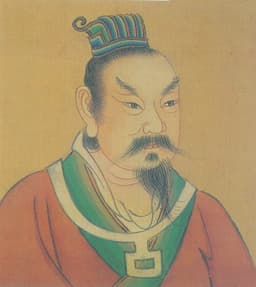
Zhu Wen
Emperor · Medieval
50.3Total
Basic Information
Born
811
852
Died
886
912
Era
Medieval
Medieval
Nationality
Byzantine Empire
China
Occupation
Emperor
Emperor
Civilization
Western
Eastern
Score Comparison
Military (10%)
60.0
72.5
Political (20%)
72.0
35.1
Influence (20%)
56.7
53.3
Legacy (20%)
52.0
45.8
Leadership (15%)
72.0
48.4
Strategy (15%)
50.0
57.5
TOTAL
59.8
50.3
Basil I — Complete Timeline
867 AD
Assassination of Michael IIIPolitical Action◆ Major
Basil I, a co-emperor under Michael III, orchestrated the murder of Michael in his palace. Basil then became sole emperor, founding the Macedonian dynasty. This act ended the Amorian dynasty and initiated a period of Byzantine resurgence.
AssassinationMacedonian DynastyCoup
Impact: nationaldestructive
876 AD
Reconquest of Southern ItalyWar
Basil I launched a campaign against the Arabs in southern Italy, capturing the city of Bari and establishing the Theme of Longobardia. This restored Byzantine control over parts of Italy and strengthened the empire's position in the Mediterranean.
ReconquestItalyArabs
Impact: regionalconstructive
879 AD
Legal Reforms: Prochiron and EpanagogeReform
Basil I commissioned the Prochiron, a legal manual, and the Epanagoge, a revised law code. These works aimed to simplify and update Roman law, replacing the earlier Ekloga and reinforcing the emperor's authority. They influenced later Byzantine legal development.
Legal ReformByzantine LawMacedonian Renaissance
Impact: nationalconstructive
Zhu Wen — Complete Timeline
881 AD
Rebellion against TangWar◆ Major
Zhu Wen, originally a rebel under Huang Chao, defected to the Tang dynasty in 882. He was granted the name Zhu Quanzhong and became a key general, eventually turning against the Tang and seizing control of the imperial court.
Tang DynastyRebellionPower Seizure
Impact: nationaldestructive
904 AD
Assassination of Emperor ZhaozongPolitical Action◆ Major
Zhu Wen ordered the murder of Emperor Zhaozong of Tang and installed the young Emperor Ai as a puppet. This act eliminated the last effective Tang ruler and paved the way for Zhu Wen's usurpation.
Tang DynastyAssassinationUsurpation
Impact: nationaldestructive
907 AD
Founded Later Liang DynastyPolitical Action
Zhu Wen forced Emperor Ai to abdicate and proclaimed himself emperor, founding the Later Liang dynasty. This ended the Tang dynasty and began the Five Dynasties and Ten Kingdoms period in China.
Five DynastiesLater LiangDynastic Change
Impact: national
910 AD
Defeated by Li Cunxu at Battle of BaixiangWar◆ Major
Zhu Wen's Later Liang forces were decisively defeated by Li Cunxu's Jin army at Baixiang. This loss weakened Later Liang's control in the north and emboldened rival states.
Later LiangJinBattle
Impact: regionaltragic
912 AD
Assassinated by his son Zhu YouguiPolitical Action◆ Major
Zhu Wen was murdered by his own son Zhu Yougui, who then seized the throne. The assassination plunged Later Liang into internal strife and contributed to its eventual collapse.
Later LiangAssassinationDynastic Crisis
Impact: nationaltragic
Expert Analysis
Origins
Basil I was born around 811 in the theme of Macedonia, likely of Armenian descent, to a peasant family. His early life was marked by poverty; he worked as a groom and later as a court servant. His fortunes changed when he caught the attention of Emperor Michael III, becoming a palace official. Zhu Wen, born in 852 in Dangshan, China, came from a scholarly family that fell into poverty. He became a bandit and later joined the Huang Chao rebellion, rising through the ranks due to his military skills. Unlike Basil, Zhu Wen's early life was shaped by rebellion and violence.
Rise to Power
Basil I rose through imperial favor. He became co-emperor in 866 after exposing a conspiracy, then orchestrated the assassination of Michael III in 867, securing sole rule. His political maneuvering scored 72.0, reflecting his adeptness at court intrigue. Zhu Wen, scoring 35.1 in political skill, rose through military prowess. He defected from Huang Chao to the Tang in 882, was granted the name Zhu Quanzhong, and gradually consolidated power. In 907, he forced Emperor Ai to abdicate, ending the Tang dynasty and founding the Later Liang. His rise was more brutal and less politically nuanced.
Leadership & Governance
Basil I's leadership (score 72.0) focused on restoring Byzantine authority. He undertook legal reforms, commissioning the Prochiron and Epanagoge to simplify Roman law, and launched military campaigns to reconquer southern Italy, capturing Bari in 876. He also defended against Arab raids and maintained internal stability. His governance was centralized and legalistic. Zhu Wen's leadership (score 48.4) was marked by instability. He established the Later Liang but faced constant rebellion from former Tang loyalists and rival warlords. His reign was characterized by ruthless elimination of rivals, including the assassination of Emperor Zhaozong in 904. He failed to build a stable administration, relying on military coercion.
Triumph & Tragedy
Basil I's greatest success was founding the Macedonian dynasty, which would lead to a Byzantine renaissance. His reconquest of southern Italy restored Byzantine influence in the West. His legal codes streamlined Byzantine law. However, his legacy is tainted by the murder of Michael III, an act of betrayal that defined his rise. His military score of 60.0 reflects mixed results; while successful in Italy, he failed to decisively defeat the Arabs. Zhu Wen's triumph was ending the Tang dynasty, a monumental shift in Chinese history. He also achieved military victories early in his career, scoring 72.5 in military. His tragedy was his inability to consolidate power; his son Zhu Yougui assassinated him in 912, plunging the Later Liang into chaos. His political score of 35.1 underscores his failure to build a lasting state.
Character & Destiny
Basil I was ambitious and ruthless, but also a capable administrator. His character combined peasant pragmatism with imperial vision. His assassination of Michael III was a calculated act, showing his willingness to seize power. In contrast, Zhu Wen was cruel and paranoid, often executing subordinates on suspicion. His murder of Emperor Zhaozong and subsequent assassination by his own son reflect a cycle of violence. Basil's destiny was to found a dynasty that lasted nearly two centuries; Zhu Wen's dynasty collapsed within a decade. Both men were shaped by their environments: Basil by Byzantine court intrigue, Zhu Wen by the chaos of Tang's collapse.
Legacy
Basil I's legacy is substantial, scoring 52.0. The Macedonian dynasty he founded oversaw a cultural and military revival, including the spread of Orthodox Christianity to the Slavs. His legal codes influenced Byzantine law for centuries. Zhu Wen's legacy (45.8) is more negative; he is remembered as the usurper who ended the Tang, a golden age, and ushered in the Five Dynasties and Ten Kingdoms period, a time of disunity. While he founded the Later Liang, it was short-lived and unstable. His influence on Chinese history is significant but largely as a destroyer rather than a builder.
Conclusion
Basil I had greater impact than Zhu Wen. His overall score of 59.8 vs. 50.3 reflects a more successful reign. Basil founded a dynasty that brought stability and cultural flourishing, while Zhu Wen's rule was chaotic and brief. Basil's political and leadership scores (72.0 each) contrast sharply with Zhu Wen's (35.1 and 48.4). Although Zhu Wen was a better military commander (72.5 vs. 60.0), his inability to govern effectively negated his military gains. Basil's legal reforms and territorial reconquests had lasting positive effects, whereas Zhu Wen's legacy is primarily negative. Thus, Basil I stands as the more consequential figure.
Rankings
🥇
Basil ILeader
Mil: 60.0Pol: 72.0Inf: 56.7
59.8
🥈
Zhu Wen
Mil: 72.5Pol: 35.1Inf: 53.3
50.3
+9.5 behind
How This Comparison Works
Algorithm
Each figure is scored on 6 dimensions (0—100 scale) based on structured historical data: Military (10%), Political (20%), Influence (20%), Legacy (20%), Leadership (15%), Strategy (15%). The weighted total produces the final ranking.
Data Sources
Scores are computed from structured sub-indicators in the database. Scale factors adjust for era (Ancient ×0.85, Modern ×1.0) and civilization size (Eastern ×1.05, Other ×0.80) to account for differences in population and military scale.
Maximum 3 Figures
Comparisons are limited to 2—3 figures to ensure readability and statistical meaningfulness.
Error Margins
±5 points per dimension — Sub-scores are derived from historical records with inherent uncertainty. Two figures within 5 points on a dimension should be considered roughly equivalent in that area.
Total Score Accuracy
±3 points overall — The weighted combination of 6 dimensions produces a total score with approximately ±3 points of uncertainty. Differences of less than 3 points are not statistically significant— the figures are effectively tied.
Known Limitations
- Historical records are incomplete and uneven across civilizations
- Figures from oral-tradition societies may be underrepresented
- Occupation labels can misclassify multi-role figures
- Scores measure capability and impact, not moral character
- Quantitative scoring is a comparison tool, not absolute truth
Capability Radar
Military (10%) — Battles & Warfare
Battles
55
65
Win Rate
60
60
Expansion
55
55
Political (20%) — Governance & Reform
Reform
70
25
Diplomacy
65
35
Economy
70
30
Influence (20%) — Cultural & Global Reach
Cultural
60
25
Global
55
15
Legacy (20%) — Historical Impact
Historical
70
45
Longevity
65
20
Leadership (15%) — Power & Stability
Tenure
75
40
Stability
65
20
Strategy (15%) — Tactics & Innovation
Strategy
55
60
Tactics
50
55
Reform
60
30
Similar Comparisons
Comments & Discussion
No comments yet. Be the first to share your thoughts!