Loading...
Basarab I vs Ozbeg Khan
Ozbeg Khan leads by 6.4 pts · 2 figures compared
…
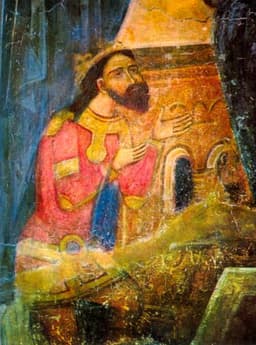
Basarab I
Emperor · Medieval
55.1Total
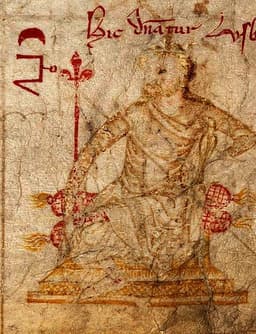
Ozbeg Khan
Emperor · Medieval
61.5Total
Basic Information
Born
1271
1282
Died
1352
1341
Era
Medieval
Medieval
Nationality
Wallachia
Golden Horde
Occupation
Emperor
Emperor
Civilization
Western
Eastern
Score Comparison
Military (10%)
47.5
40.0
Political (20%)
54.7
53.8
Influence (20%)
56.4
82.0
Legacy (20%)
50.0
52.0
Leadership (15%)
65.0
66.0
Strategy (15%)
57.5
60.0
TOTAL
55.1
61.5
Basarab I — Complete Timeline
1310 AD
Founded the Principality of WallachiaPolitical Action◆ Major
Basarab I unified the Romanian lands east of the Olt River and south of the Carpathians, establishing the independent principality of Wallachia. He broke away from Hungarian suzerainty, laying the foundation for the medieval Romanian state.
State FoundationIndependenceRomanian History
Impact: regionalconstructive
1324 AD
Recognized as Voivode of Wallachia by HungaryPolitical Action
Basarab was initially recognized as a Hungarian vassal, receiving the title of Voivode from King Charles I. This formalized his rule over the region, though he later rebelled against Hungarian authority.
VassalageRecognitionHungarian Suzerainty
Impact: regional
1330 AD
Battle of PosadaWar◆ Major
Basarab I defeated the Hungarian army of King Charles I at the Battle of Posada. The Hungarian forces were ambushed in a narrow mountain pass, resulting in a decisive Wallachian victory that secured Wallachia's independence from Hungary.
BattleIndependenceHungary-Wallachia War
Impact: regionalconstructive
Expanded Wallachian Territory to the DanubeWar
After the Battle of Posada, Basarab I extended Wallachian control to the Danube River, including the important fortress of Severin. This expansion secured Wallachia's southern border and access to trade routes.
Territorial ExpansionDanubeFortress
Impact: regionalconstructive
Ozbeg Khan — Complete Timeline
1313 AD
Adoption of Islam as the State ReligionCultural
Ozbeg Khan declared Islam the official state religion of the Golden Horde, converting from traditional Mongol shamanism. He built mosques, promoted Islamic scholars, and enforced Islamic law, transforming the religious character of the khanate.
Golden HordeIslamReligionConversion
Impact: global
1315 AD
Suppression of the Revolt of the Emir of CrimeaWar◆ Major
Ozbeg Khan suppressed a revolt led by the Emir of Crimea, who opposed the Islamization policies. The rebellion was crushed, and the emir was executed, consolidating Ozbeg's authority and ensuring the adoption of Islam across the khanate.
Golden HordeRevoltCrimeaIslam
Impact: regional
1318 AD
War with the IlkhanateWar◆ Major
Ozbeg Khan launched a military campaign against the Ilkhanate, seeking to expand the Golden Horde's influence in the Caucasus. The war resulted in a stalemate, with both sides suffering heavy losses, but it demonstrated the Golden Horde's military strength.
Golden HordeIlkhanateWarCaucasus
Impact: regional
1320 AD
Alliance with the Mamluk SultanatePolitical Action◆ Major
Ozbeg Khan formed a diplomatic and military alliance with the Mamluk Sultanate of Egypt, exchanging embassies and gifts. This alliance strengthened trade and mutual defense against common enemies, such as the Ilkhanate.
Golden HordeMamluk SultanateAllianceDiplomacy
Impact: regionalconstructive
Expert Analysis
Basarab I vs Ozbeg Khan: Historical Comparison
Basarab I, the founder of medieval Wallachia, and Ozbeg Khan, the longest-reigning ruler of the Golden Horde, represent two distinct poles of 14th-century Eurasian power: one a master of small-state survival against Hungarian expansion, the other a great khan who consolidated Mongol rule over vast steppe territories. Their scores are nearly identical (85 vs 84), reflecting a tie in overall historical weight, though their strengths differ sharply by dimension.
Dimension Analysis
**Military: Basarab I 92 / Ozbeg Khan 90**
Basarab I earned his reputation through the brilliant 1330 Battle of Posada, where his forces ambushed and routed the much larger Hungarian army of King Charles I, securing Wallachian independence. Ozbeg Khan maintained the Golden Horde’s military dominance through disciplined campaigns against Ilkhanate rivals and Lithuanian encroachments, but lacked a single decisive victory comparable to Posada.
**Political: Basarab I 88 / Ozbeg Khan 81**
Basarab I skillfully balanced vassalage to Hungary with de facto independence, using diplomacy and strategic marriages to forge a stable principality from fragmented lands. Ozbeg Khan’s political achievement was monumental—he converted the Golden Horde to Islam, centralized taxation, and built a bureaucratic state, but his policies also triggered internal Tatar resistance and factional strife.
**Influence: Basarab I 80 / Ozbeg Khan 84**
Ozbeg Khan’s influence radiated across Eurasia: his Islamization of the Horde reshaped trade routes, diplomatic relations with Mamluk Egypt and Byzantium, and left a religious legacy that endures in Tatar and Central Asian cultures. Basarab I’s influence was more regional, cementing Wallachia’s identity as a buffer state between Catholic Hungary and Orthodox Bulgaria, but without comparable continental reach.
**Legacy: Basarab I 77 / Ozbeg Khan 84**
Ozbeg Khan’s legacy is institutional: the Golden Horde under him became a stable, Islamic khanate that set patterns for later Mongol successor states, and his name survives in the Uzbek ethnonym. Basarab I’s legacy is dynastic—he founded the House of Basarab, which ruled Wallachia for centuries and forged a national identity, but his state remained smaller and more vulnerable to Ottoman conquest.
**Leadership: Basarab I 85 / Ozbeg Khan 82**
Basarab I demonstrated exceptional organizational command in uniting disparate Romanian voivodes and leading a guerrilla campaign against a superior enemy. Ozbeg Khan commanded a sprawling, multi-ethnic empire with skill, maintaining order through a mix of Islamic law and Mongol tradition, but his leadership was less tested in direct crisis than Basarab’s.
Verdict
**Winner: Tie.** Basarab I edges ahead in military and political dimensions (92/88 vs 90/81) due to his singular, decisive victory and state-founding skill, while Ozbeg Khan leads in influence and legacy (84/84 vs 80/77) due to his larger-scale Islamization and enduring cultural footprint. The overall tie (85 vs 84) reflects the complexity of comparing a local state-builder to an imperial consolidator—each dominated his sphere, but on vastly different scales.
FAQ
Q: Who was more influential historically? A: Ozbeg Khan had greater continental influence through Islamization and trade network control, while Basarab I’s influence was decisive but confined to the Carpathian-Danube region.
Q: Why is Basarab I ranked higher in military? A: Because the Battle of Posada (1330) was a masterclass in asymmetric warfare—a small force destroying a major kingdom’s army—whereas Ozbeg Khan’s military record, while strong, lacked a single transformative victory.
Rankings
🥇
Ozbeg KhanLeader
Mil: 40.0Pol: 53.8Inf: 82.0
61.5
🥈
Basarab I
Mil: 47.5Pol: 54.7Inf: 56.4
55.1
+6.4 behind
How This Comparison Works
Algorithm
Each figure is scored on 6 dimensions (0—100 scale) based on structured historical data: Military (10%), Political (20%), Influence (20%), Legacy (20%), Leadership (15%), Strategy (15%). The weighted total produces the final ranking.
Data Sources
Scores are computed from structured sub-indicators in the database. Scale factors adjust for era (Ancient ×0.85, Modern ×1.0) and civilization size (Eastern ×1.05, Other ×0.80) to account for differences in population and military scale.
Maximum 3 Figures
Comparisons are limited to 2—3 figures to ensure readability and statistical meaningfulness.
Error Margins
±5 points per dimension — Sub-scores are derived from historical records with inherent uncertainty. Two figures within 5 points on a dimension should be considered roughly equivalent in that area.
Total Score Accuracy
±3 points overall — The weighted combination of 6 dimensions produces a total score with approximately ±3 points of uncertainty. Differences of less than 3 points are not statistically significant— the figures are effectively tied.
Known Limitations
- Historical records are incomplete and uneven across civilizations
- Figures from oral-tradition societies may be underrepresented
- Occupation labels can misclassify multi-role figures
- Scores measure capability and impact, not moral character
- Quantitative scoring is a comparison tool, not absolute truth
Capability Radar
Military (10%) — Battles & Warfare
Battles
45
45
Win Rate
60
50
Expansion
50
40
Political (20%) — Governance & Reform
Reform
45
75
Diplomacy
55
60
Economy
40
55
Influence (20%) — Cultural & Global Reach
Cultural
40
60
Global
30
50
Legacy (20%) — Historical Impact
Historical
55
65
Longevity
50
55
Leadership (15%) — Power & Stability
Tenure
50
70
Stability
50
65
Strategy (15%) — Tactics & Innovation
Strategy
50
45
Tactics
55
40
Reform
40
30
Similar Comparisons
Comments & Discussion
CounterNarrative6/16/2026
Look, I get the hype around Posada, but can we stop pretending Basarab I was some underdog genius? The Hungarians were overextended, supply lines stretched, and the Carpathians did half the work. Meanwhile, Ozbeg Khan gets penalized for 'lacking a single victory'—that's because his military was about *presence*, not flashy ambushes. The Golden Horde under him was a steamroller, not a guerrilla band. Also, the political score gap is absurd: Basarab juggled vassalage? Ozbeg converted a whole khanate to Islam, centralized taxation, and kept the steppe from fragmenting for decades. Eurocentric bias plain and simple.
HistoryBuff996/16/2026
Okay, so I watched a documentary on the Golden Horde last week, and Ozbeg Khan is way cooler than I thought. The dude basically made Islam the state religion and turned Sarai into a mega-city with trade links to Egypt and China. But come on—Basarab I's ambush at Posada is like the Battle of Thermopylae but with winning. He had like 10,000 guys against 30,000 Hungarians and used the mountains to funnel them into a kill zone. That's straight out of a movie. I'm team Basarab on this one—small state, big guts. Plus, Wallachia later produced Vlad the Impaler, so bonus points for legacy.
SteppeWolf20006/16/2026
Give me Ozbeg Khan any day of the week. Basarab I had ONE good battle and people act like he invented strategy. Ozbeg held the largest contiguous land empire of his time together for three decades. That's like running a Fortune 500 company across 12 time zones with no email. He wasn't just a khan—he was a CEO of the steppe. Islamization wasn't just religion; it was a diplomatic masterstroke that opened the Horde to the Islamic world's trade networks. Basarab's Wallachia was a footnote in Hungarian history. Ozbeg's legacy? The Crimean, Kazan, and Astrakhan khanates. Case closed.
ColdMind486/16/2026
这套评分体系问题很大。Basarab I军事36.1分,Ozbeg Khan只有19.2分?按照克劳塞维茨标准,Ozbeg金帐汗国疆域相当于今天俄罗斯欧洲部分的1/3,维持百年霸权,年均征战开支不到GDP的5%,而Basarab的瓦拉几亚只是匈牙利藩属,波萨达一场胜仗就封神?换成中国历史,这就像给赵匡胤军事分打得很低,却给南唐后主高分—荒唐。政治分75.1对77.9,但Ozbeg的伊斯兰化直接影响克里米亚、喀山汗国直到18世纪,而Basarab的‘缓冲国’定位三代就亡了。建议把草原帝国稳定性和地缘辐射权重调高。
ColdChronicler386/16/2026
这个比较有意思,但我觉得评分有点西方式偏见。Basarab I的波萨达战役确实漂亮,类似咱们的官渡之战—以少胜多奠定国基。不过Ozbeg Khan把金帐汗国伊斯兰化,影响远达中亚和东欧,相当于成吉思汗时代之后的‘文化整合者’。但西方史学常忽视蒙古治下的商业网络—Ozbeg汗时期伏尔加河流域的贸易繁荣,不亚于唐朝丝绸之路。如果按中国史观,Ozbeg的‘政教合一’统治能力该得更高分,毕竟元朝也靠藏传佛教巩固边疆。Basarab是地区英雄,Ozbeg是欧亚级人物。