Loading...
Bappa Rawal vs Yuwen Yong
Yuwen Yong leads by 19.4 pts · 2 figures compared
…
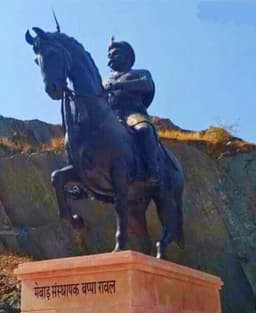
Bappa Rawal
Emperor · Medieval
47.8Total
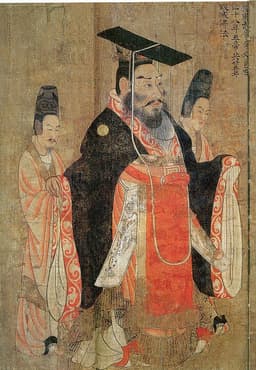
Yuwen Yong
Emperor · Medieval
67.2Total
Basic Information
Born
713
543
Died
780
578
Era
Medieval
Medieval
Nationality
India
China
Occupation
Emperor
Emperor
Civilization
Indian
Eastern
Score Comparison
Military (10%)
10.0
78.0
Political (20%)
35.1
78.0
Influence (20%)
58.0
58.0
Legacy (20%)
50.0
54.0
Leadership (15%)
67.0
85.0
Strategy (15%)
45.0
69.1
TOTAL
47.8
67.2
Bappa Rawal — Complete Timeline
734 AD
Conquest of ChittorWar◆ Major
Bappa Rawal captured the fort of Chittor from the Mori Rajputs, establishing it as the capital of the Mewar kingdom. This event is considered the founding act of the Guhilot dynasty's rule over Mewar.
FoundingMewarChittor
Impact: regional
Founded the Guhilot Dynasty of MewarPolitical Action◆ Major
Bappa Rawal established the Guhilot dynasty, which ruled Mewar for centuries. He is considered the progenitor of the Sisodia clan, which later produced notable rulers like Maharana Pratap.
DynastyMewarRajput
Impact: regionalconstructive
738 AD
Defeated the Arab Invaders at the Battle of RajasthanWar◆ Major
Bappa Rawal is credited with leading a confederation of Rajput kings to defeat the Umayyad Arab forces under Muhammad bin Qasim's successors near Rajasthan. This victory halted Arab expansion into northern India.
Arab InvasionDefenseRajput Confederation
Impact: regional
Yuwen Yong — Complete Timeline
574 AD
Suppression of Buddhism in Northern ZhouReform◆ Major
Emperor Wu of Northern Zhou (Yuwen Yong) ordered the suppression of Buddhism, confiscating monastic lands, forcing monks and nuns to return to lay life, and destroying temples. He aimed to increase state revenue and military manpower, strengthening the state.
Northern ZhouBuddhist PersecutionReform
Impact: nationaldestructive
577 AD
Conquest of Northern QiWar
Emperor Wu led a successful campaign against the rival Northern Qi dynasty, conquering its territory and unifying northern China under Northern Zhou. This victory ended the division of the north and set the stage for the Sui dynasty's unification of all China.
Northern ZhouUnificationNorthern Qi
Impact: regionalconstructive
578 AD
Death during campaign against the TurksWar◆ Major
Emperor Wu died of illness while leading a campaign against the G
Northern ZhouMilitary CampaignDeath
Impact: regionaltragic
Expert Analysis
Yuwen Yong vs Bappa Rawal
# The Emperor and the Rajput: Two Paths to Power in a Medieval World
In the year 574, two men stood at opposite ends of the Asian continent, each facing a moment that would define their civilizations for centuries. One, a Chinese emperor in his early thirties, ordered the destruction of thousands of Buddhist monasteries, sending monks into the fields and melting down bronze statues for coin. The other, a Rajput king in his sixties, had just finished repelling an invasion that might have turned India into a province of an Arab caliphate. Yuwen Yong and Bappa Rawal never met, never knew each other’s names. Yet their stories, separated by nearly two centuries and a thousand miles, reveal something profound about how power is seized, held, and lost in the medieval world.
Origins
Yuwen Yong was born in 543 into the chaotic twilight of China’s Northern Dynasties, a world of warring states and shifting alliances. His family, the Yuwen clan, were Xianbei warriors who had carved out a kingdom from the wreckage of the old Wei empire. He grew up in a court where betrayal was a daily ritual and survival required a calculating mind. His father and older brothers were murdered by political rivals. By the time Yuwen Yong became emperor of Northern Zhou at age seventeen, he had learned that trust was a luxury no ruler could afford.
Bappa Rawal’s origins are shrouded in legend, but the story that survives is revealing. Born in 713, he was said to have been a shepherd boy who, through courage and divine favor, won the allegiance of a wandering sage and then the loyalty of warriors. Whether myth or history, the tale captures something essential: Bappa Rawal rose not through inheritance but through charisma and conquest. He was a founder, not an inheritor. Where Yuwen Yong was forged in the crucible of court intrigue, Bappa Rawal was shaped by the open frontier of Rajasthan, where a man’s sword was his only pedigree.
Rise to Power
Yuwen Yong’s path to power was slow and patient. He spent his early reign as a puppet, controlled by the powerful general Yuwen Hu, his cousin. For twelve years, he smiled, bowed, and waited. Then, in 572, he struck. With a handful of trusted allies, he ambushed and killed Yuwen Hu in the palace. It was a cold, surgical coup—no armies, no battles, just a knife in the dark. This was power in the Chinese tradition: won through patience, strategy, and ruthlessness.
Bappa Rawal’s rise was the opposite. In 734, he led a band of warriors against the ancient fort of Chittor, held by the Mori Rajputs. The fort was said to be impregnable, but Bappa Rawal took it through a combination of siege craft and audacity. He then declared himself ruler of Mewar and founded the Guhilot dynasty. Where Yuwen Yong crept toward power, Bappa Rawal charged at it. One was a chess player; the other was a gambler.
Leadership & Governance
The differences in their ruling styles reflect the worlds they inhabited. Yuwen Yong governed Northern Zhou as a reformer and centralizer. He reorganized the military, streamlined the bureaucracy, and—most controversially—suppressed Buddhism in 574. This was not religious zealotry but political calculation. Buddhist monasteries had grown wealthy and tax-exempt, becoming states within the state. Yuwen Yong confiscated their lands, forced monks back into civilian life, and used the resources to fund his armies. It was the act of a man who saw power as a single, unified instrument that could not tolerate rivals.
Bappa Rawal governed Mewar differently. He was a feudal lord in the Rajput tradition, ruling through a network of clan loyalties and personal bonds. His conquest of Chittor was not the destruction of a rival but the absorption of one. He married into local families, honored their gods, and built a kingdom on alliances rather than edicts. Where Yuwen Yong centralized, Bappa Rawal federated. One built a machine; the other built a family.
Their military achievements reflect this contrast. Yuwen Yong’s greatest victory came in 577, when he conquered the rival Northern Qi dynasty and unified northern China. It was a campaign of methodical planning, logistics, and overwhelming force—a general’s war. Bappa Rawal’s defining moment came in 738 at the Battle of Rajasthan, where he led a coalition of Rajput kings against the Umayyad Arab army. It was not a war of conquest but of survival, fought by warriors who knew that defeat meant the end of their world. Yuwen Yong conquered; Bappa Rawal defended.
Triumph & Tragedy
Yuwen Yong’s triumph was the unification of northern China, a feat that set the stage for the Sui and Tang dynasties. But his tragedy came immediately after. In 578, while leading a campaign against the Göktürks, he fell ill and died at just thirty-five. His empire, built with such care, passed to a son who was weak and foolish. Within three years, the Northern Zhou dynasty collapsed, usurped by a general who founded the Sui. Yuwen Yong’s life’s work evaporated almost as soon as he was gone.
Bappa Rawal’s triumph was the preservation of Rajput independence. By defeating the Arabs, he ensured that India would not become another province of the Islamic caliphate. His tragedy was different. He lived to an old age, but his later years are shadowed by legend. Some say he abdicated and became a wandering ascetic; others say he was killed in a forgotten battle. The truth is lost. What remains is that his dynasty, the Guhilots, ruled Mewar for over a thousand years—one of the longest-lasting royal lines in history.
Character & Destiny
Yuwen Yong was a man of iron discipline and cold calculation. He suppressed Buddhism not out of hate but out of logic. He conquered Northern Qi not for glory but for unity. He died young not because of fate but because he pushed himself beyond human limits. His character was that of an engineer: methodical, relentless, and ultimately fragile. He built a machine that could not run without him.
Bappa Rawal was a man of fire and legend. He fought not for strategy but for honor, not for unity but for freedom. His character was that of a warrior-poet: impulsive, generous, and enduring. He built a dynasty that could survive without him because it was based not on institutions but on blood and story.
Legacy
Yuwen Yong is remembered by historians as a capable emperor whose reforms laid the groundwork for China’s reunification. But among ordinary people, he is often recalled as the emperor who destroyed the monasteries. His legacy is ambiguous: a builder and a breaker, a unifier and a destroyer.
Bappa Rawal is remembered as a folk hero, the shepherd who became king, the warrior who saved India. His legacy is pure: a symbol of Rajput pride and resistance. In the songs and stories of Rajasthan, he lives not as a historical figure but as a myth.
Conclusion
What drove the different outcomes? The answer lies not in their abilities—both were brilliant—but in their worlds. Yuwen Yong ruled a civilization that valued order and continuity. He built an empire that required his constant presence; when he died, it crumbled. Bappa Rawal ruled a world that valued clan and memory. He built a dynasty that fed on stories; when he died, it grew stronger. One man tried to control history; the other tried to inspire it. In the end, inspiration outlasts control. The emperor’s empire is dust; the Rajput’s legend still rides the hills of Mewar.
Rankings
🥇
Yuwen YongLeader
Mil: 78.0Pol: 78.0Inf: 58.0
67.2
🥈
Bappa Rawal
Mil: 10.0Pol: 35.1Inf: 58.0
47.8
+19.4 behind
How This Comparison Works
Algorithm
Each figure is scored on 6 dimensions (0—100 scale) based on structured historical data: Military (10%), Political (20%), Influence (20%), Legacy (20%), Leadership (15%), Strategy (15%). The weighted total produces the final ranking.
Data Sources
Scores are computed from structured sub-indicators in the database. Scale factors adjust for era (Ancient ×0.85, Modern ×1.0) and civilization size (Eastern ×1.05, Other ×0.80) to account for differences in population and military scale.
Maximum 3 Figures
Comparisons are limited to 2—3 figures to ensure readability and statistical meaningfulness.
Error Margins
±5 points per dimension — Sub-scores are derived from historical records with inherent uncertainty. Two figures within 5 points on a dimension should be considered roughly equivalent in that area.
Total Score Accuracy
±3 points overall — The weighted combination of 6 dimensions produces a total score with approximately ±3 points of uncertainty. Differences of less than 3 points are not statistically significant— the figures are effectively tied.
Known Limitations
- Historical records are incomplete and uneven across civilizations
- Figures from oral-tradition societies may be underrepresented
- Occupation labels can misclassify multi-role figures
- Scores measure capability and impact, not moral character
- Quantitative scoring is a comparison tool, not absolute truth
Capability Radar
Military (10%) — Battles & Warfare
Battles
40
75
Win Rate
45
80
Expansion
35
80
Political (20%) — Governance & Reform
Reform
30
85
Diplomacy
35
70
Economy
25
75
Influence (20%) — Cultural & Global Reach
Cultural
40
40
Global
20
40
Legacy (20%) — Historical Impact
Historical
45
65
Longevity
50
50
Leadership (15%) — Power & Stability
Tenure
50
60
Stability
40
70
Strategy (15%) — Tactics & Innovation
Strategy
30
75
Tactics
35
70
Reform
25
85
Similar Comparisons
Comments & Discussion
Zonghuo6/16/2026
Let's be real: Yuwen Yong crushed Buddhism to fund his wars and unify China under Northern Zhou. He was a pragmatic warlord who saw monks as tax dodgers. Bappa Rawal gets all the mythic hype, but his historical footprint is sketchy—mostly 10th-century ballads, not solid records. Yong's 574 decree melted 30,000+ statues into coins; that's hard power, not folklore. Rawal might've held off Arabs at Rajasthan, but Yong literally reshaped East Asia's fate. Shepherd boy vs. emperor? Give me the guy wh
原味历史6/16/2026
说实话,于文雍就是个强权的现实主义者。他打佛教不是因为信仰问题,是为了政治和经济——他把和尚赶回家种地,佛像融了铸钱,这是古代版的挪用公款搞基建啊。Bappa Rawal呢?他打败阿拉伯人的故事很英雄,但这场仗的历史证据少得可怜,多是口头传说。要我押宝,我赌那个能下令拆几千寺庙的皇帝,而不是一个连出生年份都靠猜的牧童王。