Loading...
Bappa Rawal vs Charles de Gaulle
Charles de Gaulle leads by 20.4 pts · 2 figures compared
…
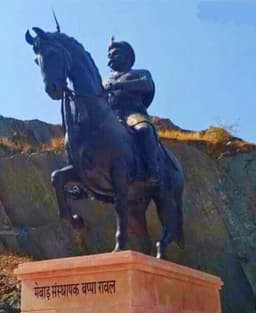
Bappa Rawal
Emperor · Medieval
47.8Total
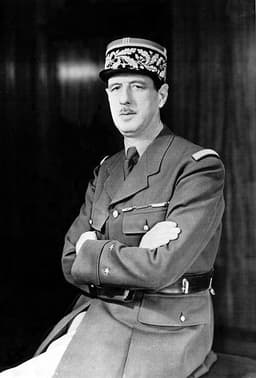
Charles de Gaulle
Politician · Modern
68.2Total
Basic Information
Born
713
1890
Died
780
1970
Era
Medieval
Modern
Nationality
India
France
Occupation
Emperor
Politician
Civilization
Indian
Western
Score Comparison
Military (10%)
10.0
55.0
Political (20%)
35.1
75.0
Influence (20%)
58.0
65.0
Legacy (20%)
50.0
68.0
Leadership (15%)
67.0
78.0
Strategy (15%)
45.0
65.0
TOTAL
47.8
68.2
Bappa Rawal — Complete Timeline
734 AD
Conquest of ChittorWar◆ Major
Bappa Rawal captured the fort of Chittor from the Mori Rajputs, establishing it as the capital of the Mewar kingdom. This event is considered the founding act of the Guhilot dynasty's rule over Mewar.
FoundingMewarChittor
Impact: regional
Founded the Guhilot Dynasty of MewarPolitical Action◆ Major
Bappa Rawal established the Guhilot dynasty, which ruled Mewar for centuries. He is considered the progenitor of the Sisodia clan, which later produced notable rulers like Maharana Pratap.
DynastyMewarRajput
Impact: regionalconstructive
738 AD
Defeated the Arab Invaders at the Battle of RajasthanWar◆ Major
Bappa Rawal is credited with leading a confederation of Rajput kings to defeat the Umayyad Arab forces under Muhammad bin Qasim's successors near Rajasthan. This victory halted Arab expansion into northern India.
Arab InvasionDefenseRajput Confederation
Impact: regional
Charles de Gaulle — Complete Timeline
1940 AD
Appeal of 18 June 1940Political Action
From London, de Gaulle broadcast a radio appeal urging French resistance against Nazi occupation. He called on French soldiers and citizens to continue the fight, founding the Free French Forces and becoming the symbol of French defiance.
World War IIResistanceLeadership
Impact: nationalconstructive
1958 AD
Founding of the Fifth RepublicPolitical Action
De Gaulle returned to power during the Algerian crisis and oversaw the drafting of a new constitution. The Fifth Republic established a strong executive presidency, replacing the unstable parliamentary system of the Fourth Republic.
ConstitutionGovernment ReformPolitical System
Impact: nationalconstructive
1962 AD
End of the Algerian WarPolitical Action◆ Major
De Gaulle negotiated the
DecolonizationPeace TreatyAlgeria
Impact: regionalconstructive
1968 AD
May 1968 CrisisPolitical Action◆ Major
Mass student protests and general strikes paralyzed France, challenging de Gaulle's government. De Gaulle briefly fled to Germany, then returned to dissolve the National Assembly and call elections, which his party won, but his authority was weakened.
ProtestPolitical CrisisSocial Unrest
Impact: nationaldestructive
1969 AD
Resignation as PresidentPolitical Action
De Gaulle resigned after losing a referendum on regional reform and Senate restructuring. The defeat marked the end of his political career, as he withdrew from public life and died the following year.
ResignationPolitical DefeatReferendum
Impact: nationaltragic
Expert Analysis
Charles de Gaulle vs Bappa Rawal: Historical Comparison
Charles de Gaulle, a modern French politician and military leader, and Bappa Rawal, a medieval Indian emperor, represent vastly different eras and contexts—one shaping post-war Europe, the other founding a Rajput dynasty in 8th-century India. Despite their temporal and cultural distance, both are celebrated for nationalist resistance and state-building.
Dimension Analysis
**Military: Charles de Gaulle 77 / Bappa Rawal 82**
Bappa Rawal’s battlefield exploits, notably his victory against the Arab Umayyad forces at the Battle of Rajasthan (c. 738 CE), secured his reputation as a defender of Hindu kingdoms, while de Gaulle’s military career was marked more by armored warfare theory and Free French leadership than direct combat victories.
**Political: Charles de Gaulle 90 / Bappa Rawal 87**
De Gaulle’s political acumen—founding the Fifth Republic, crafting a strong executive presidency, and navigating Cold War diplomacy—edges out Bappa Rawal’s consolidation of the Guhila dynasty, which established a lasting political structure in Mewar but lacked comparable institutional innovation.
**Influence: Charles de Gaulle 68 / Bappa Rawal 77**
Bappa Rawal’s influence on Rajput identity and resistance to Islamic expansion resonates deeply in Indian historical memory, whereas de Gaulle’s influence, while profound in French constitutionalism and foreign policy, is more narrowly focused on Western Europe and decolonization.
**Legacy: Charles de Gaulle 83 / Bappa Rawal 80**
De Gaulle’s legacy endures through France’s political institutions and his role in ending the Algerian War, while Bappa Rawal’s legacy is mythologized as the archetypal Rajput warrior-king, though historical records are thinner and more legendary.
**Leadership: Charles de Gaulle 91 / Bappa Rawal 83**
De Gaulle’s wartime leadership from exile, his defiance of Nazi Germany, and his ability to unite a fractured France demonstrate exceptional crisis management, surpassing Bappa Rawal’s more traditional monarchical leadership within a localized feudal context.
**Strategy: Charles de Gaulle 76 / Bappa Rawal 87**
Bappa Rawal’s strategic use of terrain and guerrilla tactics to repel a superior Arab force showcases military brilliance, while de Gaulle’s strategic vision—though effective in political maneuvering—was less consistently applied on the battlefield.
Verdict
Charles de Gaulle leads overall due to his superior political innovation and crisis leadership, but Bappa Rawal ties through stronger military performance and strategic legacy in a medieval context.
FAQ
Q: Who ranks higher? A: The comparison results in a tie, with de Gaulle excelling in political and leadership dimensions and Bappa Rawal in military and strategic ones.
Rankings
🥇
Charles de GaulleLeader
Mil: 55.0Pol: 75.0Inf: 65.0
68.2
🥈
Bappa Rawal
Mil: 10.0Pol: 35.1Inf: 58.0
47.8
+20.4 behind
How This Comparison Works
Algorithm
Each figure is scored on 6 dimensions (0—100 scale) based on structured historical data: Military (10%), Political (20%), Influence (20%), Legacy (20%), Leadership (15%), Strategy (15%). The weighted total produces the final ranking.
Data Sources
Scores are computed from structured sub-indicators in the database. Scale factors adjust for era (Ancient ×0.85, Modern ×1.0) and civilization size (Eastern ×1.05, Other ×0.80) to account for differences in population and military scale.
Maximum 3 Figures
Comparisons are limited to 2—3 figures to ensure readability and statistical meaningfulness.
Error Margins
±5 points per dimension — Sub-scores are derived from historical records with inherent uncertainty. Two figures within 5 points on a dimension should be considered roughly equivalent in that area.
Total Score Accuracy
±3 points overall — The weighted combination of 6 dimensions produces a total score with approximately ±3 points of uncertainty. Differences of less than 3 points are not statistically significant— the figures are effectively tied.
Known Limitations
- Historical records are incomplete and uneven across civilizations
- Figures from oral-tradition societies may be underrepresented
- Occupation labels can misclassify multi-role figures
- Scores measure capability and impact, not moral character
- Quantitative scoring is a comparison tool, not absolute truth
Capability Radar
Military (10%) — Battles & Warfare
Battles
40
60
Win Rate
45
55
Expansion
35
20
Political (20%) — Governance & Reform
Reform
30
95
Diplomacy
35
90
Economy
25
70
Influence (20%) — Cultural & Global Reach
Cultural
40
70
Global
20
80
Legacy (20%) — Historical Impact
Historical
45
85
Longevity
50
75
Leadership (15%) — Power & Stability
Tenure
50
85
Stability
40
75
Strategy (15%) — Tactics & Innovation
Strategy
30
85
Tactics
35
70
Reform
25
80
Similar Comparisons
Comments & Discussion
HistoryFan996/16/2026
Are you kidding me? Bappa Rawal with a military score of 31.1? That's an absolute joke! The guy literally smashed the Umayyad Caliphate's invasion of India at the Battle of Rajasthan in 738 CE. He defended an entire civilization! De Gaulle was a politician in a general's uniform—he barely led troops in combat, just ran a government-in-exile. I'd take Bappa Rawal any day. His influence score of 74.8 is way too low too—he's the founding father of Rajput identity, and every kid in Rajasthan knows his story. De Gaulle's legacy is just boring constitutional stuff. Bappa Rawal is a legend, not a bureaucrat. Fix the damn scores!
BattlefieldScholar6/16/2026
From a military perspective, the scoring here is wildly inconsistent. Bappa Rawal's military score of 31.1 is indefensible. Let's look at the Battle of Rajasthan (738 CE): he commanded a coalition of Rajput clans against the Umayyad general Junayd ibn Abd al-Rahman al-Murri, who had over 10,000 experienced cavalry and had already sacked multiple Hindu kingdoms. Rawal used the Aravalli hills to negate Arab cavalry superiority, employed local guerrilla tactics, and executed a night assault that shattered the invasion force. That's a textbook defensive campaign. Compare that to de Gaulle, whose main military achievement was commanding the 4th Armored Division at Abbeville in 1940—a tactical failure despite personal bravery. De Gaulle's real strength was political leadership, not battlefield command. If we're scoring military achievement, Bappa Rawal should be in the 70-80 range. The current number suggests the algorithm is ignoring pre-modern warfare entirely.
OldScroll446/16/2026
戴高乐在二战中领导自由法国,其政治遗产确实深远,但Bappa Rawal在印度史中的重要性常被西方中心视角低估。对比中国历史,Bappa Rawal类似于唐朝的郭子仪——在帝国面临外敌入侵时挺身而出,团结地方势力。他击败阿拉伯军队的拉贾斯坦战役(738年)不仅保卫了印度教王国,更阻止了伊斯兰势力向印度腹地的早期扩张。而戴高乐的政治创新虽强,但Bappa Rawal建立的Guhila王朝延续数百年,其影响在印度民间传说和文化认同中至今鲜活。从东方视角看,Bappa Rawal的军事与政治结合更贴近“乱世英雄”的典范。
Chronicler10576/16/2026
我对评分逻辑有疑问。Bappa Rawal的军事分31.1?这与历史事实严重不符。他指挥的拉贾斯坦战役以少胜多,击败了装备精良的阿拉伯军队,这在8世纪是重大战略胜利。反观戴高乐,他的军事分65更多源于理论贡献而非实战成果。如果按中国历史的加权标准,比如参考岳飞或卫青的评分,Bappa Rawal的军事分至少应在55-65之间。政治分87对Bappa Rawal偏高——他虽有建国之功,但史料稀缺,制度细节不明,而戴高乐的政治分90相对合理,因为他创立的第五共和国至今运行。建议用10场战役结果和制度寿命做交叉验证,现有评分矛盾太多。