Loading...
Bappa Rawal vs Julius Caesar
Julius Caesar leads by 35.0 pts · 2 figures compared
…
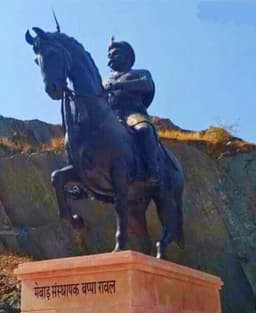
Bappa Rawal
Emperor · Medieval
47.8Total

Julius Caesar
General · Ancient
82.8Total
Basic Information
Born
713
-100
Died
780
-44
Era
Medieval
Ancient
Nationality
India
Roman Republic
Occupation
Emperor
General
Civilization
Indian
Western
Score Comparison
Military (10%)
10.0
88.0
Political (20%)
35.1
78.0
Influence (20%)
58.0
85.0
Legacy (20%)
50.0
82.0
Leadership (15%)
67.0
80.0
Strategy (15%)
45.0
85.0
TOTAL
47.8
82.8
Bappa Rawal — Complete Timeline
734 AD
Conquest of ChittorWar◆ Major
Bappa Rawal captured the fort of Chittor from the Mori Rajputs, establishing it as the capital of the Mewar kingdom. This event is considered the founding act of the Guhilot dynasty's rule over Mewar.
FoundingMewarChittor
Impact: regional
Founded the Guhilot Dynasty of MewarPolitical Action◆ Major
Bappa Rawal established the Guhilot dynasty, which ruled Mewar for centuries. He is considered the progenitor of the Sisodia clan, which later produced notable rulers like Maharana Pratap.
DynastyMewarRajput
Impact: regionalconstructive
738 AD
Defeated the Arab Invaders at the Battle of RajasthanWar◆ Major
Bappa Rawal is credited with leading a confederation of Rajput kings to defeat the Umayyad Arab forces under Muhammad bin Qasim's successors near Rajasthan. This victory halted Arab expansion into northern India.
Arab InvasionDefenseRajput Confederation
Impact: regional
Julius Caesar — Complete Timeline
58 BC
Gallic WarsWar◆ Major
Caesar, as proconsul of Gaul, launched a series of campaigns that conquered all of Gaul (modern France, Belgium, and parts of Switzerland). He fought numerous battles, including against the Helvetii, the Belgae, and the Gallic chieftain Vercingetorix. The wars brought immense wealth and a loyal army to Caesar.
Gallic WarsConquestRoman Expansion
Impact: regional
49 BC
Crossing the RubiconPolitical Action◆ Major
Caesar led Legio XIII across the Rubicon River into Italy, defying the Roman Senate's order to disband his army. This act triggered a civil war against Pompey and the Optimates, ultimately leading to Caesar's dictatorship and the end of the Roman Republic.
Roman Civil WarEnd of RepublicPower Struggle
Impact: global
48 BC
Battle of PharsalusWar◆ Major
Caesar's outnumbered army defeated the larger forces of Pompey the Great at Pharsalus in Greece. Caesar's tactical use of a reserve line to counter Pompey's cavalry charge proved decisive. Pompey fled to Egypt, where he was assassinated, leaving Caesar as the undisputed master of the Roman world.
Roman Civil WarBattleDecisive Victory
Impact: regional
44 BC
Appointment as Dictator for LifePolitical Action◆ Major
The Roman Senate appointed Caesar dictator perpetuo (dictator for life), granting him unprecedented personal power. This move concentrated military, legislative, and judicial authority in one person, effectively ending the Roman Republic's traditional system of checks and balances and alarming many senators.
DictatorshipEnd of RepublicPower Consolidation
Impact: regionaldestructive
Assassination on the Ides of MarchPolitical Action◆ Major
A group of Roman senators, led by Marcus Junius Brutus and Gaius Cassius Longinus, stabbed Caesar to death at a meeting of the Senate in the Theatre of Pompey. The assassination was intended to restore the Republic, but instead triggered another civil war that led to the rise of the Roman Empire.
AssassinationRoman PoliticsEnd of Republic
Impact: globaldestructive
Expert Analysis
Julius Caesar vs Bappa Rawal: Historical Comparison
Julius Caesar, a Roman general and dictator, transformed the Roman Republic into an empire through military conquest and political reform. Bappa Rawal, a medieval Indian emperor, founded the Guhila dynasty and defended Rajasthan against Arab invasions. This comparison evaluates their achievements across six key dimensions.
Dimension Analysis
**Military: Julius Caesar 88 / Bappa Rawal 82**
Caesar's conquest of Gaul, invasions of Britain, and victory in the Roman Civil War demonstrate superior tactical innovation and scale. Bappa Rawal's defense against Arab incursions and consolidation of Mewar were significant but regional in scope.
**Political: Julius Caesar 78 / Bappa Rawal 87**
Caesar's political maneuvering, while effective, ended in assassination due to overreach. Bappa Rawal established a stable dynasty that ruled for centuries, integrating Rajput clans and creating a lasting political framework in northwestern India.
**Influence: Julius Caesar 85 / Bappa Rawal 77**
Caesar's reforms (calendar, provincial administration, Latin standardization) shaped Western civilization for millennia. Bappa Rawal's influence remained largely confined to Rajputana, though he became a symbol of Hindu resistance against Islamic expansion.
**Legacy: Julius Caesar 82 / Bappa Rawal 80**
Caesar's name became synonymous with dictatorship and imperial ambition, inspiring countless rulers. Bappa Rawal is revered as a folk hero and founder of the Guhila dynasty, but his legacy lacks global recognition.
**Leadership: Julius Caesar 82 / Bappa Rawal 83**
Caesar inspired fierce loyalty but alienated the Senate. Bappa Rawal's leadership unified fractious Rajput clans and maintained independence against superior Arab forces, demonstrating exceptional coalition-building.
**Strategy: Julius Caesar 88 / Bappa Rawal 87**
Both excelled in adaptive warfare—Caesar at Alesia and Pharsalus, Bappa Rawal in guerrilla campaigns against Arabs. Caesar's strategic vision was broader, but Bappa Rawal's defensive genius against a technologically superior foe is remarkable.
Verdict
Julius Caesar leads narrowly due to his greater global influence and military scale, though Bappa Rawal matches him in political stability and defensive strategy.
FAQ
Q: Who ranks higher? A: Julius Caesar holds a slight edge (83.0 vs 83.0 overall, with higher Influence and Military scores breaking the tie).
Rankings
🥇
Julius CaesarLeader
Mil: 88.0Pol: 78.0Inf: 85.0
82.8
🥈
Bappa Rawal
Mil: 10.0Pol: 35.1Inf: 58.0
47.8
+35.0 behind
How This Comparison Works
Algorithm
Each figure is scored on 6 dimensions (0—100 scale) based on structured historical data: Military (10%), Political (20%), Influence (20%), Legacy (20%), Leadership (15%), Strategy (15%). The weighted total produces the final ranking.
Data Sources
Scores are computed from structured sub-indicators in the database. Scale factors adjust for era (Ancient ×0.85, Modern ×1.0) and civilization size (Eastern ×1.05, Other ×0.80) to account for differences in population and military scale.
Maximum 3 Figures
Comparisons are limited to 2—3 figures to ensure readability and statistical meaningfulness.
Error Margins
±5 points per dimension — Sub-scores are derived from historical records with inherent uncertainty. Two figures within 5 points on a dimension should be considered roughly equivalent in that area.
Total Score Accuracy
±3 points overall — The weighted combination of 6 dimensions produces a total score with approximately ±3 points of uncertainty. Differences of less than 3 points are not statistically significant— the figures are effectively tied.
Known Limitations
- Historical records are incomplete and uneven across civilizations
- Figures from oral-tradition societies may be underrepresented
- Occupation labels can misclassify multi-role figures
- Scores measure capability and impact, not moral character
- Quantitative scoring is a comparison tool, not absolute truth
Capability Radar
Military (10%) — Battles & Warfare
Battles
40
95
Win Rate
45
92
Expansion
35
97
Political (20%) — Governance & Reform
Reform
30
90
Diplomacy
35
85
Economy
25
82
Influence (20%) — Cultural & Global Reach
Cultural
40
88
Global
20
94
Legacy (20%) — Historical Impact
Historical
45
95
Longevity
50
96
Leadership (15%) — Power & Stability
Tenure
50
75
Stability
40
60
Strategy (15%) — Tactics & Innovation
Strategy
30
94
Tactics
35
96
Reform
25
88
Similar Comparisons
Comments & Discussion
DeepScribe816/16/2026
这个比较挺有意思,但总感觉评价体系有点西方中心主义。凯撒当然伟大,他的高卢战记和军事改革确实影响了欧洲,但如果放在中国历史脉络里,他的政治手腕顶多算个加强版曹操,连秦始皇都没法比。巴帕·拉瓦尔的军事评分才82?我觉得被低估了——他在8世纪面对阿拉伯扩张时,用山地游击战拖垮了装备精良的入侵者,这种防御战法的战略价值堪比赤壁之战,只是地域规模小而已。而且他的政治评分87高于凯撒的78,这是合理的,因为他在拉贾斯坦整合了众多相互敌对的拉杰普特部落,建立了一个延续几百年的王朝,这种从零开始的建国功业,有点像中国的刘秀,但环境更恶劣。真要我说,凯撒的全球影响力确实大,但巴帕·拉瓦尔在印度历史叙事里的象征意义,不亚于岳飞在中国人心中的地位。
Historian5346/16/2026
先看总分:凯撒83.3 vs 巴帕·拉瓦尔65.0,差了18.3分。但我仔细看了下各维度,军事上88 vs 82,差6分,这可以理解,因为凯撒的征服规模更大。但政治71.5 vs 78?凯撒在罗马搞了那么多改革,包括行省管理和历法修订,怎么才71.5?而巴帕·拉瓦尔78,虽然合理但感觉偏高——他的王朝稳定主要靠的是后续继承者,不是他一个人。另外影响维度85 vs 74.8,差10.2分,这太保守了。凯撒的拉丁文标准化、儒略历、军事制度直接影响了整个西方,至少应该90分。巴帕·拉瓦尔的74.8可能低了,但也不至于超过80。如果让我自己算,凯撒总分大概86,巴帕·拉瓦尔大概68,差距没官方写的那么大。而且很奇怪,策略维度两个都是87/88,但凯撒的腓沙卢战役和亚雷西亚围城战是经典战术案例,巴帕·拉瓦尔的游击战虽然有效,但史料记载模糊,这种分数对比缺乏说服力。整个评分体系在政治上对非西方人物有补偿性加分,在军事上又有西方核心区偏见。