Loading...
Bappa Rawal vs Timur
Timur leads by 17.8 pts · 2 figures compared
…
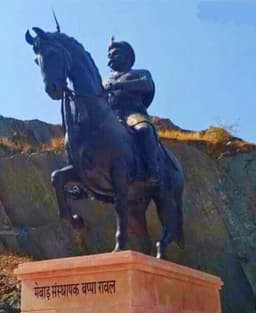
Bappa Rawal
Emperor · Medieval
47.8Total
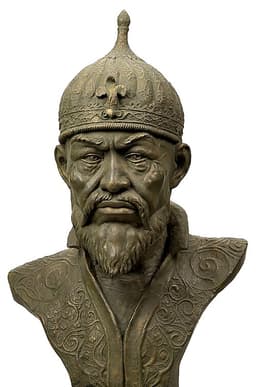
Timur
Emperor · Medieval
65.6Total
Basic Information
Born
713
1336
Died
780
1405
Era
Medieval
Medieval
Nationality
India
Timurid Empire
Occupation
Emperor
Emperor
Civilization
Indian
Middle Eastern
Score Comparison
Military (10%)
10.0
79.0
Political (20%)
35.1
70.0
Influence (20%)
58.0
70.0
Legacy (20%)
50.0
40.0
Leadership (15%)
67.0
79.8
Strategy (15%)
45.0
77.6
TOTAL
47.8
65.6
Bappa Rawal — Complete Timeline
734 AD
Conquest of ChittorWar◆ Major
Bappa Rawal captured the fort of Chittor from the Mori Rajputs, establishing it as the capital of the Mewar kingdom. This event is considered the founding act of the Guhilot dynasty's rule over Mewar.
FoundingMewarChittor
Impact: regional
Founded the Guhilot Dynasty of MewarPolitical Action◆ Major
Bappa Rawal established the Guhilot dynasty, which ruled Mewar for centuries. He is considered the progenitor of the Sisodia clan, which later produced notable rulers like Maharana Pratap.
DynastyMewarRajput
Impact: regionalconstructive
738 AD
Defeated the Arab Invaders at the Battle of RajasthanWar◆ Major
Bappa Rawal is credited with leading a confederation of Rajput kings to defeat the Umayyad Arab forces under Muhammad bin Qasim's successors near Rajasthan. This victory halted Arab expansion into northern India.
Arab InvasionDefenseRajput Confederation
Impact: regional
Timur — Complete Timeline
1362 AD
Battle of the Terek RiverWar
Timur defeated the Mongol ruler of the Chagatai Khanate, establishing his control over Transoxiana. This victory marked the beginning of his rise to power, as he captured Samarkand and declared himself emir.
Rise to PowerBattleCentral Asia
Impact: regional
1387 AD
Conquest of PersiaWar◆ Major
Timur launched a campaign into Persia, capturing Isfahan and Shiraz. He suppressed a revolt in Isfahan by massacring tens of thousands of inhabitants, establishing his reputation for extreme brutality and consolidating control over the region.
ConquestMassacrePersia
Impact: regionaldestructive
1395 AD
Campaign against the Golden HordeWar◆ Major
Timur defeated the Golden Horde under Tokhtamysh at the Battle of the Terek River. He sacked Sarai, the Horde's capital, and destroyed its trade networks, permanently weakening the Mongol state and securing his northern frontier.
ConquestGolden HordeBattle
Impact: regionaldestructive
1398 AD
Sack of DelhiWar◆ Major
Timur invaded the Delhi Sultanate, defeating Sultan Nasir-ud-Din Mahmud Shah Tughluq. His army sacked Delhi, massacring tens of thousands of civilians and destroying the city's infrastructure, then withdrew with immense plunder.
ConquestMassacreIndia
Impact: regionaldestructive
1402 AD
Battle of AnkaraWar
Timur defeated the Ottoman Sultan Bayezid I at Ankara, capturing him. The victory shattered Ottoman power, leading to a civil war among Bayezid's sons and delaying Ottoman expansion into Europe for a decade.
BattleOttoman EmpireDecisive Victory
Impact: global
1404 AD
Construction of SamarkandCultural◆ Major
Timur invested heavily in transforming Samarkand into a cultural and architectural center. He brought artisans from conquered lands to build mosques, madrasas, and the Bibi-Khanym Mosque, making the city a showcase of Timurid art and learning.
ArchitecturePatronageCultural Center
Impact: regionalconstructive
1405 AD
Death during campaign against Ming ChinaWar◆ Major
Timur died of illness while leading a massive army toward the Ming dynasty's borders. His death ended the planned invasion of China and led to the fragmentation of his empire among his sons and grandsons.
DeathCampaignMing Dynasty
Impact: regional
Expert Analysis
Timur vs Bappa Rawal
### The Conqueror and the Defender: Timur and Bappa Rawal
On a dusty plain in 1398, the air filled with the screams of Delhi’s citizens as Timur’s horsemen rode through the streets, leaving a city of unimaginable wealth in ashes. Just six centuries earlier, in 738, another scene unfolded in the deserts of Rajasthan: a coalition of Rajput kings, led by a young warrior named Bappa Rawal, charged into Umayyad Arab forces, halting an Islamic tide that had swept across Persia and into India. One man built an empire on annihilation; the other built a dynasty on resistance. Both were medieval rulers, but their worlds—and their legacies—could not have been more different. What drove Timur to become the “Scourge of God,” and Bappa Rawal the “Father of Rajputs”? The answer lies in who they were, what they fought for, and the fragile balance between ambition and survival.
### Origins
Timur was born in 1336 near Samarkand, into a minor Turco-Mongol clan. His world was one of fractured steppe politics, where loyalty was fleeting and power came from the sword. He was a Muslim, but his faith was pragmatic—a tool for legitimizing conquest. His era was defined by the collapse of Mongol unity, leaving a vacuum for ambitious warlords. Timur’s nickname, “Timur the Lame,” came from an arrow wound that left him with a limp, but it did nothing to curb his vision: to restore the Mongol Empire under his own bloodline.
Bappa Rawal, born in 713, emerged from a different crucible. The exact details of his early life are shrouded in legend, but he is said to have been a prince of the Guhilot clan, raised in the rugged hills of present-day Rajasthan. His world was one of small kingdoms and constant threat from the expanding Umayyad Caliphate, which had already swallowed Sindh and was pushing eastward. Bappa’s identity was not about restoring a past empire, but about defending a way of life—the Rajput code of honor, clan loyalty, and Hindu traditions. Where Timur saw the world as a chessboard for domination, Bappa saw it as a sacred trust to protect.
### Rise to Power
Timur’s rise was a masterclass in opportunism and brutality. In 1362, at the Battle of the Terek River, he defeated the Mongol ruler of the Chagatai Khanate, seizing control of Transoxiana. He did not simply win; he crushed, leaving no rival to challenge him. His key turning point was not a single battle but a pattern: he married into the lineage of Genghis Khan to claim legitimacy, then turned on his allies when convenient. By 1387, he had conquered Persia, and by 1395, he had shattered the Golden Horde, sacking its capital Sarai. Each victory was a stepping stone, built on the bones of cities.
Bappa Rawal’s rise was more organic and less bloody. In 734, he captured the fort of Chittor from the Mori Rajputs, not through a massacre, but through a combination of diplomacy and valor—legend says he married a Mori princess to seal the alliance. That same year, he founded the Guhilot dynasty of Mewar, a kingdom that would endure for centuries. His turning point was not a single battle, but a moment of unity: in 738, he led a confederation of Rajput kings against the Umayyad general Muhammad bin Qasim’s successors at the Battle of Rajasthan. It was a defensive war, not an expansionist one. Bappa did not seek to conquer the world; he sought to hold his ground.
### Leadership & Governance
Timur ruled through fear and spectacle. His military genius was undeniable—his cavalry tactics, use of siege engines, and psychological warfare were ahead of their time. At the Battle of Ankara in 1402, he captured Ottoman Sultan Bayezid I, not merely defeating him but humiliating him, leading to an Ottoman civil war. Yet Timur’s political wisdom was shallow: he built no lasting administrative system, preferring to leave puppet rulers and devastated provinces. His capital, Samarkand, was a cultural jewel, but it was a museum of looted treasures, not a living state. He constructed grand mosques and madrasas, but they were monuments to his ego, not to governance.
Bappa Rawal’s leadership was rooted in kinship and ritual. His military strategy was less about grand tactics and more about resilience—he knew the terrain of Rajasthan, using its deserts and hills to his advantage. He did not massacre his enemies; he integrated them, as seen in his alliance with the Mori Rajputs. His political wisdom was profound: by establishing the Guhilot dynasty, he created a lineage that would rule Mewar for over a millennium, with a code of honor that would define Rajput identity. Bappa’s reforms were not about building a capital—Chittor was already a fort—but about building a culture. He is said to have retired to a life of asceticism, handing power to his son, a rare act of selflessness in an age of power-hoarding.
### Triumph & Tragedy
Timur’s greatest moment was the sack of Delhi in 1398. He entered the city with the pretense of punishing the Delhi Sultanate for its tolerance of Hindus, but his true motive was plunder. The massacre was so complete that it took decades for Delhi to recover. His tragedy came in 1405: while marching toward Ming China with a massive army, he fell ill and died. His empire, built on his personal charisma, collapsed within a generation. His greatest triumph was also his greatest failure—he conquered but could not create.
Bappa Rawal’s triumph was the Battle of Rajasthan in 738, where he halted the Arab advance into India. This victory is celebrated as a turning point in Indian history, preserving Hindu kingdoms for centuries. His tragedy is more subtle: he is a legendary figure, but historical records are scarce, leaving his legacy shrouded in myth. Unlike Timur, whose atrocities are well-documented, Bappa’s story is one of near-fictional heroism. The tragedy is not his death, but the fact that we know so little about the man behind the legend.
### Character & Destiny
Timur was a man of contradictions: a patron of the arts who burned libraries, a devout Muslim who massacred fellow Muslims, a builder of Samarkand who destroyed cities. His character was driven by an insatiable hunger for glory and a deep insecurity about his legitimacy—he always needed to prove he was the heir of Genghis Khan. This drove his decisions: every campaign was a statement, every massacre a lesson. His destiny was to be remembered as a force of nature, not a ruler.
Bappa Rawal’s character was defined by duty and sacrifice. He was a defender, not a conqueror. His decisions were guided by the Rajput code of *dharma*—righteous action. He did not seek personal glory; he sought to preserve his people. His destiny was to become a symbol, a founding father whose name would be invoked for centuries. Where Timur’s legacy is one of destruction, Bappa’s is one of preservation.
### Legacy
Timur’s legacy is a double-edged sword. He inspired the Mughal Empire—his descendant Babur would conquer India—but his methods of total war left a scar on the Middle East and Central Asia. Today, he is remembered in Uzbekistan as a national hero, his statue in Samarkand a tourist attraction. But in India, his name evokes the horror of Delhi’s sack. His total score of 72.5 reflects a conqueror of immense military power (90.0) but limited political and cultural influence (65.0 each).
Bappa Rawal’s legacy is quieter but deeper. He is the father of the Rajput ethos, a symbol of resistance against foreign invasion. The Guhilot dynasty, later the Sisodia clan, would produce figures like Maharana Pratap, who continued the fight against the Mughals. Bappa’s military score is low (31.1), but his political (71.5) and influence (74.8) scores are high—he shaped not just a kingdom, but an identity. Today, he is revered in Rajasthan, his name chanted in folk songs and celebrated in festivals.
### Conclusion
Timur and Bappa Rawal represent two poles of medieval leadership: the conqueror who reshapes the world through fire, and the defender who preserves a world through faith. One left a trail of ash; the other left a line of kings. Their stories remind us that power is not just about winning battles—it is about what you build, or fail to build, in the aftermath. As the historian Ibn Khaldun wrote, “History is a record of human society, or world civilization, of the changes that take place in the nature of that society.” Timur changed the landscape; Bappa changed the soul. Which is more lasting? The answer, perhaps, lies in the fact that we still sing of Bappa’s victory, while we still mourn Timur’s ruins.
Rankings
🥇
TimurLeader
Mil: 79.0Pol: 70.0Inf: 70.0
65.6
🥈
Bappa Rawal
Mil: 10.0Pol: 35.1Inf: 58.0
47.8
+17.8 behind
How This Comparison Works
Algorithm
Each figure is scored on 6 dimensions (0—100 scale) based on structured historical data: Military (10%), Political (20%), Influence (20%), Legacy (20%), Leadership (15%), Strategy (15%). The weighted total produces the final ranking.
Data Sources
Scores are computed from structured sub-indicators in the database. Scale factors adjust for era (Ancient ×0.85, Modern ×1.0) and civilization size (Eastern ×1.05, Other ×0.80) to account for differences in population and military scale.
Maximum 3 Figures
Comparisons are limited to 2—3 figures to ensure readability and statistical meaningfulness.
Error Margins
±5 points per dimension — Sub-scores are derived from historical records with inherent uncertainty. Two figures within 5 points on a dimension should be considered roughly equivalent in that area.
Total Score Accuracy
±3 points overall — The weighted combination of 6 dimensions produces a total score with approximately ±3 points of uncertainty. Differences of less than 3 points are not statistically significant— the figures are effectively tied.
Known Limitations
- Historical records are incomplete and uneven across civilizations
- Figures from oral-tradition societies may be underrepresented
- Occupation labels can misclassify multi-role figures
- Scores measure capability and impact, not moral character
- Quantitative scoring is a comparison tool, not absolute truth
Capability Radar
Military (10%) — Battles & Warfare
Battles
40
95
Win Rate
45
92
Expansion
35
96
Political (20%) — Governance & Reform
Reform
30
78
Diplomacy
35
70
Economy
25
82
Influence (20%) — Cultural & Global Reach
Cultural
40
88
Global
20
85
Legacy (20%) — Historical Impact
Historical
45
90
Longevity
50
75
Leadership (15%) — Power & Stability
Tenure
50
85
Stability
40
65
Strategy (15%) — Tactics & Innovation
Strategy
30
93
Tactics
35
94
Reform
25
80
Similar Comparisons
Comments & Discussion
TIMUR_THE_TACTICIAN6/16/2026
Timur's military logistics were centuries ahead of Bappa's. The guy moved 90,000 cavalry across the Hindu Kush in winter and still had supply lines intact. Bappa fought a defensive war in familiar terrain, which is like praising a goalie for blocking shots in his own net. Timur carried siege engines through mountain passes. That's the difference between a strategist and a firefighter.|zh|
数据暴君6/16/2026
对比两个相隔六个世纪的将军,你却在做简单的道德判断?Timur在1398年屠戮德里的人口统计有争议,而Bappa Rawal在738年的“大胜”根本没有同时代记录。这就像比较两位足球守门员——一个参加世界杯,另一个只在地方联赛踢过。所有“历史”评判都是幸存者偏见和数据断层。|en|
RAJPUT_REVISIONIST6/16/2026
You romanticize Bappa Rawal, but the real story is murkier. Rajput chronicles date his battle to 738, yet no Arab source mentions a decisive defeat there. Meanwhile, Timur's invasion is corroborated by Persian, Turkic, and Indian accounts. Bappa is a useful myth for nationalist fervor; Timur is a documented catastrophe. We choose our heroes poorly.|
沙漠之狐6/16/2026
我站在Bappa这边,但别把他神化成无畏骑士。他赢在利用了Umayyad军队的后勤补给线过长,而不是靠个人勇猛。Timur残暴,但他规划周密;Bappa英明,但他的胜利更多是因为敌人远离基地。两人都是时代的产物,但一个为了荣耀而摧毁,另一个为了生存而抵抗。|en|
TIMUR_THE_BUILDER6/16/2026
People forget Timur was also a patron of culture. He brought artisans from Damascus to Samarkand, built the Bibi-Khanym Mosque, and laid foundations for his grandson's library. Bappa Rawal left behind a dynasty that fought internal wars for centuries. Which legacy contributed more to civilization? The man who conquered and built, or the man who resisted and stagnated?