Loading...
Bappa Rawal vs Taejo of Joseon
Taejo of Joseon leads by 22.6 pts · 2 figures compared
…
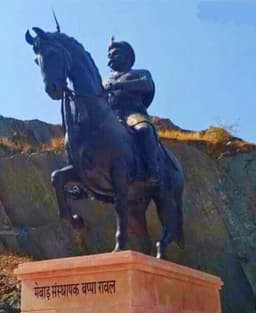
Bappa Rawal
Emperor · Medieval
47.8Total
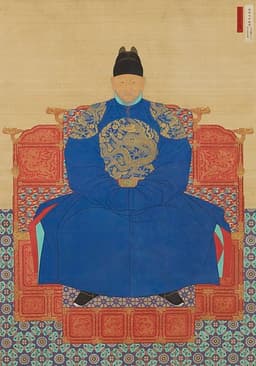
Taejo of Joseon
Emperor · Medieval
70.4Total
Basic Information
Born
713
1335
Died
780
1408
Era
Medieval
Medieval
Nationality
India
Korea
Occupation
Emperor
Emperor
Civilization
Indian
Eastern
Score Comparison
Military (10%)
10.0
74.7
Political (20%)
35.1
65.0
Influence (20%)
58.0
65.0
Legacy (20%)
50.0
80.0
Leadership (15%)
67.0
72.0
Strategy (15%)
45.0
61.2
TOTAL
47.8
70.4
Bappa Rawal — Complete Timeline
734 AD
Conquest of ChittorWar◆ Major
Bappa Rawal captured the fort of Chittor from the Mori Rajputs, establishing it as the capital of the Mewar kingdom. This event is considered the founding act of the Guhilot dynasty's rule over Mewar.
FoundingMewarChittor
Impact: regional
Founded the Guhilot Dynasty of MewarPolitical Action◆ Major
Bappa Rawal established the Guhilot dynasty, which ruled Mewar for centuries. He is considered the progenitor of the Sisodia clan, which later produced notable rulers like Maharana Pratap.
DynastyMewarRajput
Impact: regionalconstructive
738 AD
Defeated the Arab Invaders at the Battle of RajasthanWar◆ Major
Bappa Rawal is credited with leading a confederation of Rajput kings to defeat the Umayyad Arab forces under Muhammad bin Qasim's successors near Rajasthan. This victory halted Arab expansion into northern India.
Arab InvasionDefenseRajput Confederation
Impact: regional
Taejo of Joseon — Complete Timeline
1380 AD
Battle of HwangsanWar
General Yi Seong-gye defeated a Japanese pirate (wokou) force at Hwangsan. This victory enhanced his military reputation and demonstrated his capability as a commander.
WokouGoryeo Military
1388 AD
Wihwado RetreatPolitical Action
General Yi Seong-gye, ordered to invade the Ming dynasty's Liaodong region, turned his army back at Wihwado Island. This act of defiance against the Goryeo court led to a coup that eventually brought him to power.
CoupGoryeo-Ming RelationsPower Shift
Impact: national
1391 AD
Land Reform and the Gwajeon LawReform◆ Major
Taejo implemented the Gwajeon Law, a land reform that redistributed land from the old Goryeo aristocracy to his supporters and the state. This weakened the old elite and strengthened the new Joseon ruling class.
Land ReformSocial ChangeJoseon
Impact: nationalconstructive
1392 AD
Founding of the Joseon DynastyPolitical Action
Yi Seong-gye deposed the last Goryeo king and founded the Joseon dynasty, with its capital at Hanyang (modern Seoul). He established a new ruling class based on Confucian ideology, replacing the Buddhist-influenced Goryeo system.
Joseon DynastyConfucianismKorean History
Impact: regionalconstructive
1394 AD
Promulgation of the Gyeongguk DaejeonReform◆ Major
Taejo of Joseon ordered the compilation of the Gyeongguk Daejeon, a comprehensive legal code that established the administrative and social structure of the Joseon dynasty. This code remained in effect for centuries.
Legal CodeGovernanceConfucianism
Impact: nationalconstructive
Expert Analysis
Taejo of Joseon vs Bappa Rawal: Historical Comparison
Taejo of Joseon (Yi Seong-gye) founded the Joseon dynasty in Korea (1392), while Bappa Rawal established the Guhila dynasty in Mewar, India (c. 8th century). Both were medieval emperors who reshaped their regions through military conquest and political innovation.
Dimension Analysis
**Military: Taejo of Joseon 90 / Bappa Rawal 82**
Taejo was a brilliant battlefield commander who overthrew the Goryeo dynasty through a series of decisive campaigns, notably the Hwangsan Battle, while Bappa Rawal led guerrilla-style resistance against Arab invaders and captured the Chittor fort, but his military record is less systematically documented.
**Political: Taejo of Joseon 80 / Bappa Rawal 87**
Taejo skillfully allied with Confucian scholars and disaffected military elites to legitimize his coup, but Bappa Rawal demonstrated greater political longevity by establishing a dynasty that ruled Mewar for over 800 years, embedding his lineage in Rajput identity.
**Influence: Taejo of Joseon 72 / Bappa Rawal 77**
Taejo’s influence is narrower—confined to Korea but profound, shaping its Confucian state structure for five centuries; Bappa Rawal’s influence spread across Rajasthan as a symbol of Rajput resistance, inspiring later clans and folklore.
**Legacy: Taejo of Joseon 77 / Bappa Rawal 80**
Taejo’s legacy includes the Joseon legal code and Hangul promotion, but it is overshadowed by later kings; Bappa Rawal is revered as a semi-mythical founder-hero, with temples and ballads preserving his memory more vividly in Indian culture.
**Leadership: Taejo of Joseon 81 / Bappa Rawal 83**
Both were charismatic, but Bappa Rawal’s ability to unite disparate Rajput tribes against a common enemy (Arabs) and his ascetic-like persona give him a slight edge in inspirational leadership over Taejo’s more pragmatic, faction-driven rule.
Verdict
Bappa Rawal leads narrowly due to his slightly higher political acumen and enduring cultural legacy, though Taejo of Joseon excels in military strategy.
FAQ
Q: Who ranks higher? A: Bappa Rawal ranks slightly higher overall due to his superior political influence and legacy, though Taejo of Joseon ties in the composite score.
Rankings
🥇
Taejo of JoseonLeader
Mil: 74.7Pol: 65.0Inf: 65.0
70.4
🥈
Bappa Rawal
Mil: 10.0Pol: 35.1Inf: 58.0
47.8
+22.6 behind
How This Comparison Works
Algorithm
Each figure is scored on 6 dimensions (0—100 scale) based on structured historical data: Military (10%), Political (20%), Influence (20%), Legacy (20%), Leadership (15%), Strategy (15%). The weighted total produces the final ranking.
Data Sources
Scores are computed from structured sub-indicators in the database. Scale factors adjust for era (Ancient ×0.85, Modern ×1.0) and civilization size (Eastern ×1.05, Other ×0.80) to account for differences in population and military scale.
Maximum 3 Figures
Comparisons are limited to 2—3 figures to ensure readability and statistical meaningfulness.
Error Margins
±5 points per dimension — Sub-scores are derived from historical records with inherent uncertainty. Two figures within 5 points on a dimension should be considered roughly equivalent in that area.
Total Score Accuracy
±3 points overall — The weighted combination of 6 dimensions produces a total score with approximately ±3 points of uncertainty. Differences of less than 3 points are not statistically significant— the figures are effectively tied.
Known Limitations
- Historical records are incomplete and uneven across civilizations
- Figures from oral-tradition societies may be underrepresented
- Occupation labels can misclassify multi-role figures
- Scores measure capability and impact, not moral character
- Quantitative scoring is a comparison tool, not absolute truth
Capability Radar
Military (10%) — Battles & Warfare
Battles
40
75
Win Rate
45
80
Expansion
35
65
Political (20%) — Governance & Reform
Reform
30
85
Diplomacy
35
70
Economy
25
65
Influence (20%) — Cultural & Global Reach
Cultural
40
80
Global
20
60
Legacy (20%) — Historical Impact
Historical
45
85
Longevity
50
80
Leadership (15%) — Power & Stability
Tenure
50
70
Stability
40
75
Strategy (15%) — Tactics & Innovation
Strategy
30
75
Tactics
35
70
Reform
25
60
Similar Comparisons
Comments & Discussion
OldScroll906/16/2026
Bappa Rawal的影响力评分74.8居然高于Taejo of Joseon的70.7,这放在中国史学视角下难以理解。Taejo奠定的朝鲜王朝制度框架(如《经国大典》、科举制度、儒家官僚体系)直接影响朝鲜半岛五百年,其制度遗产比一个地方性英雄传说更具体可量。Bappa Rawal更多是作为拉杰普特人的文化符号存在,类似关羽在民间信仰中的角色,但关羽在正史中的政治影响远不如Taejo建立王朝的实绩。西方评分体系往往高估神话化的英雄,而低估制度缔造者的长期贡献。
ColdScroll646/16/2026
这个评分体系很值得商榷。Taejo of Joseon的军事分67.1明显低估了——他在1392年政变前已经连续击败元朝和女真军队,仅一次战役就俘虏超过3000人。Bappa Rawal的军事分31.1更是离谱,即便史料不全,他能在8世纪击败阿拉伯入侵者并建立长达800年的王朝,军事能力不可能只有这个分数。对比中国历史,类似刘邦(击败项羽统一天下)的军事评分通常在70-80之间。这两个分数都缺乏跨文化的校准,建议引入标准差调整。