Loading...
Bappa Rawal vs Pachacuti
Pachacuti leads by 21.6 pts · 2 figures compared
…
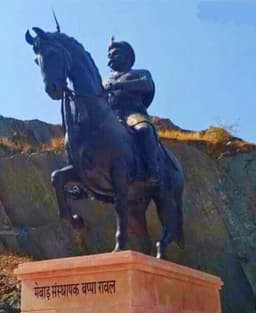
Bappa Rawal
Emperor · Medieval
47.8Total
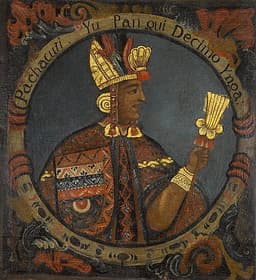
Pachacuti
Emperor · Medieval
69.4Total
Basic Information
Born
713
1418
Died
780
1472
Era
Medieval
Medieval
Nationality
India
Inca Empire
Occupation
Emperor
Emperor
Civilization
Indian
Other
Score Comparison
Military (10%)
10.0
78.5
Political (20%)
35.1
58.1
Influence (20%)
58.0
65.0
Legacy (20%)
50.0
72.0
Leadership (15%)
67.0
78.0
Strategy (15%)
45.0
69.2
TOTAL
47.8
69.4
Bappa Rawal — Complete Timeline
734 AD
Conquest of ChittorWar◆ Major
Bappa Rawal captured the fort of Chittor from the Mori Rajputs, establishing it as the capital of the Mewar kingdom. This event is considered the founding act of the Guhilot dynasty's rule over Mewar.
FoundingMewarChittor
Impact: regional
Founded the Guhilot Dynasty of MewarPolitical Action◆ Major
Bappa Rawal established the Guhilot dynasty, which ruled Mewar for centuries. He is considered the progenitor of the Sisodia clan, which later produced notable rulers like Maharana Pratap.
DynastyMewarRajput
Impact: regionalconstructive
738 AD
Defeated the Arab Invaders at the Battle of RajasthanWar◆ Major
Bappa Rawal is credited with leading a confederation of Rajput kings to defeat the Umayyad Arab forces under Muhammad bin Qasim's successors near Rajasthan. This victory halted Arab expansion into northern India.
Arab InvasionDefenseRajput Confederation
Impact: regional
Pachacuti — Complete Timeline
1438 AD
Conquest of the Chanka KingdomWar
Pachacuti led the Inca army to defeat the Chanka, a powerful rival, in a decisive battle near Cusco. This victory secured his position as Sapa Inca and initiated a period of rapid expansion, transforming the Inca from a small kingdom into a vast empire.
ConquestInca ExpansionChanka
Impact: regional
1440 AD
Reconstruction of CuscoCultural◆ Major
Pachacuti rebuilt Cusco as the imperial capital, designing it in the shape of a puma and constructing massive stone structures like Sacsayhuam
Urban PlanningArchitectureInca Empire
Impact: regionalconstructive
1450 AD
Initiation of Machu Picchu's ConstructionCultural◆ Major
Pachacuti ordered the construction of Machu Picchu, a royal estate and ceremonial site high in the Andes. The complex featured sophisticated dry-stone masonry and terraced agriculture, serving as a symbol of Inca engineering and a retreat for the emperor.
ArchitectureRoyal EstateInca Engineering
Impact: regionalconstructive
Expert Analysis
Pachacuti vs Bappa Rawal
The Mountain and the Fortress
In the high Andes of 1438, a young prince not destined to rule led his father’s army against the fierce Chanka warriors who had besieged Cusco. Nearly seven hundred years earlier, in the arid plains of northwestern India, another prince—perhaps a refugee from a fallen kingdom—seized a hilltop fort that would become the soul of a dynasty. Both men, Pachacuti and Bappa Rawal, emerged from obscurity to found empires. But one built a state that stretched two thousand miles; the other built a lineage that would defy invaders for a millennium. Why did their paths diverge so dramatically?
Origins
Pachacuti was born in 1418 into the Inca royal family, the son of Sapa Inca Viracocha. But he was not the heir—that privilege belonged to his brother Urco. The Inca kingdom was then a modest highland state, one among many in the fractured Andean world. Young Cusi Yupanqui (his birth name) grew up watching his father’s cautious diplomacy, learning that survival required both war and wisdom.
Bappa Rawal’s origins are shrouded in legend. Born around 713, he is said to have descended from the Gupta emperors, but historical records suggest a more humble reality: he may have been a chieftain of the Guhilot clan, pastoralists who roamed the Aravalli hills. Unlike Pachacuti, who inherited a functioning state, Bappa inherited only a name and a memory of lost glory. The difference is crucial: Pachacuti expanded an existing order; Bappa Rawal had to create one from fragments.
Rise to Power
The turning point for Pachacuti came in 1438, when the Chanka army, a coalition of powerful highland tribes, marched on Cusco. King Viracocha and the designated heir fled, but the young prince refused to retreat. Rallying the city’s defenders, he led a desperate counterattack that shattered the Chanka forces. The victory was so complete that his father abdicated, and Cusi Yupanqui took the throne as Pachacuti—“He Who Shakes the Earth.”
Bappa Rawal’s rise was less dramatic but no less decisive. In 734, he led his followers against the Mori Rajputs who held the fortress of Chittor. The Mori were weakened by internal strife, and Bappa’s capture of the citadel was as much a political coup as a military one. He did not conquer a kingdom; he seized a symbol. That same year, he founded the Guhilot dynasty of Mewar, claiming descent from the sun god Surya—a legitimizing myth that would sustain his descendants for centuries.
Leadership & Governance
Pachacuti was a revolutionary administrator. After securing his throne, he rebuilt Cusco in 1440 as a sacred city shaped like a puma, with stone walls so precisely cut that a knife blade could not fit between them. He then designed an imperial system that was unprecedented in the Americas: a network of roads linking every province, a state-run economy based on labor tribute, and a cult of the sun god Inti that made the emperor a living deity. By 1450, he had ordered the construction of Machu Picchu, a mountain retreat that embodied his vision of order imposed on nature.
Bappa Rawal’s governance was more personal and less systematic. He ruled through clan loyalty, not bureaucracy. His great achievement was not building cities but founding a dynasty that would resist foreign domination. The Guhilot code of honor—Rajput dharma—emphasized courage, loyalty, and sacrifice. Where Pachacuti created institutions, Bappa Rawal created a bloodline.
Triumph & Tragedy
Pachacuti’s greatest triumph was his conquest of the Chanka, which transformed a minor kingdom into an imperial power. But his tragedy was the fragility of his creation. The empire he built depended entirely on his personal authority; after his death in 1472, his successors struggled to maintain control. Within sixty years, Spanish conquistadors would exploit these internal divisions to destroy the Inca state.
Bappa Rawal’s greatest moment came in 738, when he allegedly led a confederation of Rajput kings against the Umayyad Arab army at the Battle of Rajasthan. The Arabs had conquered Sindh and were pushing east; Bappa’s victory checked their advance into central India. This was not the conquest of an empire but the defense of a civilization. His tragedy was that he could not unite the Rajput clans permanently; after his death, they returned to their feuds.
Character & Destiny
Pachacuti was a visionary who believed that order could be imposed on chaos. His name itself reflects this: he wanted to shake the earth and remake it. He was ruthless when necessary—he executed his own brother after the Chanka war—but also patient, spending years planning the reconstruction of Cusco. His destiny was to create something vast and fragile.
Bappa Rawal was a survivor, not a builder. He did not try to transform the world; he tried to preserve a way of life. His name—“Bappa” means father in Mewari—suggests a patriarch, not a god-king. He was a unifier of clans, not a creator of institutions. His destiny was to plant a seed that would outlast him.
Legacy
Pachacuti is remembered as the Napoleon of the Andes, the man who turned a mountain kingdom into an empire. His administrative innovations—the road system, the labor tax, the state religion—influenced every subsequent Andean civilization. But his legacy is also a cautionary tale: without strong institutions, even the greatest conqueror’s work can crumble.
Bappa Rawal’s legacy is more intimate but more enduring. The Guhilot dynasty he founded ruled Mewar for over a thousand years, producing heroes like Maharana Pratap who defied the Mughals. Today, Bappa Rawal is revered as the father of the Rajput ethos—a symbol of resistance against foreign invasion. His name is invoked not in history books but in folk songs and family genealogies.
Conclusion
Standing at the edge of Machu Picchu, one feels the weight of Pachacuti’s ambition—a man who carved a civilization from stone. Standing at the gates of Chittor, one feels the weight of Bappa Rawal’s defiance—a man who carved a dynasty from memory. Both were founders, but they founded different things: one an empire, the other a legacy. Their stories remind us that greatness is not measured only by the size of what we build, but by the depth of what we leave behind. In the end, Pachacuti’s stones still stand, but Bappa Rawal’s spirit still fights.
Rankings
🥇
PachacutiLeader
Mil: 78.5Pol: 58.1Inf: 65.0
69.4
🥈
Bappa Rawal
Mil: 10.0Pol: 35.1Inf: 58.0
47.8
+21.6 behind
How This Comparison Works
Algorithm
Each figure is scored on 6 dimensions (0—100 scale) based on structured historical data: Military (10%), Political (20%), Influence (20%), Legacy (20%), Leadership (15%), Strategy (15%). The weighted total produces the final ranking.
Data Sources
Scores are computed from structured sub-indicators in the database. Scale factors adjust for era (Ancient ×0.85, Modern ×1.0) and civilization size (Eastern ×1.05, Other ×0.80) to account for differences in population and military scale.
Maximum 3 Figures
Comparisons are limited to 2—3 figures to ensure readability and statistical meaningfulness.
Error Margins
±5 points per dimension — Sub-scores are derived from historical records with inherent uncertainty. Two figures within 5 points on a dimension should be considered roughly equivalent in that area.
Total Score Accuracy
±3 points overall — The weighted combination of 6 dimensions produces a total score with approximately ±3 points of uncertainty. Differences of less than 3 points are not statistically significant— the figures are effectively tied.
Known Limitations
- Historical records are incomplete and uneven across civilizations
- Figures from oral-tradition societies may be underrepresented
- Occupation labels can misclassify multi-role figures
- Scores measure capability and impact, not moral character
- Quantitative scoring is a comparison tool, not absolute truth
Capability Radar
Military (10%) — Battles & Warfare
Battles
40
85
Win Rate
45
90
Expansion
35
90
Political (20%) — Governance & Reform
Reform
30
92
Diplomacy
35
75
Economy
25
80
Influence (20%) — Cultural & Global Reach
Cultural
40
85
Global
20
65
Legacy (20%) — Historical Impact
Historical
45
80
Longevity
50
70
Leadership (15%) — Power & Stability
Tenure
50
85
Stability
40
82
Strategy (15%) — Tactics & Innovation
Strategy
30
88
Tactics
35
80
Reform
25
85
Similar Comparisons
Comments & Discussion
马背上的骑士6/16/2026
Bappa Rawal 才是真英雄。他白手起家,从无到有建立王朝,而 Pachacuti 不过是继承了父亲的政治遗产。Bappa 在 713 年夺取奇托尔堡时,面对的是一个混乱世界,没有军队、没有盟友,只有勇气和信念。相比之下,Pachacuti 的扩张更像是锦上添花—他已经有了印加的基础。真正的帝国开创者从不靠血统。
FactsAndFigures6/16/2026
Look, Bappa Rawal's historical footprint is barely a toe print. We have exactly zero contemporary records proving he existed before the 10th century. Pachacuti, on the other hand, is documented through multiple Spanish chronicles, Incan quipus, and archaeological sites like Sacsayhuamán. You're comparing a shadow to a stone fortress. One built an empire that feeds 10 million people today; the other? A legend that feeds nationalist myths.
古籍守望者6/16/2026
从文化传承看,Bappa Rawal 影响更深远。Pachacuti 的印加帝国在 1532 年被西班牙人一夜摧毁,文明几乎断代。而 Bappa 创建的西索迪亚王朝延续了 1,200 年,直到 1947 年才并入印度。他的血统让英国殖民者都不得不尊重。短期征服不算本事,千年的坚守才是真正的帝国。
Historian7016/16/2026
Pachacuti was a military genius who transformed a minor kingdom into the Tiwanaku-sized Inca Empire through sheer strategic brilliance. His victory over the Chanka at 15 years old wasn't luck—it was tactical acumen. Bappa Rawal? Just another Rajput chieftain who grabbed a fort. Give me a mountain fortress any day over a 2,500-mile highway system. One built roads, the other built legends; I'll take the roads.
Chronicler61426/16/2026
Both are overhyped by their respective nationalist narratives. Pachacuti was a brutal conqueror who enslaved entire populations—the Chanka weren't just defeated, they were ethnically cleansed. Bappa Rawal? A "liberator" who probably just swapped one feudal overlord for another. Let's not pretend either was building a benevolent empire. Military history is about power, not morality. Give me the realpolitik any day.