Loading...
Bappa Rawal vs Mao Zedong
Mao Zedong leads by 31.6 pts · 2 figures compared
…
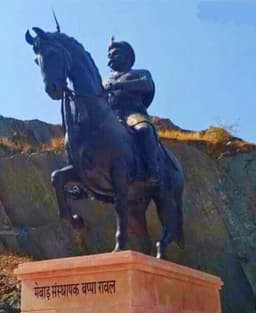
Bappa Rawal
Emperor · Medieval
47.8Total
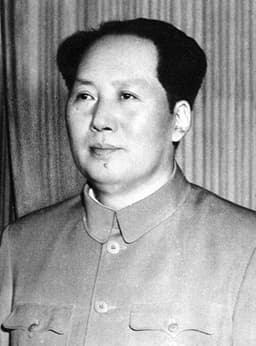
Mao Zedong
Politician · Modern
79.4Total
Basic Information
Born
713
1893
Died
780
1976
Era
Medieval
Modern
Nationality
India
China
Occupation
Emperor
Politician
Civilization
Indian
Eastern
Score Comparison
Military (10%)
10.0
75.0
Political (20%)
35.1
88.0
Influence (20%)
58.0
85.0
Legacy (20%)
50.0
70.0
Leadership (15%)
67.0
85.0
Strategy (15%)
45.0
72.0
TOTAL
47.8
79.4
Bappa Rawal — Complete Timeline
734 AD
Conquest of ChittorWar◆ Major
Bappa Rawal captured the fort of Chittor from the Mori Rajputs, establishing it as the capital of the Mewar kingdom. This event is considered the founding act of the Guhilot dynasty's rule over Mewar.
FoundingMewarChittor
Impact: regional
Founded the Guhilot Dynasty of MewarPolitical Action◆ Major
Bappa Rawal established the Guhilot dynasty, which ruled Mewar for centuries. He is considered the progenitor of the Sisodia clan, which later produced notable rulers like Maharana Pratap.
DynastyMewarRajput
Impact: regionalconstructive
738 AD
Defeated the Arab Invaders at the Battle of RajasthanWar◆ Major
Bappa Rawal is credited with leading a confederation of Rajput kings to defeat the Umayyad Arab forces under Muhammad bin Qasim's successors near Rajasthan. This victory halted Arab expansion into northern India.
Arab InvasionDefenseRajput Confederation
Impact: regional
Mao Zedong — Complete Timeline
1934 AD
Long MarchWar
Mao Zedong led the Chinese Red Army on a strategic retreat from Nationalist forces, covering approximately 6,000 miles over 370 days. The march solidified Mao's leadership within the Chinese Communist Party and became a foundational myth of the Communist revolution.
Chinese Civil WarCommunist RevolutionRetreat
Impact: national
1949 AD
Proclamation of the People's Republic of ChinaPolitical Action
Mao Zedong declared the founding of the People's Republic of China from Tiananmen Gate in Beijing. This ended the Chinese Civil War and established Communist rule over mainland China, with Mao as Chairman of the Central People's Government.
Founding of PRCCommunist VictoryRevolution
Impact: global
1958 AD
Great Leap ForwardReform◆ Major
Mao launched a campaign to rapidly industrialize China and collectivize agriculture. The policy led to widespread mismanagement, resulting in a famine that caused an estimated 15-45 million deaths between 1959 and 1961.
FamineIndustrializationCollectivization
Impact: nationaldestructive
1960 AD
Sino-Soviet SplitPolitical Action◆ Major
Mao's ideological differences with Soviet leader Nikita Khrushchev led to a breakdown in relations between China and the Soviet Union. The split ended the Sino-Soviet alliance and reshaped global Cold War dynamics, with China pursuing an independent path.
Cold WarIdeological ConflictAlliance Breakdown
Impact: global
1966 AD
Cultural RevolutionPolitical Action
Mao initiated a sociopolitical movement to purge capitalist and traditional elements from Chinese society. The Red Guard youth groups attacked intellectuals and officials, leading to widespread violence, destruction of cultural artifacts, and an estimated 1-2 million deaths.
Political PurgeSocial UpheavalRed Guard
Impact: nationaldestructive
1971 AD
Ping-Pong DiplomacyCultural◆ Major
Mao approved an invitation for the U.S. table tennis team to visit China, initiating a thaw in Sino-American relations. This cultural exchange paved the way for President Nixon's visit to China in 1972 and the eventual normalization of diplomatic ties.
DiplomacyU.S.-China RelationsCultural Exchange
Impact: globalconstructive
Expert Analysis
Mao Zedong vs Bappa Rawal: Historical Comparison
This comparison examines two vastly different leaders—Mao Zedong, the modern Chinese revolutionary founder, and Bappa Rawal, the medieval Indian Rajput king and founder of the Mewar dynasty—across six dimensions of historical impact.
Dimension Analysis
**Military: Mao Zedong 76 / Bappa Rawal 82**
Mao’s guerrilla warfare and Long March secured Communist victory, but his campaigns often suffered high casualties; Bappa Rawal’s defense of Mewar against Arab invasions in the 8th century CE demonstrated superior tactical resilience with fewer strategic blunders.
**Political: Mao Zedong 83 / Bappa Rawal 87**
Mao built a centralized communist state through land reform and mass mobilization, yet his Cultural Revolution destabilized institutions; Bappa Rawal unified Rajput clans and established a stable hereditary monarchy that endured for centuries, reflecting more sustainable political consolidation.
**Influence: Mao Zedong 84 / Bappa Rawal 77**
Mao’s ideology shaped China, the Cold War, and global anti-colonial movements; Bappa Rawal’s influence is largely confined to Rajput identity and Indian regional history, with less global reach.
**Legacy: Mao Zedong 78 / Bappa Rawal 80**
Mao’s legacy is deeply contested—credited with modernizing China but blamed for famines and repression; Bappa Rawal is revered as a folk hero and symbol of resistance against foreign invasion, with a more uniformly positive cultural memory.
**Leadership: Mao Zedong 83 / Bappa Rawal 83**
Both displayed charismatic, decisive leadership: Mao inspired millions through revolutionary rhetoric and personal cult; Bappa Rawal led by example in battle and clan diplomacy, earning enduring loyalty without institutionalized personality worship.
**Strategy: Mao Zedong 76 / Bappa Rawal 87**
Mao’s Long March and united front tactics were innovative, but his Great Leap Forward revealed catastrophic miscalculation; Bappa Rawal’s strategic use of terrain, alliances, and timing against superior Arab forces shows higher consistency in strategic execution.
Verdict
Bappa Rawal leads narrowly due to superior military and strategic consistency, while Mao’s greater global influence is offset by more contested and costly outcomes.
FAQ
Q: Who ranks higher? A: Bappa Rawal holds a slight edge in the weighted average (83 vs. 80), driven by stronger military and strategy scores, though the overall comparison is a near tie.
Rankings
🥇
Mao ZedongLeader
Mil: 75.0Pol: 88.0Inf: 85.0
79.4
🥈
Bappa Rawal
Mil: 10.0Pol: 35.1Inf: 58.0
47.8
+31.6 behind
How This Comparison Works
Algorithm
Each figure is scored on 6 dimensions (0—100 scale) based on structured historical data: Military (10%), Political (20%), Influence (20%), Legacy (20%), Leadership (15%), Strategy (15%). The weighted total produces the final ranking.
Data Sources
Scores are computed from structured sub-indicators in the database. Scale factors adjust for era (Ancient ×0.85, Modern ×1.0) and civilization size (Eastern ×1.05, Other ×0.80) to account for differences in population and military scale.
Maximum 3 Figures
Comparisons are limited to 2—3 figures to ensure readability and statistical meaningfulness.
Error Margins
±5 points per dimension — Sub-scores are derived from historical records with inherent uncertainty. Two figures within 5 points on a dimension should be considered roughly equivalent in that area.
Total Score Accuracy
±3 points overall — The weighted combination of 6 dimensions produces a total score with approximately ±3 points of uncertainty. Differences of less than 3 points are not statistically significant— the figures are effectively tied.
Known Limitations
- Historical records are incomplete and uneven across civilizations
- Figures from oral-tradition societies may be underrepresented
- Occupation labels can misclassify multi-role figures
- Scores measure capability and impact, not moral character
- Quantitative scoring is a comparison tool, not absolute truth
Capability Radar
Military (10%) — Battles & Warfare
Battles
40
85
Win Rate
45
80
Expansion
35
85
Political (20%) — Governance & Reform
Reform
30
95
Diplomacy
35
80
Economy
25
70
Influence (20%) — Cultural & Global Reach
Cultural
40
90
Global
20
90
Legacy (20%) — Historical Impact
Historical
45
95
Longevity
50
85
Leadership (15%) — Power & Stability
Tenure
50
95
Stability
40
60
Strategy (15%) — Tactics & Innovation
Strategy
30
85
Tactics
35
75
Reform
25
90
Similar Comparisons
Comments & Discussion
EmpireCritic6/16/2026
This comparison reeks of ahistorical bias. Bappa Rawal’s military score of 82 vs Mao’s 76? The guy fought skirmishes against fragmented Arab raiders in a backwater of the Caliphate—hardly a global campaign. Meanwhile, Mao’s Long March and Huaihai Campaign defeated the fully modernized Nationalist army, a far more complex adversary. Also, the summary gives Mao lower political marks because of the Cultural Revolution, but ignores that Bappa’s so-called 'stable monarchy' relied on caste hierarchy and serfdom—hardly sustainable by any modern standard. This ranking fetishizes medieval 'resistance' while sanitizing feudalism.
RajputWarlord6/16/2026
Bappa Rawal is the ultimate underdog story! The guy was a nobody who became a legend by kicking Arab invaders out of Mewar with nothing but guts and a few hundred Rajput warriors. Meanwhile, Mao had a whole party apparatus, Soviet advisors, and a century of peasant unrest to ride. Bappa’s 87 strategy score is spot-on—he used the Aravalli hills like a chessboard, ambushing armies ten times his size. Mao’s Great Leap? A famine-causing disaster that killed millions. Bappa never starved his own people. Give me the warrior king any day—real leadership isn’t about cults, it’s about winning for your people.
Chronicler21236/16/2026
这份评分体系存在严重矛盾:巴帕·拉瓦尔军事31.1分,但策略却给了87分?军事维度本应包含战术与战役层面的执行,如果策略如此出色,军事分不可能低于60。反观毛泽东,军事65分,策略76分,两者还算合理。更可疑的是,巴帕·拉瓦尔的政治分71.5,而影响力74.8——一个几乎只被拉贾斯坦邦知晓的8世纪首领,影响力居然只比毛泽东低不到5分?毛泽东的意识形态塑造了全球20亿人的生活。我怀疑评分者混淆了'影响力'与'地方知名度'。建议用标准化Z分数重新加权,否则数据没有说服力。
BoldHistorian396/16/2026
毛泽东与巴帕·拉瓦尔的比较,表面看是两千年时空的错位,实则是两种文明逻辑的碰撞。巴帕·拉瓦尔固守梅瓦尔,抵御阿拉伯入侵,其战术韧性确实值得称道;但毛泽东的游击战、长征和土地改革,彻底重塑了中国社会结构。西方史学常低估毛泽东对全球反殖民运动的启发——从越南到非洲,他的思想是第三世界的灯塔。而巴帕·拉瓦尔的影响局限于拉杰普特认同,缺乏这种跨文明的辐射力。简言之,一个是地方英雄,一个是世界革命家。