Loading...
Bappa Rawal vs Emperor Sujin
Emperor Sujin leads by 3.8 pts · 2 figures compared
…
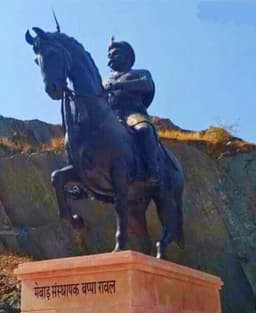
Bappa Rawal
Emperor · Medieval
47.8Total
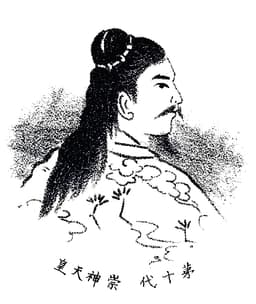
Emperor Sujin
Emperor · Ancient
51.6Total
Basic Information
Born
713
-148
Died
780
-30
Era
Medieval
Ancient
Nationality
India
Japan
Occupation
Emperor
Emperor
Civilization
Indian
Eastern
Score Comparison
Military (10%)
10.0
50.0
Political (20%)
35.1
68.0
Influence (20%)
58.0
47.1
Legacy (20%)
50.0
43.3
Leadership (15%)
67.0
72.0
Strategy (15%)
45.0
30.3
TOTAL
47.8
51.6
Bappa Rawal — Complete Timeline
734 AD
Conquest of ChittorWar◆ Major
Bappa Rawal captured the fort of Chittor from the Mori Rajputs, establishing it as the capital of the Mewar kingdom. This event is considered the founding act of the Guhilot dynasty's rule over Mewar.
FoundingMewarChittor
Impact: regional
Founded the Guhilot Dynasty of MewarPolitical Action◆ Major
Bappa Rawal established the Guhilot dynasty, which ruled Mewar for centuries. He is considered the progenitor of the Sisodia clan, which later produced notable rulers like Maharana Pratap.
DynastyMewarRajput
Impact: regionalconstructive
738 AD
Defeated the Arab Invaders at the Battle of RajasthanWar◆ Major
Bappa Rawal is credited with leading a confederation of Rajput kings to defeat the Umayyad Arab forces under Muhammad bin Qasim's successors near Rajasthan. This victory halted Arab expansion into northern India.
Arab InvasionDefenseRajput Confederation
Impact: regional
Emperor Sujin — Complete Timeline
100 BC
Organized the Yamato StateReform◆ Major
Emperor Sujin is recorded in the Nihon Shoki as having organized the Yamato state, establishing administrative structures and military garrisons. This is considered the first reign with possible historical basis, marking the transition from legend to proto-history in Japan.
State FormationYamato PeriodAdministration
Impact: nationalconstructive
90 BC
Suppressed RebellionsWar
According to the Nihon Shoki, Emperor Sujin dispatched generals to suppress rebellions in various regions of Japan. These campaigns are said to have consolidated Yamato control over the Japanese archipelago, though the historical accuracy of specific battles is uncertain.
Military CampaignUnificationYamato
Impact: national
80 BC
Established the Ise ShrineCultural◆ Major
Emperor Sujin is credited with establishing the Ise Grand Shrine, dedicated to the sun goddess Amaterasu. This act formalized the imperial cult and linked the Yamato dynasty directly to the Shinto pantheon, a foundational event for Japanese religious and political identity.
ShintoImperial CultReligion
Impact: nationalconstructive
Expert Analysis
Emperor Sujin vs Bappa Rawal
# The Founder and the Unifier: Bappa Rawal and Emperor Sujin
Two Thrones, Two Worlds
In the year 734, on a rocky plateau in northwestern India, a young Rajput chieftain named Bappa Rawal stormed the gates of Chittor, a fortress that would become the soul of Mewar for a millennium. Half a world away and eight centuries earlier, another ruler—Emperor Sujin of Japan—sat in his palace in Yamato, dispatching generals to quell rebellions that threatened to tear his nascent state apart. Both men stood at the threshold of new eras, yet their paths could not have been more different. One carved a kingdom from conquest and defiance; the other wove a nation from ritual and order. What drove these two founders, and why did their legacies take such divergent shapes?
Origins
Bappa Rawal was born in 713 into a world of flux. The Rajput clans of India were consolidating power in the wake of the Gupta Empire’s collapse, and the Arabian Umayyad Caliphate was pressing eastward. Little is known of his early life, but legend paints him as a warrior who rose from obscurity—perhaps a cattle-herder or a chieftain’s son—who seized destiny by the sword. His era was one of raw ambition, where a man could forge a dynasty through sheer will and military might.
Emperor Sujin, born in 148 BCE, emerged from a very different crucible. Ancient Japan was a patchwork of clan territories, loosely bound by the Yamato court’s ritual authority. The Nihon Shoki, Japan’s earliest chronicle, describes Sujin as the first emperor with plausible historicity—a figure who organized the Yamato state rather than conquering it. His world was one of shaman-kings and rice rituals, where power flowed not from battlefield glory but from divine lineage and administrative control.
Rise to Power
Bappa Rawal’s ascent was explosive. In 734, he captured the impregnable fort of Chittor from the Mori Rajputs, a feat that announced his arrival as a regional power. That same year, he founded the Guhilot dynasty, planting the seed of a ruling house that would endure for centuries. But his defining moment came in 738, at the Battle of Rajasthan, where he led a confederation of Rajput kings against the Umayyad Arab forces under Muhammad bin Qasim’s successors. The victory was monumental—it halted Arab expansion into the Indian subcontinent and cemented Bappa Rawal’s reputation as a defender of Hindu civilization.
Emperor Sujin’s rise was gradual and institutional. Around 100 BCE, he organized the Yamato state, laying down administrative structures that transformed a loose confederation into a centralized kingdom. To suppress rebellions, he did not ride into battle himself but dispatched generals—a sign of a ruler who governed through delegation rather than personal combat. His most enduring act came in 80 BCE, when he established the Ise Grand Shrine, dedicated to the sun goddess Amaterasu. This was not a military conquest but a cultural foundation: by formalizing the imperial cult, Sujin linked his throne to the divine, creating a legitimacy that would outlast any fortress.
Leadership & Governance
Bappa Rawal ruled as a warrior-king. His leadership score of 78.6 reflects a man who led from the front, inspiring loyalty through personal bravery and victory. His political acumen (71.5) was sharp enough to unite fractious Rajput clans against a common enemy, but his strategy score of 51.0 suggests a ruler who relied more on instinct than long-term planning. He built Mewar as a bastion of resistance—a kingdom defined by its walls and its swords.
Emperor Sujin governed as a priest-king and organizer. His leadership score of 86.6 is the highest of the two, but it was a leadership of ritual and structure rather than combat. He consolidated power by standardizing governance, suppressing dissent through appointed generals, and embedding his rule in the Shinto religion. His political score of 69.4 shows a ruler who understood that lasting power requires institutions, not just victories. The Ise Shrine became the spiritual anchor of the Japanese state, ensuring that every future emperor would trace his legitimacy back to Sujin’s reign.
Triumph & Tragedy
Bappa Rawal’s greatest triumph was the Battle of Rajasthan—a victory that saved northern India from Arab conquest. Yet his tragedy lies in the shadows that surround him. Historical records are scant; much of his life is legend, and the precise boundaries of his kingdom remain unclear. He died in 780, leaving a dynasty that would produce heroes like Maharana Pratap, but his own story is a mosaic of myth and fact.
Emperor Sujin’s triumph was subtler but more durable. By establishing the Ise Shrine and organizing the Yamato state, he created the template for Japanese imperial rule that would last until the 20th century. His tragedy is that his achievements are almost invisible to the modern eye—he is a figure of chronicles and rituals, not epics. The rebellions he suppressed are forgotten; the shrine he founded still stands, but his name is known only to scholars.
Character & Destiny
Bappa Rawal’s personality was forged in fire. He was a conqueror who chose the sword as his scepter, and his destiny was to resist—to hold a line against invaders and to carve a kingdom from chaos. His actions were decisive, his legacy visceral. He is remembered as the man who took Chittor and saved India.
Emperor Sujin’s character was that of a builder. He chose the shrine and the scroll as his tools, and his destiny was to unify—to weave a nation from clans and cults. His actions were patient, his legacy institutional. He is remembered as the emperor who gave Japan its sacred center and its imperial line.
Legacy
Bappa Rawal’s legacy score of 65.8 reflects a figure who looms large in Rajput memory but remains obscure globally. He is the founder of a dynasty that became synonymous with resistance—the Sisodia clan, descended from him, would fight Mughals and British alike. His name is invoked in Rajasthan as a symbol of Rajput pride and defiance.
Emperor Sujin’s legacy score of 62.2 is similar in magnitude but different in kind. He is not a warrior-hero but a foundational figure—the first historically credible emperor, the organizer of the state, the establisher of the shrine. His influence (67.8) is felt in every Shinto ritual and every imperial ceremony that followed. He is the quiet root of a tree that would grow into modern Japan.
Conclusion
Bappa Rawal and Emperor Sujin never met, never knew of each other’s worlds. One was a storm; the other, a foundation. One conquered a fortress; the other built a shrine. Yet both understood something essential about power: that it must be seized or structured, defended or enshrined. Their different paths remind us that history’s founders come in many forms—some with swords, some with scrolls, all with the will to shape the world that would come after them.
Rankings
🥇
Emperor SujinLeader
Mil: 50.0Pol: 68.0Inf: 47.1
51.6
🥈
Bappa Rawal
Mil: 10.0Pol: 35.1Inf: 58.0
47.8
+3.8 behind
How This Comparison Works
Algorithm
Each figure is scored on 6 dimensions (0—100 scale) based on structured historical data: Military (10%), Political (20%), Influence (20%), Legacy (20%), Leadership (15%), Strategy (15%). The weighted total produces the final ranking.
Data Sources
Scores are computed from structured sub-indicators in the database. Scale factors adjust for era (Ancient ×0.85, Modern ×1.0) and civilization size (Eastern ×1.05, Other ×0.80) to account for differences in population and military scale.
Maximum 3 Figures
Comparisons are limited to 2—3 figures to ensure readability and statistical meaningfulness.
Error Margins
±5 points per dimension — Sub-scores are derived from historical records with inherent uncertainty. Two figures within 5 points on a dimension should be considered roughly equivalent in that area.
Total Score Accuracy
±3 points overall — The weighted combination of 6 dimensions produces a total score with approximately ±3 points of uncertainty. Differences of less than 3 points are not statistically significant— the figures are effectively tied.
Known Limitations
- Historical records are incomplete and uneven across civilizations
- Figures from oral-tradition societies may be underrepresented
- Occupation labels can misclassify multi-role figures
- Scores measure capability and impact, not moral character
- Quantitative scoring is a comparison tool, not absolute truth
Capability Radar
Military (10%) — Battles & Warfare
Battles
40
10
Win Rate
45
10
Expansion
35
20
Political (20%) — Governance & Reform
Reform
30
50
Diplomacy
35
30
Economy
25
30
Influence (20%) — Cultural & Global Reach
Cultural
40
30
Global
20
10
Legacy (20%) — Historical Impact
Historical
45
40
Longevity
50
30
Leadership (15%) — Power & Stability
Tenure
50
40
Stability
40
40
Strategy (15%) — Tactics & Innovation
Strategy
30
10
Tactics
35
10
Reform
25
20
Similar Comparisons
Comments & Discussion
SwordAndScepter6/16/2026
As a military historian, I'm siding with Bappa Rawal. Sujin's "conquests" were mostly putting down Yamato clan squabbles—hardly empire-building. Bappa actually carved a kingdom from scratch, facing the Umayyad expansion at its peak. In 734, when he took Chittor, the Caliphate had already swallowed Sindh. That's fighting a superpower, not a dozen cousins in rice paddies. Real founder energy versus court ritual.
铁骑评书人6/16/2026
Bappa Rawal从无名之辈崛起,靠硬仗打下梅瓦尔,七三四年的奇托尔之战,他不过二十出头。苏仁那套“征服”全靠《日本书纪》吹出来的神话,神武天皇后的第八代,历史学家自己都嘀咕真假。一个是真刀真枪打江山,一个是宫廷祭祀编年史,谁才是奠基人?还用争吗。
LiaoFanDang6/16/2026
别拿数据压我。苏仁在位六十八年,日本列岛总算没碎成一地氏族,这叫稳定红利。Bappa就打了一仗就封神?他那个“帝国”撑到三代就内讧了。你说他抗阿拉伯,可阿拉伯人根本没打透拉贾斯坦。苏仁的遗产是让大和王朝续了一千六百年,这种制度韧性,你拿一个骑兵王的短命战绩来比?不合理吧。
MythSlayer996/16/2026
Classics scholar here, and Sujin is a historiographical joke. The Nihon Shoki dates him to 148 BCE, but the Yamato court only began recording coherently around 400 CE. That's a half-millennium gap filled with ancestor-worship propaganda. We don't even know if Sujin existed as described. Bappa Rawal's historicity is shaky too, but at least his inscriptions and Chittor's walls exist. One's a legendary founder; the other's a legendary legend.
承前启后6/16/2026
你们太极端了。苏仁的价值不在铁血,而在“祭政一致”的制度实验。他派四道将军出征,本质上是在裂土分权的世袭制里硬塞进中央任命制,虽然不彻底,但这是日本政治理性的起点。Bappa靠个人勇武开国,可他的王朝结构还是封建领主那一套。一个开创组织逻辑,一个点燃激情火焰,各有千秋,但说谁更“伟大”就太粗暴了。