Loading...
Bappa Rawal vs Baybars
Baybars leads by 16.0 pts · 2 figures compared
…
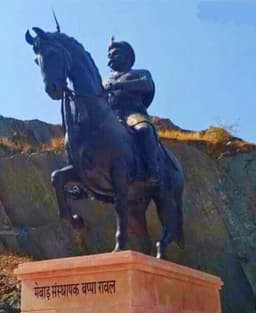
Bappa Rawal
Emperor · Medieval
47.8Total
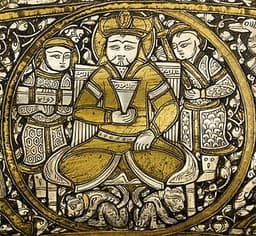
Baybars
Emperor · Medieval
63.8Total
Basic Information
Born
713
1223
Died
780
1277
Era
Medieval
Medieval
Nationality
India
Egypt
Occupation
Emperor
Emperor
Civilization
Indian
Middle Eastern
Score Comparison
Military (10%)
10.0
85.0
Political (20%)
35.1
70.0
Influence (20%)
58.0
55.0
Legacy (20%)
50.0
52.0
Leadership (15%)
67.0
72.0
Strategy (15%)
45.0
72.0
TOTAL
47.8
63.8
Bappa Rawal — Complete Timeline
734 AD
Conquest of ChittorWar◆ Major
Bappa Rawal captured the fort of Chittor from the Mori Rajputs, establishing it as the capital of the Mewar kingdom. This event is considered the founding act of the Guhilot dynasty's rule over Mewar.
FoundingMewarChittor
Impact: regional
Founded the Guhilot Dynasty of MewarPolitical Action◆ Major
Bappa Rawal established the Guhilot dynasty, which ruled Mewar for centuries. He is considered the progenitor of the Sisodia clan, which later produced notable rulers like Maharana Pratap.
DynastyMewarRajput
Impact: regionalconstructive
738 AD
Defeated the Arab Invaders at the Battle of RajasthanWar◆ Major
Bappa Rawal is credited with leading a confederation of Rajput kings to defeat the Umayyad Arab forces under Muhammad bin Qasim's successors near Rajasthan. This victory halted Arab expansion into northern India.
Arab InvasionDefenseRajput Confederation
Impact: regional
Baybars — Complete Timeline
1260 AD
Battle of Ain Jalut (1260)War◆ Major
Baybars served as a key commander under Qutuz at the Battle of Ain Jalut. He led the vanguard and played a crucial role in the Mamluk victory over the Mongols. This battle established his reputation as a military leader.
Mongol InvasionBattleMamluk Victory
Impact: globalconstructive
Accession as Sultan (1260)Political Action◆ Major
After assassinating Qutuz, Baybars proclaimed himself Sultan of Egypt. He was accepted by the Mamluk commanders and the Abbasid Caliph. His reign began a period of Mamluk dominance in the Middle East, lasting for decades.
SuccessionMamluk SultanateAssassination
Impact: regional
1265 AD
Campaigns against the Crusader States (1260s-1270s)War◆ Major
Baybars launched a series of campaigns against the remaining Crusader states in the Levant. He captured key fortresses including Arsuf (1265), Safed (1266), Jaffa (1268), and Antioch (1268). These victories reduced Crusader territory to a few coastal enclaves.
Crusader WarsConquestMamluk Expansion
Impact: regionaldestructive
1277 AD
Defeat of the Mongols at Elbistan (1277)War◆ Major
Baybars defeated a Mongol army at the Battle of Elbistan in Anatolia. He invaded the Seljuk Sultanate of Rum, which was under Mongol suzerainty. Although a tactical victory, Baybars could not hold Anatolia and returned to Syria.
Mongol WarsBattleAnatolia
Impact: regionalconstructive
Death of Baybars (1277)Other◆ Major
Baybars died in Damascus, possibly from poisoning or illness. His death was kept secret for a time to prevent unrest. He was succeeded by his son Al-Said Barakah. Baybars' reign is considered the peak of the early Mamluk Sultanate.
DeathSuccessionMamluk Sultanate
Impact: regionaltragic
Expert Analysis
Baybars vs Bappa Rawal
### The Lion and the Sultan: Two Medieval Titans Who Shaped the East
In the year 734, a young Rajput chieftain scaled the ancient walls of Chittor, claiming a fortress that would become the soul of Mewar. Just over five centuries later, in 1260, a former slave from the Kipchak steppes led a charge that shattered the myth of Mongol invincibility at Ain Jalut. Bappa Rawal and Baybars never met, yet their lives form a striking diptych of medieval greatness. Both were warriors who forged dynasties from chaos, but the worlds they built—and the shadows they cast—could not have been more different.
### Origins
Bappa Rawal was born into a world of dissolving empires. The Gupta glory had faded; the Rajput clans were emerging from the hills of Rajasthan, carving petty kingdoms from the ruins of the old order. Legend says he was a shepherd boy who dreamed of a lion—a symbol of the courage that would later define his house. His Guhilot lineage, if the bards are to be believed, traced back to the sun itself. This was a world of honor, cattle raids, and clan loyalties, where a man’s worth was measured in steel and oaths.
Baybars, by contrast, was born into the chaos of the Mongol storm. Captured as a child in the Crimea and sold in the slave markets of Syria, he was a *mamluk*—a purchased man, stripped of family and tribe. His early life was a brutal education in survival. Where Bappa inherited a myth, Baybars inherited nothing but his own body and will. The difference between a prince of legend and a slave who became a sultan is the difference between a river that knows its course and a fire that must burn its own path.
### Rise to Power
Bappa’s ascent was a tale of righteous conquest. The Mori Rajputs held Chittor, but their king had lost the mandala—the cosmic order. When Bappa married the princess of the fallen house and then claimed the fort, he was not seizing power; he was restoring dharma. His rise was sanctified by priestly blessing and popular acclaim. In 734, he founded the Guhilot dynasty, and within four years, he had rallied a coalition of Rajput kings to face a far greater threat: the Umayyad Arabs, who had already swallowed Sindh and were pushing east.
Baybars’s rise was bloodier and more pragmatic. He rose through the ranks of the Mamluk army, his skill with the bow and his tactical brilliance earning him the trust of Sultan Qutuz. At Ain Jalut in 1260, Baybars commanded the vanguard that feigned retreat, luring the Mongols into a deadly trap. But the victory was Qutuz’s—and Baybars wanted more. On the ride back to Cairo, he struck. The assassination was swift, and the army, weary of Qutuz’s arrogance, accepted Baybars as sultan. Where Bappa’s throne was built on a marriage and a myth, Baybars’s was built on a corpse and a conspiracy.
### Leadership & Governance
Bappa Rawal ruled as a *rajadharma* king—a protector of the land and its people. His military genius lay in coalition warfare: at the Battle of Rajasthan in 738, he united fractious Rajput clans against the Arab invaders, using the arid landscape to bleed the enemy dry. His political wisdom was simpler: he gave his warriors land and honor, binding them through loyalty rather than bureaucracy. Mewar under Bappa was a kingdom of chieftains, not clerks.
Baybars was a different animal. He ruled Egypt and Syria with the cold precision of a chess master. His military reforms created a standing army of mamluks, professional soldiers whose loyalty was to the sultan alone. He built a spy network that reached into the courts of Europe and the tents of the Mongol khans. His campaigns against the Crusader states were methodical: he took Antioch in 1268, not by storm but by siegecraft and diplomacy, offering terms to those who surrendered and slaughtering those who resisted. At Elbistan in 1277, he defeated the Mongols in Anatolia, proving that a slave-sultan could outmaneuver the heirs of Genghis Khan.
### Triumph & Tragedy
Bappa’s greatest triumph was the Battle of Rajasthan, where he turned back the Arab tide. It was a victory for a civilization, not just a kingdom. But his tragedy is that we know so little of him. His life blurs into legend; the historical Bappa is a silhouette against a fire. He retired to a cave to become a yogi, leaving the throne to his son. Was it exhaustion, piety, or despair? The bards say he sought moksha. The historian wonders if he simply knew his work was done.
Baybars’s tragedy is the opposite: we know too much. He died in 1277, perhaps poisoned, perhaps of a fever, in Damascus. His death was kept secret for weeks to prevent revolt. He had built an empire, but he had no heir worthy of the throne. His sons would squander his gains, and the Mamluk state would slowly decay. Baybars’s triumph was the defeat of the Mongols; his tragedy was that he could not conquer time itself.
### Character & Destiny
Bappa Rawal’s character was forged in the furnace of Rajput honor. He was a man of the *kshatriya* code: brave, generous, and bound by oaths. His destiny was to found a dynasty that would endure for a thousand years, producing heroes like Rana Pratap. His decisions were shaped by a worldview where the king was the protector of dharma, not the maker of it.
Baybars was a pragmatist. He had no code but survival and success. He was ruthless, cunning, and brilliant. His destiny was to save the Islamic world from the Mongols, but at a cost: he ruled through fear, and his state was a machine that needed constant fuel. His character was the product of a world where trust was a luxury and betrayal a tool.
### Legacy
Bappa Rawal’s legacy is the Sisodia clan of Mewar, which would later defy the Mughals for centuries. He is remembered in ballads and temples, a symbol of Rajput resistance. His name is chanted in the hills of Rajasthan, where every child knows the story of the shepherd who became a king.
Baybars’s legacy is more tangible: the Mamluk Sultanate, which would rule for 250 years, and the defeat of the Mongols, which saved the Levant and Egypt. He is remembered in the mosques he built and the laws he codified. His name is written in the chronicles of the Middle East, a reminder that a slave can become a sultan, and that a sultan can become a legend.
### Conclusion
One founded a dynasty; the other built an empire. One was a king by birthright; the other was a king by ambition. Bappa Rawal and Baybars both faced existential threats—Arabs and Mongols—and both prevailed. But the difference between them is the difference between a river and a sword. The river flows through time, shaping the land gently; the sword cuts a path, leaving scars. Bappa’s Mewar still stands in memory; Baybars’s Cairo still stands in stone. Which is more enduring? Perhaps the question is not which was greater, but which was more human.
Rankings
🥇
BaybarsLeader
Mil: 85.0Pol: 70.0Inf: 55.0
63.8
🥈
Bappa Rawal
Mil: 10.0Pol: 35.1Inf: 58.0
47.8
+16.0 behind
How This Comparison Works
Algorithm
Each figure is scored on 6 dimensions (0—100 scale) based on structured historical data: Military (10%), Political (20%), Influence (20%), Legacy (20%), Leadership (15%), Strategy (15%). The weighted total produces the final ranking.
Data Sources
Scores are computed from structured sub-indicators in the database. Scale factors adjust for era (Ancient ×0.85, Modern ×1.0) and civilization size (Eastern ×1.05, Other ×0.80) to account for differences in population and military scale.
Maximum 3 Figures
Comparisons are limited to 2—3 figures to ensure readability and statistical meaningfulness.
Error Margins
±5 points per dimension — Sub-scores are derived from historical records with inherent uncertainty. Two figures within 5 points on a dimension should be considered roughly equivalent in that area.
Total Score Accuracy
±3 points overall — The weighted combination of 6 dimensions produces a total score with approximately ±3 points of uncertainty. Differences of less than 3 points are not statistically significant— the figures are effectively tied.
Known Limitations
- Historical records are incomplete and uneven across civilizations
- Figures from oral-tradition societies may be underrepresented
- Occupation labels can misclassify multi-role figures
- Scores measure capability and impact, not moral character
- Quantitative scoring is a comparison tool, not absolute truth
Capability Radar
Military (10%) — Battles & Warfare
Battles
40
85
Win Rate
45
90
Expansion
35
80
Political (20%) — Governance & Reform
Reform
30
80
Diplomacy
35
78
Economy
25
72
Influence (20%) — Cultural & Global Reach
Cultural
40
65
Global
20
65
Legacy (20%) — Historical Impact
Historical
45
75
Longevity
50
60
Leadership (15%) — Power & Stability
Tenure
50
75
Stability
40
70
Strategy (15%) — Tactics & Innovation
Strategy
30
85
Tactics
35
88
Reform
25
82
Similar Comparisons
Comments & Discussion
THE_SIEGE_SAGE6/16/2026
Baybars was the better strategist, pure and simple. Ain Jalut wasn’t just a battle—it was a revolution in military history. He lured the Mongols into a kill box using a feigned retreat, a tactic that required iron discipline from slave soldiers who had every reason to break. Bappa Rawal’s Chittor siege was a heroic dagger, but it didn’t reshape global geopolitics. Baybars stopped the Mongol steamroller from reaching Egypt and saved Islam. That’s a legacy of concrete results, not just Rajput ball
数据猎手6/16/2026
别被英雄传说骗了。Bappa Rawal的历史证据薄弱得像纸——他的存在主要靠16世纪的编年史和民间故事,连一座确凿的碑文都没有。Baybars有马穆鲁克档案、钱币和伊本·阿米德的日志,时间线清晰到年。你想比较一个活生生的战略天才和一个半神话的斧头男?数据不会撒谎:一个影响了欧亚大陆的权力平衡,另一个在拉贾斯坦的山谷里打了几只落单的突厥兵。别把传说当历史了。
CLASSICS_COLLECTOR6/16/2026
The comparison is flawed because it ignores how each man’s myth was weaponized later. Bappa Rawal wasn’t just a warrior—he became a symbol of Rajput resistance during the Mughal era, a rallying cry in colonial times. Baybars was used by 20th-century Arab nationalists and Islamists as a model of anti-Mongol, anti-Western strength. They’re not just historical figures; they’re propaganda puppets. You can’t rank them without exposing how their stories were twisted for modern agendas. Their real selv
铁幕历史家6/16/2026
你们都在忽略关键点:Baybars统治了一个帝国,Bappa Rawal只建了一个王国。Baybars从奴隶到苏丹,打垮了十字军和蒙古人,重建了开罗的哈里发,控制了叙利亚和埃及的贸易网。Bappa Rawal呢?他在7世纪混乱中夺了座城,然后他的后代用了三百年才站稳脚跟。这不是个人能力问题,是格局问题。一个改变了中世纪世界的版图,另一个只是地方英雄。别用同一个尺子量这俩人了。
GOLDEN_AGE_GUY6/16/2026
Can we talk about actual impact instead of battlefield bravado? Baybars’s Cairo became the intellectual and economic hub of the medieval world—he built libraries, mosques, and a mail system that connected three continents. Bappa Rawal’s greatest gift to history is a fortress and a lineage that bards sang about. One built institutions that lasted centuries; the other left a name and a legend. That’s not a contest—that’