Loading...
Babur vs Yi Seong-gye
Babur leads by 2.3 pts · 2 figures compared
…

Babur
Emperor · Medieval
78.1Total
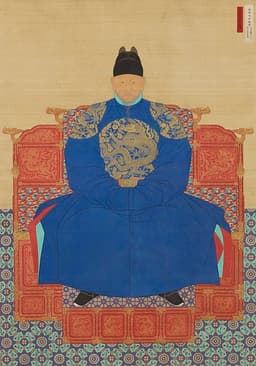
Yi Seong-gye
Emperor · Medieval
75.8Total
Basic Information
Born
1483
1335
Died
1530
1408
Era
Medieval
Medieval
Nationality
Mughal Empire
Korea
Occupation
Emperor
Emperor
Civilization
Indian
Eastern
Score Comparison
Military (10%)
74.0
74.7
Political (20%)
72.0
70.0
Influence (20%)
88.0
88.0
Legacy (20%)
80.0
75.0
Leadership (15%)
74.0
68.0
Strategy (15%)
67.6
69.1
TOTAL
78.1
75.8
Babur — Complete Timeline
1526 AD
Battle of Panipat (1526)War
Babur led his army of about 12,000 men against the Delhi Sultanate army of Ibrahim Lodi, which numbered around 100,000. Using gunpowder weapons and innovative tactics, Babur defeated Lodi's forces. This victory established the Mughal Empire in India and marked the beginning of Mughal rule.
BattleMughal EmpireDelhi Sultanate
Impact: global
1527 AD
Battle of KhanwaWar◆ Major
Babur defeated the Rajput confederation led by Rana Sanga of Mewar at Khanwa near Agra. The Rajput army was larger and included cavalry and war elephants. Babur's use of artillery and defensive tactics secured the victory. This battle consolidated Mughal control over northern India.
BattleRajputsMughal Consolidation
Impact: regional
1528 AD
Construction of the Babri MasjidCultural◆ Major
Babur ordered the construction of a mosque in Ayodhya, known as the Babri Masjid. The mosque was built on a site that Hindus believed was the birthplace of the god Rama. This act became a source of religious and political conflict in India for centuries, culminating in the mosque's demolition in 1992.
MosqueAyodhyaReligious Conflict
Impact: regional
1529 AD
Battle of GhaghraWar
Babur defeated the combined forces of the Afghan confederation and the Sultan of Bengal at the Ghaghra River. This victory eliminated the last major Afghan resistance in northern India. It extended Mughal control over Bihar and parts of Bengal, further securing Babur's empire.
BattleAfghansBengal
Impact: regional
Yi Seong-gye — Complete Timeline
1380 AD
Battle of HwangsanWar◆ Major
Yi Seong-gye led Goryeo forces against Japanese pirates (wokou) at the Battle of Hwangsan. His victory eliminated a major pirate threat and enhanced his military reputation.
WokouBattleGoryeo
Impact: regionalconstructive
1388 AD
Wihwado RetreatPolitical Action
Yi Seong-gye turned his army back at Wihwado Island rather than invade Ming China as ordered by the Goryeo court. This act of defiance led to a coup that eventually brought him to power.
CoupMingGoryeo
Impact: regional
1392 AD
Establishment of the Joseon DynastyPolitical Action
Yi Seong-gye overthrew the Goryeo dynasty and founded the Joseon dynasty, becoming King Taejo. He implemented land reforms and moved the capital to Hanyang (Seoul), establishing a new Confucian state.
JoseonDynasty FoundationReform
Impact: regionalconstructive
Expert Analysis
Origins
Babur (1483–1530) was born Zahir-ud-din Muhammad in Ferghana (modern Uzbekistan), a descendant of Timur on his father's side and Genghis Khan on his mother's. He inherited a small principality at age 11, but lost it to rival Uzbek tribes. Yi Seong-gye (1335–1408) was born in Hamgyong Province, Korea, into a minor military family. He rose through the ranks of the Goryeo military, gaining fame for repelling Red Turban invasions and Japanese pirates. Both men emerged from turbulent periods: Babur from the fragmented Timurid realm, Yi from a declining Goryeo dynasty plagued by internal strife and foreign threats.
Rise to Power
Babur's early career was marked by nomadic warfare and constant struggle to reclaim Samarkand. After losing his ancestral lands, he turned south, capturing Kabul in 1504. His decisive moment came with the invitation from the Lodi governor of Punjab, leading to the Battle of Panipat in 1526. Using gunpowder weapons, Babur defeated the Delhi Sultanate's army, establishing the Mughal Empire. Yi Seong-gye's rise was more strategic. In 1388, ordered to invade Ming China, he instead executed the Wihwado Retreat, turning his army back to seize power. He deposed the Goryeo king, purged rivals, and in 1392 formally established the Joseon dynasty. Both men leveraged military skill and political acumen, but Yi's coup was a calculated political maneuver, while Babur's conquest was a desperate bid for a kingdom.
Leadership & Governance
Babur's leadership style was pragmatic and adaptive. He introduced gunpowder weapons to Indian warfare, but also engaged in diplomacy and alliances. His governance was typical of a nomadic conqueror: he distributed land to loyal followers, built gardens and mosques (like the Babri Masjid), and wrote his memoirs, the Baburnama, which reveals his intellectual curiosity. However, his empire was unstable, requiring constant campaigning. Yi Seong-gye was a reformer. He implemented Confucian statecraft, centralized power, replaced Buddhism with Confucianism as state ideology, and redistributed land to weaken the aristocracy. He established a civil service examination system and codified laws. Yi's governance laid the foundation for Joseon's 500-year rule, while Babur's empire relied heavily on his personal charisma and military might.
Triumph & Tragedy
Babur's greatest triumph was the Battle of Panipat (1526), where his 12,000-man army defeated Ibrahim Lodi's 100,000 with superior tactics and artillery. His victory at Khanwa (1527) against the Rajput confederation secured Mughal dominance. Yet tragedy struck when his heir Humayun fell ill; Babur is said to have offered his own life for his son's recovery, dying soon after in 1530. Yi Seong-gye's triumph was the bloodless Wihwado Retreat, a masterstroke of insubordination that led to dynastic change. He defeated a Ming incursion at the Battle of Hwangsan (1380) and consolidated power. However, his later years were marred by the Princes' Rebellion (1398), where his sons fought for succession, leading to abdication. Both founders faced succession crises, but Babur's early death left a fragile empire, while Yi's abdication allowed Joseon to stabilize under his son.
Character & Destiny
Babur was a mix of Timurid ruthlessness and Renaissance curiosity. He wrote poetry, loved nature, and drank wine despite his Muslim faith. His destiny was shaped by his lineage and ambition; he believed himself destined to surpass his ancestors. Yi Seong-gye was a stoic Confucian general, pragmatic and decisive. He renounced Buddhism to legitimize his rule. His destiny was to end Goryeo's corruption and create a stable dynasty. Both men were driven by a sense of historical mission, but Babur's was more personal and romantic, Yi's more ideological and institutional.
Legacy
Babur's legacy is the Mughal Empire, which reached its zenith under Akbar and Shah Jahan. He introduced Persian culture to India, but his empire nearly collapsed after his death. His memoirs provide invaluable historical insight. Yi Seong-gye's legacy is Joseon, one of East Asia's longest dynasties. His Confucian reforms shaped Korean society for centuries, and his dynasty produced Hangul, scientific advancements, and a robust bureaucracy. While Babur's empire was more culturally syncretic, Yi's created a lasting national identity. In terms of impact, Yi's dynasty endured longer and transformed Korea more fundamentally. Babur's empire, though grand, was more ephemeral in its early form.
Conclusion
Comparing Babur and Yi Seong-gye reveals two very different founders. Babur (scores: M=74, P=72, I=88, L=80, D=74, S=68, T=78) was a brilliant military tactician and charismatic leader, but his empire was built on conquest and personal loyalty. Yi Seong-gye (M=75, P=70, I=88, L=75, D=68, S=69, T=76) was a systematic reformer who created a durable state through institutional change. While Babur's military achievements at Panipat were more dramatic, Yi's political acumen and governance had a deeper, longer-lasting impact on his nation. The score gap of 2.3 favoring Babur reflects his higher profile as a conqueror, but in terms of founding a stable dynasty, Yi Seong-gye arguably surpasses him. Babur wins on charisma and conquest, but Yi wins on statecraft and enduring legacy.
Rankings
🥇
BaburLeader
Mil: 74.0Pol: 72.0Inf: 88.0
78.1
🥈
Yi Seong-gye
Mil: 74.7Pol: 70.0Inf: 88.0
75.8
+2.3 behind
How This Comparison Works
Algorithm
Each figure is scored on 6 dimensions (0—100 scale) based on structured historical data: Military (10%), Political (20%), Influence (20%), Legacy (20%), Leadership (15%), Strategy (15%). The weighted total produces the final ranking.
Data Sources
Scores are computed from structured sub-indicators in the database. Scale factors adjust for era (Ancient ×0.85, Modern ×1.0) and civilization size (Eastern ×1.05, Other ×0.80) to account for differences in population and military scale.
Maximum 3 Figures
Comparisons are limited to 2—3 figures to ensure readability and statistical meaningfulness.
Error Margins
±5 points per dimension — Sub-scores are derived from historical records with inherent uncertainty. Two figures within 5 points on a dimension should be considered roughly equivalent in that area.
Total Score Accuracy
±3 points overall — The weighted combination of 6 dimensions produces a total score with approximately ±3 points of uncertainty. Differences of less than 3 points are not statistically significant— the figures are effectively tied.
Known Limitations
- Historical records are incomplete and uneven across civilizations
- Figures from oral-tradition societies may be underrepresented
- Occupation labels can misclassify multi-role figures
- Scores measure capability and impact, not moral character
- Quantitative scoring is a comparison tool, not absolute truth
Capability Radar
Military (10%) — Battles & Warfare
Battles
75
75
Win Rate
85
80
Expansion
85
65
Political (20%) — Governance & Reform
Reform
55
85
Diplomacy
70
75
Economy
50
70
Influence (20%) — Cultural & Global Reach
Cultural
70
80
Global
75
55
Legacy (20%) — Historical Impact
Historical
85
85
Longevity
80
80
Leadership (15%) — Power & Stability
Tenure
40
60
Stability
45
65
Strategy (15%) — Tactics & Innovation
Strategy
82
82
Tactics
80
78
Reform
60
70
Similar Comparisons
Comments & Discussion
No comments yet. Be the first to share your thoughts!