Loading...
Babur vs Rajendra Chola I
Rajendra Chola I leads by 4.1 pts · 2 figures compared
…

Babur
Emperor · Medieval
78.1Total
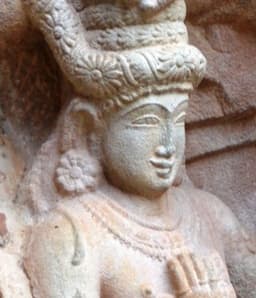
Rajendra Chola I
Emperor · Medieval
82.2Total
Basic Information
Born
1483
971
Died
1530
1044
Era
Medieval
Medieval
Nationality
Mughal Empire
India
Occupation
Emperor
Emperor
Civilization
Indian
Indian
Score Comparison
Military (10%)
74.0
84.7
Political (20%)
72.0
82.0
Influence (20%)
88.0
84.0
Legacy (20%)
80.0
84.0
Leadership (15%)
74.0
78.0
Strategy (15%)
67.6
77.6
TOTAL
78.1
82.2
Babur — Complete Timeline
1526 AD
Battle of Panipat (1526)War
Babur led his army of about 12,000 men against the Delhi Sultanate army of Ibrahim Lodi, which numbered around 100,000. Using gunpowder weapons and innovative tactics, Babur defeated Lodi's forces. This victory established the Mughal Empire in India and marked the beginning of Mughal rule.
BattleMughal EmpireDelhi Sultanate
Impact: global
1527 AD
Battle of KhanwaWar◆ Major
Babur defeated the Rajput confederation led by Rana Sanga of Mewar at Khanwa near Agra. The Rajput army was larger and included cavalry and war elephants. Babur's use of artillery and defensive tactics secured the victory. This battle consolidated Mughal control over northern India.
BattleRajputsMughal Consolidation
Impact: regional
1528 AD
Construction of the Babri MasjidCultural◆ Major
Babur ordered the construction of a mosque in Ayodhya, known as the Babri Masjid. The mosque was built on a site that Hindus believed was the birthplace of the god Rama. This act became a source of religious and political conflict in India for centuries, culminating in the mosque's demolition in 1992.
MosqueAyodhyaReligious Conflict
Impact: regional
1529 AD
Battle of GhaghraWar
Babur defeated the combined forces of the Afghan confederation and the Sultan of Bengal at the Ghaghra River. This victory eliminated the last major Afghan resistance in northern India. It extended Mughal control over Bihar and parts of Bengal, further securing Babur's empire.
BattleAfghansBengal
Impact: regional
Rajendra Chola I — Complete Timeline
1014 AD
Accession to the Chola ThronePolitical Action
Rajendra Chola I succeeded his father Raja Raja Chola I as emperor of the Chola Empire. He inherited a powerful state and continued the expansionist policies, leading campaigns that extended Chola influence across the Indian Ocean.
Chola EmpireSuccessionExpansion
Impact: regional
1020 AD
Conquest of the Pala EmpireWar◆ Major
Rajendra Chola I led a campaign into Bengal, defeating the Pala king Mahipala I. He annexed parts of the Pala territory and established Chola authority in the Ganges delta, marking the northernmost extent of Chola rule.
Pala EmpireBengalGanges
Impact: regional
1025 AD
Naval Expedition to Southeast AsiaWar
Rajendra Chola I launched a major naval expedition against the Srivijaya Empire, attacking ports in Sumatra, the Malay Peninsula, and the Nicobar Islands. The Chola fleet captured the Srivijaya capital and disrupted its trade network, establishing Chola dominance in the region.
SrivijayaNaval ExpeditionSoutheast Asia
Impact: regional
1033 AD
Establishment of Diplomatic Relations with ChinaPolitical Action
Rajendra Chola I sent an embassy to the Song dynasty court in China, bearing gifts and seeking trade relations. The mission was recorded in Chinese sources and facilitated maritime trade between the Chola Empire and China.
ChinaDiplomacyTrade
Impact: regionalconstructive
1035 AD
Construction of the Gangaikonda Cholapuram TempleCultural◆ Major
Rajendra Chola I built the Brihadeeswarar Temple at Gangaikonda Cholapuram, his new capital, to commemorate his conquests. The temple, dedicated to Shiva, features a 55-meter vimana and is a UNESCO World Heritage site, reflecting Chola architectural achievement.
Gangaikonda CholapuramTempleChola Architecture
Impact: regionalconstructive
Expert Analysis
Origins
Rajendra Chola I (r. 1014–1044 CE) was born into the powerful Chola dynasty of South India, son of the renowned Rajaraja Chola I. He inherited a strong, centralized state with a formidable army and navy. Babur (r. 1526–1530 CE), a descendant of Timur and Genghis Khan, was born in Fergana (modern Uzbekistan) and spent his early life as a minor Central Asian prince struggling to maintain a kingdom. His origins were precarious, relying on personal ambition and military prowess.
Rise to Power
Rajendra ascended smoothly, co-ruling with his father before taking full control. He immediately launched campaigns to expand Chola territory, defeating the Cheras, Pandyas, and the Chalukyas of Vengi. His greatest achievement was the naval expedition to Southeast Asia (1025 CE), conquering the Srivijaya Empire (modern Indonesia/Malaysia). Babur, in contrast, fought numerous battles to establish a foothold in India. After losing Samarkand twice, he turned his attention to the weakening Delhi Sultanate. The First Battle of Panipat (1526) against Ibrahim Lodi was a decisive victory, marking the start of Mughal rule.
Leadership & Governance
Rajendra was an effective administrator, dividing his empire into provinces (mandalams) and standardizing revenue systems. He built the temple city of Gangaikonda Cholapuram, which served as a new capital and symbol of his power. Babur, though a capable military leader, ruled only four years in India and focused on consolidating control. He introduced Persian culture and administrative practices but died before establishing a full governance system. His memoirs (Baburnama) reveal a reflective, cultured ruler.
Triumph & Tragedy
Rajendra's triumphs include the conquest of Srivijaya, which opened trade routes to China, and the defeat of the Pala Empire in Bengal. His tragedy might be the lack of lasting naval dominance after his death. Babur's triumph was founding the Mughal Empire, but his tragedy was dying young (age 47) before fully stabilizing it. He faced constant rebellions and health issues.
Character & Destiny
Rajendra was a pragmatic expansionist, focused on military might and religious patronage. His destiny was to be remembered as the greatest Chola emperor. Babur, a charismatic poet and warrior, struggled with loss and exile, but his destiny was to establish a dynasty that would rule India for centuries. Both were ambitious, but Rajendra's empire was more stable at its peak.
Legacy
Rajendra's legacy is the Chola naval supremacy and cultural influence in Southeast Asia, seen in temples like Gangaikonda Cholapuram (UNESCO site). Babur's legacy is the Mughal Empire, which shaped Indian architecture, art, and administration (e.g., Babri Masjid, though controversial). Rajendra's direct impact faded with the Chola decline, while Babur's legacy endured through successors like Akbar.
Conclusion
Rajendra Chola I (score 85) surpasses Babur (score 74) due to his superior military expansion (naval conquests), administrative reforms, and long-term stability. Babur's achievements are foundational but brief. Rajendra's Chola Empire was a more enduring regional power, while Babur's Mughal Empire, though historically significant, relied on later rulers. **Winner: Rajendra Chola I**
Rankings
🥇
Rajendra Chola ILeader
Mil: 84.7Pol: 82.0Inf: 84.0
82.2
🥈
Babur
Mil: 74.0Pol: 72.0Inf: 88.0
78.1
+4.1 behind
How This Comparison Works
Algorithm
Each figure is scored on 6 dimensions (0—100 scale) based on structured historical data: Military (10%), Political (20%), Influence (20%), Legacy (20%), Leadership (15%), Strategy (15%). The weighted total produces the final ranking.
Data Sources
Scores are computed from structured sub-indicators in the database. Scale factors adjust for era (Ancient ×0.85, Modern ×1.0) and civilization size (Eastern ×1.05, Other ×0.80) to account for differences in population and military scale.
Maximum 3 Figures
Comparisons are limited to 2—3 figures to ensure readability and statistical meaningfulness.
Error Margins
±5 points per dimension — Sub-scores are derived from historical records with inherent uncertainty. Two figures within 5 points on a dimension should be considered roughly equivalent in that area.
Total Score Accuracy
±3 points overall — The weighted combination of 6 dimensions produces a total score with approximately ±3 points of uncertainty. Differences of less than 3 points are not statistically significant— the figures are effectively tied.
Known Limitations
- Historical records are incomplete and uneven across civilizations
- Figures from oral-tradition societies may be underrepresented
- Occupation labels can misclassify multi-role figures
- Scores measure capability and impact, not moral character
- Quantitative scoring is a comparison tool, not absolute truth
Capability Radar
Military (10%) — Battles & Warfare
Battles
75
95
Win Rate
85
98
Expansion
85
95
Political (20%) — Governance & Reform
Reform
55
88
Diplomacy
70
85
Economy
50
92
Influence (20%) — Cultural & Global Reach
Cultural
70
85
Global
75
85
Legacy (20%) — Historical Impact
Historical
85
88
Longevity
80
80
Leadership (15%) — Power & Stability
Tenure
40
90
Stability
45
90
Strategy (15%) — Tactics & Innovation
Strategy
82
92
Tactics
80
90
Reform
60
85
Similar Comparisons
Comments & Discussion
No comments yet. Be the first to share your thoughts!