Loading...
Azai Nagamasa vs Victoriano Huerta
Azai Nagamasa leads by 8.5 pts · 2 figures compared
…

Azai Nagamasa
General · Modern
49.1Total
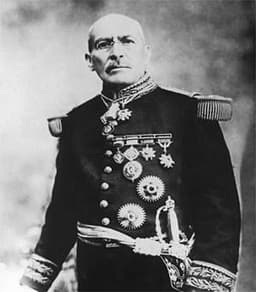
Victoriano Huerta
General · Modern
40.6Total
Basic Information
Born
1545
1850
Died
1573
1916
Era
Modern
Modern
Nationality
Japan
Mexico
Occupation
General
General
Civilization
Eastern
Western
Score Comparison
Military (10%)
30.0
10.0
Political (20%)
46.6
32.2
Influence (20%)
52.5
49.4
Legacy (20%)
43.3
40.8
Leadership (15%)
61.1
41.5
Strategy (15%)
60.0
60.0
TOTAL
49.1
40.6
Azai Nagamasa — Complete Timeline
1570 AD
Battle of AnegawaWar◆ Major
Nagamasa, allied with the Asakura clan, fought Oda Nobunaga and Tokugawa Ieyasu at the Battle of Anegawa. The battle was a defeat for Nagamasa, forcing him to retreat to his castle and weakening his position.
BattleSengoku PeriodAlliance
Impact: regional
Betrayal of Oda NobunagaPolitical Action◆ Major
Nagamasa broke his alliance with Oda Nobunaga, who was his brother-in-law, and joined the anti-Nobunaga coalition led by the Asakura clan. This betrayal led to Nobunaga's campaign against him and ultimately his destruction.
BetrayalAllianceSengoku Period
Impact: regional
1573 AD
Siege of Odani CastleWar◆ Major
Oda Nobunaga besieged Nagamasa's fortress of Odani Castle. After a prolonged siege, Nagamasa's situation became hopeless, and he committed seppuku, ending the Azai clan's resistance to Nobunaga.
SiegeSengoku PeriodOda Nobunaga
Impact: regionaltragic
Victoriano Huerta — Complete Timeline
1913 AD
Coup d'état against Francisco I. MaderoPolitical Action
Huerta, as commander of the Mexican federal army, orchestrated a coup against President Francisco I. Madero during the Ten Tragic Days. Madero and Vice President Pino Su
CoupMexican RevolutionMadero
Impact: nationaldestructive
Presidency of MexicoPolitical Action◆ Major
Huerta served as President of Mexico from February 1913 to July 1914. His regime was characterized by authoritarian rule, suppression of opposition, and reliance on the federal army, but it faced widespread rebellion from revolutionary factions.
PresidencyDictatorshipMexican Revolution
Impact: nationaldestructive
Dissolution of CongressPolitical Action
Huerta dissolved the Mexican Congress in October 1913 after it refused to approve his policies. He ruled by decree, arresting or exiling many deputies, which further alienated moderate politicians and intensified opposition to his regime.
CongressAuthoritarianismRepression
Impact: nationaldestructive
1914 AD
Defeat by Constitutionalist ArmyWar
Huerta's federal forces were defeated by the Constitutionalist Army led by Venustiano Carranza,
Mexican RevolutionDefeatExile
Impact: nationaltragic
Exile and DeathPolitical Action
After his resignation, Huerta fled to Spain and later to the United States. He was arrested by U.S. authorities in 1915 for plotting to return to power and died in custody in El Paso, Texas, in 1916, ending his political ambitions.
ExileDeathEnd of Career
Impact: nationaltragic
Expert Analysis
Origins
Azai Nagamasa was born in 1545 into the Azai clan, a powerful samurai family in Omi Province (modern Shiga Prefecture), Japan. His father, Azai Hisamasa, was a daimyo, but Nagamasa's early years were marked by clan decline due to weak leadership. He received a traditional samurai education, focusing on martial arts, strategy, and Confucian ethics. At age 15, he forced his father into retirement and became daimyo, inheriting a fractured domain.
Victoriano Huerta was born on December 22, 1850, in Colotlán, Jalisco, Mexico, to a poor indigenous Huichol family. He entered the Military College at age 17, excelling in mathematics and engineering. Huerta rose through the ranks of the Mexican army, serving under President Porfirio Díaz. His early career included suppressing indigenous rebellions, where he gained a reputation for brutality.
Rise to Power
Nagamasa quickly consolidated power in Omi, forming alliances with neighboring clans. In 1564, he married Oichi, the sister of Oda Nobunaga, cementing an alliance with the rising warlord. This alliance helped Nagamasa expand his territory, but tensions grew as Nobunaga's ambitions threatened local autonomy. In 1570, Nagamasa broke the alliance, joining the Asakura clan against Nobunaga—a decision that defined his fate.
Huerta's rise came through military loyalty to President Francisco I. Madero. In 1913, during the Ten Tragic Days, Huerta turned on Madero, orchestrating a coup with support from the U.S. ambassador and conservative factions. He assumed the presidency on February 19, 1913, after forcing Madero's resignation and subsequent murder. His coup triggered a civil war against Constitutionalist forces.
Leadership & Governance
Nagamasa governed his domain with a focus on clan loyalty and samurai honor. He implemented agricultural reforms and maintained a strong castle at Odani. His leadership style was reactive, prioritizing alliances and personal honor over strategic expansion. He scored 61.1 in leadership, reflecting his ability to inspire loyalty, but his political score of 46.6 shows his failure to navigate the complex power dynamics of Sengoku Japan.
Huerta ruled Mexico as a military dictator from 1913 to 1914. He dissolved Congress in October 1913, arrested opponents, and controlled the press. His regime was authoritarian, relying on the federal army and rural police. He attempted to stabilize the economy but faced widespread rebellion. His leadership score of 41.5 reflects his inability to build broad support, and his political score of 32.2 indicates poor governance.
Triumph & Tragedy
Nagamasa's greatest success was his early consolidation of Omi and his alliance with Nobunaga, which allowed him to expand his territory. However, his betrayal of Nobunaga led to his downfall. In 1573, Nobunaga besieged Odani Castle. After a prolonged siege, Nagamasa committed seppuku, ending the Azai clan. His tragedy was his inability to adapt to changing power structures, clinging to outdated notions of honor.
Huerta's triumph was briefly seizing power and suppressing initial rebellions. However, his regime faced overwhelming opposition. The Constitutionalist Army, led by Carranza, Obregón, and Villa, defeated his forces in a series of battles in 1914. Huerta resigned on July 15, 1914, and fled into exile. His tragedy was his brutal methods, which united his enemies and ensured his legacy as a traitor.
Character & Destiny
Nagamasa was characterized by loyalty to his allies and a strong sense of honor, but also by indecisiveness. His decision to betray Nobunaga was driven by fear of becoming a vassal, yet he failed to secure strong alternatives. Historians like Stephen Turnbull note that Nagamasa's adherence to samurai ideals led to his tragic end. His destiny was sealed by the rising power of Nobunaga, whom he could not match strategically.
Huerta was ruthless and cunning, but also a heavy drinker and prone to paranoia. He trusted few and alienated potential supporters. His coup made him a pariah, and his reliance on force rather than negotiation doomed his presidency. Historians like Alan Knight describe Huerta as a product of the old Porfiriato, unable to adapt to the democratic aspirations of the Mexican Revolution.
Legacy
Nagamasa is remembered in Japanese history as a tragic figure, a loyal samurai who chose death over dishonor. His story is celebrated in literature and film, but his political impact was minimal. He scored 43.3 in legacy, reflecting his limited long-term influence. The Azai clan was extinguished, and Omi was absorbed into Nobunaga's domain.
Huerta's legacy is overwhelmingly negative in Mexico. He is seen as a traitor who overthrew a democratically elected president. His regime accelerated the Mexican Revolution, leading to the Constitution of 1917. His score of 40.8 in legacy indicates a more significant, albeit negative, impact. The phrase "Huertista" remains a pejorative for authoritarian betrayal.
Conclusion
While Nagamasa's total score of 49.1 exceeds Huerta's 40.6 by 8.5 points, the comparison of impact must consider context. Nagamasa's influence was confined to a regional conflict in 16th-century Japan, whereas Huerta's actions shaped the course of the Mexican Revolution. Huerta's military score of 10.0 is lower than Nagamasa's 30.0, but his political miscalculations had national consequences. Nagamasa's story is a personal tragedy; Huerta's is a national one. In terms of lasting impact, Huerta's legacy—however negative—had a greater effect on modern Mexico. Therefore, Victoriano Huerta, despite his lower score, had a greater impact on history.
Rankings
🥇
Azai NagamasaLeader
Mil: 30.0Pol: 46.6Inf: 52.5
49.1
🥈
Victoriano Huerta
Mil: 10.0Pol: 32.2Inf: 49.4
40.6
+8.5 behind
How This Comparison Works
Algorithm
Each figure is scored on 6 dimensions (0—100 scale) based on structured historical data: Military (10%), Political (20%), Influence (20%), Legacy (20%), Leadership (15%), Strategy (15%). The weighted total produces the final ranking.
Data Sources
Scores are computed from structured sub-indicators in the database. Scale factors adjust for era (Ancient ×0.85, Modern ×1.0) and civilization size (Eastern ×1.05, Other ×0.80) to account for differences in population and military scale.
Maximum 3 Figures
Comparisons are limited to 2—3 figures to ensure readability and statistical meaningfulness.
Error Margins
±5 points per dimension — Sub-scores are derived from historical records with inherent uncertainty. Two figures within 5 points on a dimension should be considered roughly equivalent in that area.
Total Score Accuracy
±3 points overall — The weighted combination of 6 dimensions produces a total score with approximately ±3 points of uncertainty. Differences of less than 3 points are not statistically significant— the figures are effectively tied.
Known Limitations
- Historical records are incomplete and uneven across civilizations
- Figures from oral-tradition societies may be underrepresented
- Occupation labels can misclassify multi-role figures
- Scores measure capability and impact, not moral character
- Quantitative scoring is a comparison tool, not absolute truth
Capability Radar
Military (10%) — Battles & Warfare
Battles
45
45
Win Rate
40
40
Expansion
35
25
Political (20%) — Governance & Reform
Reform
25
15
Diplomacy
45
20
Economy
30
15
Influence (20%) — Cultural & Global Reach
Cultural
30
15
Global
15
10
Legacy (20%) — Historical Impact
Historical
35
25
Longevity
25
10
Leadership (15%) — Power & Stability
Tenure
40
20
Stability
25
10
Strategy (15%) — Tactics & Innovation
Strategy
45
45
Tactics
50
50
Reform
20
30
Similar Comparisons
Comments & Discussion
No comments yet. Be the first to share your thoughts!