Loading...
Lakshmibai vs Victoriano Huerta
Lakshmibai leads by 16.4 pts · 2 figures compared
…
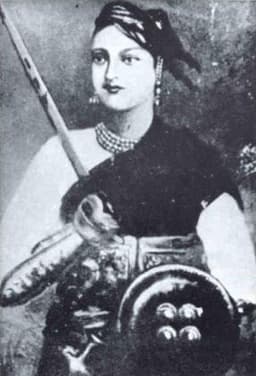
Lakshmibai
General · Modern
57.0Total
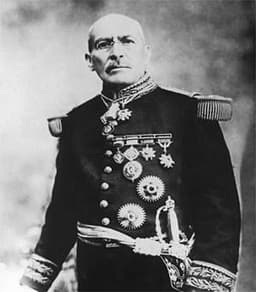
Victoriano Huerta
General · Modern
40.6Total
Basic Information
Born
1828
1850
Died
1858
1916
Era
Modern
Modern
Nationality
India
Mexico
Occupation
General
General
Civilization
Indian
Western
Score Comparison
Military (10%)
55.0
10.0
Political (20%)
36.5
32.2
Influence (20%)
82.0
49.4
Legacy (20%)
52.0
40.8
Leadership (15%)
43.8
41.5
Strategy (15%)
60.0
60.0
TOTAL
57.0
40.6
Lakshmibai — Complete Timeline
1857 AD
Refusal to Surrender JhansiPolitical Action◆ Major
Lakshmibai refused to surrender Jhansi to the British after the outbreak of the Indian Rebellion, choosing to fight. She organized the defense of the city and became a key leader of the rebellion in central India.
RebellionLeadership
Impact: regional
1858 AD
Defense of JhansiWar◆ Major
Lakshmibai led the defense of Jhansi against British forces under Sir Hugh Rose during the Indian Rebellion of 1857. Despite fierce resistance, the fort fell after a two-week siege, and she escaped to continue the fight.
SiegeRebellion
Impact: regional
Battle of Kotah-ki-SeraiWar◆ Major
Lakshmibai was killed in action at the Battle of Kotah-ki-Serai near Gwalior, fighting against British forces. Her death marked the end of organized resistance in central India during the rebellion, and she became a symbol of Indian resistance.
BattleDeathRebellion
Impact: regionaltragic
Capture of GwaliorWar
Lakshmibai and rebel forces captured Gwalior from the Scindia dynasty, which was allied with the British. This victory briefly established a rebel stronghold, but was soon reversed by British counterattacks.
Military CampaignRebellion
Impact: regional
Victoriano Huerta — Complete Timeline
1913 AD
Coup d'état against Francisco I. MaderoPolitical Action
Huerta, as commander of the Mexican federal army, orchestrated a coup against President Francisco I. Madero during the Ten Tragic Days. Madero and Vice President Pino Su
CoupMexican RevolutionMadero
Impact: nationaldestructive
Presidency of MexicoPolitical Action◆ Major
Huerta served as President of Mexico from February 1913 to July 1914. His regime was characterized by authoritarian rule, suppression of opposition, and reliance on the federal army, but it faced widespread rebellion from revolutionary factions.
PresidencyDictatorshipMexican Revolution
Impact: nationaldestructive
Dissolution of CongressPolitical Action
Huerta dissolved the Mexican Congress in October 1913 after it refused to approve his policies. He ruled by decree, arresting or exiling many deputies, which further alienated moderate politicians and intensified opposition to his regime.
CongressAuthoritarianismRepression
Impact: nationaldestructive
1914 AD
Defeat by Constitutionalist ArmyWar
Huerta's federal forces were defeated by the Constitutionalist Army led by Venustiano Carranza,
Mexican RevolutionDefeatExile
Impact: nationaltragic
Exile and DeathPolitical Action
After his resignation, Huerta fled to Spain and later to the United States. He was arrested by U.S. authorities in 1915 for plotting to return to power and died in custody in El Paso, Texas, in 1916, ending his political ambitions.
ExileDeathEnd of Career
Impact: nationaltragic
Expert Analysis
Origins
Lakshmibai, born Manikarnika Tambe in 1828 in Varanasi, India, was raised in a Brahmin family and trained in martial arts, horse riding, and sword fighting from a young age. She married Maharaja Gangadhar Rao Newalkar in 1842, becoming Rani of Jhansi. Her upbringing in the court of Bithoor, under the guidance of Peshwa Baji Rao II, exposed her to political intrigue and military strategy. Victoriano Huerta, born in 1850 in Colotlán, Jalisco, Mexico, to a poor indigenous Huichol family, studied at the Military Academy of Chapultepec, where he excelled in mathematics and astronomy. His early career in the Mexican army included campaigns against indigenous groups and later service under President Porfirio Díaz, where he learned authoritarian governance.
Rise to Power
Lakshmibai's rise came after the death of her husband in 1853. The British East India Company, under the Doctrine of Lapse, refused to recognize her adopted son as heir, annexing Jhansi. In 1857, during the Indian Rebellion, she initially sought British protection but was forced to lead when the British suspected her involvement. She organized defenses and, in March 1858, personally commanded troops against Sir Hugh Rose's siege of Jhansi. Huerta rose through military ranks, becoming a general under Díaz. During the Mexican Revolution, he was appointed commander of federal forces by President Francisco I. Madero. In February 1913, Huerta orchestrated a coup during the Ten Tragic Days, arresting and later murdering Madero and Vice President Pino Suárez, seizing the presidency on February 19, 1913.
Leadership & Governance
Lakshmibai governed Jhansi as a regent, focusing on military preparedness and maintaining order during the rebellion. She was a hands-on leader, often inspecting troops and fortifications. Her leadership score of 43.8 reflects her limited political experience but strong personal command. Huerta's governance was authoritarian: he dissolved Congress in October 1913, ruled by decree, and suppressed dissent through a brutal secret police. He sought support from foreign powers, including the U.S., but his regime was marked by corruption and violence. His political score of 32.2 indicates ineptitude in building coalitions.
Triumph & Tragedy
Lakshmibai's greatest triumph was the defense of Jhansi (March-April 1858), where her forces held out against a larger British army for two weeks. She escaped with her son and joined rebel forces at Kalpi, then captured Gwalior in June 1858, briefly establishing a rebel stronghold. Her tragedy was her death at Kotah-ki-Serai on June 18, 1858, fighting against British cavalry. She scored 55.0 in military and 60.0 in strategy, but her influence score of 82.0 underscores her symbolic power. Huerta's triumph was his seizure of power, but his tragedy was his inability to consolidate it. He was defeated by the Constitutionalist Army under Carranza, Obregón, and Villa, resigning in July 1914. He died in U.S. custody in 1916. His military score of 10.0 reflects his failures in battle, though his strategy score of 60.0 matches Lakshmibai's, indicating tactical acumen.
Character & Destiny
Lakshmibai was courageous, resolute, and willing to sacrifice her life for her cause. Her refusal to surrender Jhansi despite overwhelming odds defined her destiny. Historians often note her as a symbol of resistance. Huerta was ambitious, ruthless, and paranoid. His alcoholism and erratic behavior alienated allies. His character led to his downfall; he could not trust even his own generals. The score gap of 16.4 points reflects Lakshmibai's higher overall impact, despite both having similar strategy scores (60.0 each).
Legacy
Lakshmibai is remembered as a national heroine in India, a symbol of the 1857 rebellion and women's empowerment. Her legacy score of 52.0 is bolstered by her cultural impact in literature, film, and folklore. Huerta's legacy is overwhelmingly negative; he is seen as a traitor and usurper in Mexican history. His legacy score of 40.8 reflects his role in destabilizing Mexico during the Revolution. Neither left enduring institutions, but Lakshmibai's moral example outlasts Huerta's pragmatic failure.
Conclusion
Lakshmibai had greater impact. Her influence score (82.0) dwarfs Huerta's (49.4), and her military leadership, though ultimately defeated, inspired generations. Huerta's coup and brief presidency caused widespread suffering but left no positive change. Lakshmibai's legacy as a freedom fighter continues to resonate, while Huerta is condemned. The 16.4-point total score gap accurately reflects this disparity.
Rankings
🥇
LakshmibaiLeader
Mil: 55.0Pol: 36.5Inf: 82.0
57.0
🥈
Victoriano Huerta
Mil: 10.0Pol: 32.2Inf: 49.4
40.6
+16.4 behind
How This Comparison Works
Algorithm
Each figure is scored on 6 dimensions (0—100 scale) based on structured historical data: Military (10%), Political (20%), Influence (20%), Legacy (20%), Leadership (15%), Strategy (15%). The weighted total produces the final ranking.
Data Sources
Scores are computed from structured sub-indicators in the database. Scale factors adjust for era (Ancient ×0.85, Modern ×1.0) and civilization size (Eastern ×1.05, Other ×0.80) to account for differences in population and military scale.
Maximum 3 Figures
Comparisons are limited to 2—3 figures to ensure readability and statistical meaningfulness.
Error Margins
±5 points per dimension — Sub-scores are derived from historical records with inherent uncertainty. Two figures within 5 points on a dimension should be considered roughly equivalent in that area.
Total Score Accuracy
±3 points overall — The weighted combination of 6 dimensions produces a total score with approximately ±3 points of uncertainty. Differences of less than 3 points are not statistically significant— the figures are effectively tied.
Known Limitations
- Historical records are incomplete and uneven across civilizations
- Figures from oral-tradition societies may be underrepresented
- Occupation labels can misclassify multi-role figures
- Scores measure capability and impact, not moral character
- Quantitative scoring is a comparison tool, not absolute truth
Capability Radar
Military (10%) — Battles & Warfare
Battles
35
45
Win Rate
40
40
Expansion
20
25
Political (20%) — Governance & Reform
Reform
20
15
Diplomacy
30
20
Economy
15
15
Influence (20%) — Cultural & Global Reach
Cultural
60
15
Global
50
10
Legacy (20%) — Historical Impact
Historical
65
25
Longevity
55
10
Leadership (15%) — Power & Stability
Tenure
25
20
Stability
15
10
Strategy (15%) — Tactics & Innovation
Strategy
40
45
Tactics
45
50
Reform
30
30
Similar Comparisons
Comments & Discussion
No comments yet. Be the first to share your thoughts!