Loading...
Axayacatl vs Yuwen Yong
Yuwen Yong leads by 10.5 pts · 2 figures compared
…
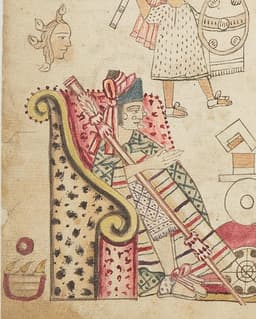
Axayacatl
Emperor · Medieval
56.7Total
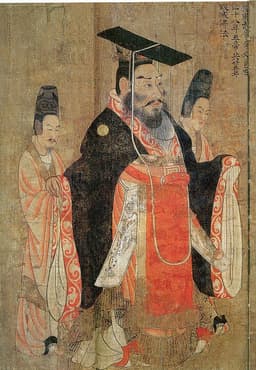
Yuwen Yong
Emperor · Medieval
67.2Total
Basic Information
Born
1449
543
Died
1481
578
Era
Medieval
Medieval
Nationality
Aztec Empire
China
Occupation
Emperor
Emperor
Civilization
Western
Eastern
Score Comparison
Military (10%)
70.0
78.0
Political (20%)
54.7
78.0
Influence (20%)
56.4
58.0
Legacy (20%)
47.5
54.0
Leadership (15%)
65.0
85.0
Strategy (15%)
57.5
69.1
TOTAL
56.7
67.2
Axayacatl — Complete Timeline
1469 AD
Coronation as Tlatoani of TenochtitlanPolitical Action◆ Major
Axayacatl succeeded his grandfather Moctezuma I as the sixth tlatoani of Tenochtitlan. His coronation campaign against the Matlatzinca was successful, capturing many prisoners for sacrifice and establishing his military credentials.
Impact: national
1473 AD
Conquest of TlatelolcoWar◆ Major
Axayacatl led Tenochtitlan forces against the neighboring city-state of Tlatelolco, which had rebelled against Aztec dominance. The war ended with the defeat of Tlatelolco and the death of its tlatoani Moquihuix, incorporating Tlatelolco into Tenochtitlan.
Impact: regionaldestructive
1478 AD
Campaign against the Tarascan EmpireWar◆ Major
Axayacatl led a large Aztec army into the Tarascan Empire (Pur
Impact: regionaldestructive
1481 AD
Construction of the Great Temple of TenochtitlanCultural◆ Major
Axayacatl oversaw the expansion of the Templo Mayor in Tenochtitlan, dedicating a new phase of construction. The temple was the religious center of the Aztec Empire, and this expansion included new sculptures and offerings.
Impact: nationalconstructive
Death of AxayacatlOther
Axayacatl died after a short illness, possibly from a disease or complications from wounds. His death led to the succession of his brother Tizoc, whose weak reign contrasted with Axayacatl's earlier successes.
Impact: national
Yuwen Yong — Complete Timeline
574 AD
Suppression of Buddhism in Northern ZhouReform◆ Major
Emperor Wu of Northern Zhou (Yuwen Yong) ordered the suppression of Buddhism, confiscating monastic lands, forcing monks and nuns to return to lay life, and destroying temples. He aimed to increase state revenue and military manpower, strengthening the state.
Northern ZhouBuddhist PersecutionReform
Impact: nationaldestructive
577 AD
Conquest of Northern QiWar
Emperor Wu led a successful campaign against the rival Northern Qi dynasty, conquering its territory and unifying northern China under Northern Zhou. This victory ended the division of the north and set the stage for the Sui dynasty's unification of all China.
Northern ZhouUnificationNorthern Qi
Impact: regionalconstructive
578 AD
Death during campaign against the TurksWar◆ Major
Emperor Wu died of illness while leading a campaign against the G
Northern ZhouMilitary CampaignDeath
Impact: regionaltragic
Expert Analysis
Yuwen Yong vs Axayacatl
### The Emperor Who Stopped and the Emperor Who Fell
In the spring of 574, a Chinese emperor in Chang'an issued an edict that would silence thousands of temples across his realm. In the autumn of 1478, an Aztec emperor in Tenochtitlan watched his finest army stagger back from the west, shattered by a kingdom he could not conquer. Yuwen Yong and Axayacatl ruled worlds apart—one the architect of a Buddhist persecution that unified northern China, the other a warrior-king whose greatest defeat would haunt his empire until the Spanish arrived. Both died young, but their legacies moved in opposite directions: one toward empire, the other toward collapse. Why did one ruler’s strength become the other’s weakness? The answer lies not in their swords, but in the soil from which they grew.
**Origins**
Yuwen Yong was born in 543 into the Xianbei warrior aristocracy of the Northern Zhou dynasty, a fragment of the fractured Sixteen Kingdoms that had torn China apart for centuries. His father was a general; his mother, a concubine. He grew up in a world where survival depended on political cunning as much as military skill. The Northern Zhou was a state forged by nomadic horsemen who had adopted Chinese bureaucracy, but the tension between tribal loyalty and imperial order was constant. Yuwen Yong learned to read men before he learned to read books, and he understood that power in a divided China required patience—and ruthlessness.
Axayacatl was born in 1449 into the royal house of Tenochtitlan, the heart of the Aztec Triple Alliance. His grandfather was Moctezuma I, the tlatoani who had expanded the empire to its greatest extent. Axayacatl grew up in a city of canals and pyramids, where the gods demanded blood and the nobility lived for war. The Aztec world was one of constant tension, not between tribes and states, but between city-states that balanced alliance and rivalry. He was trained from childhood to lead armies, to negotiate with allies, and to understand that a tlatoani’s legitimacy rested on his ability to feed the sun with captives.
The difference in their origins is subtle but profound. Yuwen Yong’s world was one of structural instability—a collapsing order that demanded a builder. Axayacatl’s world was one of ritualized competition—a stable order that demanded a performer.
**Rise to Power**
Yuwen Yong did not seize the throne; he inherited it in 560, but only after a decade of court intrigue had killed three emperors before him. His older brother, Emperor Ming, was poisoned by a regent. Yuwen Yong, then seventeen, was placed on the throne as a puppet. For twelve years, he played the role of a weak ruler, deferring to his cousin Yuwen Hu, the powerful regent who controlled the army and the bureaucracy. Then, in 572, Yuwen Yong struck. He ambushed Yuwen Hu in the palace, killed him with his own hands, and took full control. It was a masterstroke of patience: he had waited until his cousin’s arrogance made him careless.
Axayacatl’s rise was more conventional. He was elected tlatoani in 1469 after his grandfather’s death, chosen by a council of nobles from the royal lineage. His coronation campaign—a ritual war to secure captives for sacrifice—was successful, and he quickly established himself as a capable warrior. But his path to power was shadowed by the neighboring city-state of Tlatelolco, which shared Tenochtitlan’s island and resented its dominance. In 1473, when Tlatelolco rebelled, Axayacatl crushed it with a ferocity that shocked even the Aztecs. He killed the rival tlatoani and absorbed the city into Tenochtitlan, ending centuries of dual rule.
The contrast is telling. Yuwen Yong rose by outwaiting and outthinking his enemies; Axayacatl rose by outfighting them. One was a chess player; the other, a boxer.
**Leadership & Governance**
As emperor, Yuwen Yong pursued a single, radical goal: unification of northern China. He reformed the army, merging Xianbei cavalry with Chinese infantry into a disciplined force. He reorganized the bureaucracy, reducing corruption and centralizing tax collection. And in 574, he ordered the suppression of Buddhism. The decree confiscated monastic lands, forced hundreds of thousands of monks and nuns back into lay life, and melted down statues for coinage. This was not religious hatred; it was state-building. Buddhism had grown wealthy and powerful, owning vast estates and exempt from taxes. Yuwen Yong saw it as a rival state within his state, and he broke it to fund his armies. The campaign worked. In 577, he conquered the rival Northern Qi dynasty, unifying northern China for the first time in decades.
Axayacatl ruled differently. He was a warrior first, a builder second. He expanded the Templo Mayor in Tenochtitlan, dedicating a new phase in 1481 with thousands of captives. He maintained the tribute system that funneled goods to the capital. But his governance was reactive, not visionary. He did not reform the Aztec state; he performed its rituals. In 1478, he launched a massive campaign against the Tarascan Empire to the west, leading an army estimated at 24,000 men. The Tarascans, who had bronze weapons and a centralized state, ambushed the Aztecs in a mountain pass. Axayacatl lost thousands—some sources say half his army—and barely escaped with his life. It was the worst defeat in Aztec history.
Here, the difference in outcome becomes clear. Yuwen Yong’s suppression of Buddhism was controversial but effective; it gave him the resources to win. Axayacatl’s campaign against the Tarascans was a gamble that failed because the Aztec military system, built on ritual warfare and capture, could not adapt to a total war against a peer opponent.
**Triumph & Tragedy**
Yuwen Yong’s greatest moment was the conquest of Northern Qi in 577. He led his army from the front, crossing frozen rivers and besieging fortresses. After the victory, he treated the defeated royal family with respect, integrating Northern Qi officials into his administration. It was a triumph of strategy and mercy. His tragedy came the next year. In 578, he fell ill while campaigning against the Göktürks, a nomadic confederation threatening the northern border. He died at thirty-five, his dream of reunifying all of China unfinished.
Axayacatl’s greatest moment was the conquest of Tlatelolco in 1473. He personally led the assault across the causeway, fighting in the streets until the enemy tlatoani was captured. It was a victory that cemented his reputation and ended a centuries-old rivalry. His tragedy was the Tarascan defeat of 1478, which exposed the limits of Aztec power. He died three years later, in 1481, after a short illness—possibly from wounds or disease. His empire was still expanding, but the crack in its foundation was already visible.
**Character & Destiny**
Yuwen Yong was calculating, patient, and ruthless when necessary. He understood that power required sacrifice—of enemies, of institutions, of comfort. His character drove him to build a state that could outlast him. Axayacatl was proud, impulsive, and bound by tradition. He fought when he should have negotiated, and he trusted the gods when he should have trusted his generals. His character drove him to fight the Tarascans, a war he could not win, because a tlatoani who did not fight was not a tlatoani at all.
**Legacy**
Yuwen Yong’s legacy is the foundation of the Sui and Tang dynasties. His son, Emperor Xuan, squandered much of his work, but the state he built—the unified army, the centralized bureaucracy, the weakened Buddhist establishment—gave his successors the tools to reunify China. He is remembered as a reformer and a conqueror, even if his methods were harsh.
Axayacatl’s legacy is more ambiguous. He is remembered as a warrior who expanded the Templo Mayor and defeated Tlatelolco, but also as the father of Montezuma II, the tlatoani who faced Cortés. The Tarascan defeat weakened the Aztec military’s aura of invincibility, and the tribute system he maintained sowed resentment among conquered cities. When the Spanish arrived in 1519, many of those cities allied with them. Axayacatl did not cause the fall of the Aztec Empire, but he did nothing to prevent it.
**Conclusion**
Yuwen Yong and Axayacatl both died in their thirties, both left empires in transition, but their paths diverged because of how they understood power. Yuwen Yong saw power as a tool to reshape society; Axayacatl saw it as a costume to wear in a ritual. One broke the temples to build a state; the other built a temple to honor the gods. In the end, the emperor who suppressed Buddhism created the foundation for China’s golden age, while the emperor who conquered Tlatelolco left an empire that could not survive its next great test. The difference was not in their courage or their ambition, but in their vision of what an emperor should be: a builder or a performer. History, as always, chose the builder.
Rankings
🥇
Yuwen YongLeader
Mil: 78.0Pol: 78.0Inf: 58.0
67.2
🥈
Axayacatl
Mil: 70.0Pol: 54.7Inf: 56.4
56.7
+10.5 behind
How This Comparison Works
Algorithm
Each figure is scored on 6 dimensions (0—100 scale) based on structured historical data: Military (10%), Political (20%), Influence (20%), Legacy (20%), Leadership (15%), Strategy (15%). The weighted total produces the final ranking.
Data Sources
Scores are computed from structured sub-indicators in the database. Scale factors adjust for era (Ancient ×0.85, Modern ×1.0) and civilization size (Eastern ×1.05, Other ×0.80) to account for differences in population and military scale.
Maximum 3 Figures
Comparisons are limited to 2—3 figures to ensure readability and statistical meaningfulness.
Error Margins
±5 points per dimension — Sub-scores are derived from historical records with inherent uncertainty. Two figures within 5 points on a dimension should be considered roughly equivalent in that area.
Total Score Accuracy
±3 points overall — The weighted combination of 6 dimensions produces a total score with approximately ±3 points of uncertainty. Differences of less than 3 points are not statistically significant— the figures are effectively tied.
Known Limitations
- Historical records are incomplete and uneven across civilizations
- Figures from oral-tradition societies may be underrepresented
- Occupation labels can misclassify multi-role figures
- Scores measure capability and impact, not moral character
- Quantitative scoring is a comparison tool, not absolute truth
Capability Radar
Military (10%) — Battles & Warfare
Battles
55
75
Win Rate
60
80
Expansion
60
80
Political (20%) — Governance & Reform
Reform
45
85
Diplomacy
50
70
Economy
45
75
Influence (20%) — Cultural & Global Reach
Cultural
40
40
Global
30
40
Legacy (20%) — Historical Impact
Historical
45
65
Longevity
40
50
Leadership (15%) — Power & Stability
Tenure
50
60
Stability
50
70
Strategy (15%) — Tactics & Innovation
Strategy
55
75
Tactics
50
70
Reform
40
85
Similar Comparisons
Comments & Discussion
明君与战神6/16/2026
同样是33岁离世,宇文邕用四年灭北齐统一北方,而阿哈亚卡特尔却在与米却肯的交战中折损精锐。这不是个人能力的问题,而是系统差异:北周有成熟的官僚制和军户制支撑战略收缩,阿兹特克却依赖联盟贡赋体系,一次战败就动摇国本。宇文邕能等十年再打北齐,阿哈亚卡特尔却输不起第二次。制度决定策略的容错率。