Loading...
Axayacatl vs William the Lion
Axayacatl leads by 5.9 pts · 2 figures compared
…
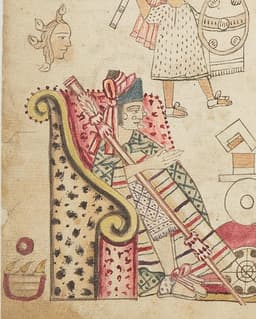
Axayacatl
Emperor · Medieval
56.7Total
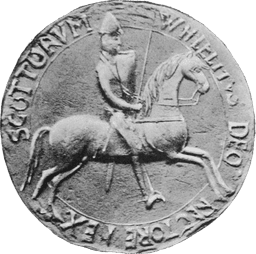
William the Lion
Emperor · Medieval
50.8Total
Basic Information
Born
1449
1143
Died
1481
1214
Era
Medieval
Medieval
Nationality
Aztec Empire
Scotland
Occupation
Emperor
Emperor
Civilization
Western
Western
Score Comparison
Military (10%)
70.0
45.0
Political (20%)
54.7
45.1
Influence (20%)
56.4
54.9
Legacy (20%)
47.5
47.5
Leadership (15%)
65.0
67.0
Strategy (15%)
57.5
38.6
TOTAL
56.7
50.8
Axayacatl — Complete Timeline
1469 AD
Coronation as Tlatoani of TenochtitlanPolitical Action◆ Major
Axayacatl succeeded his grandfather Moctezuma I as the sixth tlatoani of Tenochtitlan. His coronation campaign against the Matlatzinca was successful, capturing many prisoners for sacrifice and establishing his military credentials.
Impact: national
1473 AD
Conquest of TlatelolcoWar◆ Major
Axayacatl led Tenochtitlan forces against the neighboring city-state of Tlatelolco, which had rebelled against Aztec dominance. The war ended with the defeat of Tlatelolco and the death of its tlatoani Moquihuix, incorporating Tlatelolco into Tenochtitlan.
Impact: regionaldestructive
1478 AD
Campaign against the Tarascan EmpireWar◆ Major
Axayacatl led a large Aztec army into the Tarascan Empire (Pur
Impact: regionaldestructive
1481 AD
Construction of the Great Temple of TenochtitlanCultural◆ Major
Axayacatl oversaw the expansion of the Templo Mayor in Tenochtitlan, dedicating a new phase of construction. The temple was the religious center of the Aztec Empire, and this expansion included new sculptures and offerings.
Impact: nationalconstructive
Death of AxayacatlOther
Axayacatl died after a short illness, possibly from a disease or complications from wounds. His death led to the succession of his brother Tizoc, whose weak reign contrasted with Axayacatl's earlier successes.
Impact: national
William the Lion — Complete Timeline
1174 AD
Capture at AlnwickWar
William the Lion was captured by English forces near Alnwick Castle during an invasion of Northumberland. He was taken prisoner to England, leading to the Treaty of Falaise where Scotland became a vassal state of England.
CaptureAnglo-Scottish WarVassalage
Impact: nationaldestructive
Treaty of FalaisePolitical Action◆ Major
William the Lion signed the Treaty of Falaise, acknowledging Henry II of England as his feudal overlord. Scotland's castles were garrisoned by English troops, and William paid homage to the English king.
TreatyVassalageAnglo-Scottish Relations
Impact: nationaldestructive
1178 AD
Foundation of Arbroath AbbeyCultural
William the Lion founded Arbroath Abbey in Angus, dedicated to St. Thomas Becket. The abbey became a major religious center and later the site where the Declaration of Arbroath was drafted in 1320.
FoundationReligionArchitecture
Impact: nationalconstructive
1189 AD
Purchase of Quitclaim of CanterburyPolitical Action
William the Lion paid 10,000 marks to Richard I of England to annul the Treaty of Falaise. This purchase restored Scotland's independence and ended English overlordship, with all English garrisons withdrawn from Scottish castles.
IndependenceTreatyDiplomacy
Impact: nationalconstructive
Expert Analysis
Origins
Axayacatl (c. 1449–1481) was born into the royal lineage of Tenochtitlan, the son of Princess Atotoztli and Prince Tezozomoc, grandson of the great Moctezuma I. As a member of the Mexica nobility, he received training in warfare, religion, and governance. His early life was shaped by the expansionist policies of the Aztec Empire, which had grown rapidly under his predecessors. William the Lion (c. 1143–1214) was born to Henry, Earl of Northumbria, and Ada de Warenne, part of the Scottish royal family. He became King of Scots in 1165 after the death of his brother Malcolm IV. His upbringing was in the Norman-influenced Scottish court, where he learned the arts of kingship and diplomacy. Both rulers inherited complex political landscapes: Axayacatl a thriving empire, William a kingdom entangled with England.
Rise to Power
Axayacatl became tlatoani in 1469 at age 20, succeeding his grandfather. His coronation campaign against the Matlatzinca was successful, securing tribute and captives. He quickly established himself as a military leader, but his greatest test came in 1473 when Tlatelolco, a sister city, rebelled. Axayacatl personally led the assault, defeating the Tlatelolca and executing their ruler Moquihuix. This victory consolidated Aztec control over the Valley of Mexico. William the Lion ascended the throne in 1165. He sought to reclaim territories in Northumberland that had been lost to England. In 1174, during an invasion, he was captured at Alnwick by English forces. This led to the Treaty of Falaise, where William acknowledged Henry II as his feudal overlord and allowed English garrisons in Scottish castles. His capture was a low point, but he later negotiated the Quitclaim of Canterbury in 1189, paying 10,000 marks to Richard I to annul the treaty, restoring Scotland's independence.
Leadership & Governance
Axayacatl ruled as an autocratic emperor, centralizing power in Tenochtitlan. He expanded the Templo Mayor, reinforcing religious authority. His governance relied on tribute from conquered states, which he enforced through military campaigns. However, his overreach against the Tarascan Empire in 1479 resulted in a major defeat at Tzintzuntzan, where the Aztecs lost thousands. This failure exposed the limits of Aztec expansion. William the Lion governed as a feudal king, balancing power with nobles and the church. He founded Arbroath Abbey in 1178, which later became a symbol of Scottish independence. His leadership was characterized by persistence; despite his capture, he maintained Scottish identity and eventually regained sovereignty. Politically, he scored 45.1 against Axayacatl's 54.7, indicating Axayacatl's stronger central control, but William's strategic patience yielded long-term gains.
Triumph & Tragedy
Axayacatl's greatest triumph was the conquest of Tlatelolco, which ended a rebellion and secured Tenochtitlan's dominance. His construction of the Great Temple enhanced the city's religious prestige. His greatest tragedy was the disastrous campaign against the Tarascans, where his army was crushed, halting Aztec westward expansion. This defeat likely contributed to his early death in 1481. William's triumph was the Quitclaim of Canterbury, which freed Scotland from English vassalage. His foundation of Arbroath Abbey became a national symbol. His tragedy was the capture at Alnwick and the humiliating Treaty of Falaise, which subjected Scotland to English overlordship for 15 years. Both rulers experienced a mix of success and failure, but Axayacatl's military score of 70.0 versus William's 45.0 reflects his greater battlefield prowess, while William's political score of 45.1 vs Axayacatl's 54.7 shows Axayacatl's stronger control.
Character & Destiny
Axayacatl was ambitious and aggressive, traits that drove his early conquests but also led to overextension. His defeat by the Tarascans suggests a lack of strategic caution; his strategy score is 57.5, moderate. His death at 32 cut short his reign, leaving the empire to less capable successors. William was tenacious and diplomatic, willing to submit temporarily to regain freedom. His strategy score of 38.6 is lower, but his leadership score of 67.0 indicates resilience. Historical assessments: Axayacatl is remembered as a capable but flawed ruler, while William is seen as a king who secured Scottish independence. Their characters shaped their fates: Axayacatl's aggression led to defeat, William's patience led to eventual success.
Legacy
Axayacatl's legacy is mixed. He expanded the empire but also sowed seeds of instability. His son Moctezuma II would later face the Spanish. The Templo Mayor he expanded became a symbol of Aztec power, later destroyed by conquistadors. His influence score is 56.4. William's legacy is more enduring: the Quitclaim of Canterbury established Scottish sovereignty, and Arbroath Abbey's Declaration of Arbroath (1320) influenced Scottish independence. His legacy score is 47.5, but his impact on national identity is profound. Both left lasting marks, but William's actions had direct consequences for modern Scotland, while Axayacatl's empire was extinguished by 1521.
Conclusion
Axayacatl scores higher overall (56.7 vs 50.8) due to his military achievements and political control. However, William's impact on Scottish independence has lasted centuries, whereas Axayacatl's empire collapsed shortly after his death. In terms of enduring influence, William the Lion had greater historical significance. The score gap of 5.9 points reflects Axayacatl's immediate power, but the long view favors William. Therefore, William the Lion is more impactful, as his actions directly shaped a nation that survives today.
Rankings
🥇
AxayacatlLeader
Mil: 70.0Pol: 54.7Inf: 56.4
56.7
🥈
William the Lion
Mil: 45.0Pol: 45.1Inf: 54.9
50.8
+5.9 behind
How This Comparison Works
Algorithm
Each figure is scored on 6 dimensions (0—100 scale) based on structured historical data: Military (10%), Political (20%), Influence (20%), Legacy (20%), Leadership (15%), Strategy (15%). The weighted total produces the final ranking.
Data Sources
Scores are computed from structured sub-indicators in the database. Scale factors adjust for era (Ancient ×0.85, Modern ×1.0) and civilization size (Eastern ×1.05, Other ×0.80) to account for differences in population and military scale.
Maximum 3 Figures
Comparisons are limited to 2—3 figures to ensure readability and statistical meaningfulness.
Error Margins
±5 points per dimension — Sub-scores are derived from historical records with inherent uncertainty. Two figures within 5 points on a dimension should be considered roughly equivalent in that area.
Total Score Accuracy
±3 points overall — The weighted combination of 6 dimensions produces a total score with approximately ±3 points of uncertainty. Differences of less than 3 points are not statistically significant— the figures are effectively tied.
Known Limitations
- Historical records are incomplete and uneven across civilizations
- Figures from oral-tradition societies may be underrepresented
- Occupation labels can misclassify multi-role figures
- Scores measure capability and impact, not moral character
- Quantitative scoring is a comparison tool, not absolute truth
Capability Radar
Military (10%) — Battles & Warfare
Battles
55
30
Win Rate
60
25
Expansion
60
20
Political (20%) — Governance & Reform
Reform
45
40
Diplomacy
50
50
Economy
45
35
Influence (20%) — Cultural & Global Reach
Cultural
40
30
Global
30
20
Legacy (20%) — Historical Impact
Historical
45
40
Longevity
40
35
Leadership (15%) — Power & Stability
Tenure
50
60
Stability
50
30
Strategy (15%) — Tactics & Innovation
Strategy
55
25
Tactics
50
20
Reform
40
15
Similar Comparisons
Comments & Discussion
No comments yet. Be the first to share your thoughts!