Loading...
Alexios I Komnenos vs Axayacatl
Alexios I Komnenos leads by 21.7 pts · 2 figures compared
…
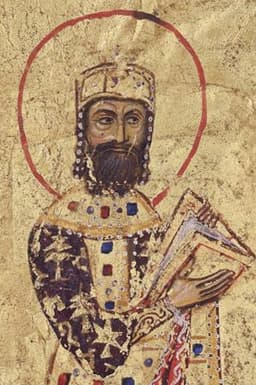
Alexios I Komnenos
Emperor · Medieval
78.4Total
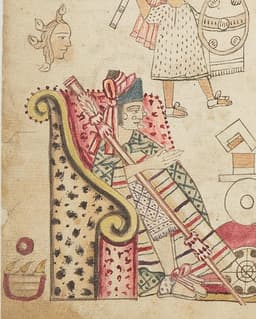
Axayacatl
Emperor · Medieval
56.7Total
Basic Information
Born
1048
1449
Died
1118
1481
Era
Medieval
Medieval
Nationality
Byzantine Empire
Aztec Empire
Occupation
Emperor
Emperor
Civilization
Western
Western
Score Comparison
Military (10%)
61.7
70.0
Political (20%)
78.0
54.7
Influence (20%)
88.0
56.4
Legacy (20%)
80.0
47.5
Leadership (15%)
78.0
65.0
Strategy (15%)
68.0
57.5
TOTAL
78.4
56.7
Alexios I Komnenos — Complete Timeline
1081 AD
Battle of DyrrhachiumWar◆ Major
Alexios I Komnenos was defeated by the Norman army under Robert Guiscard at Dyrrhachium. The Byzantine forces were routed, and Alexios barely escaped. This loss allowed the Normans to occupy much of the western Balkans, though Alexios later recovered some territory.
Norman InvasionDefeatBalkans
Impact: regionaltragic
1090 AD
Reforms of the Byzantine Military and EconomyReform◆ Major
Alexios I implemented a series of reforms to restore Byzantine power. He reorganized the army by relying more on foreign mercenaries, reformed the currency (the hyperpyron), and granted tax exemptions to the Church. These measures stabilized the empire after decades of decline.
Military ReformEconomic ReformKomnenian Restoration
Impact: nationalconstructive
1095 AD
Appeal to the West: Council of PiacenzaPolitical Action
Alexios I sent envoys to Pope Urban II at the Council of Piacenza, requesting military aid against the Seljuk Turks. This appeal contributed to Urban's call for the First Crusade at the Council of Clermont later that year, initiating the Crusader movement.
First CrusadePope Urban IISeljuk Turks
Impact: global
1097 AD
First Crusade: Siege of NicaeaWar◆ Major
Alexios I cooperated with the Crusader army to besiege and capture Nicaea from the Seljuk Turks. The city was surrendered to Byzantine control, and Alexios used the Crusaders to recover key territories in Anatolia, though tensions later arose over land claims.
First CrusadeNicaeaByzantine-Crusader Relations
Impact: regionalconstructive
Axayacatl — Complete Timeline
1469 AD
Coronation as Tlatoani of TenochtitlanPolitical Action◆ Major
Axayacatl succeeded his grandfather Moctezuma I as the sixth tlatoani of Tenochtitlan. His coronation campaign against the Matlatzinca was successful, capturing many prisoners for sacrifice and establishing his military credentials.
Impact: national
1473 AD
Conquest of TlatelolcoWar◆ Major
Axayacatl led Tenochtitlan forces against the neighboring city-state of Tlatelolco, which had rebelled against Aztec dominance. The war ended with the defeat of Tlatelolco and the death of its tlatoani Moquihuix, incorporating Tlatelolco into Tenochtitlan.
Impact: regionaldestructive
1478 AD
Campaign against the Tarascan EmpireWar◆ Major
Axayacatl led a large Aztec army into the Tarascan Empire (Pur
Impact: regionaldestructive
1481 AD
Construction of the Great Temple of TenochtitlanCultural◆ Major
Axayacatl oversaw the expansion of the Templo Mayor in Tenochtitlan, dedicating a new phase of construction. The temple was the religious center of the Aztec Empire, and this expansion included new sculptures and offerings.
Impact: nationalconstructive
Death of AxayacatlOther
Axayacatl died after a short illness, possibly from a disease or complications from wounds. His death led to the succession of his brother Tizoc, whose weak reign contrasted with Axayacatl's earlier successes.
Impact: national
Expert Analysis
Alexios I Komnenos vs Axayacatl
# The Emperor and the Tlatoani: Two Worlds, Two Fates
It is the year 1095, and a desperate Byzantine emperor stands before a council of Western bishops in Piacenza, Italy. Alexios I Komnenos, whose empire has been bleeding territory to Norman knights and Seljuk Turks for decades, makes an unprecedented plea: send warriors to aid Christendom’s eastern bulwark. Half a world away and three centuries earlier, another ruler—Axayacatl, the sixth tlatoani of the Aztec Empire—stands atop the Great Temple of Tenochtitlan, watching smoke rise from the conquered city of Tlatelolco. Both men sought to restore glory to their civilizations. Both succeeded—and both set in motion forces that would ultimately consume them. But their paths, their tools, and their fates could not have been more different.
Origins
Alexios Komnenos was born in 1048 into the Byzantine aristocracy, a world of Greek learning, Roman law, and Orthodox Christianity. The empire he inherited was a shadow of its former self: bankrupt, militarily crippled, and surrounded by enemies who had learned to exploit its weaknesses. He grew up watching his predecessors lose Anatolia piece by piece to the Seljuk Turks, and understood instinctively that survival required adaptation—even if it meant swallowing pride and begging for help from the Latin West.
Axayacatl, born in 1449, came from a very different cradle. He was the grandson of Moctezuma I, the great builder of the Aztec Empire, and grew up in Tenochtitlan—a city of canals, pyramids, and blood-soaked altars. The Aztec worldview was one of cosmic warfare: the sun required human hearts to rise each morning, and conquest was both a political necessity and a sacred duty. Where Alexios learned diplomacy and financial management, Axayacatl learned ritual sacrifice and the art of terrifying one’s enemies into submission.
Rise to Power
Alexios seized the throne in 1081 through a military coup, deposing the weak Emperor Nikephoros III. But his coronation was immediately tested: within months, the Norman warlord Robert Guiscard landed in the Balkans and crushed the Byzantine army at the Battle of Dyrrhachium. Alexios barely escaped with his life, watching his elite Varangian Guard burn alive in a church. It was a humiliation that would define his early reign—and teach him that direct confrontation was often suicide.
Axayacatl’s rise was smoother. He succeeded his grandfather in 1469 at age twenty, inheriting a stable empire at its peak. His coronation campaign—a ritual requirement for every new tlatoani—was a brutal affair: he crushed a rebellion in the southern province of Tepanecapan, taking hundreds of captives for sacrifice. For the Aztecs, this was not cruelty but piety; for Alexios, watching his enemies burn in a church was simply disaster.
Leadership & Governance
Here the two rulers diverge most sharply. Alexios was a master of political survival. His military score of 71.2 reflects competence rather than genius, but his political score of 80.0 reveals his true talent: he understood that an emperor’s greatest weapon was not the sword but the treasury. By 1090, he had implemented sweeping reforms: he devalued the currency to pay for mercenaries, granted tax exemptions to loyal landowners, and reorganized the army around foreign knights rather than unreliable native troops. He was a pragmatist who would ally with anyone—Venetian merchants, Norman exiles, even the Papacy—to save his empire.
Axayacatl’s leadership was more direct. His military score of 60.1 and strategy score of 45.7 suggest a warrior who relied on overwhelming force rather than subtle maneuvers. In 1473, when the rival city of Tlatelolco rebelled, he personally led the assault, fighting hand-to-hand on the causeways. He conquered the city, but his brutality—executing the Tlatelolcan ruler and sacrificing thousands—sowed resentment that would fester for generations. His political score of 52.1 reflects a ruler who ruled through fear, not negotiation.
Triumph & Tragedy
Alexios’s greatest triumph was also his most dangerous gamble. In 1095, he sent envoys to Pope Urban II at the Council of Piacenza, requesting mercenaries to fight the Turks. What he got was the First Crusade—a massive, unruly army of Western knights who saw themselves as holy warriors, not hired swords. Alexios managed to cooperate with them at the Siege of Nicaea in 1097, recapturing the city through a combination of siegecraft and betrayal. But the Crusaders soon ignored his authority, carving out their own kingdoms in the Holy Land. Alexios had opened a door he could not close.
Axayacatl’s tragedy came in 1478. Flush with victory over Tlatelolco, he led a massive army into the Tarascan Empire to the west. The Tarascans, who had developed bronze weapons and fortified cities, ambushed the Aztecs in a mountain pass. Thousands died; Axayacatl himself was wounded. It was the worst defeat in Aztec history, and it shattered the myth of Tenochtitlan’s invincibility. He died three years later in 1481, likely from infection or disease, leaving his empire weakened and his son—the future Montezuma II—to inherit a fragile throne.
Character & Destiny
Alexios was a survivor. He endured betrayals, military disasters, and the constant threat of assassination, yet never lost his nerve. He wrote in his memoirs that an emperor must be “like a helmsman in a storm, adjusting the sails to every wind.” That flexibility saved Byzantium for another century—but it also meant compromising with forces he could not control. The Crusaders he summoned would eventually sack Constantinople in 1204, a catastrophe rooted in his own decisions.
Axayacatl was a conqueror in a culture that demanded conquest. He expanded the empire, built the Great Temple, and maintained the blood-soaked rituals that held Aztec society together. But he could not adapt. When the Tarascans proved stronger, he had no diplomatic alternative: Aztec ideology demanded total victory or total defeat. His son Montezuma II would face the Spanish with the same rigidity—and the same result.
Legacy
Today, Alexios is remembered as the founder of the Komnenian dynasty, the man who bought Byzantium a reprieve. His legacy score of 75.0 reflects a mixed judgment: he saved the empire but unleashed the Crusades, a force that would reshape the Mediterranean for centuries. History credits him with political genius, but also with a naivety about the West that proved fatal.
Axayacatl’s legacy is more obscure. His score of 62.8 places him as a competent but unremarkable ruler, overshadowed by his grandfather Moctezuma I and his son Montezuma II. He built the Templo Mayor, but his defeat by the Tarascans and his brutal conquest of Tlatelolco made him a figure of warning rather than inspiration. In Aztec memory, he was the tlatoani who overreached.
Conclusion
Standing at the edge of their respective worlds, Alexios and Axayacatl faced the same fundamental challenge: how to preserve a civilization under pressure. One chose adaptation, the other annihilation. One opened his empire to foreign armies; the other closed his mind to foreign ideas. Neither choice was wrong—both were products of their times. But as we look back from our own age of global entanglement, we might ask: which path would we take? The helmsman who steers through the storm, or the warrior who fights until the last heart is offered to the sun? The answer, perhaps, depends on what we are willing to lose.
Rankings
🥇
Alexios I KomnenosLeader
Mil: 61.7Pol: 78.0Inf: 88.0
78.4
🥈
Axayacatl
Mil: 70.0Pol: 54.7Inf: 56.4
56.7
+21.7 behind
How This Comparison Works
Algorithm
Each figure is scored on 6 dimensions (0—100 scale) based on structured historical data: Military (10%), Political (20%), Influence (20%), Legacy (20%), Leadership (15%), Strategy (15%). The weighted total produces the final ranking.
Data Sources
Scores are computed from structured sub-indicators in the database. Scale factors adjust for era (Ancient ×0.85, Modern ×1.0) and civilization size (Eastern ×1.05, Other ×0.80) to account for differences in population and military scale.
Maximum 3 Figures
Comparisons are limited to 2—3 figures to ensure readability and statistical meaningfulness.
Error Margins
±5 points per dimension — Sub-scores are derived from historical records with inherent uncertainty. Two figures within 5 points on a dimension should be considered roughly equivalent in that area.
Total Score Accuracy
±3 points overall — The weighted combination of 6 dimensions produces a total score with approximately ±3 points of uncertainty. Differences of less than 3 points are not statistically significant— the figures are effectively tied.
Known Limitations
- Historical records are incomplete and uneven across civilizations
- Figures from oral-tradition societies may be underrepresented
- Occupation labels can misclassify multi-role figures
- Scores measure capability and impact, not moral character
- Quantitative scoring is a comparison tool, not absolute truth
Capability Radar
Military (10%) — Battles & Warfare
Battles
75
55
Win Rate
70
60
Expansion
60
60
Political (20%) — Governance & Reform
Reform
85
45
Diplomacy
90
50
Economy
70
45
Influence (20%) — Cultural & Global Reach
Cultural
70
40
Global
75
30
Legacy (20%) — Historical Impact
Historical
85
45
Longevity
80
40
Leadership (15%) — Power & Stability
Tenure
80
50
Stability
75
50
Strategy (15%) — Tactics & Innovation
Strategy
85
55
Tactics
80
50
Reform
75
40
Similar Comparisons
Comments & Discussion
SPQR_Skeptic6/16/2026
Calling Alexios a "restorer" is generous. He literally invited the Crusaders in—the most catastrophic diplomatic blunder of the Middle Ages. The First Crusade was a temporary win, sure, but it also set the stage for the Fourth Crusade, which sacked Constantinople in 1204. That's not restoration; that's trading one set of invaders for another. Axayacatl's conquest of Tlatelolco, on the other hand, was a brutal but clean absorption of a rival city-state. No foreign mercenaries, no centuries-long c
铜镜碎语6/16/2026
拿阿莱克修斯和Axayacatl比,简直是关公战秦琼。拜占庭那会儿都快被诺曼人揍成筛子了,皇帝跑去意大利求援,这叫什么?这叫病急乱投医。可Axayacatl不一样啊,他在大神庙顶上看着特拉特洛尔科烧起来的时候,那是真·武力碾压。特诺奇蒂特兰当时光湖泊系统就够复杂了,敌人根本进不来。这位tlatoani至少死得像个战士——1469年出征米却肯,战死沙场,比那个在君士坦丁堡看十字军抢劫的皇帝有骨气多了。
Historia_Exactor6/16/2026
The comparison fails on a simple timeline point: Axayacatl died in 1481, Alexios in 1118. That's 363 years apart. Comparing them is like comparing Charlemagne to Napoleon. They never breathed the same air, never faced the same geopolitics, never even knew the same world existed. Alexios lived in a post-Roman Mediterranean state fighting Turks who were literally at the gates. Axayacatl ruled a Mesoamerican empire that hadn't yet seen a single European. The only thing they share is ambition. But c
龟甲纪事6/16/2026
你们都说Axayacatl是暴君,但他扩建大神庙、重修水道系统,这搁哪个文明都是基建狂魔啊。反观阿莱克修斯,他那套"求援外交"直接把塞尔柱突厥人请进了安纳托利亚,最后那地全成了土耳其人的。拜占庭连小亚细亚都保不住,还谈啥复兴?Axayacatl至少把特拉特洛尔科并入特诺奇蒂特兰,建立了一个双城统治体系,直到科尔特斯来之前,那都是美洲最稳的政治结构。这叫务实,不叫野蛮。