Loading...
Axayacatl vs Kublai Khan
Kublai Khan leads by 17.6 pts · 2 figures compared
…
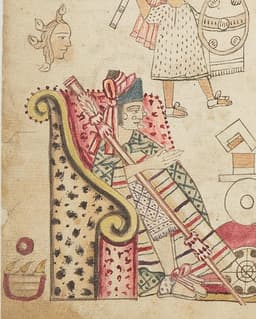
Axayacatl
Emperor · Medieval
56.7Total
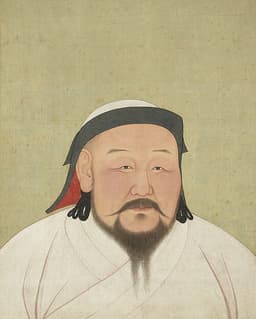
Kublai Khan
Emperor · Medieval
74.3Total
Basic Information
Born
1449
1215
Died
1481
1294
Era
Medieval
Medieval
Nationality
Aztec Empire
Mongolia
Occupation
Emperor
Emperor
Civilization
Western
Eastern
Score Comparison
Military (10%)
70.0
77.5
Political (20%)
54.7
79.2
Influence (20%)
56.4
75.0
Legacy (20%)
47.5
70.0
Leadership (15%)
65.0
72.0
Strategy (15%)
57.5
76.0
TOTAL
56.7
74.3
Axayacatl — Complete Timeline
1469 AD
Coronation as Tlatoani of TenochtitlanPolitical Action◆ Major
Axayacatl succeeded his grandfather Moctezuma I as the sixth tlatoani of Tenochtitlan. His coronation campaign against the Matlatzinca was successful, capturing many prisoners for sacrifice and establishing his military credentials.
Impact: national
1473 AD
Conquest of TlatelolcoWar◆ Major
Axayacatl led Tenochtitlan forces against the neighboring city-state of Tlatelolco, which had rebelled against Aztec dominance. The war ended with the defeat of Tlatelolco and the death of its tlatoani Moquihuix, incorporating Tlatelolco into Tenochtitlan.
Impact: regionaldestructive
1478 AD
Campaign against the Tarascan EmpireWar◆ Major
Axayacatl led a large Aztec army into the Tarascan Empire (Pur
Impact: regionaldestructive
1481 AD
Construction of the Great Temple of TenochtitlanCultural◆ Major
Axayacatl oversaw the expansion of the Templo Mayor in Tenochtitlan, dedicating a new phase of construction. The temple was the religious center of the Aztec Empire, and this expansion included new sculptures and offerings.
Impact: nationalconstructive
Death of AxayacatlOther
Axayacatl died after a short illness, possibly from a disease or complications from wounds. His death led to the succession of his brother Tizoc, whose weak reign contrasted with Axayacatl's earlier successes.
Impact: national
Kublai Khan — Complete Timeline
1260 AD
Adoption of Tibetan Buddhism as State ReligionCultural◆ Major
Kublai Khan appointed the Tibetan lama Drog
Tibetan BuddhismReligionMongol-Tibet Relations
Impact: regional
1271 AD
Proclamation of the Yuan DynastyPolitical Action◆ Major
Kublai Khan officially proclaimed the Yuan dynasty, adopting a Chinese-style dynastic name. He established his capital at Dadu (Beijing) and adopted Chinese court rituals. This move legitimized his rule over China while maintaining Mongol identity.
Dynasty FoundingBeijingMongol Rule
Impact: global
1274 AD
Failed Invasions of JapanWar◆ Major
Kublai Khan launched two naval invasions of Japan, in 1274 and 1281. Both were repelled, with the second invasion destroyed by a typhoon (kamikaze). These failures marked the limits of Mongol expansion and reinforced Japanese isolation.
Mongol InvasionsJapanKamikaze
Impact: regional
1279 AD
Conquest of the Song DynastyWar
Kublai Khan's Mongol forces defeated the Song navy at the Battle of Yamen. The last Song emperor drowned, ending the Song dynasty. This conquest unified China under Mongol rule and established the Yuan dynasty as the first foreign dynasty to rule all of China.
Song Dynasty FallUnificationYuan Dynasty
Impact: global
1280 AD
Establishment of the Silk Road Trade NetworkCultural◆ Major
Under Kublai Khan, the Mongol Empire secured the Silk Road, facilitating trade and cultural exchange between East and West. Marco Polo visited his court. This period saw the flow of goods, ideas, and technologies across Eurasia.
Silk RoadTradeCultural Exchange
Impact: globalconstructive
Expert Analysis
Kublai Khan vs Axayacatl
# The Emperor and the Tlatoani: Two Visions of Empire
In the winter of 1274, on the shores of Kyushu, Japanese defenders watched in horror as a fleet of nearly nine hundred ships darkened the horizon. Aboard one of those vessels, Kublai Khan—descendant of Genghis, ruler of the largest land empire in history—waited for news of conquest. Less than two hundred years earlier and ten thousand miles away, another emperor stood atop the Great Temple of Tenochtitlan, watching smoke rise from the conquered market of Tlatelolco. Both men were imperial conquerors. Both sought to reshape the world in their image. Yet one founded a dynasty that would rule China for a century, while the other left an empire that crumbled within a generation of his death. What separates a world-historical figure from a footnote?
Origins
Kublai Khan was born in 1215, the grandson of Genghis Khan, into a world of relentless expansion. The Mongol Empire had already swallowed vast stretches of Asia, but Kublai was different from his warrior uncles and cousins. Raised among Chinese advisers, he learned to read Chinese classics, studied Confucian administration, and developed a taste for settled civilization that his nomadic ancestors would have found bewildering. He was, in essence, a Mongol who wanted to become Chinese—or at least to rule China like a Chinese emperor.
Axayacatl, born in 1449, inherited a different tradition. The Aztec Empire was young, barely a century old, and its ideology was one of constant warfare. As a prince of Tenochtitlan, he was trained from childhood to capture prisoners for sacrifice, to expand the tribute networks, and to honor the gods with blood. His world was smaller—a valley of lakes and volcanoes—but no less violent. Where Kublai looked outward to the Silk Road and the oceans, Axayacatl looked inward, to the endless wars of the Flower Wars and the jealous city-states that surrounded his island capital.
Rise to Power
Kublai's path to power was a civil war. In 1260, after the death of his brother Möngke, he declared himself Great Khan while his younger brother Ariq Böke did the same. For four years, Mongol fought Mongol. Kublai won not because he was the better general—his military score of 88 suggests he was formidable—but because he understood something his brother did not: that the future of the empire lay in China, not the steppe. He cultivated Chinese officials, promised tax relief, and presented himself as a sage ruler. By the time he proclaimed the Yuan Dynasty in 1271, he had already won the war of ideas.
Axayacatl's rise was smoother but more constrained. He succeeded his grandfather Moctezuma I in 1469, at age twenty, through a combination of royal blood and noble approval. His coronation campaign—a ritual war to capture prisoners for sacrifice—was expected of every new tlatoani. He had no rival brothers to defeat, no ideological schism to navigate. His challenge was simpler: prove his worth through conquest, or be remembered as weak.
Leadership & Governance
Here the two emperors diverge most dramatically. Kublai ruled through bureaucracy. He adopted Chinese administrative systems, built a new capital at Dadu (modern Beijing), standardized weights and measures, and issued paper currency. His political score of 78 reflects a man who understood that conquest alone does not create an empire—administration does. He patronized Tibetan Buddhism, making it the state religion in 1260, but also tolerated Daoists, Muslims, and Christians. The Silk Road flourished under his protection, and Marco Polo would later describe a court of astonishing sophistication.
Axayacatl ruled through ritual and terror. His political score of 52.1 suggests a man who never fully grasped the arts of governance. He expanded the Templo Mayor, the great pyramid at the heart of Tenochtitlan, but his primary tool of statecraft was war. Every campaign fed the sacrificial stone. Every conquered city was bound by fear, not loyalty. When he invaded the Tarascan Empire in 1478, he led an army of perhaps 24,000 men into the mountains of western Mexico—and was crushed. It was the worst defeat in Aztec history. He survived, but the empire's aura of invincibility did not.
Triumph & Tragedy
Kublai's greatest triumph came in 1279, when his fleet destroyed the Song navy at the Battle of Yamen. The last Song emperor, a child of seven, drowned in the arms of his loyal minister. China was unified for the first time in three centuries. It was a staggering achievement—the conquest of a civilization of 100 million people by a nomadic army from the steppe.
But Kublai's reach exceeded his grasp. In 1274 and again in 1281, he launched invasions of Japan. Both failed. The second invasion, involving perhaps 140,000 men, was destroyed by a typhoon—the famous *kamikaze*, or "divine wind." Kublai never understood why his power, which stretched from Korea to Hungary, could not cross a few hundred miles of ocean.
Axayacatl's triumph was smaller but more personal. In 1473, he conquered Tlatelolco, the great market city that shared the island of Tenochtitlan. It was a civil war between Aztecs, and he won it decisively, executing the rebel king and absorbing Tlatelolco's wealth into his own capital. For a moment, Tenochtitlan was supreme.
His tragedy was the Tarascan campaign. He returned home humiliated, his army shattered, his reputation damaged. He died in 1481, possibly from wounds or disease, at just thirty-two years old. His empire was intact, but its foundations had cracked.
Character & Destiny
Kublai was a pragmatist. He adopted Tibetan Buddhism not out of deep faith but because it offered a spiritual framework that could unite Mongols and Chinese. He tolerated other religions because tolerance was good for trade. He built canals and granaries because hungry peasants rebel. His leadership score of 82 reflects a man who ruled through calculation, not passion.
Axayacatl was a warrior first. His strategy score of 45.7—the lowest of any major metric—suggests a leader who fought bravely but thought poorly. He attacked the Tarascans without understanding their terrain or their military strength. He conquered Tlatelolco but failed to build institutions that could hold it. He was, in the end, a product of his culture: an empire that valued sacrifice over sustainability, conquest over consolidation.
Legacy
Kublai Khan is remembered as a unifier. The Yuan Dynasty lasted until 1368, and its legacy—a unified China, a protected Silk Road, a cosmopolitan court—outlasted Mongol rule. His influence score of 78 reflects a man who changed the course of Asian history.
Axayacatl is remembered, if at all, as a footnote. His son Montezuma II would face Hernán Cortés, and the Aztec Empire would fall. The Templo Mayor he expanded was torn down to build a Spanish cathedral. His conquest of Tlatelolco is a chapter in a larger story of collapse.
Conclusion
Perhaps the difference between these two emperors is not one of talent but of context. Kublai inherited an empire that was already global, and he chose to adapt rather than resist. Axayacatl inherited an empire that was still local, and he had no model for change. One learned from his enemies; the other only fought them. In the end, history rewards those who can imagine a world beyond their own. Kublai could imagine China. Axayacatl could not imagine anything beyond the blood-soaked steps of the Templo Mayor. And that made all the difference.
Rankings
🥇
Kublai KhanLeader
Mil: 77.5Pol: 79.2Inf: 75.0
74.3
🥈
Axayacatl
Mil: 70.0Pol: 54.7Inf: 56.4
56.7
+17.6 behind
How This Comparison Works
Algorithm
Each figure is scored on 6 dimensions (0—100 scale) based on structured historical data: Military (10%), Political (20%), Influence (20%), Legacy (20%), Leadership (15%), Strategy (15%). The weighted total produces the final ranking.
Data Sources
Scores are computed from structured sub-indicators in the database. Scale factors adjust for era (Ancient ×0.85, Modern ×1.0) and civilization size (Eastern ×1.05, Other ×0.80) to account for differences in population and military scale.
Maximum 3 Figures
Comparisons are limited to 2—3 figures to ensure readability and statistical meaningfulness.
Error Margins
±5 points per dimension — Sub-scores are derived from historical records with inherent uncertainty. Two figures within 5 points on a dimension should be considered roughly equivalent in that area.
Total Score Accuracy
±3 points overall — The weighted combination of 6 dimensions produces a total score with approximately ±3 points of uncertainty. Differences of less than 3 points are not statistically significant— the figures are effectively tied.
Known Limitations
- Historical records are incomplete and uneven across civilizations
- Figures from oral-tradition societies may be underrepresented
- Occupation labels can misclassify multi-role figures
- Scores measure capability and impact, not moral character
- Quantitative scoring is a comparison tool, not absolute truth
Capability Radar
Military (10%) — Battles & Warfare
Battles
55
95
Win Rate
60
90
Expansion
60
95
Political (20%) — Governance & Reform
Reform
45
88
Diplomacy
50
85
Economy
45
90
Influence (20%) — Cultural & Global Reach
Cultural
40
85
Global
30
85
Legacy (20%) — Historical Impact
Historical
45
90
Longevity
40
80
Leadership (15%) — Power & Stability
Tenure
50
90
Stability
50
80
Strategy (15%) — Tactics & Innovation
Strategy
55
92
Tactics
50
85
Reform
40
88
Similar Comparisons
Comments & Discussion
HordeBreaker996/16/2026
The naval comparison is a joke. Kublai fielded 4,400 ships for his first invasion attempt - the largest amphibious assault until WWII - and still got wrecked by a typhoon and samurai defending their home turf. Seasoned Mongol cavalry meant squat when your horses were seasick. Meanwhile Axayacatl conquered Tlatelolco by personally fighting through their market, killing the king with his own hands. One built a fleet that sank; the other built a reputation that terrified his enemies for decades. Gi
墨家怪客6/16/2026
你们都被数字骗了。忽必烈是元朝创始人没错,但他1274年和1281年两次征日损失了超过十万兵力,全靠台风才没全军覆没。这不叫战略天才,这叫赌博输光后老天帮你捡回筹码!反观阿哈亚卡特尔,他在1473年征服特拉特洛尔科后,把俘虏的商人全部献祭,吓得周边城市直接投降。真正的帝国是用敌人的恐惧建立的,不是靠蒙古骑兵撑场面。历史不是算术题。
NumenoreanNomad6/16/2026
You're all missing the structural elephant in the room. Kublai didn't just conquer China - he co-opted its entire administrative machinery from the Tang-Song tradition, creating the Yuan dynasty that lasted 97 years. Axayacatl inherited a Triple Alliance that was basically a tribute empire with no succession rules. His son Moctezuma II got everything handed to him and still couldn't stop Cortés with 500 men. Sustained governance beats raw conquest every time. Kublai understood that empire means
踏破铁鞋6/16/2026
作为专门研究阿兹特克历法的人,我得说你们对Axayacatl的忽略是一种文化傲慢。他在位期间改革了墨西加人的历法体系,把太阳石(Calendar Stone)雕刻得更加精确。这不仅是宗教行为,更是政治宣言:天文学就是权力。反观忽必烈,他推行藏传佛教打压儒学,搞得汉族文人集体罢工。一个用星辰统治,一个用宗教压迫。我选那个懂星星的人。
Temujin'sToothache6/16/2026
Fine, let's talk logistics. Kublai's Yuan dynasty controlled 11 million square kilometers at its peak - that's managing supply lines across Siberia to Vietnam, with paper currency and postal relays. Axayacatl ruled maybe 300,000 square kilometers in central Mexico, and his empire collapsed when the Spanish landed because he never thought to build alliances beyond the Triple Alliance. Kublai knew how to delegate: he let Persians handle Persia, Chinese run China, and Mongols fight. Axayacatl tried