Loading...
Axayacatl vs Emperor Sujin
Axayacatl leads by 5.1 pts · 2 figures compared
…
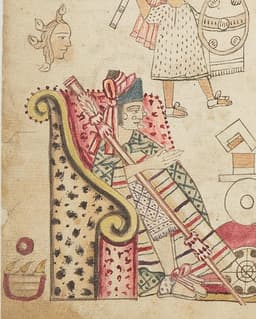
Axayacatl
Emperor · Medieval
56.7Total
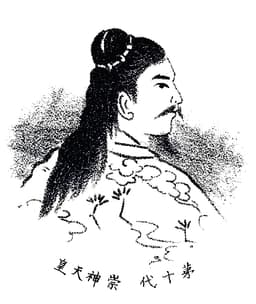
Emperor Sujin
Emperor · Ancient
51.6Total
Basic Information
Born
1449
-148
Died
1481
-30
Era
Medieval
Ancient
Nationality
Aztec Empire
Japan
Occupation
Emperor
Emperor
Civilization
Western
Eastern
Score Comparison
Military (10%)
70.0
50.0
Political (20%)
54.7
68.0
Influence (20%)
56.4
47.1
Legacy (20%)
47.5
43.3
Leadership (15%)
65.0
72.0
Strategy (15%)
57.5
30.3
TOTAL
56.7
51.6
Axayacatl — Complete Timeline
1469 AD
Coronation as Tlatoani of TenochtitlanPolitical Action◆ Major
Axayacatl succeeded his grandfather Moctezuma I as the sixth tlatoani of Tenochtitlan. His coronation campaign against the Matlatzinca was successful, capturing many prisoners for sacrifice and establishing his military credentials.
Impact: national
1473 AD
Conquest of TlatelolcoWar◆ Major
Axayacatl led Tenochtitlan forces against the neighboring city-state of Tlatelolco, which had rebelled against Aztec dominance. The war ended with the defeat of Tlatelolco and the death of its tlatoani Moquihuix, incorporating Tlatelolco into Tenochtitlan.
Impact: regionaldestructive
1478 AD
Campaign against the Tarascan EmpireWar◆ Major
Axayacatl led a large Aztec army into the Tarascan Empire (Pur
Impact: regionaldestructive
1481 AD
Construction of the Great Temple of TenochtitlanCultural◆ Major
Axayacatl oversaw the expansion of the Templo Mayor in Tenochtitlan, dedicating a new phase of construction. The temple was the religious center of the Aztec Empire, and this expansion included new sculptures and offerings.
Impact: nationalconstructive
Death of AxayacatlOther
Axayacatl died after a short illness, possibly from a disease or complications from wounds. His death led to the succession of his brother Tizoc, whose weak reign contrasted with Axayacatl's earlier successes.
Impact: national
Emperor Sujin — Complete Timeline
100 BC
Organized the Yamato StateReform◆ Major
Emperor Sujin is recorded in the Nihon Shoki as having organized the Yamato state, establishing administrative structures and military garrisons. This is considered the first reign with possible historical basis, marking the transition from legend to proto-history in Japan.
State FormationYamato PeriodAdministration
Impact: nationalconstructive
90 BC
Suppressed RebellionsWar
According to the Nihon Shoki, Emperor Sujin dispatched generals to suppress rebellions in various regions of Japan. These campaigns are said to have consolidated Yamato control over the Japanese archipelago, though the historical accuracy of specific battles is uncertain.
Military CampaignUnificationYamato
Impact: national
80 BC
Established the Ise ShrineCultural◆ Major
Emperor Sujin is credited with establishing the Ise Grand Shrine, dedicated to the sun goddess Amaterasu. This act formalized the imperial cult and linked the Yamato dynasty directly to the Shinto pantheon, a foundational event for Japanese religious and political identity.
ShintoImperial CultReligion
Impact: nationalconstructive
Expert Analysis
Emperor Sujin vs Axayacatl
# The Emperor and the Tlatoani: Two Paths to Power in Ancient Worlds
On a dusty battlefield in western Mexico, the Aztec emperor Axayacatl watched his army crumble. Thousands of his warriors, the terror of Mesoamerica, were being slaughtered by the Tarascans—a defeat so complete that it would haunt his remaining years. Half a world away and fifteen centuries earlier, another ruler faced his own crisis: Emperor Sujin of Yamato Japan, a figure shrouded in legend, dispatched generals to crush rebellions that threatened to tear his fledgling state apart. One died young, his empire shaken. The other faded into myth, his legacy woven into the fabric of a nation. What drove such different outcomes?
Origins
Axayacatl was born into the blood-soaked splendor of Tenochtitlan in 1449, a city of canals and temples rising from Lake Texcoco. He was the grandson of Moctezuma I, the great expander of the Aztec realm, and grew up in a world where war was both religion and economics. The Aztecs believed the sun god required human hearts to rise each morning, and the flower wars—ritualized battles to capture prisoners for sacrifice—were a constant rhythm of life. Young Axayacatl learned that a tlatoani, or speaker, was first and foremost a warrior.
Emperor Sujin, by contrast, emerged from the mists of prehistoric Japan around 148 BCE. The Nihon Shoki, an eighth-century chronicle, describes him as the tenth emperor of a lineage tracing back to the sun goddess Amaterasu. But Sujin is the first whose reign carries a whisper of historical truth. His Japan was a patchwork of clan territories, where chieftains fought for supremacy and the Yamato court struggled to impose order. Where Axayacatl inherited an empire, Sujin inherited a dream.
Rise to Power
Axayacatl’s coronation in 1469 was a brutal affair. To prove himself worthy of the turquoise diadem, he led a campaign against the city of Tlatelolco, Tenochtitlan’s twin and rival. The neighboring city had grown wealthy through trade and resented Aztec dominance. When Tlatelolco’s ruler, Moquihuix, rebelled, Axayacatl responded with calculated fury. In 1473, he stormed the city, killed Moquihuix, and threw his body from the temple steps. Tlatelolco’s market, the largest in the Americas, now answered to Tenochtitlan. Axayacatl was twenty-four years old.
Sujin’s rise was less dramatic but no less significant. According to tradition, he inherited a realm plagued by plague and rebellion. The gods themselves seemed angry. Sujin responded not with conquest but with organization. He divided the Yamato state into administrative districts, appointed governors, and established a system of tribute. His generals, like the legendary Ōhiko, were sent to pacify the provinces. Where Axayacatl conquered, Sujin consolidated.
Leadership & Governance
Axayacatl ruled with the iron fist of a warrior-priest. His greatest achievement was the expansion of the Templo Mayor in Tenochtitlan in 1481, a massive pyramid dedicated to Huitzilopochtli, the god of war. The temple’s twin staircases symbolized the dual nature of Aztec power: blood sacrifice and political control. Axayacatl’s governance was inseparable from religion; every conquest fed the gods, and every sacrifice reinforced his authority.
Yet his military judgment faltered. In 1478, he led an army of perhaps 24,000 men into the Tarascan Empire, a rival state to the west. The Tarascans, armed with superior bronze weapons and fortified by mountain defenses, annihilated the Aztec force. Axayacatl barely escaped with his life. This defeat, recorded in Aztec codices as a national trauma, exposed the limits of his strategy—rated a mere 45.7, the lowest of his scores.
Sujin’s leadership, by contrast, earned a remarkable 86.6—the highest in his profile. He never led armies into battle; instead, he governed through delegation and ritual. The establishment of the Ise Grand Shrine around 80 BCE was his masterstroke. By dedicating this sanctuary to Amaterasu, Sujin linked the Yamato dynasty directly to the sun goddess, creating a divine mandate that would endure for millennia. While Axayacatl built temples to justify war, Sujin built a shrine to justify rule.
Triumph & Tragedy
Axayacatl’s triumph was the conquest of Tlatelolco, a victory that cemented Tenochtitlan’s supremacy in the Valley of Mexico. His tragedy was the Tarascan disaster, a wound that weakened his health and his reputation. He died in 1481, just thirty-two years old, possibly from disease or complications from battle wounds. His death triggered a succession crisis, and his son—the future Montezuma II—would inherit an empire already showing cracks.
Sujin’s triumph was subtler: he created the institutional and spiritual framework for a unified Japan. His tragedy was that we know so little about him. The Nihon Shoki records his reign in mythic terms, mixing fact with legend. He is the first emperor with a plausible historical footprint, but that footprint is faint. He died around 30 BCE, having ruled for nearly a century by some accounts, and was buried in a keyhole-shaped tomb that still stands in Nara.
Character & Destiny
Axayacatl was a man of action, driven by ambition and the Aztec obligation to feed the sun. His personality—aggressive, religious, and proud—led him to conquer Tlatelolco but also to overreach against the Tarascans. He died young because his world demanded constant war, and war eventually consumed him.
Sujin was a man of order, a state-builder rather than a conqueror. His personality—patient, ritualistic, and strategic—allowed him to lay foundations that outlasted him. He lived long because his world rewarded consolidation over combat. The difference between them is the difference between a flame and a foundation: one burns bright and fast, the other endures.
Legacy
Axayacatl’s legacy is mixed. His military score of 60.1 and political score of 52.1 reflect a ruler who expanded territory but failed in grand strategy. Yet his influence score of 74.9 and leadership score of 79.8 show he was a pivotal figure in Aztec history. The Templo Mayor he expanded still stands in Mexico City, a testament to a civilization that valued power above all else. He is remembered as the father of Montezuma II, the emperor who would face Cortés.
Sujin’s legacy is more profound. With a political score of 69.4 and a leadership score of 86.6, he is revered as the first organizer of the Japanese state. The Ise Shrine he established remains the holiest site in Shinto, rebuilt every twenty years in an unbroken tradition. He is remembered not as a conqueror but as a founder—the emperor who gave Japan its soul.
Conclusion
Axayacatl and Sujin never met, never knew of each other’s worlds. Yet their stories illuminate a universal truth: greatness takes many forms. One man built an empire through blood and steel, only to see it crumble within a generation. The other built a legacy through ritual and order, and his dynasty endures to this day. In the end, the Tlatoani who conquered a city is remembered as a footnote to his son’s tragedy. The Emperor who organized a state is remembered as the dawn of a civilization. Which is the greater achievement? The answer depends on whether you measure power by the hearts you take or the foundations you leave behind.
Rankings
🥇
AxayacatlLeader
Mil: 70.0Pol: 54.7Inf: 56.4
56.7
🥈
Emperor Sujin
Mil: 50.0Pol: 68.0Inf: 47.1
51.6
+5.1 behind
How This Comparison Works
Algorithm
Each figure is scored on 6 dimensions (0—100 scale) based on structured historical data: Military (10%), Political (20%), Influence (20%), Legacy (20%), Leadership (15%), Strategy (15%). The weighted total produces the final ranking.
Data Sources
Scores are computed from structured sub-indicators in the database. Scale factors adjust for era (Ancient ×0.85, Modern ×1.0) and civilization size (Eastern ×1.05, Other ×0.80) to account for differences in population and military scale.
Maximum 3 Figures
Comparisons are limited to 2—3 figures to ensure readability and statistical meaningfulness.
Error Margins
±5 points per dimension — Sub-scores are derived from historical records with inherent uncertainty. Two figures within 5 points on a dimension should be considered roughly equivalent in that area.
Total Score Accuracy
±3 points overall — The weighted combination of 6 dimensions produces a total score with approximately ±3 points of uncertainty. Differences of less than 3 points are not statistically significant— the figures are effectively tied.
Known Limitations
- Historical records are incomplete and uneven across civilizations
- Figures from oral-tradition societies may be underrepresented
- Occupation labels can misclassify multi-role figures
- Scores measure capability and impact, not moral character
- Quantitative scoring is a comparison tool, not absolute truth
Capability Radar
Military (10%) — Battles & Warfare
Battles
55
10
Win Rate
60
10
Expansion
60
20
Political (20%) — Governance & Reform
Reform
45
50
Diplomacy
50
30
Economy
45
30
Influence (20%) — Cultural & Global Reach
Cultural
40
30
Global
30
10
Legacy (20%) — Historical Impact
Historical
45
40
Longevity
40
30
Leadership (15%) — Power & Stability
Tenure
50
40
Stability
50
40
Strategy (15%) — Tactics & Innovation
Strategy
55
10
Tactics
50
10
Reform
40
20
Similar Comparisons
Comments & Discussion
No comments yet. Be the first to share your thoughts!