Loading...
This comparison has not been analyzed yet.
One-time AI generation (~1 minute). Scores and timeline are already available below.
Axayacatl vs Chikuyo Chisamarengu
Axayacatl leads by 13.4 pts · 2 figures compared
…
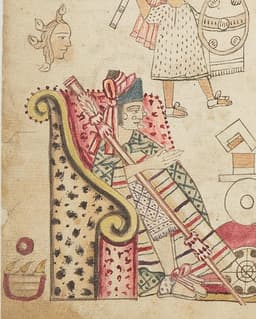
Axayacatl
Emperor · Medieval
56.7Total

Chikuyo Chisamarengu
Emperor · Medieval
43.3Total
Basic Information
Born
1449
1490
Died
1481
1530
Era
Medieval
Medieval
Nationality
Aztec Empire
Mutapa Empire
Occupation
Emperor
Emperor
Civilization
Western
Other
Score Comparison
Military (10%)
70.0
45.0
Political (20%)
54.7
33.6
Influence (20%)
56.4
48.6
Legacy (20%)
47.5
40.0
Leadership (15%)
65.0
51.9
Strategy (15%)
57.5
38.6
TOTAL
56.7
43.3
Axayacatl — Complete Timeline
1469 AD
Coronation as Tlatoani of TenochtitlanPolitical Action◆ Major
Axayacatl succeeded his grandfather Moctezuma I as the sixth tlatoani of Tenochtitlan. His coronation campaign against the Matlatzinca was successful, capturing many prisoners for sacrifice and establishing his military credentials.
Impact: national
1473 AD
Conquest of TlatelolcoWar◆ Major
Axayacatl led Tenochtitlan forces against the neighboring city-state of Tlatelolco, which had rebelled against Aztec dominance. The war ended with the defeat of Tlatelolco and the death of its tlatoani Moquihuix, incorporating Tlatelolco into Tenochtitlan.
Impact: regionaldestructive
1478 AD
Campaign against the Tarascan EmpireWar◆ Major
Axayacatl led a large Aztec army into the Tarascan Empire (Pur
Impact: regionaldestructive
1481 AD
Construction of the Great Temple of TenochtitlanCultural◆ Major
Axayacatl oversaw the expansion of the Templo Mayor in Tenochtitlan, dedicating a new phase of construction. The temple was the religious center of the Aztec Empire, and this expansion included new sculptures and offerings.
Impact: nationalconstructive
Death of AxayacatlOther
Axayacatl died after a short illness, possibly from a disease or complications from wounds. His death led to the succession of his brother Tizoc, whose weak reign contrasted with Axayacatl's earlier successes.
Impact: national
Chikuyo Chisamarengu — Complete Timeline
1510 AD
First Contact with PortuguesePolitical Action◆ Major
Chikuyo Chisamarengu received Portuguese explorers and traders at the Mutapa court. This initial contact established diplomatic relations and opened trade in gold and ivory with the Portuguese.
Portuguese ContactDiplomacyTrade
Impact: regional
1515 AD
Portuguese Missionary ArrivalCultural
Chikuyo Chisamarengu allowed Portuguese Jesuit missionaries to enter the Mutapa Empire. He permitted Christian preaching but did not convert, maintaining traditional Shona religious practices.
MissionariesChristianityReligious Contact
Impact: regional
1520 AD
Conflict with Portuguese TradersWar◆ Major
Chikuyo Chisamarengu expelled Portuguese traders from Mutapa after disputes over gold trade terms. This led to a brief armed conflict, with Mutapa forces defeating a Portuguese expedition.
ConflictPortugueseGold Trade
Impact: regional
1525 AD
Restoration of Trade RelationsPolitical Action
Chikuyo Chisamarengu reestablished trade with the Portuguese after negotiations. He granted them limited trading rights but maintained Mutapa sovereignty, setting a precedent for future relations.
TradeDiplomacySovereignty
Impact: regionalconstructive
This comparison has not been analyzed yet.
One-time AI generation (~1 minute). Scores and timeline are already available below.
Rankings
🥇
AxayacatlLeader
Mil: 70.0Pol: 54.7Inf: 56.4
56.7
🥈
Chikuyo Chisamarengu
Mil: 45.0Pol: 33.6Inf: 48.6
43.3
+13.4 behind
How This Comparison Works
Algorithm
Each figure is scored on 6 dimensions (0—100 scale) based on structured historical data: Military (10%), Political (20%), Influence (20%), Legacy (20%), Leadership (15%), Strategy (15%). The weighted total produces the final ranking.
Data Sources
Scores are computed from structured sub-indicators in the database. Scale factors adjust for era (Ancient ×0.85, Modern ×1.0) and civilization size (Eastern ×1.05, Other ×0.80) to account for differences in population and military scale.
Maximum 3 Figures
Comparisons are limited to 2—3 figures to ensure readability and statistical meaningfulness.
Error Margins
±5 points per dimension — Sub-scores are derived from historical records with inherent uncertainty. Two figures within 5 points on a dimension should be considered roughly equivalent in that area.
Total Score Accuracy
±3 points overall — The weighted combination of 6 dimensions produces a total score with approximately ±3 points of uncertainty. Differences of less than 3 points are not statistically significant— the figures are effectively tied.
Known Limitations
- Historical records are incomplete and uneven across civilizations
- Figures from oral-tradition societies may be underrepresented
- Occupation labels can misclassify multi-role figures
- Scores measure capability and impact, not moral character
- Quantitative scoring is a comparison tool, not absolute truth
Capability Radar
Military (10%) — Battles & Warfare
Battles
55
25
Win Rate
60
30
Expansion
60
20
Political (20%) — Governance & Reform
Reform
45
20
Diplomacy
50
35
Economy
45
30
Influence (20%) — Cultural & Global Reach
Cultural
40
20
Global
30
10
Legacy (20%) — Historical Impact
Historical
45
25
Longevity
40
15
Leadership (15%) — Power & Stability
Tenure
50
40
Stability
50
25
Strategy (15%) — Tactics & Innovation
Strategy
55
25
Tactics
50
20
Reform
40
15
Similar Comparisons
Comments & Discussion
No comments yet. Be the first to share your thoughts!