Loading...
Aulus Plautius vs Marcus Antonius
Marcus Antonius leads by 5.2 pts · 2 figures compared
…

Aulus Plautius
General · Ancient
51.3Total
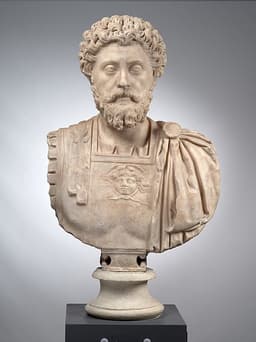
Marcus Antonius
General · Ancient
56.5Total
Basic Information
Born
-5
-83
Died
57
-30
Era
Ancient
Ancient
Nationality
Roman Empire
Roman Republic
Occupation
General
General
Civilization
Western
Western
Score Comparison
Military (10%)
82.0
74.0
Political (20%)
25.0
42.3
Influence (20%)
57.2
55.0
Legacy (20%)
50.0
56.0
Leadership (15%)
47.3
61.1
Strategy (15%)
55.0
58.0
TOTAL
51.3
56.5
Aulus Plautius — Complete Timeline
43 AD
Invasion of Britain (Aulus Plautius)War
Plautius commanded the Roman invasion force of four legions that landed in Britain. He defeated the local tribes led by Caratacus at the Battle of the Medway and the Battle of the Thames, establishing a bridgehead for Roman conquest.
Roman Conquest of BritainInvasionLegions
Impact: regional
Capture of CamulodunumWar◆ Major
Plautius captured the tribal capital of the Catuvellauni at Camulodunum (modern Colchester). This victory broke the main resistance in southeastern Britain and allowed the Romans to establish a fortified base and administrative center.
SiegeBritainCapital
Impact: regional
Appointment as First Governor of BritainPolitical Action◆ Major
Emperor Claudius appointed Plautius as the first Roman governor of the new province of Britannia. Plautius oversaw the initial organization of the province, including the establishment of a client kingdom for the Iceni and the construction of roads.
Provincial AdministrationClaudiusBritannia
Impact: regionalconstructive
47 AD
Ovation in RomeCultural
Plautius was granted an ovation (a lesser triumph) by Claudius for his conquest of Britain. He was the first Roman general to receive this honor for a campaign in Britain. The ovation included a procession and the display of captured spoils.
HonorTriumphClaudius
Impact: nationalconstructive
Marcus Antonius — Complete Timeline
43 BC
Formation of the Second TriumviratePolitical Action
Antony formed the Second Triumvirate with Octavian and Lepidus, legally dividing the Roman world among themselves. They proscribed their enemies, including Cicero, and consolidated power to defeat Caesar's assassins.
Roman PoliticsTriumvirateProscriptions
Impact: globaldestructive
42 BC
Battle of PhilippiWar◆ Major
Antony and Octavian defeated the forces of Brutus and Cassius at Philippi in Macedonia. Antony commanded the decisive victory, leading to the deaths of both conspirators and ending the Republican resistance.
Roman Civil WarBattleAssassins of Caesar
Impact: global
34 BC
Alliance with Cleopatra and Donations of AlexandriaPolitical Action◆ Major
Antony formalized his alliance with Cleopatra VII of Egypt, marrying her and recognizing their children as rulers of various eastern territories. The Donations of Alexandria granted Roman lands to Ptolemaic heirs, provoking outrage in Rome.
Roman-Egyptian RelationsPolitical AllianceScandal
Impact: regionaldestructive
31 BC
Battle of ActiumWar
Antony's fleet was decisively defeated by Octavian's forces under Agrippa at Actium in Greece. Cleopatra's ships fled, and Antony followed, abandoning his army. This defeat ended his bid for power.
Roman Civil WarNaval BattleDefeat
Impact: globaltragic
30 BC
Suicide in AlexandriaOther◆ Major
After Octavian's forces captured Alexandria, Antony attempted suicide by stabbing himself. He died in Cleopatra's arms. His death ended the civil war and paved the way for Octavian to become Augustus, the first Roman emperor.
DeathRoman Civil WarEnd of Republic
Impact: globaltragic
Expert Analysis
Origins
Aulus Plautius was born around 5 BC into a distinguished Roman senatorial family. Little is known of his early life, but he likely served as a military tribune and quaestor before becoming consul in 29 AD. His family had strong ties to the imperial household, which facilitated his military commands under Emperor Claudius.
Marcus Antonius (Mark Antony) was born in 83 BC into a noble plebeian family. His father, Marcus Antonius Creticus, was a praetor, and his mother, Julia Antonia, was a distant relative of Julius Caesar. Antony's early military service included campaigns in Syria and Egypt, and he became a close ally of Julius Caesar during the Gallic Wars and the Roman Civil War.
Rise to Power
Aulus Plautius rose to prominence through steady military and political service. He served as suffect consul in 29 AD, then as governor of Pannonia around 39-41 AD. His key turning point came in 43 AD when Emperor Claudius selected him to lead the invasion of Britain. Plautius commanded four legions (II Augusta, IX Hispana, XIV Gemina, and XX Valeria Victrix) and auxiliaries, totaling about 40,000 men. He landed in Britain, defeated the local tribes led by Caratacus and Togodumnus at the Battle of the Medway, and captured the tribal capital of Camulodunum (Colchester) in 43 AD.
Mark Antony rose to power through his association with Julius Caesar. He served as a military commander in Gaul and became tribune of the plebs in 49 BC, supporting Caesar against the Senate. After Caesar's assassination in 44 BC, Antony established himself as a leading Caesarian, delivering the famous funeral oration. He formed the Second Triumvirate with Octavian and Lepidus in 43 BC, proscribing enemies and defeating the assassins Brutus and Cassius at the Battle of Philippi in 42 BC. Antony then took control of the eastern provinces, where he allied with Cleopatra VII of Egypt.
Leadership & Governance
Aulus Plautius governed Britain as its first Roman governor from 43 to 47 AD. He focused on consolidating Roman control over southeastern Britain, establishing a network of forts and roads. His leadership was methodical and disciplined, typical of a Roman general who followed orders from Claudius. He scored a Leadership of 47.3 and a Strategy of 55.0, reflecting his competent but not exceptional command. Plautius's governance involved negotiating with local tribes, suppressing revolts, and organizing the province. He was recalled to Rome in 47 AD and awarded an ovation (lesser triumph) by Claudius.
Mark Antony's leadership was more charismatic and turbulent. He scored 61.1 in Leadership and 58.0 in Strategy. As a triumvir, he shared control of the Roman world with Octavian and Lepidus, but his alliance with Cleopatra and the Donations of Alexandria (34 BC) alienated Roman opinion. Antony's governance of the East was marked by extravagance and political miscalculations. He failed to maintain support in Rome, while Octavian skillfully portrayed him as a traitor. Antony's leadership style was bold and inspirational but lacked strategic foresight, especially at Actium.
Triumph & Tragedy
Aulus Plautius's greatest triumph was the successful invasion and initial subjugation of Britain, a feat that expanded the Roman Empire and brought glory to Claudius. He captured Camulodunum and defeated Caratacus. His tragedy was that his achievements were overshadowed by Claudius's own brief presence in Britain. Plautius was not granted a full triumph, only an ovation, reflecting his subordinate role. He died around 55 AD, and his legacy is largely confined to the conquest of Britain.
Mark Antony's greatest triumph was his victory at Philippi, which avenged Caesar's death and solidified his power. He also successfully governed the eastern provinces and formed a powerful alliance with Cleopatra. His tragedy was the loss at the Battle of Actium in 31 BC, where he scored a Military of 74.0 but was outmaneuvered by Octavian's admiral Agrippa. Antony's suicide in Alexandria in 30 BC ended his life and the Ptolemaic Kingdom of Egypt. His failure to secure Rome's support and his eastern policies led to his downfall.
Character & Destiny
Aulus Plautius was a loyal and competent general, typical of the Claudian era. He was methodical, patient, and obedient to imperial authority. His character was suited to the task of conquest, but he lacked the ambition or flair to rise higher. His destiny was to be a successful but not legendary figure, remembered primarily for one campaign.
Mark Antony was impulsive, charismatic, and passionate. He was a great battlefield commander but a poor politician. His decision to ally with Cleopatra and divorce Octavia alienated Roman elites. His character led him to prioritize personal relationships over political calculation, culminating in his defeat. Historians have noted his courage and generosity but also his lack of discipline. His destiny was to be the tragic foil to Octavian's rise.
Legacy
Aulus Plautius's legacy is the Roman conquest of Britain, which lasted nearly 400 years. He established the province and set the pattern for Roman rule. His scores: Military 82.0, Influence 57.2, Legacy 50.0. He is not widely known outside scholarly circles, but his actions had lasting impact on British history.
Mark Antony's legacy is more complex. He is remembered as a key figure in the transition from Republic to Empire, and his relationship with Cleopatra has become legendary. His scores: Military 74.0, Political 42.3, Influence 55.0, Legacy 56.0. He influenced art and literature, but his political failure enabled Augustus to establish the Roman Empire.
Conclusion
While Mark Antony had a higher overall score (56.5 vs 51.3), his impact was largely negative, contributing to civil war and the end of the Republic. Aulus Plautius, despite lower scores, achieved a concrete and enduring conquest that shaped Roman and British history. In terms of tangible, lasting impact, Plautius's conquest of Britain was more significant than Antony's failed bid for power. Therefore, Aulus Plautius had greater historical impact through his successful military campaign and establishment of a province that lasted centuries.
Rankings
🥇
Marcus AntoniusLeader
Mil: 74.0Pol: 42.3Inf: 55.0
56.5
🥈
Aulus Plautius
Mil: 82.0Pol: 25.0Inf: 57.2
51.3
+5.2 behind
How This Comparison Works
Algorithm
Each figure is scored on 6 dimensions (0—100 scale) based on structured historical data: Military (10%), Political (20%), Influence (20%), Legacy (20%), Leadership (15%), Strategy (15%). The weighted total produces the final ranking.
Data Sources
Scores are computed from structured sub-indicators in the database. Scale factors adjust for era (Ancient ×0.85, Modern ×1.0) and civilization size (Eastern ×1.05, Other ×0.80) to account for differences in population and military scale.
Maximum 3 Figures
Comparisons are limited to 2—3 figures to ensure readability and statistical meaningfulness.
Error Margins
±5 points per dimension — Sub-scores are derived from historical records with inherent uncertainty. Two figures within 5 points on a dimension should be considered roughly equivalent in that area.
Total Score Accuracy
±3 points overall — The weighted combination of 6 dimensions produces a total score with approximately ±3 points of uncertainty. Differences of less than 3 points are not statistically significant— the figures are effectively tied.
Known Limitations
- Historical records are incomplete and uneven across civilizations
- Figures from oral-tradition societies may be underrepresented
- Occupation labels can misclassify multi-role figures
- Scores measure capability and impact, not moral character
- Quantitative scoring is a comparison tool, not absolute truth
Capability Radar
Military (10%) — Battles & Warfare
Battles
65
75
Win Rate
70
60
Expansion
75
70
Political (20%) — Governance & Reform
Reform
20
40
Diplomacy
50
70
Economy
30
50
Influence (20%) — Cultural & Global Reach
Cultural
40
65
Global
45
60
Legacy (20%) — Historical Impact
Historical
55
70
Longevity
50
60
Leadership (15%) — Power & Stability
Tenure
40
65
Stability
45
40
Strategy (15%) — Tactics & Innovation
Strategy
65
65
Tactics
60
70
Reform
30
30
Similar Comparisons
Comments & Discussion
No comments yet. Be the first to share your thoughts!