Loading...
Marcus Antonius vs Napoleon Bonaparte
Napoleon Bonaparte leads by 14.4 pts · 2 figures compared
…
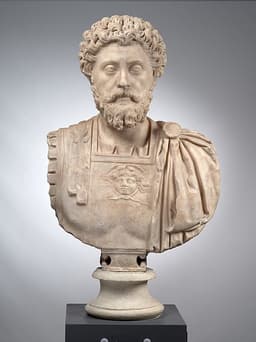
Marcus Antonius
General · Ancient
56.5Total

Napoleon Bonaparte
General · Modern
70.9Total
Basic Information
Born
-83
1769
Died
-30
1821
Era
Ancient
Modern
Nationality
Roman Republic
France
Occupation
General
General
Civilization
Western
Western
Score Comparison
Military (10%)
74.0
94.0
Political (20%)
42.3
72.0
Influence (20%)
55.0
40.0
Legacy (20%)
56.0
80.0
Leadership (15%)
61.1
78.0
Strategy (15%)
58.0
90.0
TOTAL
56.5
70.9
Marcus Antonius — Complete Timeline
43 BC
Formation of the Second TriumviratePolitical Action
Antony formed the Second Triumvirate with Octavian and Lepidus, legally dividing the Roman world among themselves. They proscribed their enemies, including Cicero, and consolidated power to defeat Caesar's assassins.
Roman PoliticsTriumvirateProscriptions
Impact: globaldestructive
42 BC
Battle of PhilippiWar◆ Major
Antony and Octavian defeated the forces of Brutus and Cassius at Philippi in Macedonia. Antony commanded the decisive victory, leading to the deaths of both conspirators and ending the Republican resistance.
Roman Civil WarBattleAssassins of Caesar
Impact: global
34 BC
Alliance with Cleopatra and Donations of AlexandriaPolitical Action◆ Major
Antony formalized his alliance with Cleopatra VII of Egypt, marrying her and recognizing their children as rulers of various eastern territories. The Donations of Alexandria granted Roman lands to Ptolemaic heirs, provoking outrage in Rome.
Roman-Egyptian RelationsPolitical AllianceScandal
Impact: regionaldestructive
31 BC
Battle of ActiumWar
Antony's fleet was decisively defeated by Octavian's forces under Agrippa at Actium in Greece. Cleopatra's ships fled, and Antony followed, abandoning his army. This defeat ended his bid for power.
Roman Civil WarNaval BattleDefeat
Impact: globaltragic
30 BC
Suicide in AlexandriaOther◆ Major
After Octavian's forces captured Alexandria, Antony attempted suicide by stabbing himself. He died in Cleopatra's arms. His death ended the civil war and paved the way for Octavian to become Augustus, the first Roman emperor.
DeathRoman Civil WarEnd of Republic
Impact: globaltragic
Napoleon Bonaparte — Complete Timeline
1799 AD
Coup of 18 BrumaireOther◆ Major
Napoleon Bonaparte, with support from his brother Lucien and key political figures, overthrew the Directory in a bloodless coup. He established the Consulate with himself as First Consul, effectively becoming the ruler of France. This event ended the French Revolution's most unstable period.
French RevolutionCoupRise to Power
Impact: regional
1804 AD
Promulgation of the Napoleonic CodeOther◆ Major
Napoleon enacted the Civil Code of the French, known as the Napoleonic Code, a comprehensive set of laws that replaced the fragmented feudal legal systems. The code established legal equality, protected property rights, and secularized law. It became the basis for legal systems in many European and world countries.
Legal ReformNapoleonic CodeCivil Law
Impact: globalconstructive
1805 AD
Battle of AusterlitzWar◆ Major
Napoleon's Grande Arm
Napoleonic WarsBattleDecisive Victory
Impact: global
1812 AD
Invasion of RussiaWar◆ Major
Napoleon led the Grande Arm
Napoleonic WarsInvasionDisaster
Impact: globaldestructive
1815 AD
Battle of WaterlooWar◆ Major
Napoleon's French army was defeated by the combined forces of the Duke of Wellington's Anglo-Allied army and Gebhard Leberecht von Bl
Napoleonic WarsBattleFinal Defeat
Impact: globaldestructive
Expert Analysis
marcus-antonius-vs-napoleon-bonaparte
# The Eagle and the Fox
In the summer of 31 BC, on the Ionian Sea near Actium, a Roman general watched his world collapse. Mark Antony, the man who had once divided the known world with Octavian, saw Cleopatra’s ships flee the battle and, for reasons that still puzzle historians, followed her. His fleet was shattered, his dream of an Eastern empire dissolved, and within a year he would fall on his own sword in Alexandria. Less than two decades after his death, another general would be born on a small Mediterranean island—Napoleon Bonaparte—who would conquer not merely a portion of the Roman world but nearly the whole of Europe. Why did one man reach for the stars and grasp only dust, while the other reshaped an entire continent?
Origins
Mark Antony was born into the chaos of the late Roman Republic, in 83 BC, a time when senatorial infighting and civil wars had become the norm. His father was a minor politician who died young, leaving Antony to a youth of dissipation and debt. He found his footing under the patronage of Julius Caesar, learning war in the brutal campaigns of Gaul. Rome in the first century BC was a world of naked ambition where loyalty shifted like desert sands, and Antony absorbed its lessons: power came from soldiers and gold, not from laws or institutions.
Napoleon Bonaparte emerged from a very different world. Born in 1769 on Corsica, an island recently annexed by France, he grew up in the shadow of the French Revolution. His family were minor nobility of Italian origin, and young Napoleon attended military school in mainland France, where his Corsican accent marked him as an outsider. The Revolution, which began when he was twenty, shattered the old order and created a vacuum of opportunity. For a brilliant artillery officer with nothing to lose, it was a world without ceilings.
Rise to Power
Antony rose as Caesar’s right hand, commanding his cavalry in the Civil War against Pompey. After Caesar’s assassination in 44 BC, he gave the funeral oration that turned the Roman mob against the conspirators—one of history’s great rhetorical performances. But his path to power was always tangled with rivals. He formed the Second Triumvirate with Octavian and Lepidus in 43 BC, a brutal pact sealed with proscriptions that murdered hundreds of political enemies. At Philippi in 42 BC, Antony commanded the decisive victory over Brutus and Cassius, proving his military prowess.
Napoleon’s ascent was more meteoric and more solitary. In 1793, at age twenty-four, he drove the British from Toulon with a brilliant use of artillery. By 1796, he commanded the Army of Italy, where he turned starving, mutinous troops into a conquering force that humbled Austria. His Italian campaign of 1796–1797 was a masterclass in speed, deception, and logistics—he won battles not just with cannon but with words, inspiring soldiers with promises of glory and plunder. Within four years, he had seized control of France in the coup of 18 Brumaire in 1799.
Leadership & Governance
The contrast in their governance reveals why one built an empire and the other lost it. Napoleon was a political architect. His Napoleonic Code, enacted in 1804, standardized French law across class lines, abolished feudalism, and spread revolutionary ideals of meritocracy and property rights. He reformed education, established the Bank of France, and negotiated the Concordat with the Pope to heal the rift between church and state. He governed through a centralized bureaucracy that functioned even when he was campaigning.
Antony governed through personality and patronage. When he took control of the Eastern provinces after Philippi, he ruled like a Hellenistic king, surrounding himself with Egyptian luxury and Greek scholars. His alliance with Cleopatra in 34 BC, formalized through the Donations of Alexandria, was a political disaster—he granted Roman territories to his children with the Egyptian queen, an act that horrified Roman traditionalists and gave Octavian the propaganda weapon he needed. Antony never created lasting institutions; he built only personal loyalties, which dissolved when his star fell.
Triumph & Tragedy
Antony’s greatest moment came at Philippi, where he showed the tactical brilliance that made him Rome’s finest battlefield commander. His greatest tragedy was Actium in 31 BC, where he abandoned his fleet to follow Cleopatra, an act of personal passion that destroyed his political credibility. He died by his own hand in Alexandria in 30 BC, reportedly in Cleopatra’s arms, leaving no legacy but a cautionary tale about love and power.
Napoleon’s triumph was Austerlitz in 1805, where he destroyed the combined armies of Russia and Austria in a battle that still stands as a masterpiece of military deception. His tragedy was the invasion of Russia in 1812, a campaign where overconfidence and logistics, not enemy bullets, destroyed his Grande Armée. He lost nearly half a million men to cold, hunger, and disease. Exiled to Elba in 1814, he returned for the Hundred Days in 1815, only to fall at Waterloo—a battle he might have won had his subordinates acted with more initiative.
Character & Destiny
Antony was a man of appetites—for wine, for women, for glory. Plutarch describes him as “simple and blunt,” a soldier’s soldier who inspired fierce loyalty but could not master his own passions. His fatal flaw was not Cleopatra herself but his inability to separate personal desire from political calculation. He trusted that his charm and courage would suffice, but in the cold world of Roman politics, they did not.
Napoleon was a man of calculation and will. He once said, “Impossible is a word to be found only in the dictionary of fools.” He could work eighteen-hour days, dictate multiple letters simultaneously, and remember the face of every officer he met. But his ambition had no limit. He crowned himself Emperor in 1804, placed his brothers on European thrones, and refused any compromise that might have preserved his conquests. His tragedy was that he could not stop winning until he could not stop losing.
Legacy
Antony’s legacy is largely literary. Shakespeare made him immortal in *Antony and Cleopatra*, a tragedy of passion and fall. Historically, he is remembered as the man who almost divided Rome but lost to the more disciplined Octavian, who became Augustus. His name survives in the word “antonian” for a man torn between duty and desire.
Napoleon’s legacy is institutional. The Napoleonic Code remains the basis of civil law in much of Europe and the world. He reshaped national borders, inspired nationalism across Europe, and established the modern French state. His military innovations—the corps system, the use of massed artillery, the emphasis on speed—influenced warfare for a century. He is remembered as both a liberator who spread revolutionary ideals and a tyrant who drowned them in blood.
Conclusion
Standing at Actium, Antony could have been Napoleon. He had the same raw talent, the same hunger for glory, the same chance to reshape the world. But he lacked the discipline to build lasting institutions, the patience to master his passions, and the strategic vision to see beyond the next battle. Napoleon, for all his flaws, understood that power required structure, not just charisma. One man conquered for himself and lost everything; the other conquered for a system and, though he fell, his system endured. In the end, the difference between a fallen general and a world-historical figure is not talent, but what they build that outlasts them.
Rankings
🥇
Napoleon BonaparteLeader
Mil: 94.0Pol: 72.0Inf: 40.0
70.9
🥈
Marcus Antonius
Mil: 74.0Pol: 42.3Inf: 55.0
56.5
+14.4 behind
How This Comparison Works
Algorithm
Each figure is scored on 6 dimensions (0—100 scale) based on structured historical data: Military (10%), Political (20%), Influence (20%), Legacy (20%), Leadership (15%), Strategy (15%). The weighted total produces the final ranking.
Data Sources
Scores are computed from structured sub-indicators in the database. Scale factors adjust for era (Ancient ×0.85, Modern ×1.0) and civilization size (Eastern ×1.05, Other ×0.80) to account for differences in population and military scale.
Maximum 3 Figures
Comparisons are limited to 2—3 figures to ensure readability and statistical meaningfulness.
Error Margins
±5 points per dimension — Sub-scores are derived from historical records with inherent uncertainty. Two figures within 5 points on a dimension should be considered roughly equivalent in that area.
Total Score Accuracy
±3 points overall — The weighted combination of 6 dimensions produces a total score with approximately ±3 points of uncertainty. Differences of less than 3 points are not statistically significant— the figures are effectively tied.
Known Limitations
- Historical records are incomplete and uneven across civilizations
- Figures from oral-tradition societies may be underrepresented
- Occupation labels can misclassify multi-role figures
- Scores measure capability and impact, not moral character
- Quantitative scoring is a comparison tool, not absolute truth
Capability Radar
Military (10%) — Battles & Warfare
Battles
75
95
Win Rate
60
90
Expansion
70
95
Political (20%) — Governance & Reform
Reform
40
95
Diplomacy
70
80
Economy
50
85
Influence (20%) — Cultural & Global Reach
Cultural
65
85
Global
60
90
Legacy (20%) — Historical Impact
Historical
70
95
Longevity
60
90
Leadership (15%) — Power & Stability
Tenure
65
85
Stability
40
70
Strategy (15%) — Tactics & Innovation
Strategy
65
95
Tactics
70
98
Reform
30
92
Similar Comparisons
Comments & Discussion
No comments yet. Be the first to share your thoughts!