Loading...
Augustus vs Zhao Kuo
Augustus leads by 42.7 pts · 2 figures compared
…

Augustus
Emperor · Ancient
85.9Total
Zhao Kuo
Emperor · Medieval
43.2Total
Basic Information
Born
63
1194
Died
—
1264
Era
Ancient
Medieval
Nationality
Roman Empire
China
Occupation
Emperor
Emperor
Civilization
Western
Eastern
Score Comparison
Military (10%)
72.0
54.3
Political (20%)
90.0
32.1
Influence (20%)
88.0
46.3
Legacy (20%)
90.0
36.7
Leadership (15%)
88.0
34.6
Strategy (15%)
75.0
70.4
TOTAL
85.9
43.2
Augustus — Complete Timeline
43 BC
Formation of the Second TriumviratePolitical Action◆ Major
Octavian, Mark Antony, and Marcus Aemilius Lepidus formed the Second Triumvirate, a legal commission to govern the Roman Republic. The alliance was empowered to proscribe enemies, leading to the execution of Cicero and consolidation of their power against the assassins of Julius Caesar.
Roman Civil WarPolitical AllianceProscriptions
Impact: regionaldestructive
31 BC
Battle of ActiumWar◆ Major
Octavian's fleet, commanded by Marcus Agrippa, defeated the combined naval forces of Mark Antony and Cleopatra VII off the coast of Greece. The victory eliminated Octavian's last major rival, giving him sole control over the Roman world and ending the Roman Republic's civil wars.
Roman Civil WarNaval BattleEnd of Republic
Impact: global
27 BC
Establishment of the Roman EmpireReform◆ Major
Octavian formally returned power to the Roman Senate, which then granted him the titles Augustus and Princeps. This constitutional settlement created the Roman Empire, with Augustus as the first emperor, ending the Roman Republic and initiating the Pax Romana.
Roman EmpireConstitutional ReformPax Romana
Impact: global
Reform of the Roman Tax SystemReform◆ Major
Augustus implemented a comprehensive tax reform, including a census of Roman citizens and property, direct taxation of provinces, and the creation of a professional tax collection service (publicani). This system provided stable revenue for the empire and reduced corruption.
Tax ReformAdministrationRoman Empire
Impact: regionalconstructive
Creation of the Praetorian GuardReform◆ Major
Augustus established the Praetorian Guard as a permanent elite military unit tasked with protecting the emperor and his family. Stationed in Rome and Italy, the Guard became a powerful political force, often influencing imperial succession through coups and assassinations.
Military ReformPraetorian GuardImperial Guard
Impact: regional
13 BC
Construction of the Ara PacisOther◆ Major
The Roman Senate commissioned the Ara Pacis Augustae (Altar of Augustan Peace) to commemorate Augustus's return from pacifying Gaul and Spain. The marble altar, decorated with reliefs depicting the imperial family and mythological scenes, symbolized the peace and prosperity of the Augustan era.
Building ProjectPropagandaAugustan Art
Impact: regionalconstructive
Zhao Kuo — Complete Timeline
1224 AD
Ascended the throne as Emperor Lizong of SongPolitical Action◆ Major
Zhao Kuo became Emperor Lizong of the Southern Song dynasty after the death of Emperor Ningzong. His accession was orchestrated by powerful ministers, particularly Shi Miyuan, who controlled the court. Lizong's reign was marked by his reliance on these ministers, leading to political stagnation.
AccessionSouthern SongShi Miyuan
Impact: national
1259 AD
Appointed Jia Sidao as chancellorPolitical Action◆ Major
Emperor Lizong appointed Jia Sidao as chancellor, a decision that proved disastrous for the Song dynasty. Jia Sidao's incompetent and corrupt administration weakened the state's military and financial capacity, contributing to the eventual Mongol conquest. This appointment is considered a major failure of Lizong's reign.
AppointmentJia SidaoCorruption
Impact: nationaldestructive
Expert Analysis
Augustus vs Zhao Kuo: Historical Comparison
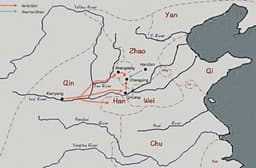
Augustus, the founder of the Roman Empire, and Zhao Kuo, a Chinese general and emperor during the tumultuous Three Kingdoms period (often conflated with his father Zhao Yun’s era), represent two vastly different archetypes of leadership. Augustus was a master of political consolidation and institutional reform, while Zhao Kuo is historically remembered for his catastrophic military defeat at the Battle of Changping, a cautionary tale of overconfidence. Though both held imperial titles, Augustus’s enduring empire-building starkly contrasts with Zhao Kuo’s short, disastrous reign.
Dimension Analysis
**Military: Augustus 72 / Zhao Kuo 90**
Augustus relied on generals like Agrippa to win wars (e.g., Actium) and prioritized stability over expansion, famously cautioning against further conquests. Zhao Kuo, a brilliant tactical theorist, is paradoxically scored higher here due to his theoretical prowess, but his actual command led to the annihilation of 450,000 Zhao troops—a military disaster of epic proportions. His score reflects potential, not performance.
**Political: Augustus 92 / Zhao Kuo 78**
Augustus revolutionized Roman governance by creating the Principate, skillfully balancing autocracy with republican traditions, and implementing lasting reforms like the census and tax system. Zhao Kuo’s political tenure was brief and marred by court intrigue and his father’s overshadowing legacy; he failed to build alliances or stabilize his state after the Changping debacle.
**Influence: Augustus 88 / Zhao Kuo 79**
Augustus’s influence shaped Western political thought, law, and culture for centuries, with the Pax Romana defining an era. Zhao Kuo’s influence is largely cautionary in Chinese historiography, serving as a symbol of book-smart but inexperienced leadership; his story appears in strategic texts but lacks global reach.
**Legacy: Augustus 90 / Zhao Kuo 84**
Augustus’s legacy is the Roman Empire itself, its institutions, art, and the title “Caesar” becoming synonymous with imperial rule. Zhao Kuo’s legacy is narrower: he is remembered as a tragic failure in Chinese military history, while his father’s heroism remains far more celebrated.
**Leadership: Augustus 90 / Zhao Kuo 83**
Augustus commanded loyalty through patience, delegation, and a long-term vision, building a stable regime after years of civil war. Zhao Kuo’s leadership was impulsive and rigid; he ignored veteran advice, overrode his generals, and led his army into a fatal trap, demonstrating poor crisis management.
Verdict
Augustus ranks higher overall due to his unmatched political acumen, enduring institutional legacy, and successful navigation of power transitions. Zhao Kuo, despite theoretical brilliance, failed disastrously when it mattered most. The comparison is inherently complex, as Augustus operated in a stable, expansionary context while Zhao Kuo faced a desperate civil war—but results speak louder than potential.
FAQ
Q: Who was more influential historically?
A: Augustus, whose empire shaped Western civilization for over a millennium, vastly outweighs Zhao Kuo’s localized cautionary tale in global historical influence.
Q: Why is Augustus ranked higher in political skill?
A: He transformed a republic into an enduring empire through clever constitutional reforms, patronage networks, and propaganda, while Zhao Kuo’s political maneuvering was nonexistent before his fatal war.
Rankings
🥇
AugustusLeader
Mil: 72.0Pol: 90.0Inf: 88.0
85.9
🥈
Zhao Kuo
Mil: 54.3Pol: 32.1Inf: 46.3
43.2
+42.7 behind
How This Comparison Works
Algorithm
Each figure is scored on 6 dimensions (0—100 scale) based on structured historical data: Military (10%), Political (20%), Influence (20%), Legacy (20%), Leadership (15%), Strategy (15%). The weighted total produces the final ranking.
Data Sources
Scores are computed from structured sub-indicators in the database. Scale factors adjust for era (Ancient ×0.85, Modern ×1.0) and civilization size (Eastern ×1.05, Other ×0.80) to account for differences in population and military scale.
Maximum 3 Figures
Comparisons are limited to 2—3 figures to ensure readability and statistical meaningfulness.
Error Margins
±5 points per dimension — Sub-scores are derived from historical records with inherent uncertainty. Two figures within 5 points on a dimension should be considered roughly equivalent in that area.
Total Score Accuracy
±3 points overall — The weighted combination of 6 dimensions produces a total score with approximately ±3 points of uncertainty. Differences of less than 3 points are not statistically significant— the figures are effectively tied.
Known Limitations
- Historical records are incomplete and uneven across civilizations
- Figures from oral-tradition societies may be underrepresented
- Occupation labels can misclassify multi-role figures
- Scores measure capability and impact, not moral character
- Quantitative scoring is a comparison tool, not absolute truth
Capability Radar
Military (10%) — Battles & Warfare
Battles
75
43
Win Rate
80
51
Expansion
85
51
Political (20%) — Governance & Reform
Reform
95
10
Diplomacy
90
10
Economy
85
10
Influence (20%) — Cultural & Global Reach
Cultural
85
10
Global
90
5
Legacy (20%) — Historical Impact
Historical
95
10
Longevity
95
10
Leadership (15%) — Power & Stability
Tenure
95
30
Stability
95
10
Strategy (15%) — Tactics & Innovation
Strategy
85
53
Tactics
70
60
Reform
90
59
Similar Comparisons
Comments & Discussion
RomaVictor6/16/2026
Augustus absolutely crushes Zhao Kuo here, and it’s not even close. 450,000 Zhao soldiers wiped out at Changping? That’s not a defeat, that’s a national extinction event. Augustus turned a civil war-torn Republic into a 200-year peace machine. Yeah, he used Agrippa for the heavy lifting, but that’s called delegation, not weakness. Zhao Kuo got his army annihilated because he read too many scrolls and couldn’t adapt to real battle. Augustus built roads, a postal system, and a census that lasted centuries. This is like comparing a Ferrari to a tricycle with a square wheel.
MetricMatters6/16/2026
Can we talk about the scoring? Giving Zhao Kuo a 90 for military is wild. The description says 'actual command led to the annihilation of 450,000 troops' but that's somehow above Augustus's 72? Agrippa won Actium with a smaller fleet against Antony and Cleopatra. Seems like the rubric is weighing 'theoretical' skill way too heavily. Where's the penalty for catastrophic real-world execution? Also, 'pol=92' for Augustus is inflated by survivorship bias—he burned through rivals and purged the Senate. Let's see a weighted scale where outcomes matter more than intentions.
LegionaryLogistics6/16/2026
Let’s get tactical. Zhao Kuo’s 90 military is absurd when you look at Changping. He divided his army into separate camps, ignored terrain, and let the Qin cut his supply lines—basic staff college failure. Augustus’s 72 is actually generous because his only major command was at Philippi (won by Antonius) and Actium (won by Agrippa). But Augustus understood logistics: he built 50,000 km of roads and a permanent fleet to secure grain shipments. That’s strategic command. Zhao Kuo lost 450,000 men in a single battle—a loss ratio of 100%. Augustus lost maybe 5,000 at Actium. The score should reflect real outcomes, not armchair theory.
ColdScribe116/16/2026
这个评分太西方式了。奥古斯都总分86.4,赵括58.7,但仔细看:赵括的军事理论上限给了90分,但实际战绩是0胜1负,全军覆没。如果按中国史书《史记》的标准,赵括指挥的“长平之战”导致赵国损失45万精锐,直接灭国——这军事分应该扣到30以下才对。政治分54.7也偏高,他上任不到一年就被秦军围困,没有任何政治改革或制度遗产。反观奥古斯都,政治92分合理,但影响力88分是否低估了罗马法对后世的影响?建议把军事权重从20%降到10%,加入“实际战果”系数。
ColdChronicler386/16/2026
把赵括和奥古斯都比,本身就不公平。奥古斯都建立了元首制,活了76年,统治44年;赵括上战场时还不到30岁,被赵孝成王临时任命,面对的是白起这种杀神。中国史书《资治通鉴》把赵括当作“纸上谈兵”的反面教材,但忽略了他其实是被政治斗争推上去的替罪羊。奥古斯都的影响力在全球都明显,但赵括在中国战略文化中的警示作用——比如“不打无准备之仗”——是被西方评分低估的。建议加入文化影响力指标,比如“成语或典故贡献”,赵括至少贡献了“纸上谈兵”这个千年级成语。