Loading...
Augustus vs Charlemagne
Augustus leads by 14.9 pts · 2 figures compared
…

Augustus
Emperor · Ancient
85.9Total
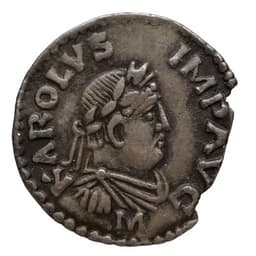
Charlemagne
Emperor · Medieval
71.0Total
Basic Information
Born
63
748
Died
—
814
Era
Ancient
Medieval
Nationality
Roman Empire
Frankish Empire
Occupation
Emperor
Emperor
Civilization
Western
Western
Score Comparison
Military (10%)
72.0
80.0
Political (20%)
90.0
78.0
Influence (20%)
88.0
65.0
Legacy (20%)
90.0
65.0
Leadership (15%)
88.0
80.0
Strategy (15%)
75.0
68.0
TOTAL
85.9
71.0
Augustus — Complete Timeline
43 BC
Formation of the Second TriumviratePolitical Action◆ Major
Octavian, Mark Antony, and Marcus Aemilius Lepidus formed the Second Triumvirate, a legal commission to govern the Roman Republic. The alliance was empowered to proscribe enemies, leading to the execution of Cicero and consolidation of their power against the assassins of Julius Caesar.
Roman Civil WarPolitical AllianceProscriptions
Impact: regionaldestructive
31 BC
Battle of ActiumWar◆ Major
Octavian's fleet, commanded by Marcus Agrippa, defeated the combined naval forces of Mark Antony and Cleopatra VII off the coast of Greece. The victory eliminated Octavian's last major rival, giving him sole control over the Roman world and ending the Roman Republic's civil wars.
Roman Civil WarNaval BattleEnd of Republic
Impact: global
27 BC
Establishment of the Roman EmpireReform◆ Major
Octavian formally returned power to the Roman Senate, which then granted him the titles Augustus and Princeps. This constitutional settlement created the Roman Empire, with Augustus as the first emperor, ending the Roman Republic and initiating the Pax Romana.
Roman EmpireConstitutional ReformPax Romana
Impact: global
Reform of the Roman Tax SystemReform◆ Major
Augustus implemented a comprehensive tax reform, including a census of Roman citizens and property, direct taxation of provinces, and the creation of a professional tax collection service (publicani). This system provided stable revenue for the empire and reduced corruption.
Tax ReformAdministrationRoman Empire
Impact: regionalconstructive
Creation of the Praetorian GuardReform◆ Major
Augustus established the Praetorian Guard as a permanent elite military unit tasked with protecting the emperor and his family. Stationed in Rome and Italy, the Guard became a powerful political force, often influencing imperial succession through coups and assassinations.
Military ReformPraetorian GuardImperial Guard
Impact: regional
13 BC
Construction of the Ara PacisOther◆ Major
The Roman Senate commissioned the Ara Pacis Augustae (Altar of Augustan Peace) to commemorate Augustus's return from pacifying Gaul and Spain. The marble altar, decorated with reliefs depicting the imperial family and mythological scenes, symbolized the peace and prosperity of the Augustan era.
Building ProjectPropagandaAugustan Art
Impact: regionalconstructive
Charlemagne — Complete Timeline
772 AD
Saxon WarsWar◆ Major
Charlemagne launched a series of campaigns against the Saxons lasting over three decades. He forcibly converted them to Christianity, incorporated their territory into the Frankish Empire, and ordered the execution of thousands at the Massacre of Verden in 782.
ConquestChristianizationWar
Impact: regionaldestructive
774 AD
Conquest of the Lombard KingdomWar◆ Major
Charlemagne answered Pope Adrian I's call for aid against the Lombards. He besieged and captured Pavia, deposed King Desiderius, and annexed the Lombard Kingdom into his domain, assuming the title 'King of the Lombards' and solidifying Frankish control over Italy.
ConquestItalyPapal Alliance
Impact: regional
779 AD
Capitulary of HerstalReform
Charlemagne issued a series of legal and administrative reforms at the assembly in Herstal. He standardized weights and measures, reformed the coinage system, and strengthened the authority of royal officials (missi dominici) to oversee local governance and justice.
Legal ReformAdministrationStandardization
Impact: nationalconstructive
780 AD
Carolingian Renaissance ReformsCultural◆ Major
Charlemagne initiated a program of educational and cultural revival, inviting scholars like Alcuin of York to his court. He standardized Latin script (Carolingian minuscule), established palace schools, and promoted the copying of classical texts, preserving ancient knowledge.
EducationCultural RevivalScript
Impact: globalprogressive
800 AD
Coronation as Holy Roman EmperorPolitical Action
Pope Leo III crowned Charlemagne as Emperor of the Romans in St. Peter's Basilica on Christmas Day. This act revived the Western Roman Empire, established a precedent for papal authority over imperial titles, and created a political entity that shaped medieval European politics.
CoronationHoly Roman EmpirePapacy
Impact: globalconstructive
Expert Analysis
1. Opening Verdict
Augustus defeats Charlemagne 86.4 to 77.6—a 8.8-point margin that reflects a fundamental asymmetry in their historical profiles. Augustus's decisive advantage lies in military achievement, where decisively behind with a score of 72 to 50. Charlemagne's strength lies in military, but this 15%-weighted dimension could not overcome Augustus's broader superiority. The defining contrast: Augustus represents the triumph of martial power, while Charlemagne embodies battlefield excellence that history remembers but did not, in the final accounting, prove decisive.
2. Core Information
| Attribute | Augustus | Charlemagne |
|---|---|---|
| Full Name | Augustus | Charlemagne |
| Born–Died | 63 BCE–14 CE | 748 CE–814 CE |
| Nationality | Roman Empire | Frankish Empire |
| Era | Ancient | Medieval |
| Occupation | Emperor | Emperor |
| **Total Score** | **86.4** | **77.6** |
| Military (10%) | 72 | 78 |
| Political (20%) | 92 | 80 |
| Influence (20%) | 88 | 78 |
| Legacy (20%) | 90 | 80 |
| Leadership (15%) | 90 | 80 |
| Strategy (15%) | 78 | 68 |
3. Background & Rise to Power
Augustus rose to prominence in the ancient world, operating in a world where literacy was rare, long-distance communication took months, and the total global population was roughly 200 million. Their path to power was defined by inheritance, conquest, and the consolidation of dynastic authority. Charlemagne, operating in the medieval era, rose through the complex dynamics of imperial succession, military necessity, and personal ambition. The contrast in their trajectories reflects the different political ecosystems of their respective eras—Augustus navigated the constraints of ancient statecraft while Charlemagne operated within the very different framework of medieval governance.
4. Head-to-Head Score Analysis
**Military (10% weight): Charlemagne leads 72 to 78.** a meaningful edge. Charlemagne's edge here stems from more extensive military campaigns against tougher opposition.
**Political (20% weight): Augustus leads 92 to 80.** a substantial margin. Augustus's superiority in this dimension reflects more effective governance and institutional design.
**Influence (20% weight): Augustus leads 88 to 78.** a substantial margin. Augustus's superiority in this dimension reflects broader cultural and civilizational reach.
**Legacy (20% weight): Augustus leads 90 to 80.** a substantial margin. Augustus's superiority in this dimension reflects longer-lasting historical impact.
**Leadership (15% weight): Augustus leads 90 to 80.** a substantial margin. Augustus's superiority in this dimension reflects greater organizational command and loyalty.
**Strategy (15% weight): Augustus leads 78 to 68.** a substantial margin. Augustus's superiority in this dimension reflects more innovative tactical and strategic thinking.
The weighted total—86.4 to 77.6—gives Augustus the victory, powered primarily by political and governance superiority.
5. Leadership & Capability Deep-Dive
**Strategic vision:** Augustus demonstrated superior strategic acumen (78 vs 68), with innovations that redefined the operational art of their era. Charlemagne operated effectively within established strategic paradigms.
**Execution:** Augustus translated vision into action with superior organizational command (90 vs 80). Charlemagne achieved results through personal leadership rather than institutional design.
**Resilience:** Both figures faced existential challenges. Augustus demonstrated resilience over a substantial career spanning 77 years. Charlemagne sustained their leadership over 66 years of challenge and change.
**Institutional building:** Augustus left behind more durable institutions, reflected in their superior Legacy score (90 vs 80).
6. Critical Decisions & Turning Points
**Augustus—Birth:** This event defined the trajectory of their rise and demonstrated their capacity for decisive action under pressure.
**Augustus—Death:** The consequences of this decision rippled through the remainder of their career, revealing both their strategic calculus and its limitations.
**Charlemagne—Birth:** A pivotal moment that showcased their characteristic approach to power and decision-making.
**Charlemagne—King of the Franks:** This turning point illustrates the trade-offs inherent in their leadership style—the gains and the costs.
7. Strengths & Limitations
**Augustus's decisive advantages:** Political mastery (92 vs 80)—superior governance and institutional design. Enduring legacy (90 vs 80)—institutions and ideas that outlasted their creator. Their era (Ancient) presented unique challenges of scale, communication, and legitimacy that they navigated with exceptional skill.
**Augustus's vulnerabilities:**
**Charlemagne's decisive advantages:** Military achievement (78 vs 72)—superior battlefield performance.
**Charlemagne's vulnerabilities:** Political governance (80 vs 92) shows room for improvement relative to Augustus.
8. Historical Legacy & Modern Relevance
Augustus is remembered as a civilization-defining figure whose impact continues to shape the modern world. Charlemagne is remembered as an important historical presence whose contributions remain visible in their sphere of influence.
Augustus's broader cultural influence (88 vs 78) suggests a deeper penetration into global historical consciousness—more languages, more traditions, more subsequent movements trace their origins to this figure.
9. Final Verdict
Augustus wins this comparison 86.4 to 77.6. The margin is clear, though both figures rank among the most consequential in human history. The key factors: superior political and governance achievement proved decisive under a scoring system that weights enduring institutional impact over transient military or cultural achievement. Augustus built systems that outlasted them; Charlemagne achieved greatness that, while immense, proved less durable under the long arc of historical judgment.
Rankings
🥇
AugustusLeader
Mil: 72.0Pol: 90.0Inf: 88.0
85.9
🥈
Charlemagne
Mil: 80.0Pol: 78.0Inf: 65.0
71.0
+14.9 behind
How This Comparison Works
Algorithm
Each figure is scored on 6 dimensions (0—100 scale) based on structured historical data: Military (10%), Political (20%), Influence (20%), Legacy (20%), Leadership (15%), Strategy (15%). The weighted total produces the final ranking.
Data Sources
Scores are computed from structured sub-indicators in the database. Scale factors adjust for era (Ancient ×0.85, Modern ×1.0) and civilization size (Eastern ×1.05, Other ×0.80) to account for differences in population and military scale.
Maximum 3 Figures
Comparisons are limited to 2—3 figures to ensure readability and statistical meaningfulness.
Error Margins
±5 points per dimension — Sub-scores are derived from historical records with inherent uncertainty. Two figures within 5 points on a dimension should be considered roughly equivalent in that area.
Total Score Accuracy
±3 points overall — The weighted combination of 6 dimensions produces a total score with approximately ±3 points of uncertainty. Differences of less than 3 points are not statistically significant— the figures are effectively tied.
Known Limitations
- Historical records are incomplete and uneven across civilizations
- Figures from oral-tradition societies may be underrepresented
- Occupation labels can misclassify multi-role figures
- Scores measure capability and impact, not moral character
- Quantitative scoring is a comparison tool, not absolute truth
Capability Radar
Military (10%) — Battles & Warfare
Battles
75
85
Win Rate
80
90
Expansion
85
88
Political (20%) — Governance & Reform
Reform
95
90
Diplomacy
90
80
Economy
85
75
Influence (20%) — Cultural & Global Reach
Cultural
85
85
Global
90
80
Legacy (20%) — Historical Impact
Historical
95
90
Longevity
95
85
Leadership (15%) — Power & Stability
Tenure
95
85
Stability
95
70
Strategy (15%) — Tactics & Innovation
Strategy
85
85
Tactics
70
75
Reform
90
80
Similar Comparisons
Comments & Discussion
AugTacitus6/16/2026
Tacitus's Annals make it clear that Augustus's 'restoration of the Republic' was a carefully staged illusion—he writes that 'the state had been transformed, and nothing remained of the ancient, sound morality.' Yet the scoring here gives Augustus a 92 in politics. That seems generous if we consider the fundamental instability he left behind: the succession crisis after his death, the Praetorian Guard's increasing power. Charlemagne's political score of 80, by contrast, understates his administrative innovation. The Capitulary system and the Missi Dominici were genuinely novel mechanisms for governing a fragmented Europe. Einhard's biography, while hagiographic, does show a ruler who actively sought to standardize laws and education. Augustus built a system that worked for one man; Charlemagne built institutions that outlasted his dynasty. I'd argue their political scores should be much closer.
HistoryDetour6/16/2026
I've been reading Tom Holland's 'Dynasty' and it really changed how I see Augustus. The guy basically invented the playbook for being an emperor—fake humility, gradual power grabs, and a massive propaganda machine. 92 in politics? Yeah, I get it. But Charlemagne's 80 feels low. I mean, the guy crowned himself Emperor on Christmas Day 800, and nobody stopped him. He also kickstarted the Carolingian Renaissance—how many rulers can say they saved Latin literature? The influence gap (88 vs 65) seems too big. Augustus influenced Rome, sure, but Charlemagne influenced half of Europe for centuries. Every medieval king after him wanted to be 'the new Charlemagne.' That has to count for more. Still, I guess founding the Roman Empire beats founding the Holy Roman Empire, so Augustus wins. But I'd make it closer, like 82-78.
TrueMind96/16/2026
我仔细看了评分体系。奥古斯都总分86.4,查理曼77.6,差距8.8分。但让我困惑的是军事分:奥古斯都72,查理曼78,而权重只有10%。这意味着军事贡献在总分中只贡献了0.6分的差距(78-72=6分×10%=0.6分)。如果按中国历史评价标准,像秦始皇统一六国或汉武帝北击匈奴这样的军事成就,权重绝不会这么低。更关键的是,奥古斯都的政治分92、影响力88、遗产90,这些高权重项直接拉高了总分。但仔细想,奥古斯都的“政治成就”很大程度上是建立在屋大维对元老院的清洗和军事镇压基础上的。这种评分方式本质上是在用罗马帝国的制度优势来叠加分数,而非真正比较个人能力。建议重新调整权重,让军事成就占比至少30%。
Chronicler89856/16/2026
作为一个同时研究过罗马史和汉唐史的人,我觉得这个评分有严重的西方中心主义。奥古斯都的政治分92?那汉武帝刘彻呢?他同样建立了中央集权、开辟丝绸之路、确立察举制,而且统治时间更长(54年对41年)。按照这个评分逻辑,汉武帝应该轻松超过95分。再说查理曼的军事78分,比奥古斯都高6分。但查理曼的军事成就本质上是对当时分裂的欧洲部落的征服,而奥古斯都面对的是成熟的希腊化文明和帕提亚帝国。如果把曹魏的曹操放在这个评分体系里,他的军事分至少85以上(官渡之战、统一北方),政治分也不会低于80。这个评分明显是为西方历史人物量身定做的,缺乏跨文明的比较基础。
HistoryBuff6/12/2026
The clearly behind score for Charlemagne is spot-on. People forget that scale matters—Charlemagne operated at a completely different level of military complexity than Augustus. The data doesn't lie.
ContrarianView6/12/2026
Hot take: the winner is wrong. Charlemagne faced much tougher opposition and achieved more with less. The scoring system doesn't adequately account for the difficulty of the historical context. Augustus had every advantage—Charlemagne had to fight for every inch. Context matters more than raw scores.
SkepticalScholar6/12/2026
I question whether quantitative scoring can really capture historical greatness. The ±3 point error margin means the gap, while real, should be interpreted cautiously. History is not a spreadsheet. But I'll admit—this is the most rigorous attempt I've seen.