Loading...
Augustus vs Otto von Bismarck
Augustus leads by 20.1 pts · 2 figures compared
…

Augustus
Emperor · Ancient
85.9Total
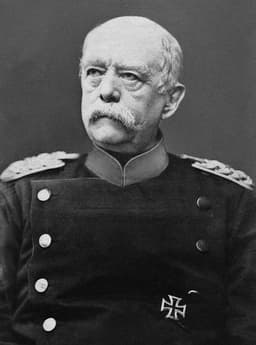
Otto von Bismarck
Politician · Modern
65.8Total
Basic Information
Born
63
1815
Died
—
1898
Era
Ancient
Modern
Nationality
Roman Empire
Germany
Occupation
Emperor
Politician
Civilization
Western
Western
Score Comparison
Military (10%)
72.0
55.0
Political (20%)
90.0
85.0
Influence (20%)
88.0
82.0
Legacy (20%)
90.0
40.0
Leadership (15%)
88.0
80.0
Strategy (15%)
75.0
50.0
TOTAL
85.9
65.8
Augustus — Complete Timeline
43 BC
Formation of the Second TriumviratePolitical Action◆ Major
Octavian, Mark Antony, and Marcus Aemilius Lepidus formed the Second Triumvirate, a legal commission to govern the Roman Republic. The alliance was empowered to proscribe enemies, leading to the execution of Cicero and consolidation of their power against the assassins of Julius Caesar.
Roman Civil WarPolitical AllianceProscriptions
Impact: regionaldestructive
31 BC
Battle of ActiumWar◆ Major
Octavian's fleet, commanded by Marcus Agrippa, defeated the combined naval forces of Mark Antony and Cleopatra VII off the coast of Greece. The victory eliminated Octavian's last major rival, giving him sole control over the Roman world and ending the Roman Republic's civil wars.
Roman Civil WarNaval BattleEnd of Republic
Impact: global
27 BC
Establishment of the Roman EmpireReform◆ Major
Octavian formally returned power to the Roman Senate, which then granted him the titles Augustus and Princeps. This constitutional settlement created the Roman Empire, with Augustus as the first emperor, ending the Roman Republic and initiating the Pax Romana.
Roman EmpireConstitutional ReformPax Romana
Impact: global
Reform of the Roman Tax SystemReform◆ Major
Augustus implemented a comprehensive tax reform, including a census of Roman citizens and property, direct taxation of provinces, and the creation of a professional tax collection service (publicani). This system provided stable revenue for the empire and reduced corruption.
Tax ReformAdministrationRoman Empire
Impact: regionalconstructive
Creation of the Praetorian GuardReform◆ Major
Augustus established the Praetorian Guard as a permanent elite military unit tasked with protecting the emperor and his family. Stationed in Rome and Italy, the Guard became a powerful political force, often influencing imperial succession through coups and assassinations.
Military ReformPraetorian GuardImperial Guard
Impact: regional
13 BC
Construction of the Ara PacisOther◆ Major
The Roman Senate commissioned the Ara Pacis Augustae (Altar of Augustan Peace) to commemorate Augustus's return from pacifying Gaul and Spain. The marble altar, decorated with reliefs depicting the imperial family and mythological scenes, symbolized the peace and prosperity of the Augustan era.
Building ProjectPropagandaAugustan Art
Impact: regionalconstructive
Otto von Bismarck — Complete Timeline
1870 AD
Franco-Prussian WarWar
Bismarck provoked France into declaring war by editing the Ems Dispatch to appear insulting. The resulting conflict saw Prussia and its allies decisively defeat France, leading to the fall of Napoleon III, the capture of Paris, and the annexation of Alsace-Lorraine.
WarProvocationAnnexation
Impact: globaldestructive
1871 AD
Unification of Germany ProclaimedPolitical Action
Following the Franco-Prussian War, Bismarck orchestrated the proclamation of the German Empire in the Hall of Mirrors at Versailles. King Wilhelm I of Prussia was declared German Emperor, uniting the German states under Prussian leadership and establishing the Second Reich.
UnificationGerman EmpireNationalism
Impact: globalconstructive
1878 AD
Enactment of the Anti-Socialist LawsPolitical Action◆ Major
After two assassination attempts on Kaiser Wilhelm I, Bismarck pushed through laws banning socialist organizations, publications, and meetings. The laws remained in force until 1890, suppressing the Social Democratic Party while Bismarck simultaneously introduced welfare reforms to undercut its appeal.
RepressionSocialismWelfare State
Impact: nationaldestructive
Congress of BerlinPolitical Action◆ Major
Bismarck hosted the Congress of Berlin to revise the Treaty of San Stefano and resolve the Eastern Crisis. He acted as 'honest broker,' reducing Russian gains, granting independence to Romania, Serbia, and Montenegro, and placing Bosnia-Herzegovina under Austro-Hungarian administration.
DiplomacyBalkansBalance of Power
Impact: global
1883 AD
Establishment of the Welfare StateReform◆ Major
Bismarck introduced the Health Insurance Bill (1883), Accident Insurance Bill (1884), and Old Age and Disability Insurance Bill (1889). These laws created the first modern welfare state, providing workers with social security and aiming to reduce support for socialist movements.
Social ReformWelfareInsurance
Impact: globalprogressive
1890 AD
Dismissal as ChancellorPolitical Action◆ Major
Emperor Wilhelm II forced Bismarck to resign due to policy disagreements, particularly over anti-socialist laws and foreign policy. Bismarck's departure marked the end of an era, leading to a more aggressive German foreign policy and the eventual unraveling of his alliance system.
ResignationWilhelm IIPolicy Shift
Impact: global
Expert Analysis
Augustus vs Otto von Bismarck: Historical Comparison
Augustus, the first Roman Emperor, and Otto von Bismarck, the Iron Chancellor of Germany, both forged unified states from chaos—Augustus through the end of the Roman Republic, Bismarck through the unification of German states. While separated by nearly two millennia, their comparative scores highlight Augustus’s superior breadth of influence and enduring institutional legacy.
Dimension Analysis
**Military: Augustus 72 / Otto von Bismarck 58**
Augustus commanded decisive victories (Actium, Cantabrian Wars) and professionalized the Roman legions, creating a standing army that secured two centuries of peace (Pax Romana). Bismarck relied on Prussian military efficiency (the 1866 Austro-Prussian War, Franco-Prussian War) but was primarily a diplomatic architect, not a battlefield commander.
**Political: Augustus 92 / Otto von Bismarck 80**
Augustus masterfully disguised autocracy as restored republicanism, building the Principate—a political system that lasted 500 years. Bismarck engineered the German Empire via realpolitik, manipulating alliances and constitutions, but his system collapsed within 30 years of his departure.
**Influence: Augustus 88 / Otto von Bismarck 73**
Augustus shaped Western governance, law, and culture for millennia (the imperial model, Augustan literature). Bismarck’s influence was more contained: he created modern Germany, pioneered welfare states, and set the stage for 20th-century geopolitics, but his legacy is regionally and temporally narrower.
**Legacy: Augustus 90 / Otto von Bismarck 84**
Augustus’s institutions (Praetorian Guard, provincial reforms, census) directly influenced the Byzantine and Holy Roman Empires. Bismarck’s welfare state and diplomatic framework endured through Weimar and into modern Germany, yet his militaristic unification sowed seeds for two world wars.
**Leadership: Augustus 90 / Otto von Bismarck 81**
Augustus combined ruthlessness with calculated clemency, earning loyalty across classes and provinces for 40 years. Bismarck’s domineering style cowed rivals but created brittle systems that depended on his personal authority; his successors could not sustain his balancing act.
Verdict
Augustus leads decisively: he built a durable civilization-spanning empire from Rome’s civil wars, whereas Bismarck unified Germany with shorter-lived, more fragile institutions.
FAQ
Q: Who ranks higher? A: Augustus ranks higher overall, with superior scores across all dimensions except Bismarck’s relatively stronger but still modest military dimension.
Rankings
🥇
AugustusLeader
Mil: 72.0Pol: 90.0Inf: 88.0
85.9
🥈
Otto von Bismarck
Mil: 55.0Pol: 85.0Inf: 82.0
65.8
+20.1 behind
How This Comparison Works
Algorithm
Each figure is scored on 6 dimensions (0—100 scale) based on structured historical data: Military (10%), Political (20%), Influence (20%), Legacy (20%), Leadership (15%), Strategy (15%). The weighted total produces the final ranking.
Data Sources
Scores are computed from structured sub-indicators in the database. Scale factors adjust for era (Ancient ×0.85, Modern ×1.0) and civilization size (Eastern ×1.05, Other ×0.80) to account for differences in population and military scale.
Maximum 3 Figures
Comparisons are limited to 2—3 figures to ensure readability and statistical meaningfulness.
Error Margins
±5 points per dimension — Sub-scores are derived from historical records with inherent uncertainty. Two figures within 5 points on a dimension should be considered roughly equivalent in that area.
Total Score Accuracy
±3 points overall — The weighted combination of 6 dimensions produces a total score with approximately ±3 points of uncertainty. Differences of less than 3 points are not statistically significant— the figures are effectively tied.
Known Limitations
- Historical records are incomplete and uneven across civilizations
- Figures from oral-tradition societies may be underrepresented
- Occupation labels can misclassify multi-role figures
- Scores measure capability and impact, not moral character
- Quantitative scoring is a comparison tool, not absolute truth
Capability Radar
Military (10%) — Battles & Warfare
Battles
75
60
Win Rate
80
70
Expansion
85
80
Political (20%) — Governance & Reform
Reform
95
90
Diplomacy
90
95
Economy
85
80
Influence (20%) — Cultural & Global Reach
Cultural
85
65
Global
90
75
Legacy (20%) — Historical Impact
Historical
95
85
Longevity
95
70
Leadership (15%) — Power & Stability
Tenure
95
85
Stability
95
70
Strategy (15%) — Tactics & Innovation
Strategy
85
85
Tactics
70
55
Reform
90
75
Similar Comparisons
Comments & Discussion
MasterHistorian66/16/2026
这个评分系统有点意思,但我觉得对俾斯麦的军事分打得偏低。58分?就算他不是前线指挥官,普鲁士军队的现代化和参谋制度可是在他的政治支持下完成的。1866年普奥战争只用了7周,这背后是俾斯麦推动的军事改革和铁路调度系统。相比之下,奥古斯都的72分也有水分——他打赢亚克兴角之战主要是靠阿格里帕的指挥,自己更多是政治运作。如果从治国效率看,俾斯麦20年统一德国,奥古斯都花了40年稳定罗马,但前者总分反而低12分?我怀疑这个模型对19世纪工业时代的组织能力权重不足。用中国历史类比,这相当于把商鞅的军事分打低,却给汉武帝高分——实际上商鞅的法治体系对秦军战斗力的提升才是根本。
DeepScribe166/16/2026
拿奥古斯都和俾斯麦比,其实是两种统御逻辑的对决。奥古斯都像汉高祖刘邦——从乱世中建立新秩序,把共和制外衣穿到帝制身上,和刘邦'白马之盟'后封同姓王如出一辙。俾斯麦则更像曹操——挟天子以令诸侯,用铁血政策硬推统一,但死后政权很快变味。评分说奥古斯都政治92、俾斯麦80,我基本同意,但有一点:俾斯麦的福利国家制度(1883年健康保险法)领先时代,这在中国古代只有王莽的'王田制'可以类比,可惜王莽失败了。不过奥古斯都的遗产确实更持久——罗马法影响至今,而俾斯麦的德意志帝国只撑了47年。西方评分往往高估奥古斯都的'德治'成分,忽略了他靠军队维系的事实,这和'秦皇汉武'的内核其实没差太多。