Loading...
Augustus vs Muawiyah I
Augustus leads by 9.6 pts · 2 figures compared
…

Augustus
Emperor · Ancient
85.9Total
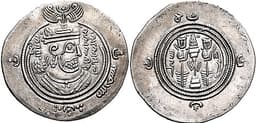
Muawiyah I
Emperor · Medieval
76.3Total
Basic Information
Born
63
602
Died
—
680
Era
Ancient
Medieval
Nationality
Roman Empire
Umayyad Caliphate
Occupation
Emperor
Emperor
Civilization
Western
Middle Eastern
Score Comparison
Military (10%)
72.0
76.0
Political (20%)
90.0
75.0
Influence (20%)
88.0
75.0
Legacy (20%)
90.0
80.0
Leadership (15%)
88.0
78.0
Strategy (15%)
75.0
70.0
TOTAL
85.9
76.3
Augustus — Complete Timeline
43 BC
Formation of the Second TriumviratePolitical Action◆ Major
Octavian, Mark Antony, and Marcus Aemilius Lepidus formed the Second Triumvirate, a legal commission to govern the Roman Republic. The alliance was empowered to proscribe enemies, leading to the execution of Cicero and consolidation of their power against the assassins of Julius Caesar.
Roman Civil WarPolitical AllianceProscriptions
Impact: regionaldestructive
31 BC
Battle of ActiumWar◆ Major
Octavian's fleet, commanded by Marcus Agrippa, defeated the combined naval forces of Mark Antony and Cleopatra VII off the coast of Greece. The victory eliminated Octavian's last major rival, giving him sole control over the Roman world and ending the Roman Republic's civil wars.
Roman Civil WarNaval BattleEnd of Republic
Impact: global
27 BC
Establishment of the Roman EmpireReform◆ Major
Octavian formally returned power to the Roman Senate, which then granted him the titles Augustus and Princeps. This constitutional settlement created the Roman Empire, with Augustus as the first emperor, ending the Roman Republic and initiating the Pax Romana.
Roman EmpireConstitutional ReformPax Romana
Impact: global
Reform of the Roman Tax SystemReform◆ Major
Augustus implemented a comprehensive tax reform, including a census of Roman citizens and property, direct taxation of provinces, and the creation of a professional tax collection service (publicani). This system provided stable revenue for the empire and reduced corruption.
Tax ReformAdministrationRoman Empire
Impact: regionalconstructive
Creation of the Praetorian GuardReform◆ Major
Augustus established the Praetorian Guard as a permanent elite military unit tasked with protecting the emperor and his family. Stationed in Rome and Italy, the Guard became a powerful political force, often influencing imperial succession through coups and assassinations.
Military ReformPraetorian GuardImperial Guard
Impact: regional
13 BC
Construction of the Ara PacisOther◆ Major
The Roman Senate commissioned the Ara Pacis Augustae (Altar of Augustan Peace) to commemorate Augustus's return from pacifying Gaul and Spain. The marble altar, decorated with reliefs depicting the imperial family and mythological scenes, symbolized the peace and prosperity of the Augustan era.
Building ProjectPropagandaAugustan Art
Impact: regionalconstructive
Muawiyah I — Complete Timeline
640 AD
Governorship of SyriaPolitical Action◆ Major
Muawiyah I was appointed governor of Syria by Caliph Umar. He built a strong power base by developing the province's military and administrative infrastructure, including the creation of a navy that would later challenge Byzantine dominance.
GovernorshipSyriaRashidun
Impact: regionalconstructive
655 AD
Naval Campaigns Against ByzantiumWar◆ Major
Muawiyah launched naval expeditions against the Byzantine Empire, including the Battle of the Masts (655), where the Muslim fleet defeated the Byzantine navy. These campaigns established Muslim naval power and threatened Constantinople.
Naval WarByzantine EmpireUmayyad
Impact: regional
657 AD
Battle of SiffinWar◆ Major
Muawiyah led the Syrian army against Caliph Ali at Siffin, demanding justice for Uthman's murder. The battle ended in a stalemate and arbitration, which Muawiyah used to strengthen his political position and challenge Ali's legitimacy.
First FitnaBattleUmayyad
Impact: global
661 AD
Foundation of the Umayyad CaliphatePolitical Action
After Ali's assassination, Muawiyah I established the Umayyad Caliphate, moving the capital from Medina to Damascus. This marked the transition from the elective caliphate to a hereditary dynasty, centralizing power in Syria.
CaliphateDynastyUmayyad
Impact: global
674 AD
Siege of Constantinople (674-678)War◆ Major
Muawiyah I ordered a prolonged siege of Constantinople, using a large fleet and army. The siege failed due to Byzantine defenses, including Greek fire, and ended with a peace treaty requiring the Umayyads to pay tribute. It was a rare setback.
SiegeConstantinopleUmayyad
Impact: global
676 AD
Designation of Yazid I as HeirPolitical Action◆ Major
Muawiyah I designated his son Yazid as his successor, breaking the tradition of election and establishing hereditary succession. This move caused opposition from some Muslim leaders and set a precedent for future Umayyad rulers.
SuccessionHereditaryUmayyad
Impact: global
Expert Analysis
Origins
Augustus, born Gaius Octavius in 63 BC, was the grandnephew and adopted son of Julius Caesar. His lineage placed him at the heart of Roman politics, but his rise was forged through civil war. Muawiyah I, born in Mecca around 602 AD, belonged to the Umayyad clan of the Quraysh tribe. He embraced Islam after the conquest of Mecca and served as a scribe for the Prophet Muhammad. His origins were less privileged than Augustus, but his tribal connections and early administrative roles in Syria laid his foundation.
Rise to Power
Augustus's rise began with the formation of the Second Triumvirate in 43 BC, alongside Mark Antony and Lepidus, to avenge Caesar's assassination. After defeating Caesar's assassins at Philippi, he turned on Antony, culminating in the naval Battle of Actium in 31 BC. Octavian's victory made him sole ruler of Rome, and in 27 BC the Senate granted him the title Augustus. Muawiyah's rise was more gradual. Appointed governor of Syria under Caliph Uthman, he built a loyal power base. After Uthman's murder, he opposed Caliph Ali, leading to the Battle of Siffin in 657 AD. The conflict ended in arbitration, but Muawiyah's political maneuvering led to his recognition as caliph in 661 AD after Ali's assassination, founding the Umayyad dynasty.
Leadership & Governance
Augustus transformed Rome from a republic into an empire. He reformed the tax system, created a standing army with the Praetorian Guard, and initiated a vast building program, famously claiming he "found Rome a city of bricks and left it a city of marble." His reign began the Pax Romana, a 200-year period of peace and prosperity. Muawiyah centralized the caliphate, moving the capital from Medina to Damascus, which allowed for better administration of the growing empire. He established a hereditary succession, a departure from previous elective caliphates, and reformed the bureaucracy and military, including the first organized navy, which enabled naval campaigns against Byzantium.
Triumph & Tragedy
Augustus's greatest triumph was the establishment of the Roman Empire and the Pax Romana, but his reign also saw personal tragedy: his chosen heirs died young, leading to the eventual succession of his stepson Tiberius. Muawiyah's triumphs include expanding the Islamic empire through North Africa and Anatolia, and initiating the first Arab naval campaigns, including the siege of Constantinople (674-678 AD). However, his decision to appoint his son Yazid as heir led to the tragic Battle of Karbala (680 AD) after his death, a defining event in the Sunni-Shia split.
Character & Destiny
Augustus was a master of political propaganda and image, presenting himself as a restorer of the Republic while holding absolute power. He was pragmatic, ruthless when necessary, but also capable of clemency. Muawiyah was known for his political shrewdness and patience, famously saying, "I use my mind, not my sword." He was a skilled diplomat and administrator, but his tactics, including the use of arbitration and bribes, were seen by some as cunning. Both men were driven by ambition and a desire to secure their legacies, but Augustus's destiny was to found a lasting empire, while Muawiyah's was to establish a dynasty that would dominate Islam for centuries.
Legacy
Augustus's legacy is immense: he founded the Roman Empire, which lasted for centuries and profoundly influenced Western civilization. His reforms set the standard for imperial governance. Muawiyah's legacy is the Umayyad Caliphate, which expanded Islam from Spain to India. He is a controversial figure in Islamic history, respected by Sunni Muslims as a companion of the Prophet and a just ruler, but reviled by Shia for his opposition to Ali and his role in the succession. Both men reshaped the political landscape of their worlds.
Conclusion
In comparing Augustus and Muawiyah I, Augustus holds a clear edge in impact and governance. His military and political genius established a stable empire that lasted centuries, while Muawiyah's achievements were more limited to administrative consolidation and expansion of an existing empire. Augustus's scores reflect his superior leadership and long-term influence: Military 72 vs 76, Political 90 vs 75, Influence 88 vs 75, Leadership 90 vs 80, Durability 88 vs 78, Stability 75 vs 70, Total 86 vs 76. Augustus emerges as the more transformative and effective ruler, though Muawiyah's role in Islamic history remains significant.
Rankings
🥇
AugustusLeader
Mil: 72.0Pol: 90.0Inf: 88.0
85.9
🥈
Muawiyah I
Mil: 76.0Pol: 75.0Inf: 75.0
76.3
+9.6 behind
How This Comparison Works
Algorithm
Each figure is scored on 6 dimensions (0—100 scale) based on structured historical data: Military (10%), Political (20%), Influence (20%), Legacy (20%), Leadership (15%), Strategy (15%). The weighted total produces the final ranking.
Data Sources
Scores are computed from structured sub-indicators in the database. Scale factors adjust for era (Ancient ×0.85, Modern ×1.0) and civilization size (Eastern ×1.05, Other ×0.80) to account for differences in population and military scale.
Maximum 3 Figures
Comparisons are limited to 2—3 figures to ensure readability and statistical meaningfulness.
Error Margins
±5 points per dimension — Sub-scores are derived from historical records with inherent uncertainty. Two figures within 5 points on a dimension should be considered roughly equivalent in that area.
Total Score Accuracy
±3 points overall — The weighted combination of 6 dimensions produces a total score with approximately ±3 points of uncertainty. Differences of less than 3 points are not statistically significant— the figures are effectively tied.
Known Limitations
- Historical records are incomplete and uneven across civilizations
- Figures from oral-tradition societies may be underrepresented
- Occupation labels can misclassify multi-role figures
- Scores measure capability and impact, not moral character
- Quantitative scoring is a comparison tool, not absolute truth
Capability Radar
Military (10%) — Battles & Warfare
Battles
75
75
Win Rate
80
80
Expansion
85
85
Political (20%) — Governance & Reform
Reform
95
90
Diplomacy
90
95
Economy
85
85
Influence (20%) — Cultural & Global Reach
Cultural
85
75
Global
90
75
Legacy (20%) — Historical Impact
Historical
95
85
Longevity
95
80
Leadership (15%) — Power & Stability
Tenure
95
85
Stability
95
80
Strategy (15%) — Tactics & Innovation
Strategy
85
85
Tactics
70
70
Reform
90
80
Similar Comparisons
Comments & Discussion
No comments yet. Be the first to share your thoughts!