Loading...
Augustus vs Mahatma Gandhi
Augustus leads by 17.2 pts · 2 figures compared
…

Augustus
Emperor · Ancient
85.9Total
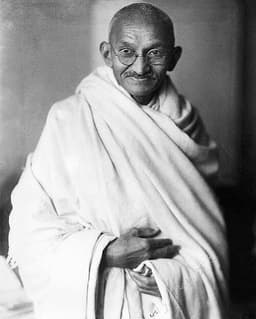
Mahatma Gandhi
Politician · Modern
68.7Total
Basic Information
Born
63
1869
Died
—
1948
Era
Ancient
Modern
Nationality
Roman Empire
India
Occupation
Emperor
Politician
Civilization
Western
Indian
Score Comparison
Military (10%)
72.0
42.3
Political (20%)
90.0
65.0
Influence (20%)
88.0
80.0
Legacy (20%)
90.0
75.0
Leadership (15%)
88.0
70.0
Strategy (15%)
75.0
55.0
TOTAL
85.9
68.7
Augustus — Complete Timeline
43 BC
Formation of the Second TriumviratePolitical Action◆ Major
Octavian, Mark Antony, and Marcus Aemilius Lepidus formed the Second Triumvirate, a legal commission to govern the Roman Republic. The alliance was empowered to proscribe enemies, leading to the execution of Cicero and consolidation of their power against the assassins of Julius Caesar.
Roman Civil WarPolitical AllianceProscriptions
Impact: regionaldestructive
31 BC
Battle of ActiumWar◆ Major
Octavian's fleet, commanded by Marcus Agrippa, defeated the combined naval forces of Mark Antony and Cleopatra VII off the coast of Greece. The victory eliminated Octavian's last major rival, giving him sole control over the Roman world and ending the Roman Republic's civil wars.
Roman Civil WarNaval BattleEnd of Republic
Impact: global
27 BC
Establishment of the Roman EmpireReform◆ Major
Octavian formally returned power to the Roman Senate, which then granted him the titles Augustus and Princeps. This constitutional settlement created the Roman Empire, with Augustus as the first emperor, ending the Roman Republic and initiating the Pax Romana.
Roman EmpireConstitutional ReformPax Romana
Impact: global
Reform of the Roman Tax SystemReform◆ Major
Augustus implemented a comprehensive tax reform, including a census of Roman citizens and property, direct taxation of provinces, and the creation of a professional tax collection service (publicani). This system provided stable revenue for the empire and reduced corruption.
Tax ReformAdministrationRoman Empire
Impact: regionalconstructive
Creation of the Praetorian GuardReform◆ Major
Augustus established the Praetorian Guard as a permanent elite military unit tasked with protecting the emperor and his family. Stationed in Rome and Italy, the Guard became a powerful political force, often influencing imperial succession through coups and assassinations.
Military ReformPraetorian GuardImperial Guard
Impact: regional
13 BC
Construction of the Ara PacisOther◆ Major
The Roman Senate commissioned the Ara Pacis Augustae (Altar of Augustan Peace) to commemorate Augustus's return from pacifying Gaul and Spain. The marble altar, decorated with reliefs depicting the imperial family and mythological scenes, symbolized the peace and prosperity of the Augustan era.
Building ProjectPropagandaAugustan Art
Impact: regionalconstructive
Mahatma Gandhi — Complete Timeline
1917 AD
Champaran SatyagrahaPolitical Action
Gandhi led his first nonviolent protest in India, supporting indigo farmers in Champaran, Bihar, against exploitative British planters. He organized a campaign of civil disobedience and negotiations, resulting in the abolition of the oppressive tinkathia system.
Civil disobedienceFarmers' rightsBritish Raj
Impact: nationalprogressive
1919 AD
Jallianwala Bagh massacre aftermathPolitical Action◆ Major
After British troops killed hundreds of unarmed civilians in Amritsar, Gandhi organized a nationwide hartal (strike) and nonviolent protests. He returned his medals and launched the Rowlatt Satyagraha, marking a shift from cooperation to non-cooperation with British rule.
ProtestBritish RajMassacre
Impact: nationaltragic
1930 AD
Salt MarchPolitical Action
Gandhi led a 240-mile march from Sabarmati to Dandi, Gujarat, to defy the British salt monopoly. Thousands joined him, making salt from seawater. This act of civil disobedience sparked mass protests across India and drew global attention to the independence movement.
Civil disobedienceSalt taxIndependence movement
Impact: globalprogressive
1942 AD
Quit India Movement launchPolitical Action◆ Major
Gandhi launched the Quit India Movement, calling for an end to British rule with the slogan 'Do or Die'. The British arrested him and other leaders, but the movement led to widespread protests and repression, accelerating the end of colonial rule.
IndependenceCivil disobedienceBritish Raj
Impact: nationalprogressive
1948 AD
AssassinationPolitical Action
Gandhi was shot and killed by Nathuram Godse, a Hindu nationalist, during a prayer meeting in New Delhi. His assassination shocked the world and led to a wave of grief and violence, but also reinforced his legacy as a martyr for nonviolence.
AssassinationMartyrdomNonviolence
Impact: globaltragic
Expert Analysis
Augustus vs Mahatma Gandhi: Historical Comparison
Augustus, founder of the Roman Empire, and Mahatma Gandhi, leader of India's independence movement, represent two profoundly different models of power—one built on military conquest and institutional consolidation, the other on moral persuasion and nonviolent resistance.
Dimension Analysis
**Military: Augustus 72 / Mahatma Gandhi 52**
Augustus ended a century of civil war through decisive military campaigns and established the Praetorian Guard, while Gandhi rejected armed force entirely, relying on civil disobedience and peaceful protest.
**Political: Augustus 92 / Mahatma Gandhi 70**
Augustus masterfully transformed a crumbling republic into a stable autocracy, creating the Principate and administrative systems that lasted centuries; Gandhi mobilized mass political consciousness but never held formal office, and his movement achieved independence through negotiation rather than direct governance.
**Influence: Augustus 88 / Mahatma Gandhi 85**
Augustus’s Pax Romana shaped Western governance, law, and culture for millennia; Gandhi’s philosophy of nonviolence inspired global civil rights movements (King, Mandela) and remains a template for peaceful revolution.
**Legacy: Augustus 90 / Mahatma Gandhi 80**
Augustus’s imperial framework endured for 500 years and influenced European statecraft until the modern era; Gandhi’s legacy is enduring but more diffuse—his moral authority is universal, yet India’s post-independence trajectory diverged from his vision.
**Leadership: Augustus 90 / Mahatma Gandhi 75**
Augustus combined ruthless pragmatism with strategic patience, unifying a fractured empire through calculated reforms and propaganda; Gandhi led by personal example and sacrifice, but his decentralized movement often lacked institutional discipline.
Verdict
Augustus leads decisively, scoring higher across all dimensions due to his unparalleled success in founding a durable political order that reshaped Western civilization, whereas Gandhi’s moral influence, while profound, was less structurally transformative.
FAQ
Q: Who ranks higher? A: Augustus ranks higher overall, driven by superior scores in political consolidation, military effectiveness, and long-term institutional legacy.
Rankings
🥇
AugustusLeader
Mil: 72.0Pol: 90.0Inf: 88.0
85.9
🥈
Mahatma Gandhi
Mil: 42.3Pol: 65.0Inf: 80.0
68.7
+17.2 behind
How This Comparison Works
Algorithm
Each figure is scored on 6 dimensions (0—100 scale) based on structured historical data: Military (10%), Political (20%), Influence (20%), Legacy (20%), Leadership (15%), Strategy (15%). The weighted total produces the final ranking.
Data Sources
Scores are computed from structured sub-indicators in the database. Scale factors adjust for era (Ancient ×0.85, Modern ×1.0) and civilization size (Eastern ×1.05, Other ×0.80) to account for differences in population and military scale.
Maximum 3 Figures
Comparisons are limited to 2—3 figures to ensure readability and statistical meaningfulness.
Error Margins
±5 points per dimension — Sub-scores are derived from historical records with inherent uncertainty. Two figures within 5 points on a dimension should be considered roughly equivalent in that area.
Total Score Accuracy
±3 points overall — The weighted combination of 6 dimensions produces a total score with approximately ±3 points of uncertainty. Differences of less than 3 points are not statistically significant— the figures are effectively tied.
Known Limitations
- Historical records are incomplete and uneven across civilizations
- Figures from oral-tradition societies may be underrepresented
- Occupation labels can misclassify multi-role figures
- Scores measure capability and impact, not moral character
- Quantitative scoring is a comparison tool, not absolute truth
Capability Radar
Military (10%) — Battles & Warfare
Battles
75
45
Win Rate
80
46
Expansion
85
51
Political (20%) — Governance & Reform
Reform
95
85
Diplomacy
90
80
Economy
85
40
Influence (20%) — Cultural & Global Reach
Cultural
85
85
Global
90
90
Legacy (20%) — Historical Impact
Historical
95
90
Longevity
95
85
Leadership (15%) — Power & Stability
Tenure
95
60
Stability
95
55
Strategy (15%) — Tactics & Innovation
Strategy
85
52
Tactics
70
56
Reform
90
55
Similar Comparisons
Comments & Discussion
Legionarius6/16/2026
Augustus's military score of 72 is frankly generous when you consider his actual combat record. He didn't command a single major battle personally — that was Agrippa's job at Actium (31 BCE) and Philippi (42 BCE). His real contribution was organizational: professionalizing the legions, creating the Praetorian Guard (9 cohorts of 500 men each), and establishing the 25-year service term that stabilized recruitment. But compare that to Caesar's 82 in military, which reflects actual tactical brilliance in Gaul. Gandhi's 52 is too high if we're measuring conventional military capability — he had no army, no fortifications, no logistics. But if we include strategic nonviolent warfare as a military dimension, then his 52 should be at least 65. He organized 300,000 volunteers for the Salt March, which is a logistics feat Augustus would respect.
NumbrCruncher6/16/2026
I call BS on this whole scoring system. How do you quantify "influence" for two people who operated in completely different contexts? Augustus's 88 vs Gandhi's 85 is basically statistical noise — the margin of error has to be at least 10 points given the subjectivity. And why is military weighted so heavily in the total? The summary admits Gandhi rejected armed force, then punishes him for it. That's like grading a fish on its ability to climb a tree. Also, where's the economic dimension? Augustus reformed taxation and built infrastructure (200+ miles of aqueducts); Gandhi promoted swadeshi and rural self-sufficiency. Neither gets credit for that. The weighting formula should be public, not hidden behind a black box. This feels like Western imperial history dressed up as data science.
DecolonialEyes6/16/2026
This comparison is a classic example of how Western historiography prioritizes state-building over liberation movements. Augustus founded an empire that depended on slavery (estimates suggest 30-40% of Italy was enslaved) and brutal suppression of provinces—yet gets 90 for legacy. Gandhi's moral framework, which directly inspired Mandela and King, gets only 80. The military score for Gandhi is meaningless—by design, nonviolence rejects that metric. But more importantly, where's the critique of Augustus's methods? He exiled his own daughter, purged political rivals, and maintained power through a network of informants. That's not 'political mastery'—it's authoritarianism. Gandhi's political score should be higher because he achieved mass mobilization without a single execution. The scoring system is a tool of power, not objective history.
SharpScroll906/16/2026
Augustus 在中国史学里会被归为‘开国雄主’,类似汉高祖刘邦或唐太宗李世民。但 Gandhi 这种‘圣雄’类型,中国历史上没有完全对应的人物——更像是墨家的兼爱非攻,但又融入了现代民族主义。评分系统在 Gandhi 的领导力上只给了 75,太低了。Gandhi 的‘食盐进军’组织了三万志愿者徒步 388 公里,这种非暴力动员的难度不亚于指挥一场战役。中国历史上的‘民心’概念,Gandhi 是深谙其道的。Augustus 的‘元首制’(Principate)确实有制度创新,但中国从秦朝开始就有郡县制了,Augustus 的制度创新程度其实不如秦始皇。跨文化比较时,必须考虑各自文明的历史评价惯性。
ArchEye876/16/2026
这个评分体系对非军事领袖明显不公平。Gandhi 的政治分只有 70,但要知道他领导的是没有常备军、没有税收体系的殖民地群众运动。对比 Augustus 的 92 分,后者建立在罗马军团和元老院的制度基础上。如果按照中国历史的评价标准,比如商鞅变法的政治制度化程度,Augustus 的分数可能还得下调。Gandhi 的民权动员能力,放在中国近现代史里,应该对标五四运动领袖,政治分至少 85。另外,军事分 52 对 Gandhi 是合理的,非暴力运动本来就不该用军事维度衡量。这个评分体系的维度设计本身就有西方中心论 bias。