Loading...
Augustus vs Joseph Stalin
Augustus leads by 17.1 pts · 2 figures compared
…

Augustus
Emperor · Ancient
85.9Total
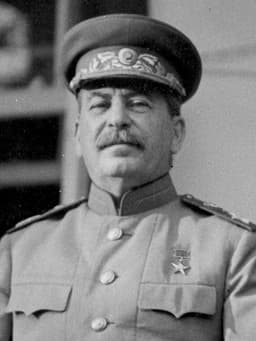
Joseph Stalin
Politician · Modern
68.8Total
Basic Information
Born
63
1878
Died
—
1953
Era
Ancient
Modern
Nationality
Roman Empire
Russia
Occupation
Emperor
Politician
Civilization
Western
Western
Score Comparison
Military (10%)
72.0
75.0
Political (20%)
90.0
70.0
Influence (20%)
88.0
72.0
Legacy (20%)
90.0
55.0
Leadership (15%)
88.0
80.0
Strategy (15%)
75.0
70.0
TOTAL
85.9
68.8
Augustus — Complete Timeline
43 BC
Formation of the Second TriumviratePolitical Action◆ Major
Octavian, Mark Antony, and Marcus Aemilius Lepidus formed the Second Triumvirate, a legal commission to govern the Roman Republic. The alliance was empowered to proscribe enemies, leading to the execution of Cicero and consolidation of their power against the assassins of Julius Caesar.
Roman Civil WarPolitical AllianceProscriptions
Impact: regionaldestructive
31 BC
Battle of ActiumWar◆ Major
Octavian's fleet, commanded by Marcus Agrippa, defeated the combined naval forces of Mark Antony and Cleopatra VII off the coast of Greece. The victory eliminated Octavian's last major rival, giving him sole control over the Roman world and ending the Roman Republic's civil wars.
Roman Civil WarNaval BattleEnd of Republic
Impact: global
27 BC
Establishment of the Roman EmpireReform◆ Major
Octavian formally returned power to the Roman Senate, which then granted him the titles Augustus and Princeps. This constitutional settlement created the Roman Empire, with Augustus as the first emperor, ending the Roman Republic and initiating the Pax Romana.
Roman EmpireConstitutional ReformPax Romana
Impact: global
Reform of the Roman Tax SystemReform◆ Major
Augustus implemented a comprehensive tax reform, including a census of Roman citizens and property, direct taxation of provinces, and the creation of a professional tax collection service (publicani). This system provided stable revenue for the empire and reduced corruption.
Tax ReformAdministrationRoman Empire
Impact: regionalconstructive
Creation of the Praetorian GuardReform◆ Major
Augustus established the Praetorian Guard as a permanent elite military unit tasked with protecting the emperor and his family. Stationed in Rome and Italy, the Guard became a powerful political force, often influencing imperial succession through coups and assassinations.
Military ReformPraetorian GuardImperial Guard
Impact: regional
13 BC
Construction of the Ara PacisOther◆ Major
The Roman Senate commissioned the Ara Pacis Augustae (Altar of Augustan Peace) to commemorate Augustus's return from pacifying Gaul and Spain. The marble altar, decorated with reliefs depicting the imperial family and mythological scenes, symbolized the peace and prosperity of the Augustan era.
Building ProjectPropagandaAugustan Art
Impact: regionalconstructive
Joseph Stalin — Complete Timeline
1928 AD
Launched the First Five-Year PlanReform
Stalin initiated a series of centralized economic plans aimed at rapid industrialization and collectivization of agriculture. The First Five-Year Plan set ambitious targets for heavy industry, leading to significant growth but also severe shortages and human cost.
Impact: global
1929 AD
Implemented forced collectivization of agricultureReform
Stalin ordered the consolidation of individual peasant farms into collective farms (kolkhozy). This was met with resistance, leading to the liquidation of kulaks (wealthy peasants) as a class. The policy caused a catastrophic famine, particularly in Ukraine (Holodomor), resulting in millions of deaths.
Impact: nationaldestructive
1937 AD
Conducted the Great Purge (Great Terror)Political Action
Stalin orchestrated a campaign of political repression against alleged enemies of the state. Millions were arrested, executed, or sent to the Gulag labor camps. The purges targeted the Communist Party, military leadership, intellectuals, and ordinary citizens, consolidating Stalin's absolute power.
Impact: nationaldestructive
1945 AD
Led the Soviet Union to victory in World War IIWar
Stalin served as Supreme Commander of the Soviet armed forces. The Soviet Union bore the brunt of the war against Nazi Germany, suffering immense casualties. The Red Army's victory at Stalingrad and the capture of Berlin were key turning points. The war ended with Soviet domination of Eastern Europe.
Impact: global
Established the Eastern Bloc and the Iron CurtainPolitical Action◆ Major
After WWII, Stalin imposed communist governments in Eastern European countries occupied by the Red Army, creating a buffer zone against the West. This division of Europe into Soviet and Western spheres of influence marked the beginning of the Cold War.
Impact: globaldestructive
Expert Analysis
Augustus vs Joseph Stalin: Historical Comparison
Augustus, the first Roman Emperor, transformed a republic into a stable empire, while Joseph Stalin, the Soviet dictator, industrialized a backward nation through terror. Their scores reflect Augustus's superior political consolidation and enduring legacy versus Stalin's brutal but effective modernization.
Dimension Analysis
**Military: Augustus 72 / Joseph Stalin 75**
Augustus secured Rome's borders through strategic legions and the *Pax Romana*, while Stalin oversaw the Red Army's victory in WWII and massive military industrialization, though at staggering human cost.
**Political: Augustus 92 / Joseph Stalin 72**
Augustus masterfully cloaked autocracy in republican forms, creating the Principate that lasted centuries. Stalin built a totalitarian state through purges and the cult of personality, but his system was brittle and reliant on fear.
**Influence: Augustus 88 / Joseph Stalin 72**
Augustus's administrative reforms, coinage, and patronage of arts (e.g., Virgil, Ovid) shaped Western civilization. Stalin's influence was largely negative—exporting the Gulag model and suppressing Eastern Europe, with limited intellectual or cultural appeal.
**Legacy: Augustus 90 / Joseph Stalin 55**
Augustus is revered as the founder of the Roman Empire and a model of stable governance. Stalin's legacy is deeply tarnished by mass famine, executions, and human rights abuses, though some credit him with Soviet victory in WWII.
**Leadership: Augustus 90 / Joseph Stalin 75**
Augustus led through coalition-building, patience, and institutional reform. Stalin ruled through paranoia, purges, and absolute control, achieving results but destroying any potential for succession or trust.
Verdict
Augustus leads decisively across nearly all dimensions due to his superior political acumen, enduring influence, and positive legacy, while Stalin's achievements are overshadowed by catastrophic human costs and a brittle authoritarian model.
FAQ
Q: Who ranks higher? A: Augustus ranks higher overall (86 vs 68), excelling in political skill, legacy, and leadership, whereas Stalin's military and political effectiveness is undermined by his brutal methods and negative long-term impact.
Rankings
🥇
AugustusLeader
Mil: 72.0Pol: 90.0Inf: 88.0
85.9
🥈
Joseph Stalin
Mil: 75.0Pol: 70.0Inf: 72.0
68.8
+17.1 behind
How This Comparison Works
Algorithm
Each figure is scored on 6 dimensions (0—100 scale) based on structured historical data: Military (10%), Political (20%), Influence (20%), Legacy (20%), Leadership (15%), Strategy (15%). The weighted total produces the final ranking.
Data Sources
Scores are computed from structured sub-indicators in the database. Scale factors adjust for era (Ancient ×0.85, Modern ×1.0) and civilization size (Eastern ×1.05, Other ×0.80) to account for differences in population and military scale.
Maximum 3 Figures
Comparisons are limited to 2—3 figures to ensure readability and statistical meaningfulness.
Error Margins
±5 points per dimension — Sub-scores are derived from historical records with inherent uncertainty. Two figures within 5 points on a dimension should be considered roughly equivalent in that area.
Total Score Accuracy
±3 points overall — The weighted combination of 6 dimensions produces a total score with approximately ±3 points of uncertainty. Differences of less than 3 points are not statistically significant— the figures are effectively tied.
Known Limitations
- Historical records are incomplete and uneven across civilizations
- Figures from oral-tradition societies may be underrepresented
- Occupation labels can misclassify multi-role figures
- Scores measure capability and impact, not moral character
- Quantitative scoring is a comparison tool, not absolute truth
Capability Radar
Military (10%) — Battles & Warfare
Battles
75
85
Win Rate
80
80
Expansion
85
85
Political (20%) — Governance & Reform
Reform
95
90
Diplomacy
90
70
Economy
85
85
Influence (20%) — Cultural & Global Reach
Cultural
85
70
Global
90
95
Legacy (20%) — Historical Impact
Historical
95
95
Longevity
95
80
Leadership (15%) — Power & Stability
Tenure
95
95
Stability
95
60
Strategy (15%) — Tactics & Innovation
Strategy
85
85
Tactics
70
60
Reform
90
90
Similar Comparisons
Comments & Discussion
AugustanAgeScholar6/16/2026
Tacitus, in his *Annals*, famously wrote that Augustus ‘attracted everyone’s goodwill by the delights of peace,’ but also noted the ‘bloodshed at home’ that paved his path. The scoring here rightly elevates Augustus’s political acumen—his *Res Gestae* inscription boasts over 500,000 citizens sworn to him, a masterstroke of soft power. Yet Stalin’s military score overshadows Augustus’s *Pax Romana*: the *Clades Variana* (AD 9) cost three legions, a blow that forced Augustus to abandon expansion beyond the Rhine. Neither leader was a saint; Augustus’s *Lex Julia* penalized adultery while his own daughter Julia was exiled for it. The real distinction is legacy: Augustus’s system endured for centuries, while Stalin’s Gulag state collapsed within decades. That’s not bias—it’s historiography.
RedStarRomance6/16/2026
Augustus was just a rich kid who got lucky after Actium—Stalin clawed his way from a Georgian peasant hut to running the biggest country on Earth! The scores are a joke: Stalin’s 75 military vs Augustus’s 72? Come on. Stalin took a backward, illiterate nation, smashed Hitler’s war machine at Stalingrad (2 million casualties, but victory), and built an atomic bomb in four years. Augustus played dress-up with republican titles while his buddy Agrippa did the fighting. And influence? Virgil wrote propaganda for Augustus; Stalin’s *Short Course* shaped how millions understood history. Yeah, Stalin was brutal—no argument there. But Augustus’s ‘peace’ was built on slavery and exile (Ovid died in Tomis!). Give me the guy who modernized a continent over the one who just painted the senate red.
OldScroll906/16/2026
西方中心主义的老毛病又犯了。奥古斯都84分总评,斯大林68分,但这套标准放在中国帝王身上根本水土不服。奥古斯都的‘元首制’不过是中国汉宣帝‘霸王道杂之’的罗马版,但后者还懂得‘汉家自有制度’。斯大林如果对比秦始皇,政治上更接近——都统一度量衡(计划经济)、修长城(东方战线)、焚书(大清洗)。但中国史官会高看斯大林的地方:他打赢了卫国战争,就像汉武帝击退匈奴;他工业化速度,堪比隋炀帝修运河——代价巨大但功在千秋。另外,奥古斯都的‘影响88分’里有多少是文艺复兴后西方吹捧出来的?按中国标准,斯大林输出革命模式影响半个地球,不该比奥古斯都低16分。建议引入‘民生代价系数’和‘制度可复制性’两个维度。
ColdScroll646/16/2026
这个评分体系有意思,但政治分差距20分我觉得被夸大了。奥古斯都92 vs 斯大林72,可奥古斯都的元首制本质上也是军事独裁,只是包装得更精致。他建立禁卫军、清洗政敌(西塞罗就是例证),难道不也是一种恐怖统治?如果按中国历史标准,秦始皇政治分肯定也低不了,但焚书坑儒后人怎么评价?建议把‘政治手腕’和‘制度韧性’分开打分。另外,斯大林军事工业化让苏联在4年内从1941年溃败打到柏林,这个75分给低了——奥古斯都的条顿堡森林惨败(公元9年)差点让罗马失去莱茵河,怎么没扣分?数据需要重新校准。