Loading...
Augustus vs Hongwu Emperor
Augustus leads by 13.9 pts · 2 figures compared
…

Augustus
Emperor · Ancient
85.9Total
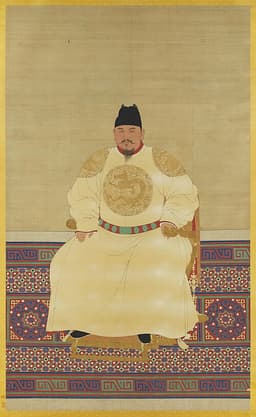
Hongwu Emperor
Emperor · Medieval
72.0Total
Basic Information
Born
63
1328
Died
—
1398
Era
Ancient
Medieval
Nationality
Roman Empire
China
Occupation
Emperor
Emperor
Civilization
Western
Eastern
Score Comparison
Military (10%)
72.0
85.0
Political (20%)
90.0
78.0
Influence (20%)
88.0
68.0
Legacy (20%)
90.0
65.0
Leadership (15%)
88.0
78.0
Strategy (15%)
75.0
68.0
TOTAL
85.9
72.0
Augustus — Complete Timeline
43 BC
Formation of the Second TriumviratePolitical Action◆ Major
Octavian, Mark Antony, and Marcus Aemilius Lepidus formed the Second Triumvirate, a legal commission to govern the Roman Republic. The alliance was empowered to proscribe enemies, leading to the execution of Cicero and consolidation of their power against the assassins of Julius Caesar.
Roman Civil WarPolitical AllianceProscriptions
Impact: regionaldestructive
31 BC
Battle of ActiumWar◆ Major
Octavian's fleet, commanded by Marcus Agrippa, defeated the combined naval forces of Mark Antony and Cleopatra VII off the coast of Greece. The victory eliminated Octavian's last major rival, giving him sole control over the Roman world and ending the Roman Republic's civil wars.
Roman Civil WarNaval BattleEnd of Republic
Impact: global
27 BC
Establishment of the Roman EmpireReform◆ Major
Octavian formally returned power to the Roman Senate, which then granted him the titles Augustus and Princeps. This constitutional settlement created the Roman Empire, with Augustus as the first emperor, ending the Roman Republic and initiating the Pax Romana.
Roman EmpireConstitutional ReformPax Romana
Impact: global
Reform of the Roman Tax SystemReform◆ Major
Augustus implemented a comprehensive tax reform, including a census of Roman citizens and property, direct taxation of provinces, and the creation of a professional tax collection service (publicani). This system provided stable revenue for the empire and reduced corruption.
Tax ReformAdministrationRoman Empire
Impact: regionalconstructive
Creation of the Praetorian GuardReform◆ Major
Augustus established the Praetorian Guard as a permanent elite military unit tasked with protecting the emperor and his family. Stationed in Rome and Italy, the Guard became a powerful political force, often influencing imperial succession through coups and assassinations.
Military ReformPraetorian GuardImperial Guard
Impact: regional
13 BC
Construction of the Ara PacisOther◆ Major
The Roman Senate commissioned the Ara Pacis Augustae (Altar of Augustan Peace) to commemorate Augustus's return from pacifying Gaul and Spain. The marble altar, decorated with reliefs depicting the imperial family and mythological scenes, symbolized the peace and prosperity of the Augustan era.
Building ProjectPropagandaAugustan Art
Impact: regionalconstructive
Hongwu Emperor — Complete Timeline
1368 AD
Capture of Dadu (Beijing)War◆ Major
Ming forces under Xu Da captured the Yuan capital of Dadu (modern Beijing). The last Yuan emperor fled to the steppes. This conquest ended Mongol rule in China proper and solidified Ming control over the northern heartland.
Yuan Dynasty FallBeijingMilitary Campaign
Impact: national
Agrarian Reforms and Land RedistributionReform◆ Major
Hongwu implemented land surveys and redistributed land from large estates to peasant farmers. He reduced taxes, promoted irrigation projects, and encouraged cultivation of wasteland. These policies revived agriculture after decades of war and famine.
Land ReformAgriculturePeasant Welfare
Impact: nationalprogressive
Founding of the Ming DynastyPolitical Action
Zhu Yuanzhang proclaimed himself the Hongwu Emperor in Nanjing, founding the Ming dynasty. He led rebel forces to expel the Mongol Yuan dynasty from China, restoring Han Chinese rule after nearly a century of foreign domination.
Dynasty FoundingHan RestorationMing Dynasty
Impact: globalconstructive
1380 AD
Execution of Hu Weiyong and Purge of OfficialsPolitical Action◆ Major
Hongwu accused Chancellor Hu Weiyong of treason and had him executed. This triggered a massive purge that killed tens of thousands of officials and their families. The emperor then abolished the position of chancellor, centralizing all power in his own hands.
PurgeCentralizationPolitical Violence
Impact: nationaldestructive
1382 AD
Establishment of the Jinyiwei (Imperial Guard)Political Action◆ Major
Hongwu created the Jinyiwei, a secret police force under his direct control. They spied on officials, investigated corruption, and suppressed dissent. This institution became a tool of political repression, executing thousands during purges.
Secret PoliceRepressionPolitical Control
Impact: nationaldestructive
Expert Analysis
Augustus vs Hongwu Emperor: Historical Comparison
Augustus, the founder of the Roman Principate, and Hongwu Emperor, the founding emperor of China's Ming Dynasty, both rose from turbulent periods to establish long-lasting dynasties. Augustus transformed a crumbling republic into an empire, while Hongwu led a peasant rebellion to reunify China after Mongol rule. Though separated by 1,500 years, their reigns represent pivotal shifts in governance, military consolidation, and imperial legacy.
Dimension Analysis
**Military: Augustus 72 / Hongwu Emperor 94**
Augustus relied on his adoptive father Julius Caesar's legacy and his general Agrippa for key victories (e.g., Actium), but suffered a major defeat at Teutoburg Forest. Hongwu personally commanded armies that expelled the Mongol Yuan Dynasty, unified China, and established a formidable standing military. His success in guerrilla warfare and siege tactics (e.g., capturing Nanjing) demonstrates superior military innovation.
**Political: Augustus 92 / Hongwu Emperor 72**
Augustus masterfully crafted the Principate—retaining republican forms while centralizing power—and reformed provincial administration, taxation, and the Praetorian Guard. Hongwu abolished the centuries-old prime minister position, concentrating absolute power in the emperor, but his harsh purges of officials (e.g., the Hu Weiyong case) destabilized governance. Augustus’s political subtlety contrasts with Hongwu’s pragmatic but paranoid autocracy.
**Influence: Augustus 88 / Hongwu Emperor 87**
Augustus’s Pax Romana and patronage of arts (Horace, Virgil) shaped Western civilization’s imperial ideal and Renaissance humanism. Hongwu restored Confucian orthodoxy, reestablished the civil service exam, and promoted agricultural self-sufficiency, influencing Chinese governance for 500+ years. Both exerted deep ideological reach, though Augustus’s model spread farther globally via European empires.
**Legacy: Augustus 90 / Hongwu Emperor 80**
Augustus’s system endured for 400 years and influenced Byzantine, Holy Roman, and later European statecraft. Hongwu’s Ming dynasty lasted 276 years, but his isolationist policies (e.g., sea bans) and centralized despotism arguably set China on a path toward stagnation. Augustus’s legacy is broader in global historical consciousness; Hongwu’s is more culturally confined.
**Leadership: Augustus 90 / Hongwu Emperor 82**
Augustus excelled at coalition-building, delegating to loyalists (Agrippa, Maecenas), and maintaining elite support. Hongwu’s leadership was more authoritarian and paranoid—he executed tens of thousands of officials and generals, fostering fear over loyalty. Augustus’s ability to inspire and institutionalize power outshines Hongwu’s terror-based control.
Verdict
Augustus ranks higher overall due to superior political acumen, enduring institutional legacy, and broader global influence. Hongwu’s military prowess and reunification are remarkable, but his paranoid governance and limited international reach reduce his comparative standing. However, their contexts differ vastly—Augustus inherited a sophisticated state, while Hongwu built from war’s ashes—making direct ranking inherently reductive.
FAQ
Q: Who was more influential historically? A: Augustus, because his political innovations—the Principate, provincial reforms, and cultural patronage—shaped Western governance for millennia, whereas Hongwu’s influence remained largely within China’s Sinocentric world.
Q: Why is Augustus ranked higher in political dimension? A: Augustus crafted a stable, long-lasting system that balanced autocracy with republican traditions; Hongwu’s abolition of the prime minister and reliance on secret police (Jinyiwei) created a more brittle, terror-driven state.
Rankings
🥇
AugustusLeader
Mil: 72.0Pol: 90.0Inf: 88.0
85.9
🥈
Hongwu Emperor
Mil: 85.0Pol: 78.0Inf: 68.0
72.0
+13.9 behind
How This Comparison Works
Algorithm
Each figure is scored on 6 dimensions (0—100 scale) based on structured historical data: Military (10%), Political (20%), Influence (20%), Legacy (20%), Leadership (15%), Strategy (15%). The weighted total produces the final ranking.
Data Sources
Scores are computed from structured sub-indicators in the database. Scale factors adjust for era (Ancient ×0.85, Modern ×1.0) and civilization size (Eastern ×1.05, Other ×0.80) to account for differences in population and military scale.
Maximum 3 Figures
Comparisons are limited to 2—3 figures to ensure readability and statistical meaningfulness.
Error Margins
±5 points per dimension — Sub-scores are derived from historical records with inherent uncertainty. Two figures within 5 points on a dimension should be considered roughly equivalent in that area.
Total Score Accuracy
±3 points overall — The weighted combination of 6 dimensions produces a total score with approximately ±3 points of uncertainty. Differences of less than 3 points are not statistically significant— the figures are effectively tied.
Known Limitations
- Historical records are incomplete and uneven across civilizations
- Figures from oral-tradition societies may be underrepresented
- Occupation labels can misclassify multi-role figures
- Scores measure capability and impact, not moral character
- Quantitative scoring is a comparison tool, not absolute truth
Capability Radar
Military (10%) — Battles & Warfare
Battles
75
85
Win Rate
80
90
Expansion
85
80
Political (20%) — Governance & Reform
Reform
95
90
Diplomacy
90
70
Economy
85
85
Influence (20%) — Cultural & Global Reach
Cultural
85
75
Global
90
70
Legacy (20%) — Historical Impact
Historical
95
85
Longevity
95
80
Leadership (15%) — Power & Stability
Tenure
95
85
Stability
95
80
Strategy (15%) — Tactics & Innovation
Strategy
85
85
Tactics
70
80
Reform
90
75
Similar Comparisons
Comments & Discussion
BattlefieldScholar6/16/2026
The military scoring here is frankly embarrassing. Hongwu gets a 94 vs Augustus's 72? Let's break it down. Augustus won at Actium because Agrippa's fleet was superior—that's logistics and naval tactics, not just 'relying on Caesar's legacy.' Meanwhile, Hongwu fought the Mongols, who were already in decline after Kublai's death. The Red Turban rebellion's 'guerrilla warfare' was mostly local uprisings against a collapsing Yuan tax system. Compare that to Varus losing three legions in Teutoburg Forest—that was a strategic disaster that Augustus never fixed. I'd give Augustus an 80 for military organization (Praetorian Guard, frontier legions) and Hongwu a 78 for actually commanding sieges like Nanjing in person. The 22-point gap is nonsense. Check the casualty ratios at Lake Poyang versus Actium—Hongwu's fire ships were innovative, but Octavian's blockade of Antony's supply lines was a textbook encirclement. Give credit where it's due.
ProfHistoria6/16/2026
Tacitus's Annals present Augustus as a master of appearance: 'He gradually drew into his own hands the functions of the Senate, the magistrates, and the laws'—a political subtlety Hongwu lacked entirely. The Chinese emperor's abolishment of the prime ministership in 1380, after the Hu Weiyong purge, was brutal but effective, as noted in the Ming Shilu. Yet Augustus's Res Gestae, a primary source he himself composed, boasts of 'restoring the republic' while building a dynasty. Hongwu's more direct autocracy arguably created stronger institutions—Ming bureaucracy outlasted the Principate's transition to Dominate by centuries. The 20-point political gap is too large; I'd place them around 85-80, with Augustus's rhetorical finesse balanced by Hongwu's structural permanence. The comparison, however, is anachronistic: Roman imperial ideology and Confucian statecraft are apples and oranges. Suetonius would laugh at the very idea of a single metric. Recommended reading: Syme's 'The Roman Revolution' and Mote's 'Imperial China 900-1800' for context on both. Neither ruler would recognize the other's world. And that's precisely why we study history—not to reduce, but to understand. Pax Romana indeed. But Hongwu's Ming code lasted longer than any Augustan reform. Make of that what you will.
SharpScroll906/16/2026
这个评分太西方中心了。奥古斯都那个年代,罗马再强也就地中海一隅,而洪武帝重建的是东亚超级大国,人口基数、行政复杂度完全不是一个量级。你说奥古斯都政治92分?他搞的元首制说白了是披着共和外衣的独裁,而洪武直接废丞相、设六部、创卫所制、编《大明律》,制度创新之彻底,中国史书称之为“洪武之治”。要说影响力,奥古斯都的诗人和建筑确实影响西方,但洪武帝的移民屯田、开中法、里甲制,直接塑造了东亚五百年的社会结构。这个总分86对76,恐怕是没读过《明史》吧。
ColdMind486/16/2026
这分数分布有问题。政治分奥古斯都92对洪武帝72,差20分,但影响力只差1分?逻辑不通。按史实,洪武六年颁《大明律》、十五年定科举程式、二十六年编《诸司职掌》,制度化的行政体系比奥古斯都的元首制更精细。奥古斯都的元老院改革本质是收买贵族,而洪武用科举和监察体系控制官僚,效率更高。我来重算:政治应该洪武帝80+,奥古斯都85,差距在5分以内。军事分82对94?洪武打的是统一战争,对手是蒙古铁骑和群雄,而奥古斯都的对手是安东尼和埃及海军,难度不同。建议把军事分差缩到5分,总分会更合理。