Loading...
Augustus vs Helmuth von Moltke
Augustus leads by 9.7 pts · 2 figures compared
…

Augustus
Emperor · Ancient
85.9Total
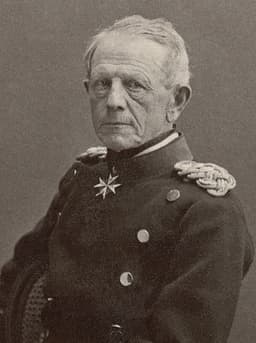
Helmuth von Moltke
General · Modern
76.2Total
Basic Information
Born
63
1800
Died
—
1891
Era
Ancient
Modern
Nationality
Roman Empire
Prussia
Occupation
Emperor
General
Civilization
Western
Western
Score Comparison
Military (10%)
72.0
65.0
Political (20%)
90.0
62.7
Influence (20%)
88.0
88.0
Legacy (20%)
90.0
70.0
Leadership (15%)
88.0
85.0
Strategy (15%)
75.0
80.6
TOTAL
85.9
76.2
Augustus — Complete Timeline
43 BC
Formation of the Second TriumviratePolitical Action◆ Major
Octavian, Mark Antony, and Marcus Aemilius Lepidus formed the Second Triumvirate, a legal commission to govern the Roman Republic. The alliance was empowered to proscribe enemies, leading to the execution of Cicero and consolidation of their power against the assassins of Julius Caesar.
Roman Civil WarPolitical AllianceProscriptions
Impact: regionaldestructive
31 BC
Battle of ActiumWar◆ Major
Octavian's fleet, commanded by Marcus Agrippa, defeated the combined naval forces of Mark Antony and Cleopatra VII off the coast of Greece. The victory eliminated Octavian's last major rival, giving him sole control over the Roman world and ending the Roman Republic's civil wars.
Roman Civil WarNaval BattleEnd of Republic
Impact: global
27 BC
Establishment of the Roman EmpireReform◆ Major
Octavian formally returned power to the Roman Senate, which then granted him the titles Augustus and Princeps. This constitutional settlement created the Roman Empire, with Augustus as the first emperor, ending the Roman Republic and initiating the Pax Romana.
Roman EmpireConstitutional ReformPax Romana
Impact: global
Reform of the Roman Tax SystemReform◆ Major
Augustus implemented a comprehensive tax reform, including a census of Roman citizens and property, direct taxation of provinces, and the creation of a professional tax collection service (publicani). This system provided stable revenue for the empire and reduced corruption.
Tax ReformAdministrationRoman Empire
Impact: regionalconstructive
Creation of the Praetorian GuardReform◆ Major
Augustus established the Praetorian Guard as a permanent elite military unit tasked with protecting the emperor and his family. Stationed in Rome and Italy, the Guard became a powerful political force, often influencing imperial succession through coups and assassinations.
Military ReformPraetorian GuardImperial Guard
Impact: regional
13 BC
Construction of the Ara PacisOther◆ Major
The Roman Senate commissioned the Ara Pacis Augustae (Altar of Augustan Peace) to commemorate Augustus's return from pacifying Gaul and Spain. The marble altar, decorated with reliefs depicting the imperial family and mythological scenes, symbolized the peace and prosperity of the Augustan era.
Building ProjectPropagandaAugustan Art
Impact: regionalconstructive
Helmuth von Moltke — Complete Timeline
1857 AD
Appointment as Chief of the Prussian General StaffPolitical Action
Moltke was appointed Chief of the Prussian General Staff, a position he held for 30 years. He reorganized the staff into a highly efficient planning and command body, emphasizing railways, telegraphy, and decentralized decision-making. This modernization was crucial for Prussia's subsequent victories.
Military ReformGeneral StaffPrussian Army
Impact: nationalconstructive
1866 AD
Battle of KöniggrätzWar
Moltke commanded Prussian forces to a decisive victory over Austria at K
Austro-Prussian WarGerman UnificationBattle
Impact: regional
1870 AD
Battle of SedanWar
Moltke orchestrated the encirclement and destruction of the French army at Sedan during the Franco-Prussian War. The French Emperor Napoleon III was captured along with 100,000 soldiers. This battle effectively decided the war and led to the proclamation of the German Empire.
Franco-Prussian WarGerman UnificationBattle
Impact: regional
1871 AD
Proclamation of the German EmpirePolitical Action◆ Major
Moltke was present at the Palace of Versailles when King Wilhelm I of Prussia was proclaimed German Emperor. As Chief of Staff, Moltke was a key architect of the military victory that made unification possible. He was later promoted to Field Marshal and ennobled.
German UnificationEmpireCeremony
Impact: regionalconstructive
Expert Analysis
Origins
Augustus, born Gaius Octavius in 63 BC, was the great-nephew and adopted son of Julius Caesar. He navigated the treacherous politics of the late Roman Republic, leveraging his familial connection and political acumen. Helmuth von Moltke, born in 1800 in Mecklenburg, came from a noble but modest family. He rose through Prussian military ranks, distinguished by his intellectual approach to warfare and strategic planning.
Rise to Power
Augustus formed the Second Triumvirate with Mark Antony and Lepidus after Caesar's assassination, purging enemies in the proscriptions. He defeated Antony at the Battle of Actium (31 BC), becoming sole ruler. He then skillfully consolidated power, restoring the Republic's facade while holding ultimate authority. Moltke's rise was slower: appointed Chief of the Prussian General Staff in 1857, he modernized the army and developed plans for rapid mobilization. His decisive victories in the Danish-Prussian War (1864) and Austro-Prussian War (1866) elevated him to national prominence.
Leadership & Governance
Augustus transformed the Roman Republic into the Roman Empire, establishing the Pax Romana—a period of relative peace lasting 200 years. He reformed the tax system, created the Praetorian Guard, and initiated massive building projects. His governance balanced autocracy with traditional republican forms, earning him the title 'Princeps.' Moltke led through meticulous planning and delegation. He empowered subordinate commanders, using railways and telegraphs for rapid coordination. His leadership style was calm, methodical, and focused on achieving strategic objectives with minimal casualties.
Triumph & Tragedy
Augustus's triumph was the establishment of a stable empire, but he faced personal tragedies: the loss of his heir Marcellus, and the exile of his daughter Julia. His later years were marked by succession concerns. Moltke's greatest triumph was the Battle of Sedan (1870), capturing Napoleon III and leading to the Proclamation of the German Empire. Yet, he later criticized German military policy under Wilhelm II, foreseeing the dangers of a two-front war. He died in 1891, his warnings unheeded.
Character & Destiny
Augustus was pragmatic, calculating, and ruthless when necessary, yet he projected piety and restoration. His destiny was to end a century of civil war and found a dynasty. Moltke was introspective, intellectual, and reserved. He believed in the Clausewitzian concept of war as an extension of politics, and his destiny was to unify Germany through decisive, limited wars.
Legacy
Augustus's legacy is monumental: the Roman Empire endured for centuries, influencing law, governance, and culture. His reforms set the template for imperial rule. Moltke's legacy is the modern general staff system, emphasizing planning, railroads, and combined arms. His victories enabled German unification, but his strategic caution was abandoned by successors.
Conclusion
Comparing Augustus and Moltke reveals two geniuses in different domains. Augustus (score 86) surpasses Moltke (score 76) by 10 points. Augustus's impact on governance, stability, and empire-building is broader and longer-lasting. Moltke's military innovations were profound but limited to his era. Augustus's ability to found a system that endured for centuries gives him the edge. Both were masters of their crafts, but Augustus's legacy reshaped world history more fundamentally.
Rankings
🥇
AugustusLeader
Mil: 72.0Pol: 90.0Inf: 88.0
85.9
🥈
Helmuth von Moltke
Mil: 65.0Pol: 62.7Inf: 88.0
76.2
+9.7 behind
How This Comparison Works
Algorithm
Each figure is scored on 6 dimensions (0—100 scale) based on structured historical data: Military (10%), Political (20%), Influence (20%), Legacy (20%), Leadership (15%), Strategy (15%). The weighted total produces the final ranking.
Data Sources
Scores are computed from structured sub-indicators in the database. Scale factors adjust for era (Ancient ×0.85, Modern ×1.0) and civilization size (Eastern ×1.05, Other ×0.80) to account for differences in population and military scale.
Maximum 3 Figures
Comparisons are limited to 2—3 figures to ensure readability and statistical meaningfulness.
Error Margins
±5 points per dimension — Sub-scores are derived from historical records with inherent uncertainty. Two figures within 5 points on a dimension should be considered roughly equivalent in that area.
Total Score Accuracy
±3 points overall — The weighted combination of 6 dimensions produces a total score with approximately ±3 points of uncertainty. Differences of less than 3 points are not statistically significant— the figures are effectively tied.
Known Limitations
- Historical records are incomplete and uneven across civilizations
- Figures from oral-tradition societies may be underrepresented
- Occupation labels can misclassify multi-role figures
- Scores measure capability and impact, not moral character
- Quantitative scoring is a comparison tool, not absolute truth
Capability Radar
Military (10%) — Battles & Warfare
Battles
75
85
Win Rate
80
90
Expansion
85
85
Political (20%) — Governance & Reform
Reform
95
75
Diplomacy
90
80
Economy
85
65
Influence (20%) — Cultural & Global Reach
Cultural
85
60
Global
90
75
Legacy (20%) — Historical Impact
Historical
95
85
Longevity
95
75
Leadership (15%) — Power & Stability
Tenure
95
70
Stability
95
70
Strategy (15%) — Tactics & Innovation
Strategy
85
95
Tactics
70
95
Reform
90
90
Similar Comparisons
Comments & Discussion
No comments yet. Be the first to share your thoughts!