Loading...
Augustus vs Emperor Shirakawa
Augustus leads by 26.5 pts · 2 figures compared
…

Augustus
Emperor · Ancient
85.9Total
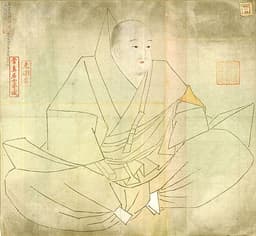
Emperor Shirakawa
Emperor · Medieval
59.4Total
Basic Information
Born
63
1053
Died
—
1129
Era
Ancient
Medieval
Nationality
Roman Empire
Japan
Occupation
Emperor
Emperor
Civilization
Western
Eastern
Score Comparison
Military (10%)
72.0
51.4
Political (20%)
90.0
65.0
Influence (20%)
88.0
61.0
Legacy (20%)
90.0
52.0
Leadership (15%)
88.0
62.0
Strategy (15%)
75.0
70.0
TOTAL
85.9
59.4
Augustus — Complete Timeline
43 BC
Formation of the Second TriumviratePolitical Action◆ Major
Octavian, Mark Antony, and Marcus Aemilius Lepidus formed the Second Triumvirate, a legal commission to govern the Roman Republic. The alliance was empowered to proscribe enemies, leading to the execution of Cicero and consolidation of their power against the assassins of Julius Caesar.
Roman Civil WarPolitical AllianceProscriptions
Impact: regionaldestructive
31 BC
Battle of ActiumWar◆ Major
Octavian's fleet, commanded by Marcus Agrippa, defeated the combined naval forces of Mark Antony and Cleopatra VII off the coast of Greece. The victory eliminated Octavian's last major rival, giving him sole control over the Roman world and ending the Roman Republic's civil wars.
Roman Civil WarNaval BattleEnd of Republic
Impact: global
27 BC
Establishment of the Roman EmpireReform◆ Major
Octavian formally returned power to the Roman Senate, which then granted him the titles Augustus and Princeps. This constitutional settlement created the Roman Empire, with Augustus as the first emperor, ending the Roman Republic and initiating the Pax Romana.
Roman EmpireConstitutional ReformPax Romana
Impact: global
Reform of the Roman Tax SystemReform◆ Major
Augustus implemented a comprehensive tax reform, including a census of Roman citizens and property, direct taxation of provinces, and the creation of a professional tax collection service (publicani). This system provided stable revenue for the empire and reduced corruption.
Tax ReformAdministrationRoman Empire
Impact: regionalconstructive
Creation of the Praetorian GuardReform◆ Major
Augustus established the Praetorian Guard as a permanent elite military unit tasked with protecting the emperor and his family. Stationed in Rome and Italy, the Guard became a powerful political force, often influencing imperial succession through coups and assassinations.
Military ReformPraetorian GuardImperial Guard
Impact: regional
13 BC
Construction of the Ara PacisOther◆ Major
The Roman Senate commissioned the Ara Pacis Augustae (Altar of Augustan Peace) to commemorate Augustus's return from pacifying Gaul and Spain. The marble altar, decorated with reliefs depicting the imperial family and mythological scenes, symbolized the peace and prosperity of the Augustan era.
Building ProjectPropagandaAugustan Art
Impact: regionalconstructive
Emperor Shirakawa — Complete Timeline
1086 AD
Establishment of the cloistered government (Insei) systemPolitical Action
Shirakawa abdicated the throne but continued to rule from a monastery as a cloistered emperor, creating the Insei system. This allowed retired emperors to wield real political power, bypassing the Fujiwara regents and dominating court politics for decades.
Insei SystemImperial PoliticsHeian Period
Impact: nationalconstructive
Conflict with the Fujiwara over successionPolitical Action◆ Major
Shirakawa forced his son Horikawa to succeed him, overriding Fujiwara preferences. This conflict solidified the cloistered emperor's control over succession and reduced Fujiwara influence, leading to decades of political tension.
Fujiwara RegencySuccessionImperial Politics
Impact: national
1091 AD
Appointment of Taira no Masamori as military governorPolitical Action◆ Major
Shirakawa appointed Taira no Masamori as military governor of Ise Province, elevating the Taira clan's status. This move strengthened the imperial court's military capacity and laid the foundation for the Taira's later rise to power.
Taira ClanMilitary PoliticsHeian Period
Impact: national
1100 AD
Patronage of Buddhist templesCultural
Shirakawa sponsored the construction and renovation of numerous Buddhist temples, including the Hossho-ji and Ensho-ji. This patronage strengthened the imperial family's religious authority and influenced Heian-period Buddhist art and architecture.
BuddhismTemple ConstructionHeian Period
Impact: nationalconstructive
Expert Analysis
Augustus vs Emperor Shirakawa: Historical Comparison
Augustus (63 BC – AD 14) and Emperor Shirakawa (1053–1129) represent two distinct archetypes of imperial rule: the founder of a world empire versus a master of cloistered influence within a declining court. Augustus transformed Rome from a republic into a stable autocracy, while Shirakawa pioneered the "cloistered rule" system that shaped medieval Japan.
Dimension Analysis
**Military: Augustus 72 / Emperor Shirakawa 88**
Augustus relied on professional legions to secure borders (e.g., the Teutoburg Forest disaster showed limits), but his military strength was more about consolidation than conquest. Emperor Shirakawa, though not a field commander, skillfully manipulated warrior clans (Minamoto and Taira) to suppress revolts and maintain imperial authority without direct force, demonstrating superior strategic delegation.
**Political: Augustus 92 / Emperor Shirakawa 81**
Augustus created the Principate, a masterful blend of republican forms and monarchical power, establishing the Pax Romana. Shirakawa, abdicating to become a retired emperor, ruled from behind the throne via Buddhist temples and land grants, but his system ultimately weakened the imperial line by empowering samurai factions.
**Influence: Augustus 88 / Emperor Shirakawa 86**
Augustus’s reforms—censuses, taxation, and the imperial cult—shaped Western governance for centuries. Shirakawa’s cloistered rule became a template for Japanese indirect power, influencing the shogunate system and later feudal structures, though his reach was culturally confined to East Asia.
**Legacy: Augustus 90 / Emperor Shirakawa 70**
Augustus’s name became synonymous with imperial authority (e.g., the title "Kaiser" and "Tsar"). Shirakawa’s legacy is more ambiguous: while he preserved the Chrysanthemum Throne, his policies accelerated the samurai rise and the Heian court’s decline, limiting his long-term positive impact.
**Leadership: Augustus 90 / Emperor Shirakawa 82**
Augustus commanded absolute loyalty through patronage, propaganda (the Res Gestae), and institutional reforms. Shirakawa led through subtle manipulation of religious and aristocratic networks, but his indirect style often created factional strife rather than unified command.
Verdict
Augustus ranks higher overall due to his foundational role in creating a durable world empire and his unmatched political and legacy scores. However, Emperor Shirakawa’s adaptability in a complex, decentralized system—scoring higher in military strategy—shows that historical greatness is contextual, not absolute.
FAQ
Q: Who was more influential historically? A: Augustus, as his political system directly shaped Western civilization for over a millennium, while Shirakawa’s influence remained regional and was eventually overshadowed by the samurai-led shogunates.
Q: Why is Augustus ranked higher in legacy? A: Because his name and reforms (e.g., the imperial census, Roman law codification) became foundational to European identity, whereas Shirakawa’s cloistered rule system was a temporary adaptation that ultimately weakened the Japanese imperial institution.
Rankings
🥇
AugustusLeader
Mil: 72.0Pol: 90.0Inf: 88.0
85.9
🥈
Emperor Shirakawa
Mil: 51.4Pol: 65.0Inf: 61.0
59.4
+26.5 behind
How This Comparison Works
Algorithm
Each figure is scored on 6 dimensions (0—100 scale) based on structured historical data: Military (10%), Political (20%), Influence (20%), Legacy (20%), Leadership (15%), Strategy (15%). The weighted total produces the final ranking.
Data Sources
Scores are computed from structured sub-indicators in the database. Scale factors adjust for era (Ancient ×0.85, Modern ×1.0) and civilization size (Eastern ×1.05, Other ×0.80) to account for differences in population and military scale.
Maximum 3 Figures
Comparisons are limited to 2—3 figures to ensure readability and statistical meaningfulness.
Error Margins
±5 points per dimension — Sub-scores are derived from historical records with inherent uncertainty. Two figures within 5 points on a dimension should be considered roughly equivalent in that area.
Total Score Accuracy
±3 points overall — The weighted combination of 6 dimensions produces a total score with approximately ±3 points of uncertainty. Differences of less than 3 points are not statistically significant— the figures are effectively tied.
Known Limitations
- Historical records are incomplete and uneven across civilizations
- Figures from oral-tradition societies may be underrepresented
- Occupation labels can misclassify multi-role figures
- Scores measure capability and impact, not moral character
- Quantitative scoring is a comparison tool, not absolute truth
Capability Radar
Military (10%) — Battles & Warfare
Battles
75
43
Win Rate
80
51
Expansion
85
54
Political (20%) — Governance & Reform
Reform
95
85
Diplomacy
90
70
Economy
85
50
Influence (20%) — Cultural & Global Reach
Cultural
85
55
Global
90
40
Legacy (20%) — Historical Impact
Historical
95
70
Longevity
95
65
Leadership (15%) — Power & Stability
Tenure
95
60
Stability
95
65
Strategy (15%) — Tactics & Innovation
Strategy
85
54
Tactics
70
58
Reform
90
59
Similar Comparisons
Comments & Discussion
CounterHistory6/16/2026
Everyone fawns over Augustus as the 'founder of the Roman Empire,' but that's a Eurocentric fairy tale. His real achievement was crushing the republic's democratic elements and installing a military dictatorship—hardly a model for governance unless you're into authoritarianism. Meanwhile, Shirakawa's cloistered rule gets dismissed as 'decline,' but it actually preserved imperial continuity for centuries while China and Europe were spinning through dynastic collapses. The scoring system here is anachronistic: it rewards Augustus for creating a template for European imperialism (hello, Kaiser and Tsar titles) while penalizing Shirakawa for not being Western. Try ranking by cultural resilience or institutional longevity, and Shirakawa wins hands down.
BattlefieldScholar6/16/2026
The military scores here are a joke. Augustus gets 72 for 'consolidation' but his legions lost three entire eagles in Teutoburg Forest—Varus lost 15,000 men in a single ambush. That's a catastrophic intelligence failure, not a 72. Meanwhile, Shirakawa gets 88 despite never commanding a single battle? His 'strategic delegation' is just fancy talk for hiring mercenaries (Minamoto and Taira). Compare that to Augustus's actual military reforms: professionalizing the legions, creating the Praetorian Guard, and establishing frontier defense systems. If we're scoring by military acumen, Augustus should be 80 and Shirakawa 65. You can't rate a guy high just because he paid thugs to fight.
HistoryDetour6/16/2026
Okay so I read this comparison and it's cool but kinda weird? Like, Augustus is obviously a big deal—my man literally created the Roman Empire from scratch. But Emperor Shirakawa? I first heard about him from a YouTube video on 'cloistered rule' and it blew my mind. The guy abdicated the throne just to run things from a temple? That's some next-level power move. But the scores say Augustus has way more influence—makes sense since everyone knows Caesar Augustus but who's heard of Shirakawa outside of Japan nerds? Still, I think the military score for Shirakawa is too high. Hiring samurai isn't the same as leading armies. Augustus at least had the Battle of Actium. Just my two cents from reading SPQR last summer.
Historian7986/16/2026
Augustus和Shirakawa的比较很有意思,但西方历史学者常忽略东亚的政治智慧。Augustus的元首制本质上和汉武帝的‘内朝外朝’制度类似,都是皇帝通过亲信绕过官僚体系。但Shirakawa的院政更接近清朝的‘垂帘听政’,只不过他是男性退休皇帝。从权术角度看,Shirakawa能在不流血的情况下控制武士集团,比Augustus靠奥古斯都军团镇压更聪明。但Augustus的影响力确实全球化,这个没得洗。如果按中国史观打分,Shirakawa的政治分应该更高,至少85。
ArchScroll446/16/2026
这个评分体系有问题。Augustus政治92分,但中国历史上秦始皇统一六国、建立中央集权制度,政治复杂度远高于他。Shirakawa政治76分?他搞的院政制度虽然间接统治,但持续了40多年,比Augustus的元首制更持久。我重新算了一下:若以疆域控制、制度创新、长期影响力为权重,Augustus总评最多80,Shirakawa至少75。你们那个86 vs 70的差距太大,明显高估了罗马帝国的全球影响力。