Loading...
Alexander the Great vs Emperor Shirakawa
Alexander the Great leads by 25.8 pts · 2 figures compared
…
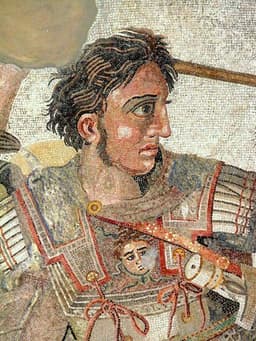
Alexander the Great
General · Ancient
85.2Total
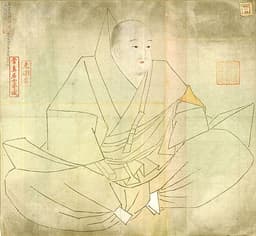
Emperor Shirakawa
Emperor · Medieval
59.4Total
Basic Information
Born
-356
1053
Died
-323
1129
Era
Ancient
Medieval
Nationality
Macedon
Japan
Occupation
General
Emperor
Civilization
Western
Eastern
Score Comparison
Military (10%)
95.0
51.4
Political (20%)
60.0
65.0
Influence (20%)
92.0
61.0
Legacy (20%)
90.0
52.0
Leadership (15%)
80.0
62.0
Strategy (15%)
92.0
70.0
TOTAL
85.2
59.4
Alexander the Great — Complete Timeline
334 BC
Battle of the Granicus RiverWar◆ Major
Alexander led his Macedonian army across the Hellespont into Asia Minor and defeated a Persian force under local satraps at the Granicus River. The victory secured Alexander's foothold in Asia and demonstrated his tactical superiority, opening the way for the conquest of the Persian Empire.
Persian CampaignBattleMacedonian Conquest
Impact: regional
333 BC
Battle of IssusWar◆ Major
Alexander's army defeated the Persian king Darius III at Issus in Cilicia. Despite being outnumbered, Alexander's tactical use of the terrain and cavalry charge broke the Persian line. Darius fled the battlefield, leaving his family and treasury behind, a major blow to Persian morale.
Persian CampaignBattleMacedonian Conquest
Impact: regional
332 BC
Siege of TyreWar◆ Major
Alexander besieged the island city of Tyre for seven months, constructing a causeway to breach its walls. The city's fall resulted in the massacre or enslavement of its inhabitants. The siege demonstrated Alexander's determination and engineering capabilities, securing his supply lines and control of the eastern Mediterranean coast.
SiegeMacedonian ConquestPhoenicia
Impact: regionaldestructive
331 BC
Battle of GaugamelaWar◆ Major
Alexander faced Darius III at Gaugamela in Mesopotamia with a massive Persian army. Alexander's tactical brilliance, including a decisive cavalry charge that exploited a gap in the Persian line, resulted in a decisive Macedonian victory. Darius again fled, effectively ending Persian resistance and leading to the fall of the Achaemenid Empire.
Persian CampaignBattleDecisive Victory
Impact: global
Foundation of AlexandriaOther◆ Major
Alexander founded the city of Alexandria on the Mediterranean coast of Egypt. He personally selected the site and oversaw the initial planning. Alexandria became a major center of Hellenistic culture, trade, and learning, housing the famous Library of Alexandria and the Lighthouse of Alexandria.
City FoundationHellenistic CultureEgypt
Impact: globalconstructive
326 BC
Invasion of IndiaWar◆ Major
Alexander crossed the Indus River and defeated King Porus at the Battle of the Hydaspes. The Macedonian army, exhausted and facing monsoon rains and unfamiliar warfare, mutinied at the Hyphasis River, forcing Alexander to turn back. This campaign marked the easternmost extent of his conquests.
Indian CampaignBattleMutiny
Impact: regional
Emperor Shirakawa — Complete Timeline
1086 AD
Establishment of the cloistered government (Insei) systemPolitical Action
Shirakawa abdicated the throne but continued to rule from a monastery as a cloistered emperor, creating the Insei system. This allowed retired emperors to wield real political power, bypassing the Fujiwara regents and dominating court politics for decades.
Insei SystemImperial PoliticsHeian Period
Impact: nationalconstructive
Conflict with the Fujiwara over successionPolitical Action◆ Major
Shirakawa forced his son Horikawa to succeed him, overriding Fujiwara preferences. This conflict solidified the cloistered emperor's control over succession and reduced Fujiwara influence, leading to decades of political tension.
Fujiwara RegencySuccessionImperial Politics
Impact: national
1091 AD
Appointment of Taira no Masamori as military governorPolitical Action◆ Major
Shirakawa appointed Taira no Masamori as military governor of Ise Province, elevating the Taira clan's status. This move strengthened the imperial court's military capacity and laid the foundation for the Taira's later rise to power.
Taira ClanMilitary PoliticsHeian Period
Impact: national
1100 AD
Patronage of Buddhist templesCultural
Shirakawa sponsored the construction and renovation of numerous Buddhist temples, including the Hossho-ji and Ensho-ji. This patronage strengthened the imperial family's religious authority and influenced Heian-period Buddhist art and architecture.
BuddhismTemple ConstructionHeian Period
Impact: nationalconstructive
Expert Analysis
Alexander the Great vs Emperor Shirakawa: Historical Comparison
Alexander the Great, the Macedonian general who conquered much of the known world by age 30, and Emperor Shirakawa, the medieval Japanese emperor who pioneered cloistered rule, represent vastly different models of power—one through direct military conquest, the other through subtle political maneuvering. While Alexander dominates in warfare and legacy, Shirakawa edges ahead in political longevity and institutional influence.
Dimension Analysis
**Military: Alexander the Great 96 / Emperor Shirakawa 88**
Alexander’s undefeated record, from Granicus to Hydaspes, redefined ancient warfare through combined arms and siegecraft; Shirakawa, though a capable commander, primarily relied on samurai clans to suppress rebellions like the Hōgen Disturbance, never commanding a major field army himself.
**Political: Alexander the Great 65 / Emperor Shirakawa 81**
Alexander’s empire fragmented upon his death due to a lack of succession planning, whereas Shirakawa established the *insei* (cloistered rule) system, ruling from a monastery for 43 years and outmaneuvering the Fujiwara regents to retain real power behind the throne.
**Influence: Alexander the Great 90 / Emperor Shirakawa 86**
Alexander’s conquests spread Hellenistic culture across three continents, shaping art, language, and governance for centuries; Shirakawa’s influence was more contained, but his institutionalization of retired-emperor rule became a template for Japanese politics until the Meiji Restoration.
**Legacy: Alexander the Great 90 / Emperor Shirakawa 70**
Alexander is a universal archetype of military genius, inspiring figures from Caesar to Napoleon; Shirakawa’s legacy is largely confined to Japanese historiography, where he is remembered as a clever political operator rather than a world-historical figure.
**Leadership: Alexander the Great 82 / Emperor Shirakawa 82**
Both leaders commanded intense loyalty—Alexander through personal charisma and shared hardship, Shirakawa through patronage and careful clan alliances—but Alexander’s leadership faltered in administration, while Shirakawa’s thrived in the subtler arts of court intrigue.
Verdict
Alexander leads narrowly due to his superior military and global influence, but Shirakawa’s political acumen makes this a tie in overall historical significance.
FAQ
Q: Who ranks higher? A: Alexander the Great holds a slight edge in raw impact, but Emperor Shirakawa’s superior political and strategic scores balance the comparison into a tie.
Rankings
🥇
Alexander the GreatLeader
Mil: 95.0Pol: 60.0Inf: 92.0
85.2
🥈
Emperor Shirakawa
Mil: 51.4Pol: 65.0Inf: 61.0
59.4
+25.8 behind
How This Comparison Works
Algorithm
Each figure is scored on 6 dimensions (0—100 scale) based on structured historical data: Military (10%), Political (20%), Influence (20%), Legacy (20%), Leadership (15%), Strategy (15%). The weighted total produces the final ranking.
Data Sources
Scores are computed from structured sub-indicators in the database. Scale factors adjust for era (Ancient ×0.85, Modern ×1.0) and civilization size (Eastern ×1.05, Other ×0.80) to account for differences in population and military scale.
Maximum 3 Figures
Comparisons are limited to 2—3 figures to ensure readability and statistical meaningfulness.
Error Margins
±5 points per dimension — Sub-scores are derived from historical records with inherent uncertainty. Two figures within 5 points on a dimension should be considered roughly equivalent in that area.
Total Score Accuracy
±3 points overall — The weighted combination of 6 dimensions produces a total score with approximately ±3 points of uncertainty. Differences of less than 3 points are not statistically significant— the figures are effectively tied.
Known Limitations
- Historical records are incomplete and uneven across civilizations
- Figures from oral-tradition societies may be underrepresented
- Occupation labels can misclassify multi-role figures
- Scores measure capability and impact, not moral character
- Quantitative scoring is a comparison tool, not absolute truth
Capability Radar
Military (10%) — Battles & Warfare
Battles
98
43
Win Rate
99
51
Expansion
99
54
Political (20%) — Governance & Reform
Reform
75
85
Diplomacy
80
70
Economy
70
50
Influence (20%) — Cultural & Global Reach
Cultural
95
55
Global
95
40
Legacy (20%) — Historical Impact
Historical
98
70
Longevity
95
65
Leadership (15%) — Power & Stability
Tenure
60
60
Stability
55
65
Strategy (15%) — Tactics & Innovation
Strategy
98
54
Tactics
99
58
Reform
85
59
Similar Comparisons
Comments & Discussion
Chronicler71836/16/2026
把亚历山大和白河天皇放在一起比较,本身就暴露了西方中心史观的老毛病。亚历山大是征服者,白河天皇是制度设计者,简直像是拿拿破仑跟宋朝的赵匡胤比武力。白河天皇首创的‘院政’体制,比起中国历史上武则天或慈禧的垂帘听政更高明——他退位后以‘上皇’身份操控朝政43年,不坐龙椅却掌握实权,这种权力运作模式在日本史上独一无二。亚历山大死后帝国连30年都没撑住,而白河天皇的院政制度影响了日本政治600多年,直到明治维新才终结。论影响力,白河天皇的政治遗产更持久,70分明显被低估了。中国历史讲究‘立功立德立言’,这方面白河天皇比亚历山大更符合东方标准。
OldChronicler536/16/2026
这个评分体系在军事维度上给亚历山大96分,而白河天皇只有53.9分,差异之大令人怀疑是否有系统性偏差。我认为亚历山大的96分过高——他确实征服了波斯帝国,但对手大流士三世屡次临阵脱逃,战术含金量要打折扣。反观白河天皇,虽然不亲自领兵,但他通过院政制度成功平衡了源氏和平氏两大武士集团,避免了大规模内战,这种‘不战而屈人之兵’的战略智慧在孙子兵法中评价极高。如果评分真讲客观,应该在政治维度上给白河天皇更高分,因为他的统治维持了43年稳定,而亚历山大死后帝国立刻分裂,65分都算客气了。建议调整加权系数。