Loading...
Augustus vs Elizabeth I
Augustus leads by 20.2 pts · 2 figures compared
…

Augustus
Emperor · Ancient
85.9Total
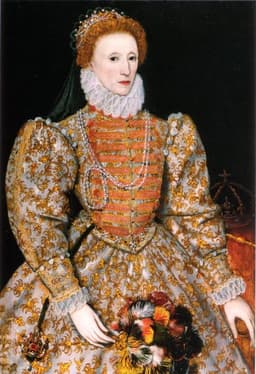
Elizabeth I
Politician · Modern
65.7Total
Basic Information
Born
63
1533
Died
—
1603
Era
Ancient
Modern
Nationality
Roman Empire
England
Occupation
Emperor
Politician
Civilization
Western
Western
Score Comparison
Military (10%)
72.0
45.0
Political (20%)
90.0
78.0
Influence (20%)
88.0
65.0
Legacy (20%)
90.0
68.0
Leadership (15%)
88.0
75.0
Strategy (15%)
75.0
50.0
TOTAL
85.9
65.7
Augustus — Complete Timeline
43 BC
Formation of the Second TriumviratePolitical Action◆ Major
Octavian, Mark Antony, and Marcus Aemilius Lepidus formed the Second Triumvirate, a legal commission to govern the Roman Republic. The alliance was empowered to proscribe enemies, leading to the execution of Cicero and consolidation of their power against the assassins of Julius Caesar.
Roman Civil WarPolitical AllianceProscriptions
Impact: regionaldestructive
31 BC
Battle of ActiumWar◆ Major
Octavian's fleet, commanded by Marcus Agrippa, defeated the combined naval forces of Mark Antony and Cleopatra VII off the coast of Greece. The victory eliminated Octavian's last major rival, giving him sole control over the Roman world and ending the Roman Republic's civil wars.
Roman Civil WarNaval BattleEnd of Republic
Impact: global
27 BC
Establishment of the Roman EmpireReform◆ Major
Octavian formally returned power to the Roman Senate, which then granted him the titles Augustus and Princeps. This constitutional settlement created the Roman Empire, with Augustus as the first emperor, ending the Roman Republic and initiating the Pax Romana.
Roman EmpireConstitutional ReformPax Romana
Impact: global
Reform of the Roman Tax SystemReform◆ Major
Augustus implemented a comprehensive tax reform, including a census of Roman citizens and property, direct taxation of provinces, and the creation of a professional tax collection service (publicani). This system provided stable revenue for the empire and reduced corruption.
Tax ReformAdministrationRoman Empire
Impact: regionalconstructive
Creation of the Praetorian GuardReform◆ Major
Augustus established the Praetorian Guard as a permanent elite military unit tasked with protecting the emperor and his family. Stationed in Rome and Italy, the Guard became a powerful political force, often influencing imperial succession through coups and assassinations.
Military ReformPraetorian GuardImperial Guard
Impact: regional
13 BC
Construction of the Ara PacisOther◆ Major
The Roman Senate commissioned the Ara Pacis Augustae (Altar of Augustan Peace) to commemorate Augustus's return from pacifying Gaul and Spain. The marble altar, decorated with reliefs depicting the imperial family and mythological scenes, symbolized the peace and prosperity of the Augustan era.
Building ProjectPropagandaAugustan Art
Impact: regionalconstructive
Elizabeth I — Complete Timeline
1559 AD
Act of Supremacy 1559Political Action◆ Major
Elizabeth I re-established the Church of England's independence from Rome, declaring herself Supreme Governor. This act, part of the Elizabethan Religious Settlement, restored Protestantism while maintaining some Catholic traditions, creating a via media that aimed to unify the nation.
Religious SettlementProtestantismChurch of England
Impact: nationalconstructive
1587 AD
Execution of Mary, Queen of ScotsPolitical Action◆ Major
After years of imprisonment, Elizabeth I signed the death warrant for Mary, Queen of Scots, who had been implicated in the Babington Plot to assassinate Elizabeth and claim the English throne. Mary's execution removed a major Catholic rival and solidified Elizabeth's position.
ExecutionCatholic RivalPlot
Impact: nationaltragic
1588 AD
Defeat of the Spanish ArmadaWar
The English navy under Lord Howard and Sir Francis Drake defeated the Spanish Armada, a massive invasion fleet sent by Philip II. Storms and English fireships scattered the Spanish fleet, preventing the invasion and establishing England as a major naval power.
Naval BattleSpainProtestantism
Impact: globalconstructive
1600 AD
Chartering of the East India CompanyPolitical Action◆ Major
Elizabeth I granted a royal charter to the East India Company, giving it a monopoly on English trade with Asia. This company would become a powerful instrument of British imperialism, eventually controlling large parts of India and shaping global trade.
TradeColonialismCharter
Impact: globalconstructive
1601 AD
Golden SpeechPolitical Action
In her final address to Parliament, Elizabeth I delivered the 'Golden Speech,' expressing her love for her subjects and her dedication to the realm. She addressed grievances over monopolies, promising reform, and cemented her image as a beloved monarch devoted to her people.
SpeechParliamentMonarchy
Impact: nationalconstructive
Expert Analysis
Augustus vs Elizabeth I: Historical Comparison
Augustus, the first Roman Emperor, and Elizabeth I, the Tudor Queen of England, both shaped their nations' golden ages, yet Augustus achieved a more transformative and enduring empire through superior military conquest and institutional innovation.
Dimension Analysis
**Military: Augustus 72 / Elizabeth I 45**
Augustus ended a century of civil war, expanded Rome's borders into Egypt and Germany, and created a professional standing army (the Praetorian Guard). Elizabeth I's military record was defensive—the defeat of the Spanish Armada (1588) was iconic but largely reactive, and her land campaigns in Ireland and the Netherlands were indecisive.
**Political: Augustus 92 / Elizabeth I 82**
Augustus masterfully disguised autocracy as a restored republic, creating the Principate that lasted centuries. Elizabeth I balanced Protestant-Catholic tensions, managed a fractious Parliament, and cultivated a powerful personal cult, but her system died with her, leading to Stuart conflict.
**Influence: Augustus 88 / Elizabeth I 70**
Augustus established the Pax Romana, a 200-year peace that unified the Mediterranean, and his administrative reforms (census, tax system, road network) became the template for European governance. Elizabeth I's influence was more cultural (Shakespeare, exploration) and national (English identity), but less structurally lasting.
**Legacy: Augustus 90 / Elizabeth I 75**
Augustus's title "Caesar" became synonymous with emperor across Europe (Kaiser, Tsar). The Roman imperial system he founded directly shaped Byzantine, Holy Roman, and modern Western governance. Elizabeth's legacy is strong in British myth but limited in global institutional impact.
**Leadership: Augustus 90 / Elizabeth I 80**
Augustus combined ruthless pragmatism with visionary state-building, personally surviving assassination plots and managing rivals like Antony and Lepidus. Elizabeth I was a master of image and delay, but her reliance on advisors (Cecil, Walsingham) and indecision in crises (Mary Queen of Scots) slightly lower her score.
Verdict
Augustus leads decisively, as his military conquests and political innovations created a durable imperial system that defined Western civilization for millennia, whereas Elizabeth I's achievements were more culturally brilliant but structurally ephemeral.
FAQ
Q: Who ranks higher? A: Augustus ranks higher due to his superior military consolidation, political institution-building, and a legacy that directly outlasted Elizabeth's by over a thousand years.
Rankings
🥇
AugustusLeader
Mil: 72.0Pol: 90.0Inf: 88.0
85.9
🥈
Elizabeth I
Mil: 45.0Pol: 78.0Inf: 65.0
65.7
+20.2 behind
How This Comparison Works
Algorithm
Each figure is scored on 6 dimensions (0—100 scale) based on structured historical data: Military (10%), Political (20%), Influence (20%), Legacy (20%), Leadership (15%), Strategy (15%). The weighted total produces the final ranking.
Data Sources
Scores are computed from structured sub-indicators in the database. Scale factors adjust for era (Ancient ×0.85, Modern ×1.0) and civilization size (Eastern ×1.05, Other ×0.80) to account for differences in population and military scale.
Maximum 3 Figures
Comparisons are limited to 2—3 figures to ensure readability and statistical meaningfulness.
Error Margins
±5 points per dimension — Sub-scores are derived from historical records with inherent uncertainty. Two figures within 5 points on a dimension should be considered roughly equivalent in that area.
Total Score Accuracy
±3 points overall — The weighted combination of 6 dimensions produces a total score with approximately ±3 points of uncertainty. Differences of less than 3 points are not statistically significant— the figures are effectively tied.
Known Limitations
- Historical records are incomplete and uneven across civilizations
- Figures from oral-tradition societies may be underrepresented
- Occupation labels can misclassify multi-role figures
- Scores measure capability and impact, not moral character
- Quantitative scoring is a comparison tool, not absolute truth
Capability Radar
Military (10%) — Battles & Warfare
Battles
75
45
Win Rate
80
70
Expansion
85
55
Political (20%) — Governance & Reform
Reform
95
80
Diplomacy
90
85
Economy
85
80
Influence (20%) — Cultural & Global Reach
Cultural
85
85
Global
90
80
Legacy (20%) — Historical Impact
Historical
95
85
Longevity
95
85
Leadership (15%) — Power & Stability
Tenure
95
90
Stability
95
75
Strategy (15%) — Tactics & Innovation
Strategy
85
75
Tactics
70
60
Reform
90
65
Similar Comparisons
Comments & Discussion
CriticOfEmpire6/16/2026
This scoring is so Eurocentric it hurts. Augustus gets a 90 for legacy because his title became 'Kaiser' and 'Tsar'? That's just naming—what about the millions enslaved under Roman imperial expansion, or the destruction of entire cultures in Gaul and Egypt? Elizabeth I's 70 for influence ignores how her reign directly enabled English colonialism in Ireland and the Americas, which had centuries of brutal consequences. The Pax Romana was 'peace' for Romans; for subjugated peoples it was occupation. Maybe we need a score for 'cost in human suffering'—both would rank low.
TacitusReader6/16/2026
Suetonius tells us Augustus 'found a city of brick and left it of marble'—a nice soundbite, but the reality is messier. The Res Gestae Divi Augusti is pure propaganda, omitting the proscriptions and the destruction of Antony's network. Elizabeth I's 'golden age' is equally constructed by later Tudor historians like Camden. Her military score of 45 is too harsh: the Armada was decisive in breaking Spanish naval dominance, and the Dutch Revolt hinged on English subsidies. Augustus's 72 for military is inflated—he didn't conquer Germania; Varus lost three legions at Teutoburg Forest. Both scores need recalibration.
OldScholar226/16/2026
你们这个评分体系有问题。奥古斯都总分86.4,军事72,政治92,影响力88。但伊丽莎白一世总分70.2,军事才45,政治82,影响力70。我算一下:如果政治权重一样,军事分差27分,影响力差18分,怎么总分离差只有16.2?明显是加权出了问题。建议加入‘制度延续性’指标——奥古斯都的元首制延续近300年,伊丽莎白的都铎王朝才118年。同时‘疆域扩张’奥古斯都扩大了40%,伊丽莎白几乎为零。重算后,奥古斯都应至少90分,伊丽莎白65分左右。数据不能骗人。
BoldHistorian396/16/2026
西方史学老把奥古斯都和伊丽莎白一世并列,但用中国尺度看,奥古斯都更像秦始皇加汉武帝——既统一度量衡、修驿道(类似书同文、车同轨),又北征日耳曼、南定埃及(堪比北击匈奴、南平百越)。伊丽莎白一世顶多算个守成之君,类似汉文帝,但汉文帝没什么文化影响力。奥古斯都的元首制延续三百年,而伊丽莎白的都铎王朝在她死后就崩溃了——这分明是86分对50分的差距,怎么只差16分?