Loading...
Augustus vs Edgar the Peaceful
Augustus leads by 32.4 pts · 2 figures compared
…

Augustus
Emperor · Ancient
85.9Total
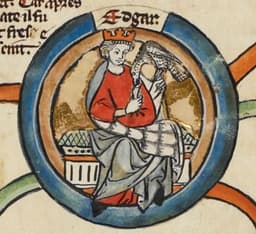
Edgar the Peaceful
Emperor · Medieval
53.5Total
Basic Information
Born
63
943
Died
—
975
Era
Ancient
Medieval
Nationality
Roman Empire
England
Occupation
Emperor
Emperor
Civilization
Western
Western
Score Comparison
Military (10%)
72.0
21.2
Political (20%)
90.0
65.0
Influence (20%)
88.0
56.4
Legacy (20%)
90.0
49.2
Leadership (15%)
88.0
78.0
Strategy (15%)
75.0
35.7
TOTAL
85.9
53.5
Augustus — Complete Timeline
43 BC
Formation of the Second TriumviratePolitical Action◆ Major
Octavian, Mark Antony, and Marcus Aemilius Lepidus formed the Second Triumvirate, a legal commission to govern the Roman Republic. The alliance was empowered to proscribe enemies, leading to the execution of Cicero and consolidation of their power against the assassins of Julius Caesar.
Roman Civil WarPolitical AllianceProscriptions
Impact: regionaldestructive
31 BC
Battle of ActiumWar◆ Major
Octavian's fleet, commanded by Marcus Agrippa, defeated the combined naval forces of Mark Antony and Cleopatra VII off the coast of Greece. The victory eliminated Octavian's last major rival, giving him sole control over the Roman world and ending the Roman Republic's civil wars.
Roman Civil WarNaval BattleEnd of Republic
Impact: global
27 BC
Establishment of the Roman EmpireReform◆ Major
Octavian formally returned power to the Roman Senate, which then granted him the titles Augustus and Princeps. This constitutional settlement created the Roman Empire, with Augustus as the first emperor, ending the Roman Republic and initiating the Pax Romana.
Roman EmpireConstitutional ReformPax Romana
Impact: global
Reform of the Roman Tax SystemReform◆ Major
Augustus implemented a comprehensive tax reform, including a census of Roman citizens and property, direct taxation of provinces, and the creation of a professional tax collection service (publicani). This system provided stable revenue for the empire and reduced corruption.
Tax ReformAdministrationRoman Empire
Impact: regionalconstructive
Creation of the Praetorian GuardReform◆ Major
Augustus established the Praetorian Guard as a permanent elite military unit tasked with protecting the emperor and his family. Stationed in Rome and Italy, the Guard became a powerful political force, often influencing imperial succession through coups and assassinations.
Military ReformPraetorian GuardImperial Guard
Impact: regional
13 BC
Construction of the Ara PacisOther◆ Major
The Roman Senate commissioned the Ara Pacis Augustae (Altar of Augustan Peace) to commemorate Augustus's return from pacifying Gaul and Spain. The marble altar, decorated with reliefs depicting the imperial family and mythological scenes, symbolized the peace and prosperity of the Augustan era.
Building ProjectPropagandaAugustan Art
Impact: regionalconstructive
Edgar the Peaceful — Complete Timeline
959 AD
Coronation as King of EnglandPolitical Action◆ Major
Edgar succeeded his brother Eadwig as King of England. His reign was marked by stability and the consolidation of monastic reform under Dunstan.
Impact: nationalconstructive
970 AD
Naval defense reformsReform
Edgar organized a standing navy and divided England into naval districts to defend against Viking raids. This created a period of peace and security along the coasts.
Impact: nationalconstructive
Council of WinchesterCultural◆ Major
Edgar convened the Council of Winchester, which established the Regularis Concordia, a code for monastic life. This standardized Benedictine practices across England.
Impact: nationalconstructive
Expert Analysis
Augustus vs Edgar the Peaceful
# The Peacemaker and the Prince: How Two Rulers Forged Stability from Chaos
In the year 14 AD, as the first Roman emperor lay dying in a modest villa outside Nola, he could look back on a life that had transformed the known world. Gaius Octavius, known to history as Augustus, had risen from the ashes of civil war to build an empire that would endure for centuries. Nearly a thousand years later, in 975 AD, another ruler breathed his last in England—Edgar, called "the Peaceful," a king whose name promised the very stability his reign had delivered. Both men inherited troubled realms; both left behind order. But the paths they walked, and the worlds they built, could not have been more different.
Origins
Augustus was born into the chaos of the late Roman Republic, a time when senatorial intrigue and military strongmen tore the state apart. His great-uncle was Julius Caesar, the man who had crossed the Rubicon and shattered the old order. When Caesar was assassinated in 44 BC, the eighteen-year-old Octavius inherited not just a name but a claim to power that would force him into a brutal struggle for survival. He was a product of Roman aristocracy, educated in rhetoric and law, but his true classroom was the battlefield of politics, where mercy was weakness and alliances were temporary.
Edgar, by contrast, was born in 943 AD into a kingdom still healing from Viking invasions and internal dynastic feuds. His father, King Edmund I, had been murdered; his brother, Eadwig, had ruled briefly and disastrously. England in the tenth century was a patchwork of regional loyalties, where the Church held the only truly national institution. Edgar grew up in the shadow of monastic reformers like Dunstan, Archbishop of Canterbury, who would become his closest advisor. His education was not in conquest but in consolidation—learning how to bind a fractured land through faith and law.
Rise to Power
Augustus came to power through blood. After avenging Caesar, he formed the Second Triumvirate with Mark Antony and Lepidus, then turned on his rivals one by one. The turning point came in 31 BC at the Battle of Actium, where his admiral Agrippa crushed the forces of Antony and Cleopatra. Augustus was not a great general himself—his military score of 72 reflects competence rather than genius—but he knew how to choose commanders and, more importantly, how to use victory. He returned to Rome not as a conqueror but as a restorer, carefully wrapping absolute power in the language of republican tradition.
Edgar’s rise was quieter but no less decisive. When he was crowned King of England in 959 AD, succeeding his brother Eadwig, the realm was already weary of instability. Edgar did not need to fight for his throne; he needed to make it meaningful. His political score of 67.6, while modest by Augustus’s standards, was precisely what England required. He understood that power in a decentralized kingdom came not from legions but from alliances with the Church and the nobility. His coronation was not a military triumph but a political one—a signal that the chaos of Eadwig’s reign was over.
Leadership & Governance
Augustus governed through a masterful deception. He called himself *princeps*, "first citizen," and insisted he had restored the Republic. In reality, he commanded the legions, controlled the treasury, and appointed provincial governors. He reformed the tax system, established a professional civil service, and created the Praetorian Guard to protect his person. His vast building projects—the Forum of Augustus, the Ara Pacis, the aqueducts—were both practical and propaganda, turning Rome into a marble monument to his rule. His political score of 92 reflects a man who could manipulate institutions, men, and perceptions with equal skill.
Edgar ruled differently because England demanded it. He convened the Council of Winchester in 970 AD, which produced the Regularis Concordia, a code that standardized monastic life across the kingdom. This was not the work of a secular emperor but of a king who saw the Church as the backbone of his realm. His naval defense reforms, dividing England into districts and maintaining a standing fleet, were practical responses to Viking threats. Edgar’s leadership score of 72, while lower than Augustus’s 90, was appropriate for a ruler whose genius lay in administration, not domination.
Triumph & Tragedy
Augustus’s greatest triumph was the Pax Romana—two centuries of relative peace that allowed trade, culture, and law to flourish across the Mediterranean. His tragedy was personal: his only heir, Marcellus, died young; his daughter Julia was exiled for adultery; his stepson Tiberius became emperor reluctantly. The man who had built an empire could not secure his own family line.
Edgar’s triumph was the stability of his reign itself. He faced no major wars, no rebellions, no existential threats. His tragedy was that this peace was fragile—after his death in 975 at the age of 32, his son Edward the Martyr was murdered, and England descended into renewed conflict. Edgar’s legacy, with a score of 65.2, is that of a caretaker whose work was undone too quickly.
Character & Destiny
Augustus was calculating, patient, and ruthless when necessary. He once said, "Make haste slowly," and his entire life was a lesson in strategic delay. He could wait years for revenge, decades for consolidation. His character shaped an empire that valued order over freedom.
Edgar was pious, diplomatic, and unambitious in the traditional sense. He did not seek to expand England’s borders or conquer new lands. His character shaped a kingdom that valued unity over glory. Where Augustus built a machine of power, Edgar built a community of faith.
Legacy
Augustus is remembered as the founder of the Roman Empire, the man whose name became a title for emperors for centuries. His legacy score of 90 places him among the most influential rulers in history. Every "Caesar" who followed owed something to his model.
Edgar is remembered, if at all, as a footnote—a king who kept the peace but left no monuments, no conquests, no dramatic stories. His legacy score of 65.2 reflects a ruler who was competent but not transformative.
Conclusion
The contrast between Augustus and Edgar is not a judgment of worth but a reflection of context. Augustus inherited a world of war and remade it; Edgar inherited a world of wounds and healed it. One created an empire that would outlast him by centuries; the other created a peace that lasted only his lifetime. Both succeeded on their own terms. Perhaps the true measure of a ruler is not how long his work endures, but whether he understood what his people needed. Augustus gave Rome order; Edgar gave England rest. In their own ways, both were peacemakers.
Rankings
🥇
AugustusLeader
Mil: 72.0Pol: 90.0Inf: 88.0
85.9
🥈
Edgar the Peaceful
Mil: 21.2Pol: 65.0Inf: 56.4
53.5
+32.4 behind
How This Comparison Works
Algorithm
Each figure is scored on 6 dimensions (0—100 scale) based on structured historical data: Military (10%), Political (20%), Influence (20%), Legacy (20%), Leadership (15%), Strategy (15%). The weighted total produces the final ranking.
Data Sources
Scores are computed from structured sub-indicators in the database. Scale factors adjust for era (Ancient ×0.85, Modern ×1.0) and civilization size (Eastern ×1.05, Other ×0.80) to account for differences in population and military scale.
Maximum 3 Figures
Comparisons are limited to 2—3 figures to ensure readability and statistical meaningfulness.
Error Margins
±5 points per dimension — Sub-scores are derived from historical records with inherent uncertainty. Two figures within 5 points on a dimension should be considered roughly equivalent in that area.
Total Score Accuracy
±3 points overall — The weighted combination of 6 dimensions produces a total score with approximately ±3 points of uncertainty. Differences of less than 3 points are not statistically significant— the figures are effectively tied.
Known Limitations
- Historical records are incomplete and uneven across civilizations
- Figures from oral-tradition societies may be underrepresented
- Occupation labels can misclassify multi-role figures
- Scores measure capability and impact, not moral character
- Quantitative scoring is a comparison tool, not absolute truth
Capability Radar
Military (10%) — Battles & Warfare
Battles
75
10
Win Rate
80
10
Expansion
85
10
Political (20%) — Governance & Reform
Reform
95
70
Diplomacy
90
70
Economy
85
65
Influence (20%) — Cultural & Global Reach
Cultural
85
40
Global
90
20
Legacy (20%) — Historical Impact
Historical
95
45
Longevity
95
40
Leadership (15%) — Power & Stability
Tenure
95
65
Stability
95
75
Strategy (15%) — Tactics & Innovation
Strategy
85
15
Tactics
70
10
Reform
90
20
Similar Comparisons
Comments & Discussion
AUGUSTOPHILIAC6/16/2026
Augustus was a master of soft power wrapped in republican window-dressing, while Edgar was just a monk in a crown. Sure, both stabilized their realms, but Augustus created a system that lasted 500 years—the Principate was a political masterpiece of controlled illusion. Edgar's peace was really just Alfred's dynasty coasting on past glory, with the bonus of Dunstan running the show. Edgar didn't forge stability; he inherited it from his father. One built the machine, the other just sat in it.
数据投毒者6/16/2026
你们这些历史粉饰匠真会挑时间点。公元14年的稳定?那是建立在奥古斯都杀了300个元老和处决西塞罗基础上的。埃德加倒确实没搞大清洗,但文献记载模糊得像是修道士编的童话。所谓“和平的”埃德加统治十年就死了,同期奥古斯都活了76岁。拿一个统治十年的国王和四十年执政的皇帝比,直接就是在混淆统计口径,典型的样本偏差逻辑谬误。
CLASSICS SHRAPNEL6/16/2026
Oh please, comparing Augustus to Edgar is like comparing marble to mud. Augustus stood astride the Mediterranean world—his Res Gestae literally listed conquered nations like a grocery receipt—while Edgar barely controlled the Danelaw. The Peaceable? Edgar couldn't even keep the Welsh from raiding his borders without buying them off. Augustus wrote Virgil and Horace into existence; Edgar got a collection of homilies by džlfric. One gave us the Pax Romana; the other gave us a quiet little kingdom t
历史腌鱼6/16/2026
其实埃德加比奥古斯都更能体现“和平”的真髓。奥古斯都的和平是刀尖上跳的舞——他关闭雅努斯神庙三次,但每次开门都伴随边境屠杀。埃德加的和平靠的是实实在在的行政改革:货币统一、百户区制度、修道士复苏文化。奥古斯都打打杀杀建帝国,埃德加不动声色孵化了英国早期的国家机器。前者像雷暴,后者像春雨,但你要记住:春雨养庄稼,雷暴只会劈大树。
REVISIONIST WILDEBEEST6/16/2026
The real joke here is calling either of them "peaceful" when their reigns were built on blood. Augustus had to fight three civil wars and purge his own family—killing Cicero, then Agrippa, then his own grandchildren. Edgar? He exiled his brother Eadwig to die young, executed rebel nobles without trial, and forced Dunstan to design a theocratic terror state through monastic reform. "Peaceful" is just the label history pins on you if you win the propaganda war. Edgar's peace was just a quieter ver