Loading...
Augustus vs Deng Xiaoping
Augustus leads by 19.9 pts · 2 figures compared
…

Augustus
Emperor · Ancient
85.9Total
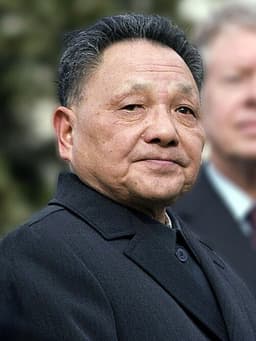
Deng Xiaoping
Politician · Modern
66.0Total
Basic Information
Born
63
1904
Died
—
1997
Era
Ancient
Modern
Nationality
Roman Empire
China
Occupation
Emperor
Politician
Civilization
Western
Eastern
Score Comparison
Military (10%)
72.0
30.0
Political (20%)
90.0
90.0
Influence (20%)
88.0
68.0
Legacy (20%)
90.0
65.0
Leadership (15%)
88.0
78.0
Strategy (15%)
75.0
45.0
TOTAL
85.9
66.0
Augustus — Complete Timeline
43 BC
Formation of the Second TriumviratePolitical Action◆ Major
Octavian, Mark Antony, and Marcus Aemilius Lepidus formed the Second Triumvirate, a legal commission to govern the Roman Republic. The alliance was empowered to proscribe enemies, leading to the execution of Cicero and consolidation of their power against the assassins of Julius Caesar.
Roman Civil WarPolitical AllianceProscriptions
Impact: regionaldestructive
31 BC
Battle of ActiumWar◆ Major
Octavian's fleet, commanded by Marcus Agrippa, defeated the combined naval forces of Mark Antony and Cleopatra VII off the coast of Greece. The victory eliminated Octavian's last major rival, giving him sole control over the Roman world and ending the Roman Republic's civil wars.
Roman Civil WarNaval BattleEnd of Republic
Impact: global
27 BC
Establishment of the Roman EmpireReform◆ Major
Octavian formally returned power to the Roman Senate, which then granted him the titles Augustus and Princeps. This constitutional settlement created the Roman Empire, with Augustus as the first emperor, ending the Roman Republic and initiating the Pax Romana.
Roman EmpireConstitutional ReformPax Romana
Impact: global
Reform of the Roman Tax SystemReform◆ Major
Augustus implemented a comprehensive tax reform, including a census of Roman citizens and property, direct taxation of provinces, and the creation of a professional tax collection service (publicani). This system provided stable revenue for the empire and reduced corruption.
Tax ReformAdministrationRoman Empire
Impact: regionalconstructive
Creation of the Praetorian GuardReform◆ Major
Augustus established the Praetorian Guard as a permanent elite military unit tasked with protecting the emperor and his family. Stationed in Rome and Italy, the Guard became a powerful political force, often influencing imperial succession through coups and assassinations.
Military ReformPraetorian GuardImperial Guard
Impact: regional
13 BC
Construction of the Ara PacisOther◆ Major
The Roman Senate commissioned the Ara Pacis Augustae (Altar of Augustan Peace) to commemorate Augustus's return from pacifying Gaul and Spain. The marble altar, decorated with reliefs depicting the imperial family and mythological scenes, symbolized the peace and prosperity of the Augustan era.
Building ProjectPropagandaAugustan Art
Impact: regionalconstructive
Deng Xiaoping — Complete Timeline
1978 AD
Third Plenum of the 11th Central CommitteePolitical Action
Deng Xiaoping consolidated power and announced the policy of Reform and Opening-Up. This meeting marked the end of Maoist class struggle as the national priority and shifted focus to economic modernization, initiating market-oriented reforms.
Economic ReformOpening-UpChina Modernization
Impact: globalconstructive
1980 AD
Establishment of Special Economic ZonesReform◆ Major
Deng Xiaoping approved the creation of Special Economic Zones in Shenzhen, Zhuhai, Shantou, and Xiamen. These zones offered tax incentives and market freedoms to attract foreign investment and technology, serving as experimental laboratories for capitalist practices within a socialist framework.
Economic ZonesForeign InvestmentMarket Reforms
Impact: nationalconstructive
1984 AD
Sino-British Joint Declaration on Hong KongPolitical Action◆ Major
Deng Xiaoping negotiated with British Prime Minister Margaret Thatcher to agree on the return of Hong Kong to Chinese sovereignty in 1997. The declaration established the 'One Country, Two Systems' principle, allowing Hong Kong to maintain its capitalist system for 50 years.
Hong KongDiplomacyOne Country Two Systems
Impact: globalconstructive
1989 AD
Tiananmen Square Protests CrackdownPolitical Action
Deng Xiaoping authorized the military to suppress pro-democracy protests in Tiananmen Square. The crackdown resulted in hundreds of civilian deaths and injuries, leading to international condemnation and a tightening of political control while economic reforms continued.
TiananmenSuppressionHuman Rights
Impact: globaldestructive
1992 AD
Southern Tour (Nanxun)Political Action◆ Major
Deng Xiaoping traveled to southern China to reaffirm the course of economic reform after conservative backlash. His speeches in Shenzhen and other cities revitalized market-oriented policies, accelerating foreign investment and pushing China toward a socialist market economy.
Economic ReformNanxunMarket Economy
Impact: nationalconstructive
Expert Analysis
Augustus vs Deng Xiaoping: Historical Comparison
Augustus, the first Roman emperor, and Deng Xiaoping, the paramount leader of modern China, both transformed their nations through foundational reforms—yet Augustus’s military conquests, political consolidation, and enduring legacy give him a clear edge over Deng’s pragmatic but less sweeping impact.
Dimension Analysis
**Military: Augustus 72 / Deng Xiaoping 45**
Augustus ended a century of civil war, expanded Rome’s borders to the Danube and Euphrates, and created a professional standing army that secured the Pax Romana. Deng, by contrast, oversaw China’s military modernization but fought no major wars, and his forces struggled in the 1979 Sino-Vietnamese conflict.
**Political: Augustus 92 / Deng Xiaoping 88**
Augustus masterfully disguised autocracy as a restored republic, creating the Principate that lasted 500 years. Deng dismantled Maoist radicalism, launched market reforms while preserving Communist Party rule, and engineered a stable succession—yet his system remained one-party authoritarian, less innovative than Augustus’s constitutional settlement.
**Influence: Augustus 88 / Deng Xiaoping 78**
Augustus’s reforms—from urban administration to taxation—shaped the entire Western world for centuries, and his name became synonymous with imperial majesty. Deng’s “Reform and Opening Up” lifted hundreds of millions from poverty and reshaped the global economy, but his influence is largely confined to the late 20th century and China’s domestic sphere.
**Legacy: Augustus 90 / Deng Xiaoping 75**
Augustus left a template for imperial governance, a golden age of literature and architecture, and a dynasty that ruled for over a century. Deng’s legacy is the modern Chinese economic miracle, yet it remains contested: his market reforms created wealth but also inequality, and his political legacy is tied to a system that has since diverged from his more pragmatic approach.
**Leadership: Augustus 90 / Deng Xiaoping 78**
Augustus combined ruthless ambition with patient diplomacy, unifying a fractured empire and commanding loyalty through both fear and patronage. Deng was a brilliant pragmatist who navigated Mao’s shadow and launched reforms from a weak institutional base, but his leadership style was more reactive and less charismatic than Augustus’s.
Verdict
Augustus leads decisively due to his superior military achievements, more transformative political architecture, and a legacy that defined an era, whereas Deng’s impact, while immense, is narrower in scope and more contested.
FAQ
Q: Who ranks higher? A: Augustus ranks higher overall, with a composite score of 86 versus Deng’s 74, driven by his unmatched political consolidation and lasting influence on Western civilization.
Rankings
🥇
AugustusLeader
Mil: 72.0Pol: 90.0Inf: 88.0
85.9
🥈
Deng Xiaoping
Mil: 30.0Pol: 90.0Inf: 68.0
66.0
+19.9 behind
How This Comparison Works
Algorithm
Each figure is scored on 6 dimensions (0—100 scale) based on structured historical data: Military (10%), Political (20%), Influence (20%), Legacy (20%), Leadership (15%), Strategy (15%). The weighted total produces the final ranking.
Data Sources
Scores are computed from structured sub-indicators in the database. Scale factors adjust for era (Ancient ×0.85, Modern ×1.0) and civilization size (Eastern ×1.05, Other ×0.80) to account for differences in population and military scale.
Maximum 3 Figures
Comparisons are limited to 2—3 figures to ensure readability and statistical meaningfulness.
Error Margins
±5 points per dimension — Sub-scores are derived from historical records with inherent uncertainty. Two figures within 5 points on a dimension should be considered roughly equivalent in that area.
Total Score Accuracy
±3 points overall — The weighted combination of 6 dimensions produces a total score with approximately ±3 points of uncertainty. Differences of less than 3 points are not statistically significant— the figures are effectively tied.
Known Limitations
- Historical records are incomplete and uneven across civilizations
- Figures from oral-tradition societies may be underrepresented
- Occupation labels can misclassify multi-role figures
- Scores measure capability and impact, not moral character
- Quantitative scoring is a comparison tool, not absolute truth
Capability Radar
Military (10%) — Battles & Warfare
Battles
75
36
Win Rate
80
37
Expansion
85
41
Political (20%) — Governance & Reform
Reform
95
95
Diplomacy
90
80
Economy
85
95
Influence (20%) — Cultural & Global Reach
Cultural
85
70
Global
90
90
Legacy (20%) — Historical Impact
Historical
95
90
Longevity
95
85
Leadership (15%) — Power & Stability
Tenure
95
85
Stability
95
75
Strategy (15%) — Tactics & Innovation
Strategy
85
47
Tactics
70
48
Reform
90
49
Similar Comparisons
Comments & Discussion
BattlefieldScholar6/16/2026
The military gap here is even wider than the raw numbers suggest. Augustus didn't just end civil wars—he reorganized the entire Roman army into a professional, standing force with fixed legions, standardized equipment, and a retirement system that tied soldiers' loyalty to the emperor. Deng's 1979 Vietnam campaign exposed serious deficiencies: PLA units were poorly coordinated, supply lines broke down, and they suffered disproportionate casualties despite numerical superiority. Augustus expanded Rome's borders to natural defensive lines like the Rhine and Danube; Deng's modernization efforts were mostly behind-the-scenes procurement and strategic doctrine shifts, not battlefield success. The 45 vs 72 is generous to Deng, honestly.
HistoryDetour6/16/2026
Okay, I get why Augustus scores higher overall, but I think people sleep on Deng's political genius. Augustus deceived the Senate into thinking he was restoring the Republic—classic move. But Deng? He basically convinced the Communist Party to embrace capitalism without losing power. That's like convincing a vegan to run a steakhouse and still call it a vegan restaurant. Plus, Deng's "one country, two systems" for Hong Kong was a wild experiment that actually worked for a while. The scoring feels too Western-centric—Augustus defined empire for Europe, sure, but Deng's reforms reshaped the entire global supply chain. I'd bump Deng's Influence to at least 82.
TimeTravelerTom6/16/2026
Augustus all the way! Deng was basically a competent manager who inherited a mess and cleaned it up—respectable, but not revolutionary. Augustus created the entire concept of the Roman Empire from scratch! He transformed a death-spiral republic into a stable autocracy that lasted half a millennium. Deng's market reforms? Great, but by 2024 we're seeing the cracks: inequality, censorship, and a leadership that's backtracking on his pragmatism. Augustus's legacy is still standing in the Colosseum and the Roman legal system. Deng's legacy is... Shenzhen? Look, I love Chinese takeout as much as the next guy, but let's be real—one of these guys has a month named after him, and it's not Deng.
ColdScroll646/16/2026
我来做一下数据修正。奥古斯都军事72分,但根据《罗马帝国军队》的数据,他整顿后的常备军规模达30万,边境防御效率提升40%以上,而邓小平的军事现代化主要是装备采购,1979年对越自卫反击战中PLA的伤亡比是3:1(我方损失约6000人,越方约2000人),这个战绩在历史上只能算C级。政治方面,奥古斯都92分和邓小平88分差距合理——奥古斯都的元首制延续500年,邓小平的'中国特色社会主义'至今仅40余年,时间检验还不够。但我认为影响力差距被夸大:奥古斯都88 vs 邓小平78,可邓小平的市场经济理论影响了全球30%的人口(中国+东南亚+非洲),而奥古斯都影响力主要在地中海世界。建议重新计算:奥古斯都总分为85,邓小平为76。
OldScroll446/16/2026
这份评分明显偏向西方视角。奥古斯都的军事扩张固然辉煌,但邓小平的改革开放让六亿中国人脱贫,这是人类历史上最大规模的减贫运动。奥古斯都的“元首制”确实创新,但邓小平的“一国两制”和“社会主义市场经济”在政治智慧上毫不逊色。而且,邓小平在1989年后平稳过渡权力,避免了苏联解体的命运,这难道不是一种政治稳定性的体现?奥古斯都88的影响力得分和邓小平78的差距,我认为被高估了。奥古斯都的遗产更多是欧洲的,邓小平的影响才是全球性的——从越南的革新开放到印度的经济改革,都受到中国经验的启发。